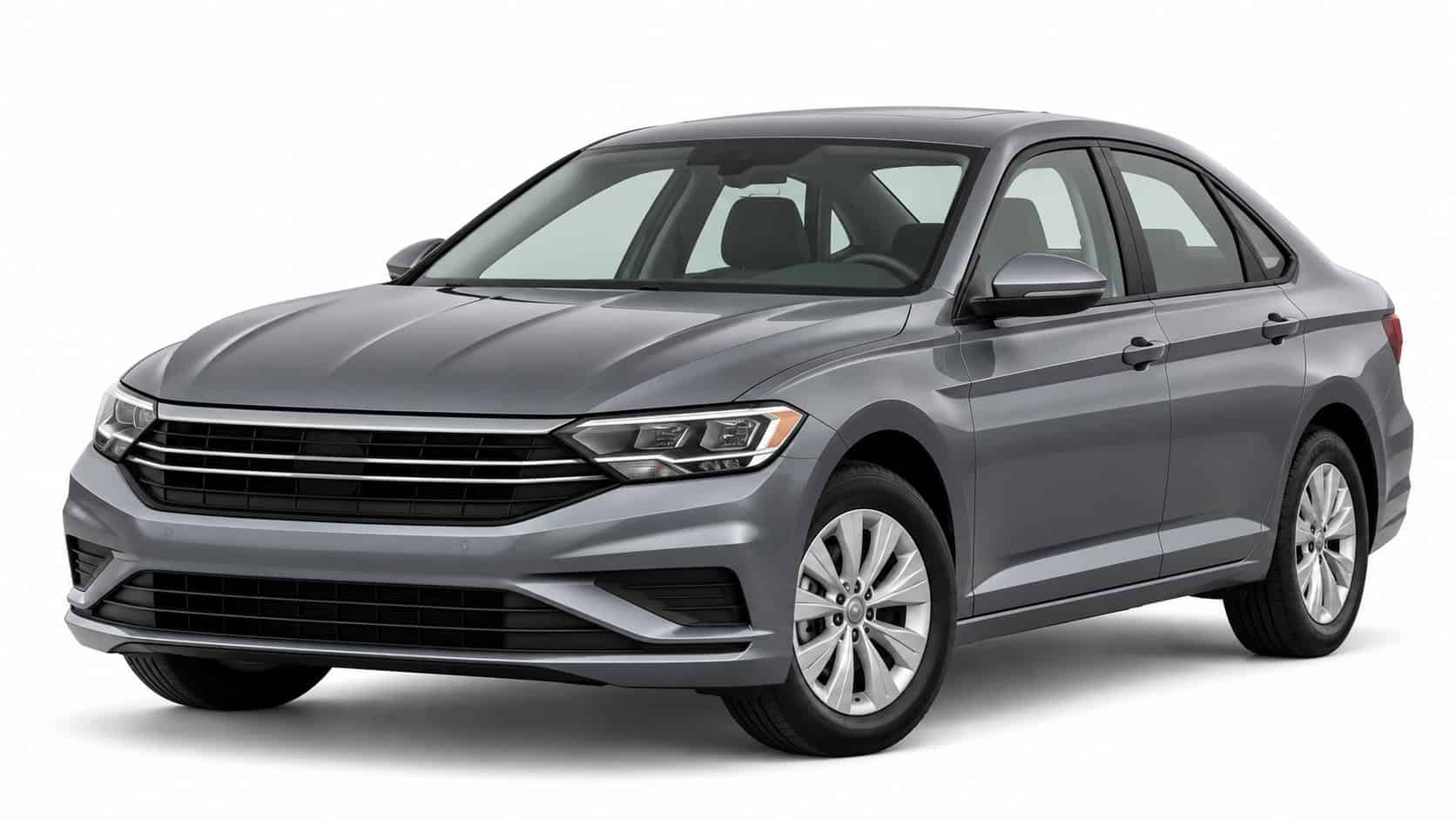
The Volkswagen Jetta S is the entry trim for recent U.S. Jetta lineups. You get the same 1.5L turbocharged engine used by several higher regular Jetta trims, so choosing the least expensive version does not mean accepting a weaker engine. In applicable late model years, the 1.5L produces 158 hp and 184 lb ft of torque. Front wheel drive is standard. Transmission availability changes by year, with 6 speed manual and 8 speed automatic configurations appearing during the recent generation. The Jetta S concentrates on fuel economy, passenger room, and the equipment you need for everyday driving. Canadian shoppers need to pay attention to naming because Volkswagen Canada has used Trendline for the comparable entry position during applicable years rather than simply copying the U.S. S badge.
Volkswagen Jetta S Trim Position
The Volkswagen Jetta S gives you the mechanical foundation of the regular Jetta without many of the comfort and appearance upgrades found farther up the range. In the U.S. lineup, it sits below Sport, SE, and SEL, while the GLI occupies a separate performance position. This distinction matters because the regular trims do not simply gain horsepower every time you move upward. An S can have the same 158 hp output as a considerably better equipped SEL from the same applicable model year. Your extra money generally buys equipment rather than a faster engine. If your priority is an efficient compact sedan and you do not care about premium cabin features, that can make the Volkswagen Jetta S an appealing place to start.
| Jetta Trim |
Main Position |
Typical Late Model Engine |
Output |
| S |
Entry trim |
1.5L turbo 4 cylinder |
158 hp |
| Sport |
Sport styled regular Jetta |
1.5L turbo 4 cylinder |
158 hp |
| SE |
Comfort focused trim |
1.5L turbo 4 cylinder |
158 hp |
| SEL |
Higher equipment trim |
1.5L turbo 4 cylinder |
158 hp |
| GLI |
Performance model |
2.0L turbo 4 cylinder |
228 hp on applicable years |
Volkswagen Jetta S Engine and Performance
Under the hood, the late model Volkswagen Jetta S uses a 1.5L turbocharged 4 cylinder engine rated at 158 hp and 184 lb ft of torque on applicable years. That torque figure matters during normal driving because the engine can deliver useful pulling power without needing a large displacement engine. Every recent Jetta S sends power to the front wheels. There is no AWD version to search for. Transmission choice depends on the year you are considering. Some recent S models were offered with a 6 speed manual or an 8 speed automatic, while Volkswagen changed transmission availability as the lineup evolved. Before buying, confirm the exact model year rather than assuming every Jetta S has the same gearbox.
- Engine: 1.5L turbocharged 4 cylinder on applicable late models
- Displacement: About 1,498 cc
- Horsepower: 158 hp
- Torque: 184 lb ft
- Drivetrain: Front wheel drive
- Manual transmission: 6 speed on applicable model years
- Automatic transmission: 8 speed on applicable model years
- AWD: Not offered on the regular Jetta S
Volkswagen Jetta S Fuel Economy
Fuel economy is one of the strongest reasons to consider the Volkswagen Jetta S. Exact ratings change with model year and transmission, so a single mpg figure should not be applied to every S. As a general late model range, you can expect roughly 29 to 31 mpg in city driving and around 40 to 42 mpg on the highway from applicable 1.5L versions. A 42 mpg highway rating works out to roughly 5.6 L/100 km, while 30 mpg is approximately 7.8 L/100 km. Those conversions give Canadian shoppers a more familiar reference, but official Canadian ratings should still be checked by model year. Natural Resources Canada provides a fuel consumption ratings search where you can compare the exact vehicle before estimating your annual gasoline bill.
| Driving |
Approximate U.S. Range |
Approximate Metric Equivalent |
| City |
29 to 31 mpg |
About 7.6 to 8.1 L/100 km |
| Highway |
40 to 42 mpg |
About 5.6 to 5.9 L/100 km |
| Fuel |
Gasoline |
Gasoline |
Volkswagen Jetta S Interior and Seating
Inside the Volkswagen Jetta S, the emphasis stays on useful equipment rather than luxury upgrades. Cloth seating is typical, and you have room for up to 5 occupants across two rows. The cabin uses the same basic body dimensions as the higher regular Jetta trims, so buying the entry model does not mean losing rear seat space simply because you skipped the SEL. What changes is the amount of comfort equipment surrounding you. Seat materials, adjustment features, climate controls, and other details can change by model year. If you are shopping used, sit in the car and test the driving position before focusing on the badge. A feature sheet cannot tell you whether the seat remains comfortable after a 90 minute commute.
- Seating capacity: 5
- Rows: 2
- Upholstery: Cloth on typical S configurations
- Cabin position: Entry level Jetta equipment
- Rear seating: Three passenger positions
- Comfort upgrades: More limited than SE and SEL
- Interior equipment: Varies by model year
Volkswagen Jetta S Infotainment and Connectivity
Technology in the Volkswagen Jetta S covers the main functions most drivers expect, but the exact screen and connectivity equipment depend on model year. Recent versions provide a central touchscreen, smartphone connectivity, USB connections, and a digital driver display on applicable configurations. Higher Jetta trims can add larger displays, upgraded audio, wireless features, and other convenience equipment. You should therefore compare the actual equipment rather than assuming the word “base” means the car has almost nothing. When inspecting a used S, connect your phone and test every port. Check Bluetooth, speakers, touchscreen response, steering wheel controls, and the backup camera. Electronics have an impressive ability to behave perfectly until five minutes after you sign the paperwork.
- Touchscreen: Standard on recent models, size varies by year
- Smartphone connectivity: Available on applicable recent versions
- USB connections: Included on applicable models
- Bluetooth: Available
- Backup camera display: Included on recent models
- Premium audio: Not the focus of the S trim
- Additional technology: Depends on model year and installed equipment
Volkswagen Jetta S Safety and Driver Assistance
Entry trim no longer automatically means stripped down safety equipment. Recent Volkswagen Jetta S models can include or offer features such as forward collision warning, automatic emergency braking, blind spot monitoring, rear cross traffic alert, and other driver assistance systems. The exact list changed as Volkswagen updated the Jetta, so you should verify the year you are buying. Do not assume that a safety feature found on a new S was also fitted to an older one. U.S. shoppers should enter the VIN into the official NHTSA recall lookup before purchase. Canadian shoppers can check Transport Canada’s recall database. A VIN check takes a few minutes and can tell you whether an open recall still needs attention.
- Rearview camera: Standard on applicable recent models
- Automatic emergency braking: Available or standard depending on year
- Forward collision warning: Model year dependent
- Blind spot monitoring: Availability varies by year
- Rear cross traffic alert: Available on applicable configurations
- Lane assistance: Depends on year and equipment
- Adaptive cruise control: Availability varies by model year
Volkswagen Jetta S Exterior and Wheels
The exterior of the Volkswagen Jetta S keeps the regular sedan shape without the more noticeable appearance changes used by Sport and GLI versions. Wheel diameter and design depend on year, but entry models generally use smaller wheels than the sportier configurations. That is not automatically a disadvantage. Smaller wheels normally leave more tire sidewall between the road and the rim, which can be useful on rough pavement. Replacement tires may also cost less than larger performance oriented sizes. You should inspect all four wheels when buying used. Look for curb damage, bends, mismatched tires, and uneven tread wear. Fancy wheels look good in photos. Straight wheels with healthy tires tend to feel better at 70 mph.
- Body style: 4 door compact sedan
- Exterior position: Standard Jetta appearance
- Wheels: Entry size and design depend on model year
- GLI styling: Not included
- Sport trim appearance upgrades: Not included
- Exterior lighting: Equipment varies with model year
Volkswagen Jetta S Dimensions and Trunk Space
You receive the full Jetta body when you choose the S. Late model measurements are roughly 186.5 inches in length and 70.8 inches in width. The wheelbase is about 105.7 inches, while height is approximately 57.4 inches depending on configuration. Trunk capacity is around 14.1 cu ft, giving you a useful enclosed cargo area behind the rear seats. These measurements matter because the Jetta competes in the compact sedan class without giving you an unusually small trunk or a 4 passenger cabin. You still have seating for 5. If you regularly carry adults in the rear, however, bring them along for your test drive. Their opinion of rear legroom will be considerably more useful than yours from the driver’s seat.
| Measurement |
Approximate Late Model Jetta S |
| Overall length |
186.5 in |
| Width |
70.8 in |
| Height |
57.4 in |
| Wheelbase |
105.7 in |
| Seating capacity |
5 |
| Trunk capacity |
14.1 cu ft |
| Doors |
4 |
| Drivetrain |
FWD |
Volkswagen Jetta S Wheels, Tires and Everyday Costs
The lower equipment level can work in your favor when normal wear items need replacement. The Volkswagen Jetta S does not rely on the large performance wheels, sport suspension hardware, or stronger performance brakes associated with the GLI. Wheel and tire sizes still vary by year, so check the label inside the driver’s door or the original specifications before ordering replacements. Tire price can change considerably with diameter, brand, speed rating, and season. Canadian owners should also consider a dedicated winter set if they regularly drive in snow or freezing temperatures. Front wheel drive can provide useful traction, but it does not shorten your stopping distance on ice by itself. Four suitable winter tires can make a much bigger difference when the road turns white.
- Driven wheels: Front
- Performance tires: Not required as standard GLI equipment
- Winter tires: Worth considering in colder regions
- Replacement size: Verify by model year and vehicle label
- Maintenance advantage: Less performance specific hardware than the GLI
- Inspection point: Check tread depth and wear across all four tires
Volkswagen Jetta S U.S. vs Canada
Market naming is one of the easiest places to get confused when researching the Volkswagen Jetta S. In the United States, S has been used as the entry trim during applicable recent model years. Volkswagen Canada has used different names, including Trendline during applicable years, rather than following the American lineup exactly. You should therefore avoid treating a Canadian Trendline and U.S. S as perfectly identical without checking the year. Engines may be similar while standard features, option packages, wheels, heated equipment, and pricing differ. Canadian MSRP is also set independently in CAD. It should not be calculated by simply converting a U.S. price. When shopping across the border, use the VIN and original market specification to confirm what the vehicle actually includes.
| Market Detail |
United States |
Canada |
| Entry trim name |
S on applicable years |
Trendline on applicable years |
| Currency |
USD |
CAD |
| Drivetrain |
FWD |
FWD |
| Trim equipment |
U.S. specification |
Canadian specification |
| Packages |
U.S. market packages |
Canadian market packages |
| Winter equipment |
Year and package dependent |
Can differ by Canadian specification |
Volkswagen Jetta S vs Sport
The Jetta Sport is the closest step above the S in applicable U.S. lineups, but the change is not primarily about engine power. Both can use the 1.5L turbocharged engine with 158 hp and 184 lb ft. Sport versions concentrate more heavily on appearance and handling related touches depending on model year. That means you should not automatically pay more for a Sport expecting a major increase in straight line performance. Compare wheels, seats, exterior details, equipment, mileage, and condition instead. If the Sport features matter to you, the upgrade may make sense. If you simply need the regular Jetta engine and a comfortable commuter, the S keeps things simpler.
| Specification |
Jetta S |
Jetta Sport |
| Engine |
1.5L turbo 4 cylinder |
1.5L turbo 4 cylinder |
| Horsepower |
158 hp |
158 hp |
| Torque |
184 lb ft |
184 lb ft |
| Drivetrain |
FWD |
FWD |
| Main emphasis |
Entry equipment |
Sportier appearance and equipment |
| GLI performance engine |
No |
No |
Volkswagen Jetta S vs SE
Moving from S to SE is more about comfort than speed. On applicable late models, both trims can share the same 158 hp 1.5L turbo engine. The SE uses its higher position to add cabin and convenience equipment. Depending on year, this can include upgraded seating surfaces, heated seats, additional power adjustments, larger wheels, and more driver assistance features. If you spend several hours each week commuting, those additions may be worth more to you than a small difference in purchase price. If you rarely use them, the Volkswagen Jetta S still delivers the same basic engine performance. Compare actual used prices carefully because age, mileage, accident history, and condition can easily matter more than one step in the trim ladder.
What to Check When Buying a Used Volkswagen Jetta S
Condition matters more than the word S on the trunk when you are shopping for a used Jetta. Confirm that routine maintenance has been kept up to date, even if the vehicle has relatively low mileage. Look for oil change records and check whether scheduled services were completed. During the road test, make sure the turbocharged engine accelerates smoothly and the transmission behaves normally. Check the tires for uneven wear. Test the air conditioning, touchscreen, camera, windows, locks, lights, and driver assistance equipment. You should also research concerns for the specific model year through the Volkswagen Jetta problems guide before you inspect the car. That gives you a more useful checklist than treating every Jetta year as identical.
- Maintenance history: Look for regular oil changes and scheduled service
- Engine: Listen for unusual noises and check for warning lights
- Transmission: Confirm smooth operation during a cold and warm test drive
- Tires: Check tread depth and uneven wear
- Brakes: Listen for grinding and check for vibration while stopping
- Electronics: Test every fitted feature
- Body: Look for mismatched paint and signs of previous repairs
- Recall status: Check the VIN with the appropriate U.S. or Canadian authority
Who Should Consider the Volkswagen Jetta S?
The Volkswagen Jetta S fits you best when you want the regular Jetta’s turbocharged engine, 5 passenger cabin, 14.1 cu ft trunk, and strong highway fuel economy without paying for every available comfort feature. You are not giving up horsepower compared with several higher regular trims on applicable late models. You are mainly giving up equipment. Sport deserves consideration if you want a more distinctive appearance. SE makes more sense when heated seating and additional comfort equipment matter. GLI belongs in another category because its larger 2.0L turbo engine changes the performance equation. Before choosing a used S, the Volkswagen Jetta buyer’s guide can help you examine model years, ownership concerns, and the wider Jetta lineup.