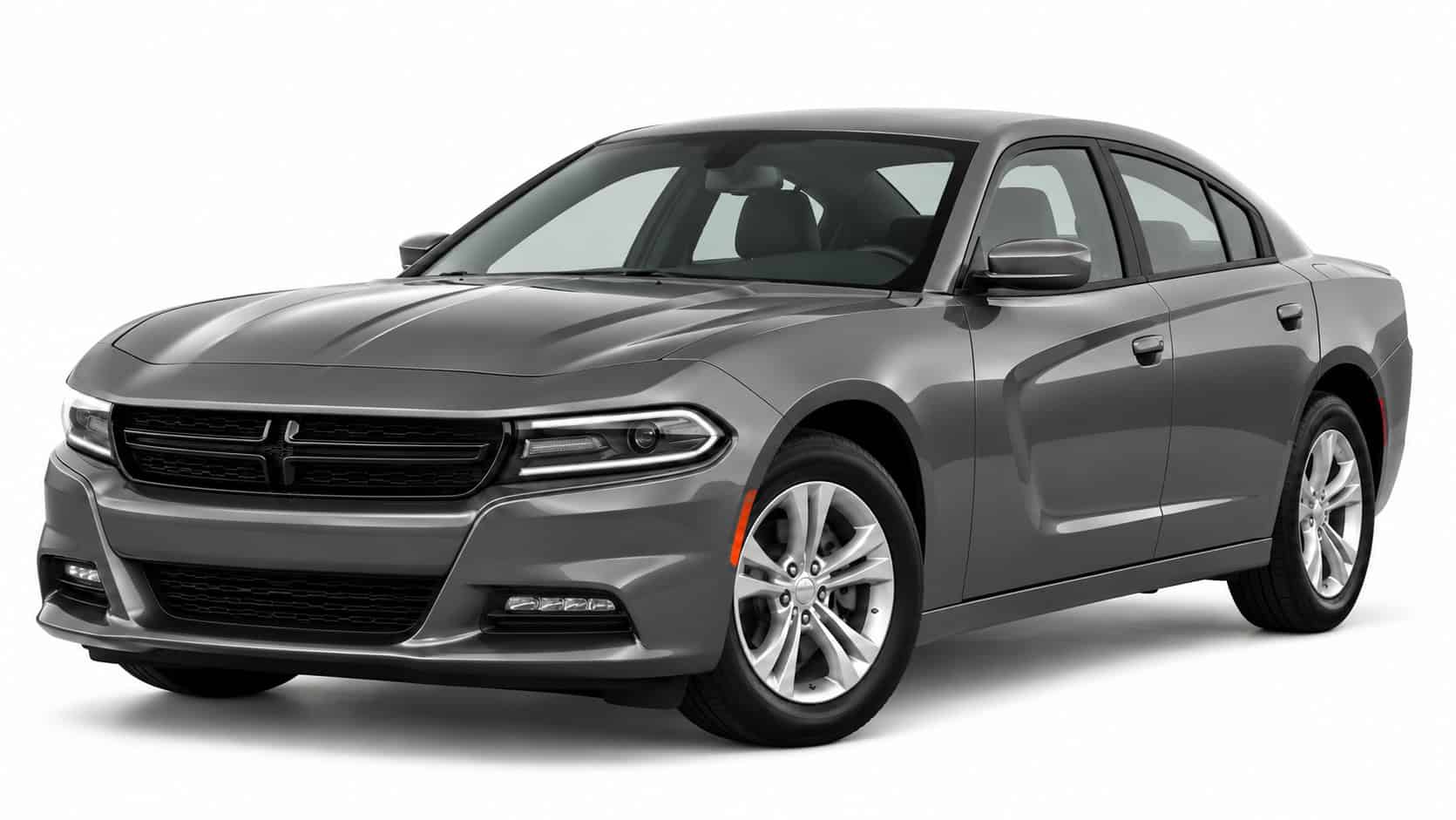
The Dodge Charger SXT is the entry trim of the previous generation Charger. It gives you the full size Charger body without requiring you to move into V8 performance. Late models use the 3.6L Pentastar V6 with an 8 speed automatic transmission. Rear wheel drive is available, while AWD gives you another option when winter traction matters. The SXT also keeps ownership simpler by avoiding the 6.4L V8, supercharger, extra wide tires, and other performance hardware found farther up the lineup. If you are shopping for a used Dodge Charger SXT, however, pay attention to the model year and installed packages. Equipment changed during the Charger’s long production run, so two SXT models from different years may not have identical wheels, screens, safety features, or interior equipment.
Dodge Charger SXT Trim Position
You can think of the Dodge Charger SXT as the foundation of the lineup. It sits below the GT, R/T, Scat Pack, and SRT models. That lower position does not mean you get a tiny engine. The 3.6L V6 still produces close to 300 hp in late models. What you avoid is the added performance equipment and higher output of the V8 trims. This makes the SXT worth considering when you want Charger passenger room and styling without making horsepower the main reason for buying the car.
- Price position: Lowest regular Charger trim
- Engine type: Naturally aspirated 3.6L V6
- Passenger capacity: 5 people
- Transmission: 8 speed automatic
- Drivetrain choices: RWD or AWD on applicable models
- Main purpose: Everyday driving with the Charger body and cabin
- Next trim: GT
- Major equipment difference: No HEMI V8, supercharger, Widebody hardware, or Scat Pack performance equipment
Dodge Charger SXT Engine and Performance
The 3.6L Pentastar V6 is the heart of the Dodge Charger SXT. A common late model RWD specification is 292 hp at 6,350 rpm and 260 lb ft of torque at 4,800 rpm. Power is handled by an 8 speed automatic transmission. That gives you considerably more output than many ordinary family sedans, even though the SXT sits at the bottom of the Charger range. You should also check the exact drivetrain and model year because some AWD versions have different published output figures. What you do not get is equally important. There are no 5.7L or 6.4L HEMI engines here, and there is no supercharged 6.2L V8 waiting to turn a quick grocery trip into an event.
|
Specification
|
Dodge Charger SXT
|
| Engine |
3.6L Pentastar V6 |
| Displacement |
3,604 cc |
| Horsepower |
292 hp on common late‑model RWD versions |
| Torque |
260 lb‑ft on common late‑model RWD versions |
| Transmission |
8‑speed automatic |
| Standard drive layout |
RWD on applicable versions |
| Available drivetrain |
AWD on applicable versions |
| Fuel delivery |
Gasoline |
| Performance position |
Entry V6 |
Dodge Charger SXT Fuel Economy
Fuel consumption is one reason you may choose the Dodge Charger SXT instead of a HEMI powered model. Using the 2023 Charger as a late model reference, EPA estimates for the 3.6L RWD configuration reach about 19 mpg city and 30 mpg highway. AWD consumes more fuel because the system adds weight and has more components to turn. Canadian ratings use L/100 km instead of mpg, and the exact number also changes with drivetrain and model year. You should therefore check the specific year you plan to buy rather than applying one rating to every SXT ever built. Your own result will also depend on traffic, temperature, speed, tire pressure, and how often you decide that 292 hp needs exercising.
| Late Model SXT Configuration |
City |
Highway |
| RWD |
About 19 mpg |
About 30 mpg |
| AWD |
About 18 mpg |
About 27 mpg |
These U.S. figures are useful for comparing the two drivetrains, but Canadian shoppers should use the matching model year in Natural Resources Canada’s Fuel Consumption Ratings Search Tool before estimating annual fuel costs.
Dodge Charger SXT RWD vs AWD
Choosing between RWD and AWD changes more than the number of driven wheels. RWD keeps the drivetrain simpler and generally delivers slightly better fuel economy. AWD can send power to the front and rear when additional traction is needed, which can be useful on snow covered roads. It is relevant in Canada, but AWD is not a Canada only Charger configuration. SXT AWD models were also sold in the United States. You should check the actual drivetrain when shopping instead of assuming that every Canadian SXT has AWD or every American SXT has RWD. If winter driving is your priority, remember that AWD helps you get moving. Proper winter tires also help you stop and turn, which tends to be useful when a red light appears.
| Feature |
SXT RWD |
SXT AWD |
| Engine |
3.6L V6 |
3.6L V6 |
| Driven wheels |
Rear |
Front and rear as required |
| Transmission |
8 speed automatic |
8 speed automatic |
| Fuel economy |
Better |
Slightly lower |
| Vehicle weight |
Lower |
Higher |
| Snow acceleration |
Normal |
Improved traction |
| Best use |
Mild climates and lower fuel use |
Regular winter driving |
Dodge Charger SXT Dimensions and Cargo Space
The SXT may be the least expensive Charger trim, but Dodge does not shrink the body when you choose it. Late models measure about 198.4 inches long with a 120 inch wheelbase. Width is roughly 75 inches without the mirrors. Trunk capacity is approximately 16.5 cu ft, and there is seating for 5. Those dimensions help explain why the Charger works as more than a weekend performance car. You have enough trunk space for normal luggage and a rear seat that can actually carry passengers. The nearly 16.5 foot body is worth remembering in tighter parking spaces, though. If you are coming from a compact sedan, measure your garage before discovering that your new Charger technically fits only when the door stays open.
|
Measurement
|
Approximate Late Model SXT Figure
|
| Overall length |
198.4 in |
| Wheelbase |
120.0 in |
| Overall width |
About 75 in |
| Height |
About 57 in |
| Seating capacity |
5 |
| Trunk capacity |
About 16.5 cu ft |
| Doors |
4 |
Dodge Charger SXT Interior and Comfort
Inside, the Dodge Charger SXT starts with a straightforward cabin rather than the upgraded performance theme of the more expensive trims. Cloth upholstery is common, while seat adjustment and comfort equipment depend on model year and option packages. That last part matters when you shop used. One SXT may have heated seats, additional power adjustments, or upgraded convenience equipment while another has a much simpler specification. You should inspect the actual equipment instead of deciding that every SXT cabin is identical. The underlying advantage remains cabin size. You have two seating rows, 5 passenger capacity, and the same basic Charger body dimensions regardless of whether a HEMI badge is attached to the front fender.
- Upholstery: Cloth is standard on typical SXT configurations
- Seating: Two rows with room for up to 5 people
- Front seats: Adjustment features depend on year and package
- Rear seat: Full width second row
- Comfort upgrades: Heated seats and other features may be available through packages
- Cabin position: Entry Charger interior without the standard performance treatment of upper trims
Dodge Charger SXT Infotainment and Connectivity
Technology in the SXT depends heavily on model year because the Charger remained in production long enough to see its infotainment system evolve. On the 2023 SXT, a 7 inch Uconnect touchscreen serves as the basic system, with Apple CarPlay and Android Auto smartphone integration. Equipment packages can change the screen, audio system, navigation functions, and other convenience features. That makes the equipment list especially important when comparing two used cars at similar prices. You should turn the system on during an inspection. Pair your phone, test the USB connections, check the speakers, and make sure the touchscreen responds correctly. A larger screen is nice. A smaller one that actually works is considerably nicer than an upgraded unit that freezes every five minutes.
- Infotainment system: Uconnect
- Standard touchscreen: 7 inches on the 2023 SXT
- Apple CarPlay: Included on applicable late models
- Android Auto: Included on applicable late models
- USB connectivity: Available
- Audio upgrades: Package dependent
- Navigation: Depends on installed infotainment equipment
Dodge Charger SXT Exterior and Wheels
The standard body is one of the easiest ways to separate an SXT from the most aggressive Chargers. You do not get the large Widebody fender extensions used to cover the 305 mm tires fitted to certain Scat Pack and Hellcat models. Late model SXT RWD cars commonly start with smaller wheels, while AWD versions and option packages can change wheel diameter and design. This can work in your favor when replacement time arrives because ordinary SXT tires are generally less extreme than the wide performance rubber used farther up the range. When you inspect a used Dodge Charger SXT, look at all four wheel and tire sizes. Check for bent wheels, curb damage, uneven tread wear, and mismatched tires. That inspection matters even more on an AWD car.
- Body style: Standard width 4 door Charger body
- Widebody fenders: Not included
- Base wheels: Smaller than the 20 x 11 inch wheels used on certain Widebody models
- Performance tires: Widebody 305 mm tires are not standard SXT equipment
- Exterior upgrades: Wheel and appearance choices vary by year and package
- Trim appearance: Standard Charger styling without Scat Pack or Hellcat body hardware
Dodge Charger SXT Safety and Driver Assistance
Safety equipment is one area where you should never assume the trim badge tells the whole story. A late model SXT includes core safety equipment such as stability control, traction control, airbags, a rearview camera, and anti lock brakes. Additional driver assistance equipment can depend on the year and installed package. Features such as blind spot monitoring, rear cross traffic alert, adaptive cruise control, and forward collision warning may therefore appear on one used SXT but not another. Check the buttons, vehicle settings, original window sticker, or VIN based equipment record before buying. U.S. shoppers can also enter the VIN into the official NHTSA recall lookup. Canadian buyers can perform the same type of check through Transport Canada.
- Rearview camera: Included on applicable late models
- Stability control: Standard
- Traction control: Standard
- Anti lock brakes: Standard
- Airbags: Multiple front and side protection systems
- Blind spot monitoring: Availability depends on year and equipment
- Adaptive cruise control: Package dependent
- Forward collision warning: Package dependent
Dodge Charger SXT Brakes and Performance Equipment
The braking and cooling setup reflects the SXT’s role as an everyday V6 Charger. You do not receive the large Brembo systems associated with Scat Pack and SRT models as standard equipment. There is also no need for the same cooling hardware required by a 485 hp 6.4L V8 or a supercharged Hellcat engine. This keeps the SXT mechanically closer to an ordinary large sedan. It can also reduce the cost of replacing certain wear items compared with the most extreme Charger trims. You should still inspect the brake pads and rotors before buying. The Charger is a large car, and ordinary brakes still wear out. A lower horsepower badge has never convinced a worn brake pad to grow its friction material back.
- Standard brakes: Conventional Charger braking system
- Brembo performance brakes: Not standard SXT equipment
- Performance cooling: Upper trim performance hardware is not included
- Widebody suspension: Not included
- Track focused hardware: Not part of the SXT’s normal equipment
- Inspection priority: Check pads, rotors, fluid condition, and braking behavior on a road test
Dodge Charger SXT vs GT, R/T and Scat Pack
The easiest way to understand the Dodge Charger SXT is to compare what happens as you move upward. The GT retains the 3.6L V6 but commonly raises output to 300 hp and adds more aggressive styling. R/T is the first major mechanical jump because you move to the 5.7L HEMI V8 with about 370 hp. Scat Pack increases displacement to 6.4L and output to 485 hp. This means an SXT and Scat Pack may share the recognizable Charger shape while serving very different buyers. If you need AWD, the V6 side of the lineup deserves particular attention because the later V8 performance trims are RWD.
| Specification |
SXT |
GT |
R/T |
Scat Pack |
| Engine |
3.6L V6 |
3.6L V6 |
5.7L V8 |
6.4L V8 |
| Horsepower |
292 hp* |
300 hp |
370 hp |
485 hp |
| Torque |
260 lb ft* |
264 lb ft |
395 lb ft |
475 lb ft |
| AWD available |
Yes |
Yes |
No |
No |
| HEMI V8 |
No |
No |
Yes |
Yes |
| Brembo performance brakes |
No standard setup |
No standard setup |
Package dependent |
Yes on applicable configurations |
| Main focus |
Entry V6 |
Sport styled V6 |
V8 experience |
High performance V8 |
*Common late model SXT RWD specification. Exact output can vary with configuration.
Dodge Charger SXT U.S. vs Canada Differences
The U.S. and Canadian SXT are fundamentally the same type of Charger, but inventory, option packages, pricing, and drivetrain availability can differ. AWD is particularly attractive in Canadian provinces and northern U.S. states because of winter conditions. That does not make the SXT AWD a Canadian only model. You can find RWD and AWD examples on either side of the border depending on model year. Canadian pricing also cannot be calculated by simply converting a U.S. MSRP into CAD. Factory pricing, standard equipment, taxes, and packages were market specific. When comparing a used import with a domestic market car, check the original specification and VIN. That gives you a much clearer answer than relying on an online advertisement that says only “SXT.”
| Item |
United States |
Canada |
| SXT availability |
Yes |
Yes |
| RWD availability |
Yes |
Yes, depending on year |
| AWD availability |
Yes |
Yes |
| AWD relevance |
Higher in snowbelt states |
Popular for winter use |
| Currency |
USD |
CAD |
| Equipment |
Year and package dependent |
Year and package dependent |
What to Check Before Buying a Used Dodge Charger SXT
Mileage alone should not decide whether you buy a used Dodge Charger SXT. Confirm that routine maintenance has been kept up to date, even when the car has relatively low mileage. Newer vehicles can still have missed oil changes, worn tires, weak batteries, or overdue service. I also recommend paying closer attention to the four tires on an AWD model. A car with four matching tires and even tread gives you a much better starting point than one wearing a random collection from three different brands. Review the model year’s known issues through the Dodge Charger problems guide before the inspection, then use the vehicle’s actual condition and service records to make your decision.
- Service history: Confirm regular oil changes and scheduled maintenance
- Transmission: Check that the 8 speed automatic shifts smoothly
- AWD system: Listen for unusual noises during acceleration and turns
- Tires: Verify matching sizes and look for uneven tread wear
- Brakes: Inspect pad and rotor condition
- Suspension: Listen for knocking or rattling over uneven pavement
- Electronics: Test Uconnect, cameras, USB ports, lights, climate controls, and fitted driver aids
- Accident history: Inspect panel gaps, paint differences, and repair records
- Recall status: Search the VIN before purchase
Is the Dodge Charger SXT the Right Trim for You?
The Dodge Charger SXT makes the strongest case when you want the Charger’s size and appearance without paying for V8 performance you do not plan to use. You still have roughly 292 hp, seating for 5, about 16.5 cu ft of trunk space, and available AWD on applicable models. The GT deserves a look when you want a more aggressive V6 Charger. The R/T is the logical step when a 5.7L HEMI is central to your decision. Scat Pack and Hellcat models move much farther toward outright performance. Before choosing between them, the Dodge Charger buyer’s guide can help you examine the broader model. For an SXT buyer, the decision is simpler. Choose RWD when lower fuel use and a simpler drivetrain suit your driving. Look for AWD when regular winter conditions make the extra traction worthwhile.