Overview
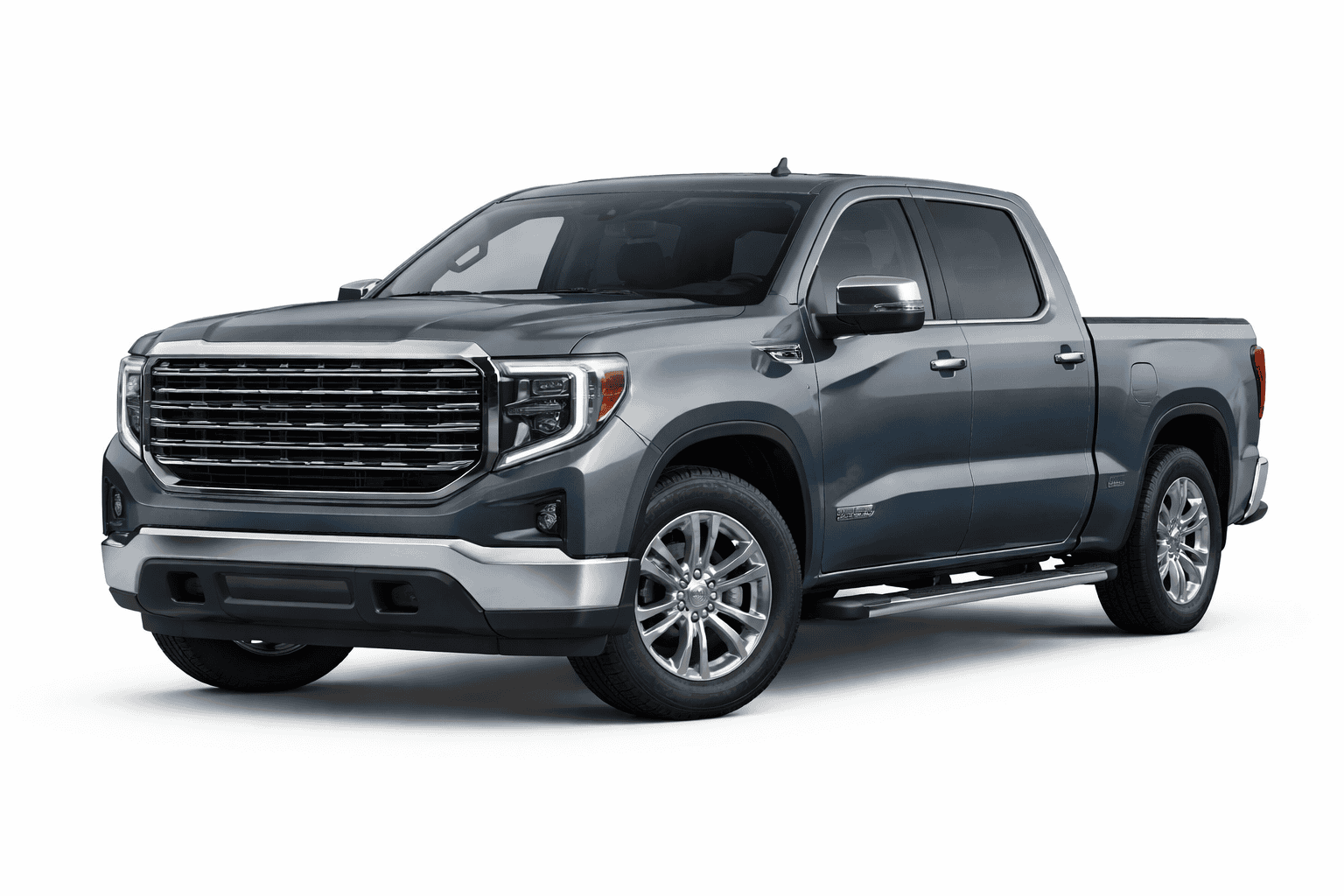
The GMC Sierra 1500 delivers strong performance, modern tech, and a more refined feel than many full size trucks. It shares its core engineering with the Silverado 1500 but is positioned differently, focusing more on interior quality and feature upgrades. The Sierra name has been used by GMC for decades, but it became a standalone model in 1999 when General Motors separated it from the older C K truck platform, marking a shift toward more defined trims and modern design.
Today, it competes directly with trucks like the Ford F 150 and Ram 1500. With multiple engines, trims ranging from basic work setups to luxury level builds, and towing capability that reaches over 13,000 pounds, the Sierra 1500 fits a wide range of buyers. This overview gives shoppers the key information they need to understand what the truck offers and how it performs in real use.
Engine & Performance
The Sierra 1500 offers four main engines, each designed for different needs:
- 2.7L Turbo I4 — around 310 horsepower and 430 lb ft of torque, strong low end pull for daily driving and light towing
- 5.3L V8 — about 355 horsepower and 383 lb ft, a proven balance of power and long term durability
- 6.2L V8 — roughly 420 horsepower and 460 lb ft, the strongest gas engine in the lineup with quick acceleration and high towing capability
- 3.0L Duramax Diesel — around 305 horsepower and 495 lb ft, designed for highway efficiency and long distance towing
Most configurations use a 10 speed automatic transmission developed through a joint effort between General Motors and Ford in 2017. Power delivery is smooth, and the truck remains stable across different driving conditions. Off road trims like AT4 and AT4X include upgraded suspension, skid plates, and traction systems designed for uneven terrain.
Towing & Payload Capability
The Sierra 1500 is built to handle demanding work when properly equipped.
- Maximum towing: up to 13,200 pounds
- Maximum payload: up to 2,200 pounds
These figures vary depending on engine choice, axle ratio, cab configuration, and drivetrain. The 6.2L V8 and 3.0L diesel typically deliver the highest towing performance, while the 5.3L V8 offers a balanced setup for mixed use.
Towing features include trailer sway control, hitch guidance, an integrated trailer brake controller, and multiple camera views that improve visibility during hookups and maneuvering.
Interior & Technology
The Sierra 1500’s interior ranges from practical to more refined setups depending on trim level.
- Available 13.4 inch touchscreen
- Available 12.3 inch digital driver display
- Wireless Apple CarPlay and Android Auto
- Optional head up display
- Available Bose premium audio
- Multiple USB ports and wireless charging
Higher trims such as SLT, AT4, Denali, and Denali Ultimate introduce upgraded materials and quieter cabin insulation. General Motors expanded its infotainment system in the early 2020s to include Google built in functionality, improving navigation and voice control integration.
Safety & Driver Assistance
Standard safety features include:
- Automatic emergency braking
- Forward collision alert
- Lane keeping assist
- Front pedestrian braking
Available upgrades include:
- Adaptive cruise control
- Rear cross traffic braking
- HD surround view camera system
- Blind zone steering assist
- Super Cruise hands free driving on compatible highways
Super Cruise was introduced by General Motors in 2017 and uses mapped highway data along with driver monitoring systems to support hands free driving under certain conditions.
Trim Levels
The Sierra 1500 lineup covers a wide range of configurations.
- Pro — basic, durable, work ready
- SLE — added comfort and tech
- Elevation — sport focused styling with mid level features
- SLT — balanced option with premium touches
- AT4 / AT4X — off road focused with upgraded hardware
- Denali — premium interior and advanced features
- Denali Ultimate — highest trim level with exclusive materials and technology
Each trim is designed with a specific use case in mind, making it easier to match the truck to different needs.
Fuel Economy
Fuel economy varies depending on engine and drivetrain setup.
- 2.7L Turbo: typically around 20 to 22 mpg combined
- 5.3L V8: around 17 to 19 mpg combined
- 6.2L V8: roughly 16 to 18 mpg combined
- 3.0L Duramax Diesel: can reach up to 27 to 30 mpg highway
Actual results depend on driving habits, load conditions, and whether the truck is equipped with two wheel drive or four wheel drive.
Bed & Cargo Features
The Sierra 1500 is designed with a focus on durability and usability.
- High strength steel bed
- Multiple tie downs
- Bed lighting
- Optional 120 volt outlet
- CornerStep rear bumper
- Available MultiPro tailgate with six functional positions
The MultiPro tailgate, introduced in 2019, adds flexibility for loading, access, and workstation use.
Ownership Experience
The Sierra 1500 maintains competitive resale value, particularly in trims like SLT, AT4, and Denali. Its shared platform with other General Motors trucks supports parts availability and service access.
- Competitive resale value
- Diesel engine supports long distance durability
- Wide dealer network
- Costs vary by engine and trim
Maintenance patterns are generally predictable, though long term costs depend on usage, mileage, and configuration.
Conclusion
The GMC Sierra 1500 blends capability, comfort, and modern features in a way that fits both work focused use and daily driving. Its range of engines, strong towing performance, and premium trim options allow buyers to choose a setup that matches their needs without sacrificing practicality.