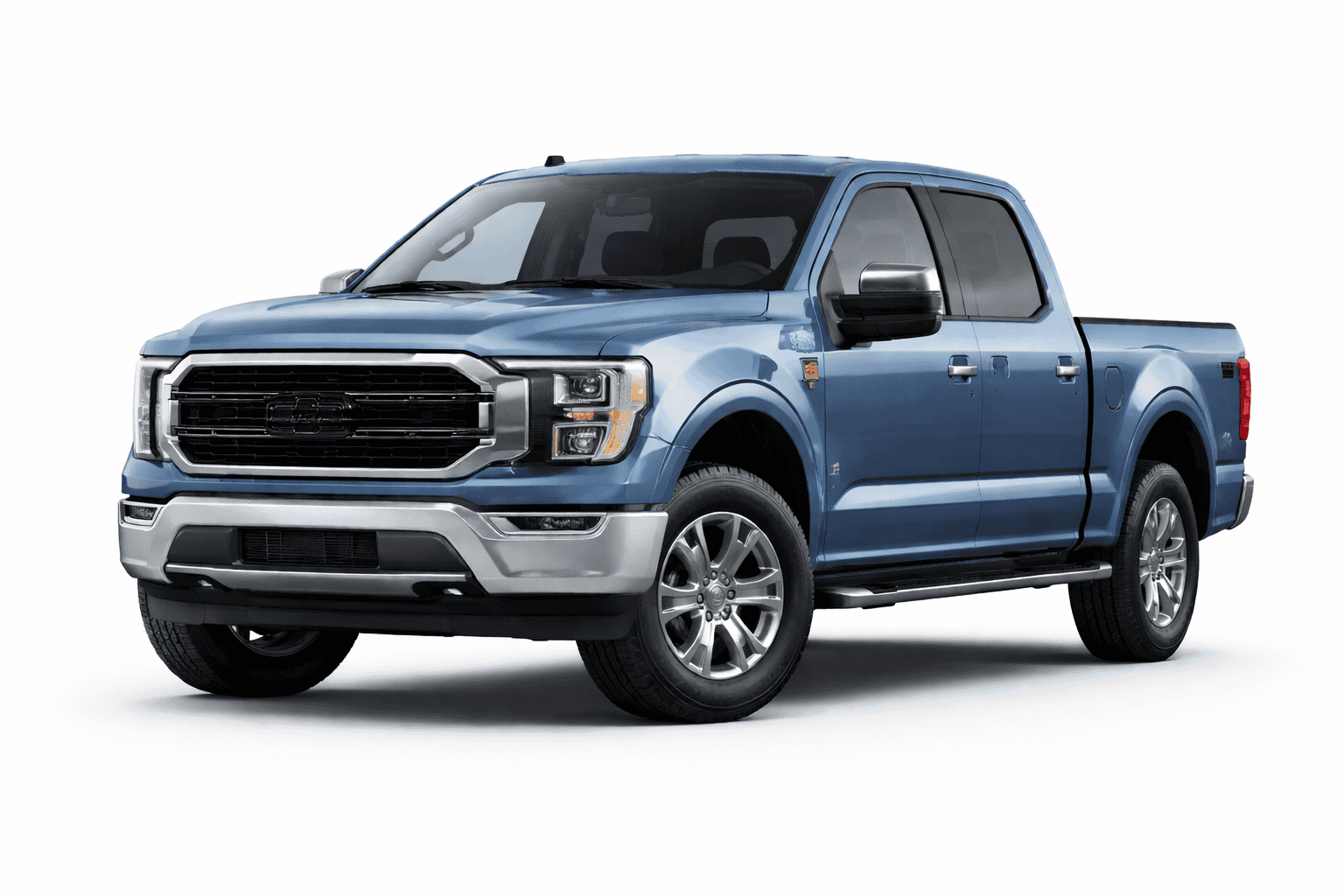
To begin with, the Ford F 150 sits at the center of the full size truck segment, balancing work capability with everyday usability. First introduced in 1975 as part of the sixth generation Ford F Series lineup, it filled the gap between the F 100 and F 250 and quickly became the most popular configuration. By 1981, the F Series became the best selling truck line in the United States, a position it has maintained for decades according to Ford Motor Company sales records.
From a market standpoint, the F 150 competes directly with models like the Chevrolet Silverado from General Motors and the Ram 1500 from Stellantis. Buyers typically compare these trucks based on towing capacity, engine efficiency, and long term ownership costs. What keeps the F 150 relevant is its wide configuration range, allowing it to serve both commercial fleets and private owners without forcing a single use case.
Key Details
At its core, the F 150 is designed to offer flexibility across multiple use cases. This is reflected in both its mechanical setup and trim structure.
Multiple powertrain options, including hybrid
High towing and payload capability
Modern interior with large screens and driver assist systems
Wide trim range from work focused to premium
Strong resale demand across used vehicle markets
Data from Kelley Blue Book and Edmunds consistently shows that full size trucks retain value better than many passenger vehicles, especially when equipped with widely used configurations like mid level trims and common engine options.
Engine and Performance Options
Looking at the powertrain lineup, the F 150 offers one of the broadest engine selections in its class. This strategy began to shift in 2011 when Ford introduced EcoBoost turbocharged engines, developed to improve fuel efficiency without sacrificing torque. That move influenced competitors, with both GM and Stellantis later expanding their own turbocharged offerings.
Available Engines
Engine
Horsepower
Torque (lb ft)
Notes
3.3L V6
~290 hp
~265
Entry level, fleet focused
2.7L EcoBoost V6
~325 hp
~400
Balanced performance and efficiency
5.0L V8
~400 hp
~410
Traditional setup, higher payload strength
3.5L EcoBoost V6
~400 hp
~500
Best for towing performance
3.5L PowerBoost Hybrid
~430 hp
~570
Highest torque, integrated electric assist
What stands out here is torque delivery. Turbocharged engines reach peak torque at lower RPM, which improves towing response and acceleration under load.
Driving Experience
On the road, the F 150 uses a 10 speed automatic transmission co developed by Ford and General Motors in 2017. This transmission allows tighter gear spacing, improving both fuel efficiency and performance consistency. Handling remains stable for a full size truck, especially with available four wheel drive systems. Higher trims may include adaptive suspension setups, which adjust damping based on road conditions and load weight.
Towing and Payload
When evaluating capability, the F 150 is engineered around real world work demands. Over time, Ford has focused heavily on improving towing technology rather than just increasing raw numbers.
Capability Metric
Approximate Value
Max towing
Up to 13,500 lbs
Max payload
Up to 2,400 lbs
Key systems that support these numbers include:
Pro Trailer Backup Assist
Integrated trailer brake controller
Onboard payload scales
Smart hitch alignment guidance
In everyday driving, these features reduce user error, especially for drivers who tow occasionally rather than daily.
Interior and Technology
Stepping inside, the F 150 interior has evolved significantly over the past decade. The shift accelerated in 2021 with the introduction of a fully redesigned cabin focused on digital integration and workspace functionality.
Interior Highlights
Center touchscreen up to 12 inches
Digital instrument cluster on select trims
Fold flat center console for work use
Under seat lockable storage
Available leather seating on higher trims
Tech and Connectivity
Ford’s SYNC infotainment system has gone through multiple iterations since its original launch in 2007 in partnership with Microsoft. Current versions support:
Apple CarPlay and Android Auto
Over the air updates
360 degree camera system
Pro Power Onboard generator system
The onboard generator feature, introduced in 2021, allows the truck to supply up to 7.2 kW of power, which is enough to run tools, appliances, or small job site equipment.
Safety and Driver Assistance
From a safety standpoint, the F 150 integrates driver assistance systems that align with industry standards set by organizations like the National Highway Traffic Safety Administration.
Top down diagram of a pickup truck backing up with a trailer, showing curved intended path and trailer backup assist control.
Standard Features
Automatic emergency braking
Lane keeping assist
Blind spot monitoring on most trims
Available Upgrades
Feature
Availability
Adaptive cruise control
Optional
Intersection assist
Optional
Evasive steering assist
Optional
Advanced parking assist
Optional
These systems rely on a combination of radar sensors, cameras, and software calibration, similar to setups used across competing trucks.
Trim Levels Explained
Across the lineup, the F 150 offers a wide trim structure that allows buyers to scale from basic utility to premium comfort. This approach has been consistent since the early 2000s when Ford expanded trim differentiation to compete more directly with luxury oriented trucks.
Common Trims
Trim
Positioning
XL
Work focused, minimal features
XLT
Adds essential comfort and tech
Lariat
Balanced mid tier option
King Ranch
Distinct styling with premium materials
Platinum
Technology focused luxury
Limited
Highest trim with full feature set
Raptor / Raptor R
Off road performance specialization
In some cases, trim selection impacts long term ownership cost more than engine choice due to differences in repair complexity and component pricing.
Fuel Economy
Fuel efficiency varies depending on engine and drivetrain configuration. Since 2011, Ford has prioritized turbocharged engines to improve efficiency without reducing capability.
Engine Type
Estimated Highway MPG
V6 EcoBoost
22 to 26 MPG
V8
17 to 21 MPG
Hybrid
24 to 26 MPG
The hybrid system combines a twin turbo V6 with an electric motor, allowing better fuel usage in stop and go conditions.
Ownership Costs and Reliability
Over time, the F 150 has maintained stable ownership cost patterns relative to other full size trucks. Data from repair cost aggregators and insurance platforms shows that maintenance expenses remain predictable due to widespread parts availability.
Key ownership factors:
Strong resale value supported by high demand
Extensive dealership and service network
Insurance varies based on trim and usage
Hybrid models may reduce fuel expenses
In many cases, resale value is influenced by configuration. Mid range trims with common engines tend to perform better in the used market due to broader buyer demand.
From a usage perspective, the F 150 fits a wide range of drivers due to its configurability.
Contractors requiring towing and payload capacity
Families needing space and daily comfort
Outdoor users hauling trailers or equipment
Buyers looking for hybrid capability in a truck
Drivers wanting multiple trim and engine choices
This flexibility is one of the main reasons it continues to dominate sales charts year after year.
Conclusion
Overall, the Ford F 150 continues to define the full size truck category through a combination of historical development, engineering updates, and market adaptability. Its evolution from a mid range F Series option in 1975 to a segment leader reflects both consumer demand and manufacturer strategy. For buyers comparing trucks today, the F 150 stands out not because of a single feature, but because of how well it balances capability, technology, and long term usability across multiple configurations.
This platform analyzes depreciation trends, resale value behavior, and long-term ownership costs, helping drivers understand how mileage, maintenance, and timing shape real financial outcomes.