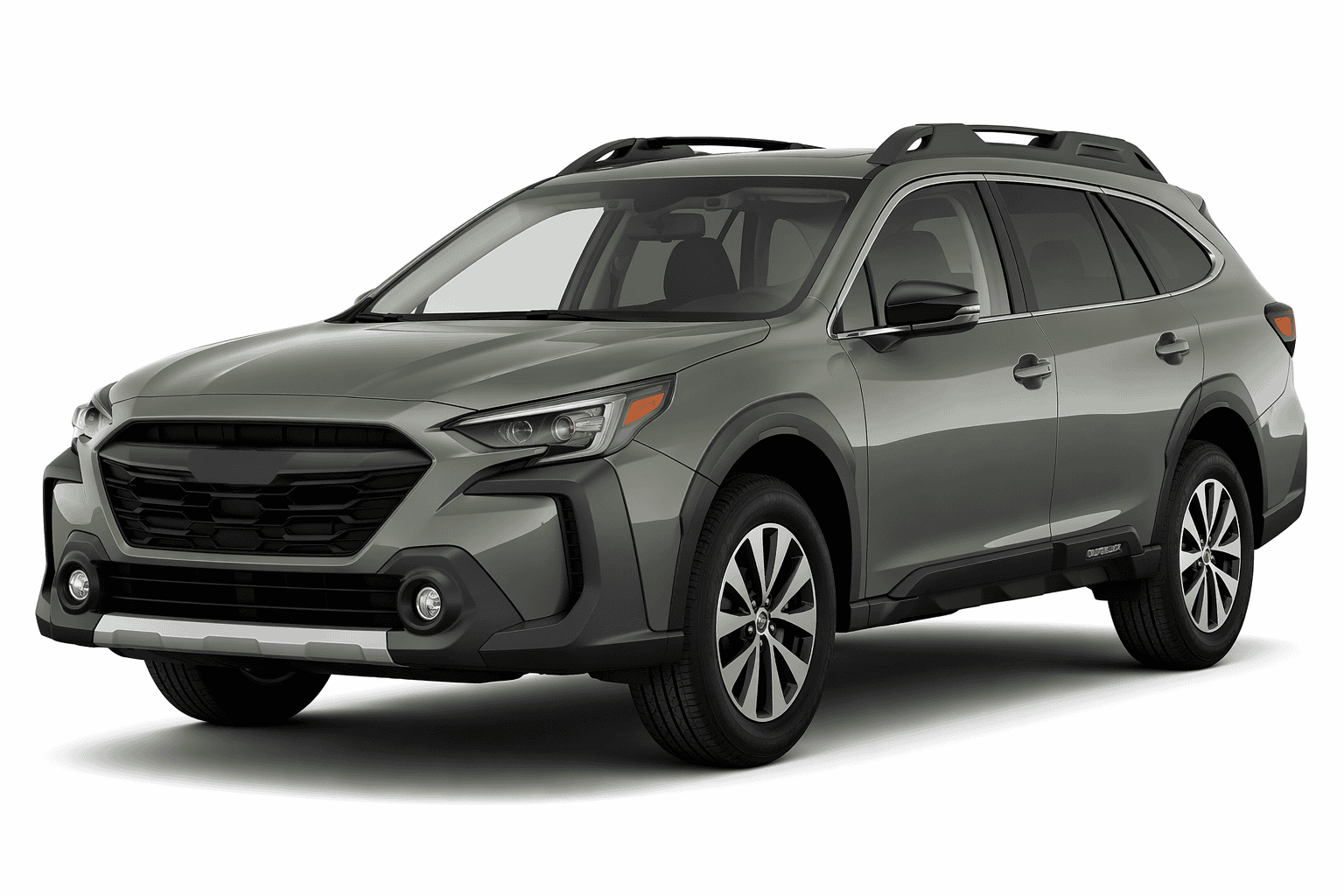
First introduced in 1994 as a variant of the Subaru Legacy, the Outback helped define the crossover category before it became mainstream. Subaru Corporation, headquartered in Japan, positioned the Outback as a wagon with increased ground clearance and all wheel drive capability, targeting drivers who needed utility without moving into full size SUVs.
Today, the Outback operates in a competitive segment tracked by organizations like Kelley Blue Book and Consumer Reports, where it is evaluated against models such as the Toyota RAV4 and Honda CR V. Its design continues to reflect its original purpose, combining passenger car ride comfort with light off road capability and standard all wheel drive across all trims.
Pros
Standard AWD on every trim improves traction in rain, snow, and uneven road conditions without requiring upgrades
Ride comfort and long distance stability benefit from a lower center of gravity and suspension tuned for rough surfaces
Spacious interior with flexible cargo layout makes it easier to carry larger or irregular items compared to many compact SUVs
Higher ground clearance supports light off road driving and uneven terrain without needing specialized equipment
Resale value remains relatively stable, supported by consistent demand in all weather markets and long term ownership trends
Cabin remains quiet under normal driving conditions, with supportive seating designed for extended trips
Cons
Base engine delivers moderate performance, with acceleration typically slower than segment leaders
CVT transmission prioritizes efficiency, which can reduce responsiveness during rapid acceleration or heavy load conditions
Touchscreen system in earlier models may respond slower, especially in first versions of larger display setups
Turbocharged models increase performance but require premium fuel and raise overall operating costs
Who the Outback Is Best For
From a practical standpoint, the Outback is designed for drivers who want versatility without the bulk of a traditional SUV. It fits well into daily commuting, long distance travel, and light off road scenarios where traction and clearance matter.
Drivers in colder climates or regions with frequent weather changes tend to benefit most, largely because Subaru has made symmetrical all wheel drive standard across its lineup since the early 2000s. Buyers focused on performance or towing capacity may find better alignment with alternatives like the Mazda CX 50.
Trim Levels and Features
Trim
Key Features
Engine Type
AWD
Base
Essential safety and infotainment
2.5L
Standard
Premium
Added comfort and tech
2.5L
Standard
Limited
Leather and premium materials
2.5L
Standard
Touring
Full feature package
2.5L
Standard
Wilderness
Off‑road tuning and higher clearance
2.4L Turbo
Standard
XT Models
Turbo performance variants
2.4L Turbo
Standard
Trim structure has evolved as Subaru responded to competitive pressure from brands like Hyundai Motor Group, which expanded feature offerings across lower trims starting around 2018.
Performance and Driving Experience
Vehicle
Horsepower
Torque
0 to 60 mph
Outback 2.5L
182 hp
176 lb ft
Around 8.5 sec
Outback Turbo
260 hp
277 lb ft
Around 6.5 sec
RAV4
203 hp
184 lb ft
Around 8.0 sec
CR‑V
190 hp
179 lb ft
Around 7.8 sec
CX‑50
187 hp
186 lb ft
Around 7.8 sec
Looking at performance data, the Outback prioritizes stability and traction over outright speed. The turbocharged models introduced in recent generations provide a noticeable improvement in acceleration, particularly during highway passing.
In some cases, drivers report that the CVT delivers smoother power at constant speeds but can feel less responsive during rapid throttle inputs. This reflects Subaru’s long standing focus on efficiency and drivetrain balance rather than aggressive tuning.
Fuel Economy
Fuel economy remains competitive, especially considering that all models include all wheel drive as standard equipment. Data from the EPA and independent testing organizations shows the Outback maintaining efficiency levels similar to front wheel drive competitors. Over time, this efficiency helps reduce total fuel expenses, particularly for drivers covering higher annual mileage.
MPG By Engine Type
Engine Type
MPG Range
2.5L Engine
26 to 33 mpg
2.4L Turbo
23 to 29 mpg
Interior Space and Cargo Capacity
The Outback’s wagon design provides a lower load floor and wider cargo opening compared to many compact SUVs. This makes it easier to load larger or heavier items without lifting them as high.
Vehicle
Rear Cargo
Max Cargo
Outback
920 L
2140 L
CR‑V
1110 L
2146 L
RAV4
1060 L
1976 L
Forester
1074 L
2155 L
CX‑50
889 L
1595 L
For instance, the extended roofline allows for more usable vertical space, which is beneficial when transporting outdoor equipment or luggage.
Technology and Safety
Modern Outback models include Subaru’s EyeSight driver assistance system, which has been refined over multiple generations since its introduction in the late 2000s. Safety ratings from organizations such as the Insurance Institute for Highway Safety reflect strong crash protection performance.
Key features include:
Adaptive cruise control
Lane keeping assist
Pre collision braking
Traction and stability control systems
Large touchscreen interface in newer models
Higher trims also incorporate upgraded audio systems supplied by Harman Kardon, a well known automotive audio manufacturer.
Generations Overview
Generation
Years
Key Changes
6th Gen
2020 to Present
New platform, improved safety tech
5th Gen
2015 to 2019
Refinement and interior updates
4th Gen
2010 to 2014
Larger body, improved comfort
Early Models
1994 to 2009
Wagon roots, AWD identity
The 2020 redesign marked a major shift with a new platform architecture, aligning with broader industry transitions toward modular vehicle platforms used by manufacturers like Toyota and Volkswagen.
Best Years and Years to Avoid
Certain model years show more consistent reliability patterns based on aggregated ownership data and service records.
Best years:
2018 to 2019
2020 to present
Years to watch:
2013 to 2014
Early 2015 models
In typical ownership, earlier models are more likely to show oil consumption concerns and minor electrical issues, which were addressed in later updates.
Common Problems
While the Outback is widely regarded as reliable, recurring issues have been documented across different model years. These include oil consumption in older engines, infotainment glitches in early touchscreen systems, and wear related suspension components at higher mileage. Newer models show fewer widespread issues due to improved engine design, updated electronics, and better manufacturing consistency introduced after the 2020 redesign.
Maintenance Snapshot
Service Item
Interval
Notes
Oil Change
5000 to 7500 miles
Frequent changes help engine longevity
Brake Service
25000 to 40000 miles
Depends on driving conditions
Coolant
Around 100000 miles
Long life coolant used
Spark Plugs
Around 100000 miles
Iridium components
CVT Fluid
30000 to 60000 miles
Important for transmission lifespan
Routine maintenance plays a critical role in long term durability, particularly for the CVT system which benefits from earlier fluid service intervals.
Ownership Costs
Ownership cost analysis shows the Outback performs well in categories such as fuel, maintenance, and depreciation. Data from Kelley Blue Book and Consumer Reports indicates lower than average depreciation compared to many competitors in the same segment. In many cases, predictable maintenance schedules and strong resale demand help offset long term ownership expenses, especially for buyers planning to keep the vehicle for extended periods.
Resale Value
Resale value remains one of the Outback’s stronger financial attributes. Vehicles with consistent service history and moderate mileage tend to retain value better than average within the compact crossover segment. This trend is influenced by Subaru’s brand perception and demand in regions where all weather capability is a priority.
Competitors
The Outback competes with several well established models:
Toyota RAV4
Honda CR V
Subaru Forester
Mazda CX 50
Hyundai Tucson
Each model targets different priorities, with Toyota emphasizing resale value, Honda balancing efficiency and comfort, and Mazda focusing on driving dynamics.
Final Verdict
The Subaru Outback delivers a balanced combination of comfort, space, and all weather capability. It does not lead in performance or towing, but it consistently meets the needs of buyers looking for practicality and reliability. For drivers prioritizing usability, efficiency, and long term ownership stability, the Outback remains a practical and data supported choice.
This platform analyzes depreciation trends, resale value behavior, and long-term ownership costs, helping drivers understand how mileage, maintenance, and timing shape real financial outcomes.