Overview
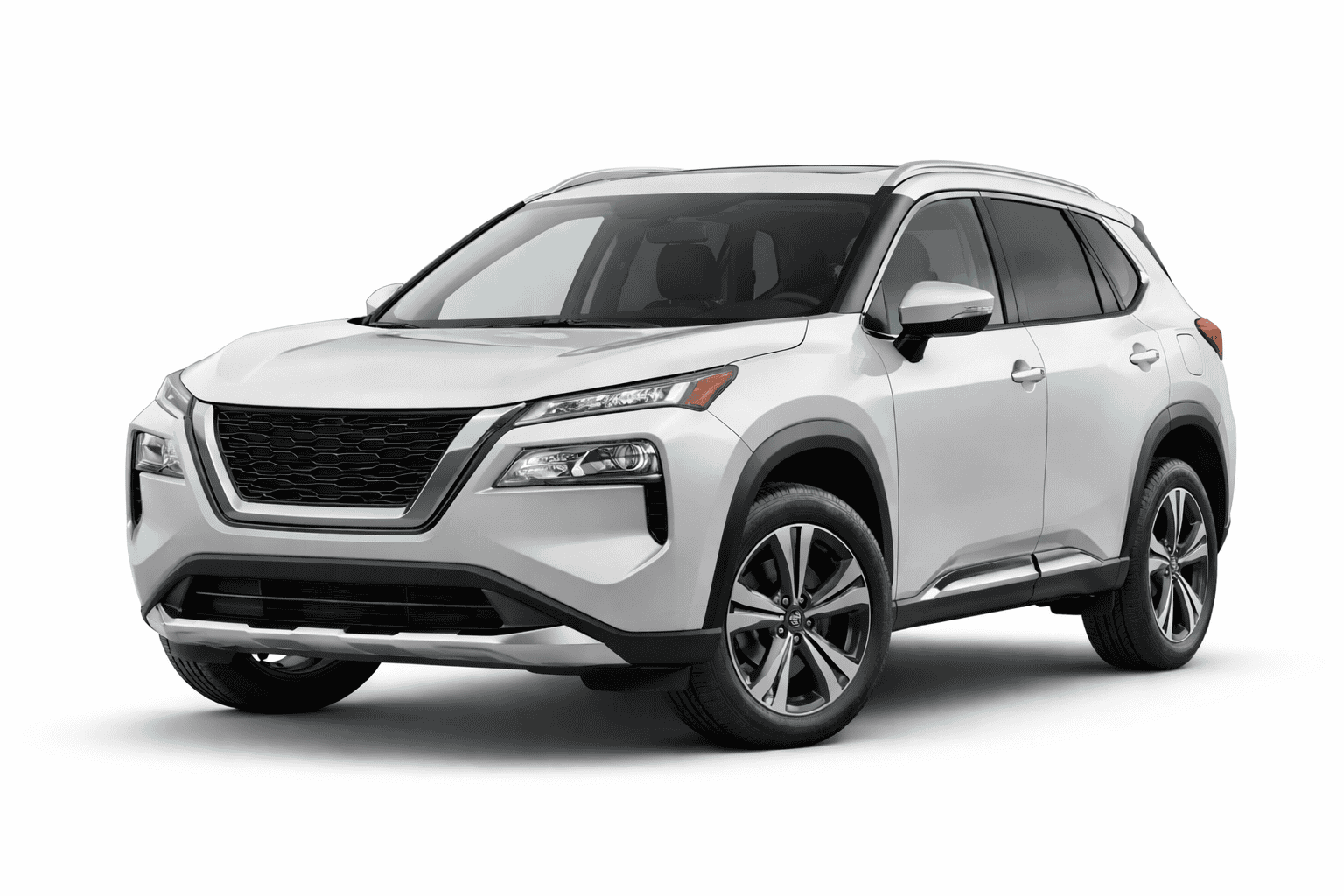
First introduced in 2007 for the 2008 model year, the Nissan Rogue entered a rapidly growing compact SUV segment dominated by the Honda CR V and Toyota RAV4. Nissan positioned the Rogue as a comfort focused alternative rather than a performance leader. Over time, it has remained a consistent option for buyers looking for space, fuel efficiency, and straightforward ownership.
Today, the Rogue continues to compete as a value driven compact SUV, offering predictable ownership costs and competitive efficiency compared to others in the segment.
Key Strengths and Trade Offs
Evaluating the Rogue requires looking at both strengths and limitations. It does not dominate one category but instead delivers a balanced mix.
What the Rogue Does Well
- Smooth and quiet ride quality
- Comfortable seating with strong long distance support
- Competitive fuel economy
- Good safety ratings across most model years
- Lower ownership and maintenance costs
- Modern interior design on 2021 and newer models
Where It Falls Short
- Below average acceleration compared to rivals
- CVT can feel unresponsive under load
- Earlier models had more transmission related complaints
- Resale value trails Toyota and Honda
Who Should Buy the Nissan Rogue
The Rogue fits buyers focused on comfort and efficiency rather than performance.
Best suited for:
- Families needing space and safety
- Daily commuters focused on fuel economy
- Drivers who prefer a quiet, smooth ride
- Buyers comparing value versus features
- Those wanting a modern interior without luxury pricing
Not ideal for:
- Performance focused drivers
- Buyers wanting quicker acceleration or sharper handling
Trim Levels Breakdown
The Rogue’s trims follow a clear progression.
- S — AWD available, about 27–30 mpg
- SV — added comfort and tech, about 28–31 mpg
- SL — leather and premium features, about 28–31 mpg
- Platinum — full tech and safety suite, about 28–31 mpg
- Hybrid (older models) — around 34 mpg
Performance and Driving Experience
The Rogue is tuned for smoothness and efficiency.
Performance Snapshot
- Rogue: about 181 hp, 181 lb ft, 0–60 mph in ~8.2–8.5 seconds
- RAV4: about 203 hp, 184 lb ft, about 8.0 seconds
- CR V: about 190 hp, 179 lb ft, about 7.8 seconds
- Tucson: about 187 hp, 178 lb ft, about 8.5 seconds
- CX 5: about 187 hp, 186 lb ft, about 7.8 seconds
The Rogue delivers enough power for daily driving. The CVT focuses on smooth acceleration rather than aggressive response, especially during highway passing.
Fuel Economy
Fuel efficiency is one of the Rogue’s main advantages.
- Most models return about 27–33 mpg depending on drivetrain
Real World Fuel Economy
- Rogue: 30–33 mpg FWD, 27–30 mpg AWD
- RAV4: 27–30 mpg FWD, 25–28 mpg AWD
- CR V: 28–32 mpg FWD, 27–30 mpg AWD
- Tucson: 26–30 mpg FWD, 24–28 mpg AWD
- Forester: 26–29 mpg
The CVT helps maintain lower engine speeds during highway driving, which improves efficiency over time.
Interior Space and Cargo Capacity
The Rogue offers strong interior space for the segment.
- Behind rear seats: about 1,033 L
- Maximum cargo space: about 2,100 L
This places it near the top of the segment for usable space, slightly below the CR V but ahead of several competitors.
Technology and Safety Features
Modern Rogue models include a solid set of safety features.
- Automatic emergency braking
- Blind spot monitoring
- Lane keeping assist
- Adaptive cruise control
- 360 degree camera system on higher trims
Infotainment improved significantly after the 2021 redesign, with better screen responsiveness and updated interface design.
Nissan Rogue Generations
The Rogue has evolved through multiple generations.
- 3rd Generation (2021 to present) — major redesign with improved quality and technology
- 2nd Generation (2014–2020) — strong value but some CVT concerns
- 1st Generation (2008–2013) — basic design with older technology
Best Years and Years to Avoid
Some model years stand out more than others.
Best Years
- 2017–2020 — more refined with fewer issues
- 2021–Present — improved platform and build quality
Years to Be Careful With
- 2013–2016 — higher CVT related complaints
Common Nissan Rogue Problems
Common issues include:
- CVT hesitation or shudder, especially in older models
- HVAC blend door failures
- Electrical glitches in earlier generations
- Wind noise at highway speeds
Newer models show fewer widespread issues due to improvements introduced in 2021.
Maintenance Snapshot
Routine maintenance plays a key role in long term reliability.
- Oil and filter: every 5,000–7,500 miles
- Brake service: 25,000–40,000 miles
- Coolant: around 100,000 miles
- Spark plugs: around 100,000 miles
- CVT fluid: 30,000–60,000 miles
- Air filter: 15,000–30,000 miles
- Cabin filter: 15,000–25,000 miles
Ownership Costs
Ownership costs remain predictable.
- Strong fuel efficiency
- Moderate insurance rates
- Affordable maintenance
- Lower repair frequency on newer models
Overall, costs remain competitive within the segment.
Resale Value
The Rogue holds value reasonably well but trails some competitors.
- Newer models retain value better
- Stronger demand improves resale stability
Competitors to Consider
- Toyota RAV4
- Honda CR V
- Hyundai Tucson
- Subaru Forester
- Mazda CX 5
Each competitor emphasizes different strengths such as reliability, driving feel, or AWD capability.
Conclusion
The Nissan Rogue is a practical compact SUV focused on comfort, efficiency, and ease of ownership. It does not lead in performance, but it delivers consistent results for everyday driving. Newer models offer improved refinement and technology, making them the strongest choice for buyers looking for a reliable and straightforward vehicle.