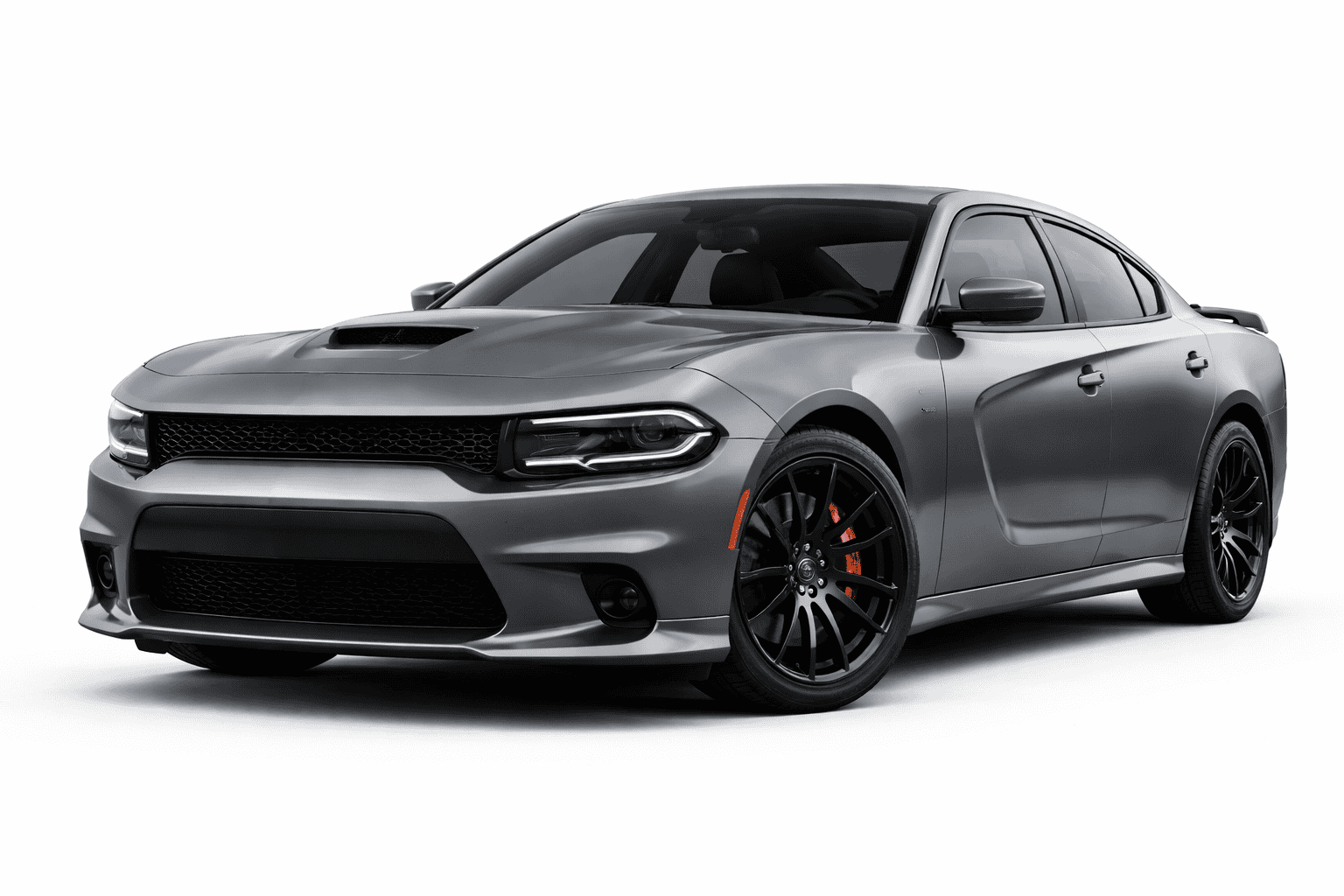
From the moment it returned to production in 2006, the Dodge Charger reintroduced the full size American performance sedan at a time when most brands were moving away from large rear wheel drive platforms. That decision by Stellantis (formerly Fiat Chrysler Automobiles) kept the muscle sedan segment alive, and today the Charger remains one of the few options combining space with real horsepower.
In practical terms, buyers are drawn to the Charger for its mix of size, performance, and usability. Industry pricing and resale trends from sources like Kelley Blue Book show that demand remains steady, especially for V8 models where depreciation tends to stay within 35% to 45% over 5 years, depending on condition and trim.
- Large cabin with real rear seat space
- Engine range from 300 hp to over 700 hp
- Highway fuel economy up to 30 mpg (V6 models)
- Strong resale demand in performance trims
Engine Options and Performance
Looking at the lineup, the Charger offers one of the widest power ranges in the sedan market. Each engine changes ownership cost, fuel usage, and long term maintenance expectations. Starting with the base option, the 3.6L Pentastar V6 produces around 292 to 300 hp and delivers up to 30 mpg highway, making it the most efficient configuration. This engine has been widely used across multiple Chrysler and Jeep platforms since 2011, which helps explain its consistent reliability and lower repair frequency. Moving up, the V8 lineup defines the Charger’s identity:
- 5.7L HEMI V8
- Around 370 hp
- Fuel economy averages 16 to 25 mpg
- Balanced cost and performance
- 6.4L 392 HEMI V8
- Around 485 hp
- 0 to 60 mph in roughly 4.3 seconds
- Higher brake and tire wear costs
- 6.2L Supercharged Hellcat V8
- 707 to 797 hp
- Fuel economy drops to around 12 to 21 mpg
- Premium fuel required at all times
For buyers comparing long term fuel costs, using tools like the fuel calculator can help estimate yearly spending based on driving habits.
Driving Experience
On the road, the Charger behaves differently depending on engine choice and trim setup. The platform itself is built for stability, which becomes noticeable at highway speeds where the car maintains a steady, planted feel even above 70 mph. V6 models lean toward comfort, with softer suspension tuning and quieter operation. In contrast, V8 trims add weight and stiffness, which changes handling dynamics and increases road feedback.
- V6 models prioritize smoothness and low cabin noise
- 5.7L models introduce a noticeable exhaust tone and stronger acceleration
- 392 models feel more aggressive with firmer suspension
- Hellcat models deliver extreme acceleration with supercharger response
Because driving style directly affects wear, especially on performance trims, resources like how driving habits affect long term vehicle reliability help explain why aggressive use can increase annual costs by 20% to 40%.
Interior and Comfort
Inside the cabin, the Charger focuses on space and usability rather than complexity. Rear seat legroom measures over 40 inches, which is higher than many midsize sedans, making it suitable for families or long trips. The layout has remained consistent since its major redesign in 2011, when Dodge introduced the current dashboard architecture and Uconnect system, developed by Chrysler’s in house software division. Key interior highlights include:
- Touchscreen sizes up to 8.4 inches
- Trunk capacity around 16.5 cubic feet
- Dual zone climate control standard on most trims
- Heated seats and steering wheel available
Higher trims add features like leather seating, upgraded audio systems from Alpine or Harman Kardon, and performance specific displays.
Fuel Economy and Running Costs
Fuel consumption varies widely, making engine choice one of the most important ownership decisions. The difference between a V6 and Hellcat model can exceed $2,000 to $3,500 per year in fuel costs depending on mileage.
- V6 models average 19 to 30 mpg
- 5.7L V8 averages 16 to 25 mpg
- 392 averages 15 to 24 mpg
- Hellcat averages 12 to 21 mpg
Maintenance costs also scale with performance. While V6 models typically average around $500 to $700 per year, high performance trims can exceed $1,200 to $2,000 annually due to tires, brakes, and fluid requirements. To better project these expenses, tools like the maintenance cost calculator and ownership cost calculator give a clearer picture of long term spending.
Reliability and Common Issues
When looking at long term ownership, the Charger shows consistent reliability trends, especially for the V6 and 5.7L engines. Data across multiple repair databases indicates many models reaching 200,000 miles with regular maintenance. That said, certain issues appear more frequently as mileage increases:
- Suspension wear after 80,000 to 120,000 miles
- Electrical sensor issues affecting warning lights
- Brake wear, especially on heavier V8 trims
- Tire replacement costs exceeding $800 to $1,500 per set on wide performance tires
For buyers evaluating used models, combining inspection results with tools like the repair cost estimator and used car inspection checklist to avoid costly mistakes helps reduce risk.
Safety and Winter Driving
In colder climates, drivetrain choice plays a major role in usability. The Charger is one of the few large sedans offering all wheel drive, but only on V6 models. Rear wheel drive V8 models can still operate in winter conditions, though traction becomes limited without proper tires. According to safety data from organizations like the NHTSA, vehicle weight and stability contribute to better highway control, especially in adverse conditions. Available safety features include:
- Adaptive cruise control
- Blind spot monitoring
- Forward collision warning
- Lane departure warning
For drivers in snow heavy regions, pairing AWD with winter tires significantly improves control and reduces stopping distance by up to 20% to 30%.
Best Trims for Different Buyers
Choosing the right trim depends on how the vehicle will be used daily. Each configuration targets a different type of driver.
- Daily driving and commuting
- V6 SXT or GT
- Lower fuel cost and smoother ride
- Balanced performance and value
- R T 5.7L HEMI
- Strong power without extreme maintenance costs
- Performance focused buyers
- Scat Pack 392
- Higher output with noticeable cost increase
- Maximum performance
- Hellcat models
- Highest power but also highest operating costs
For buyers comparing trims and long term value, resources like the vehicle depreciation guide and trade in value estimator help determine how each model holds value over time.
Used Market and Depreciation
In the resale market, the Charger behaves differently depending on engine and condition. V6 models tend to follow standard depreciation patterns, while V8 models often retain stronger value due to limited supply and enthusiast demand. On average:
- V6 models lose around 40% to 50% value in 5 years
- V8 models often retain more, around 35% to 45%
- Hellcat models can vary widely based on mileage and condition
Because pricing can shift based on usage and history, tools like the depreciation calculator and how accident history affects car value help buyers determine if a listing reflects real market value.
Who Should Buy the Dodge Charger
For buyers evaluating whether the Charger fits their needs, the decision comes down to priorities. It remains one of the few sedans combining space, power, and traditional rear wheel drive dynamics.
- Strong choice for drivers wanting 300 hp to 700+ hp
- Practical for families needing space and trunk capacity
- Suitable for highway driving with stable ride quality
- Less ideal for buyers prioritizing fuel efficiency under 25 mpg combined
Ultimately, the Charger fills a niche that has largely disappeared since the early 2000s, when most manufacturers shifted toward smaller, more efficient platforms. For those who want a full size sedan with real performance capability, it continues to stand apart.