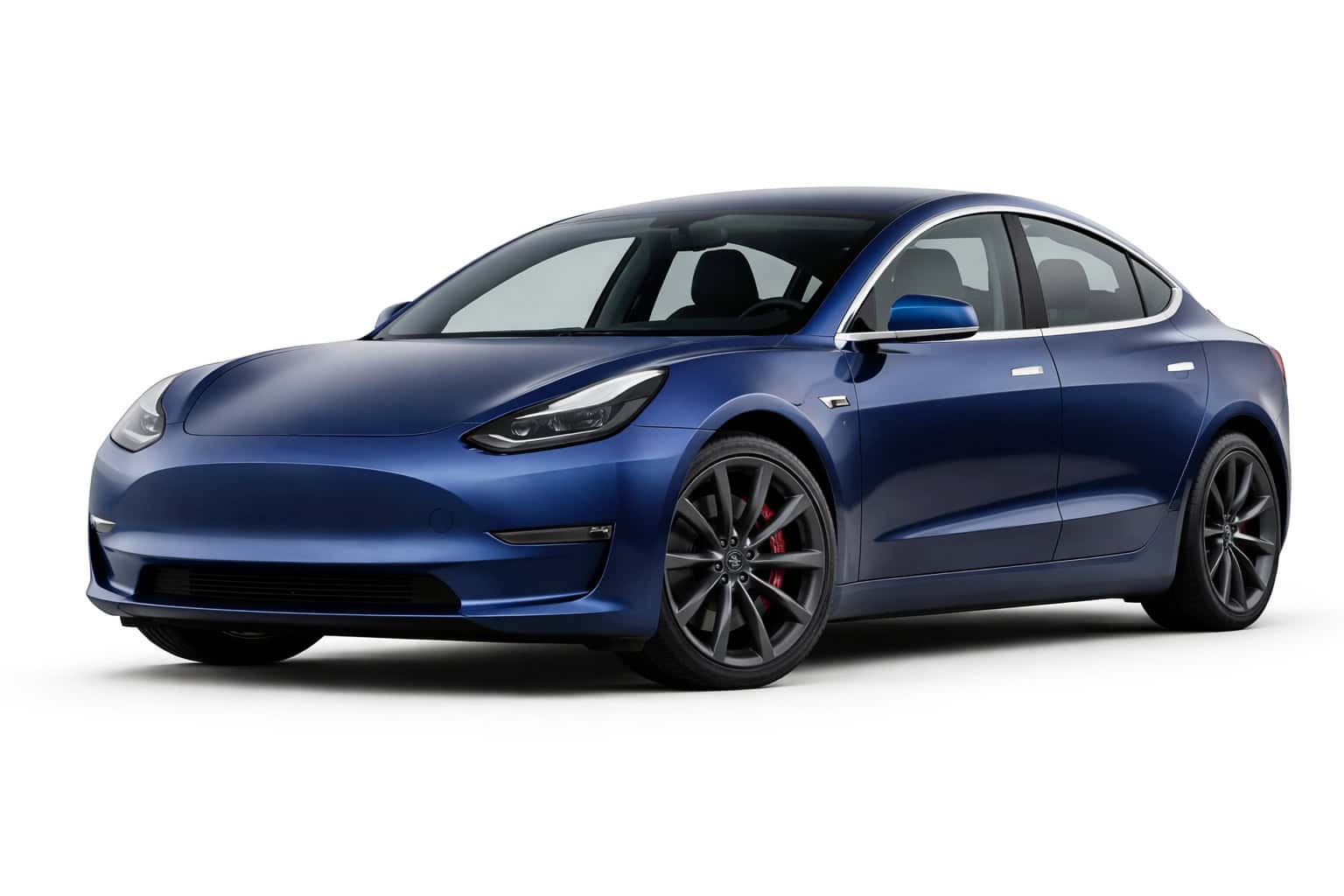
Tesla Model 3 Overview
When Tesla introduced the Model 3 in 2017, it marked a shift in the automotive market by making long range electric vehicles accessible at a lower entry price compared to earlier EVs. Built by Tesla, Inc., the Model 3 quickly became one of the highest volume electric vehicles globally, with annual sales exceeding 400,000 units in peak production years. In practical terms, buyers are drawn to the Model 3 for its combination of efficiency, range, and lower operating costs. Market data from Kelley Blue Book resale values shows EV demand has remained strong, with depreciation typically ranging between 30% to 45% over 5 years, depending on battery condition, mileage, and trim level.
- Real world range between 220 to 330 miles
- Energy cost per mile often 60% to 80% lower than gasoline vehicles
- Minimal routine maintenance compared to internal combustion engines
Powertrain, Range and Real World Performance
Looking at the lineup, each Model 3 version delivers a different balance of efficiency and acceleration. Despite updates over the years, the core performance characteristics remain consistent. Starting with the base configuration, the Rear Wheel Drive model offers the highest efficiency. Real world range typically falls between 220 and 260 miles, with acceleration from 0 to 60 mph around 5.8 seconds, making it suitable for daily commuting with the lowest energy cost per mile.
Moving into dual motor configurations:
- Long Range AWD
- Real world range: 290 to 330 miles
- 0 to 60 mph: about 4.2 seconds
- Balanced for highway driving and long distance travel
- Performance
- Real world range: 260 to 300 miles
- 0 to 60 mph: about 3.1 seconds
- Higher tire and energy consumption under aggressive driving
Cold weather remains a key factor. Studies from organizations like the U.S. Department of Energy show EV range can drop between 15% and 30% in winter due to battery and cabin heating demands.
Charging: Home, Public and Supercharging
One of the defining advantages of the Model 3 comes from its charging ecosystem, particularly Tesla’s proprietary network introduced in 2012 and expanded globally. At home, Level 2 charging typically adds between 30 and 44 miles per hour, allowing most drivers to recover a full daily commute overnight. Electricity costs vary, but average energy cost per mile is often 3 to 5 times lower than gasoline based on national averages.
- Home charging delivers the lowest cost per mile
- Public Level 2 chargers are slower but widely available
- Supercharging provides rapid charging for long trips
Supercharging performance:
- 10% to 80% charge in 25 to 30 minutes
- Charging speeds depend on battery temperature and station capacity
- Preconditioning improves charging efficiency and reduces time
To estimate charging and energy costs more accurately, tools like the fuel calculator and ownership cost calculator help project long term expenses based on driving patterns.
Driving Experience
Behind the wheel, the Model 3 feels responsive due to instant torque delivery and a low center of gravity created by its battery placement. This results in stable handling and reduced body roll compared to many gasoline sedans. Driving feel varies slightly by configuration. The RWD version prioritizes smoothness and efficiency, while dual motor versions increase traction and acceleration, especially in poor weather conditions.
- RWD offers balanced, predictable handling
- AWD improves grip in rain and snow by up to 20% to 30%
- Performance model delivers significantly quicker throttle response
Regenerative braking reduces reliance on traditional brakes, often extending brake life beyond 100,000 miles, depending on driving habits.
Interior, Comfort and Technology
Inside the cabin, the Model 3 focuses on simplicity and digital integration. Since its release, Tesla has minimized physical controls, relying on a central touchscreen that controls most vehicle functions. The system continues to evolve through over the air updates, a feature introduced by Tesla early in its product lifecycle and now widely discussed across the industry. Key interior highlights include:
- Central display measuring 15 inches
- Over the air software updates improving features over time
- Combined trunk and front storage totaling over 15 cubic feet
- Heated seating and climate control standard in most models
Audio systems in higher trims are developed in house by Tesla, offering improved sound quality compared to base configurations.
Efficiency, Running Costs and Maintenance
From a cost perspective, the Model 3 stands out due to lower energy and maintenance requirements. Compared to gasoline vehicles, annual energy savings can exceed $800 to $1,500, depending on mileage and fuel prices. Electric drivetrains eliminate many traditional maintenance items:
- No oil changes
- No transmission servicing
- Fewer moving parts overall
Typical maintenance includes:
- Cabin air filter replacement every 2 years
- Tire replacement every 25,000 to 40,000 miles
- Brake service less frequent due to regenerative braking
Battery degradation is a key concern for buyers. Real world data shows most vehicles retain around 90% to 95% capacity after 100,000 miles, depending on usage and charging habits. To better project these costs over time, tools like the maintenance cost calculator and ownership cost calculator provide more accurate long term estimates.
Reliability and Common Issues
In terms of mechanical reliability, the Model 3 benefits from a simpler drivetrain compared to gasoline vehicles. However, early production years around 2017 to 2019 saw more variability in build quality as Tesla scaled manufacturing. Common issues reported by owners include:
- Panel alignment variations
- Wind noise at highway speeds
- Touchscreen lag or resets
- Window and door calibration adjustments
Most software related issues are addressed through updates, reducing long term repair frequency. Data from service reports suggests major drivetrain failures remain low, typically under 5% occurrence rates across high mileage vehicles. For used buyers, combining inspection results with tools like the used car inspection checklist to avoid costly mistakes and repair cost estimator helps identify potential risks before purchase.
Safety and Winter Driving
Safety testing from organizations like the National Highway Traffic Safety Administration shows the Model 3 achieving top ratings, supported by its rigid structure and low rollover risk. Winter performance varies by drivetrain. AWD models provide improved traction, while RWD versions require proper tire selection to maintain control in snow.
- AWD improves traction by approximately 20% to 30%
- Winter range reduction typically 15% to 30%
- Preconditioning improves battery efficiency and cabin comfort
Driver assistance features include:
- Automatic emergency braking
- Adaptive cruise control
- Lane keeping assist
- Blind spot monitoring
Which Model 3 Should You Buy
Choosing the right version depends on budget, driving habits, and climate conditions.
- Best overall balance
- Long Range AWD
- Combines 300+ miles of range with strong performance
- Best budget option
- RWD
- Lowest purchase price and highest efficiency
- Best for performance
- Performance model
- Acceleration near 3.1 seconds to 60 mph
For buyers comparing long term value, using tools like the vehicle depreciation guide and trade in value estimator helps determine resale expectations based on mileage and condition.
Used Market and Depreciation
In the resale market, the Model 3 shows relatively stable value retention compared to many gasoline sedans. Demand is supported by charging infrastructure and lower operating costs. Typical depreciation patterns:
- Around 30% to 45% loss over 5 years
- Higher mileage reduces value more significantly after 100,000 miles
- Battery condition plays a major role in pricing
External pricing benchmarks from Kelley Blue Book used car values help determine whether listings are aligned with current market conditions. For more precise evaluation, tools like the depreciation calculator and how mileage impacts vehicle depreciation and resale value provide additional context.
Who Should Buy the Tesla Model 3
For many drivers, the Model 3 represents a shift toward lower operating costs and simplified ownership. It works best for those who can charge at home and drive within its range capabilities.
- Ideal for drivers seeking low energy costs and minimal maintenance
- Suitable for commuting with consistent daily mileage
- Strong option for buyers prioritizing technology and efficiency
- Less suitable for buyers needing large cargo space beyond 15 cubic feet
- Less ideal for those without reliable home charging access