Overview
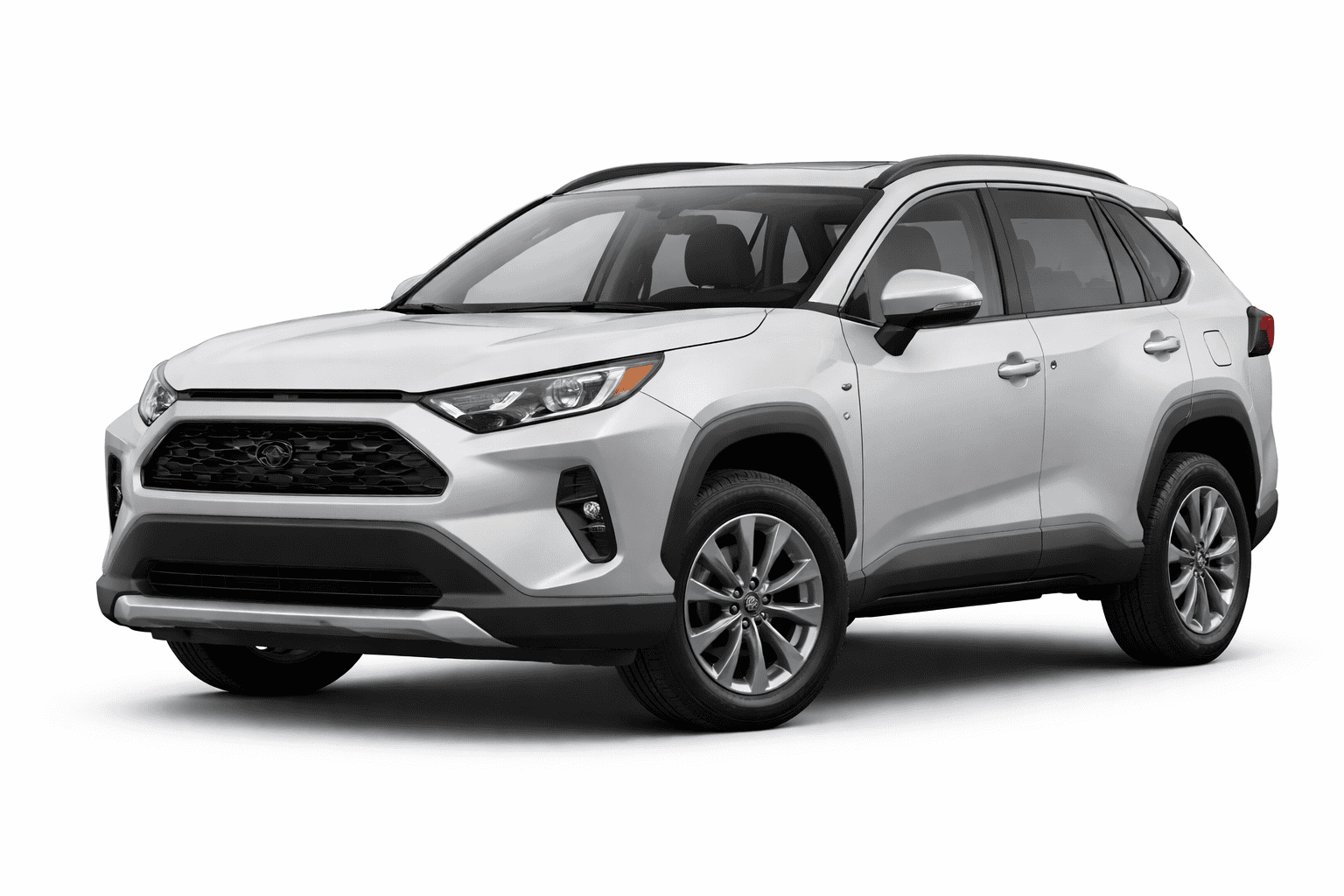
The Toyota RAV4 has been one of the most influential compact SUVs since its debut in 1994, when it helped define the crossover segment. It has remained a top seller worldwide, and in the United States alone, annual sales regularly exceed 475,000 units, placing it among the highest volume vehicles in its class.
Its reputation is built on long term reliability, predictable ownership costs, strong resale value, and a wide range of powertrains that appeal to different types of drivers.
Key Strengths and Trade Offs
The RAV4’s strengths are well documented across long term owner data and reliability studies.
- Predicted reliability often scores between 4 and 5 out of 5
- Average annual maintenance cost is around $429 USD
- Hybrid models deliver about 40 mpg combined
- Resale value typically retains 60–65% after five years
Trade offs include:
- Noticeable engine noise during hard acceleration from the 2.5L gas engine
- A firmer ride compared to some competitors
- Higher used market pricing between 2021 and 2024 due to supply conditions
Who the RAV4 Is Best For
The RAV4 fits a wide range of buyers.
- Families benefit from about 37.5 cubic feet of cargo space behind the rear seats and nearly 70 cubic feet when folded
- Daily commuters benefit from lower fuel costs and consistent maintenance intervals
- Cold climate drivers benefit from AWD systems that improve traction in snow
- Value focused buyers benefit from strong resale value and long term reliability
Trim Levels Overview
The RAV4 lineup covers everything from basic transportation to hybrid efficiency.
- LE — around 30 mpg with optional AWD
- XLE — similar fuel economy to LE
- XLE Premium — around 29 mpg with improved materials
- Adventure / TRD Off Road — roughly 28 mpg with upgraded AWD systems
- Limited — around 29 mpg with full tech features
- Hybrid trims — about 40 mpg combined with standard AWD
- Prime (PHEV) — delivers 94 MPGe with strong performance
Performance and Driving Experience
Performance varies significantly depending on the powertrain.
- Gas model produces 203 horsepower with 0–60 mph in about 8.0 seconds
- Hybrid model produces 219 combined horsepower with 0–60 mph in about 7.3 seconds
- Prime model produces 302 horsepower with 0–60 mph in about 5.7 seconds
Driving characteristics include stable highway behavior, predictable steering, and improved traction with AWD. The ride leans firm, focusing more on control than softness.
Fuel Economy
Fuel economy is one of the RAV4’s strongest advantages.
- Gas AWD models typically deliver 27–30 mpg
- Hybrid models average around 40 mpg combined
- Prime models deliver 94 MPGe with about 42 miles of electric only range
These numbers place it among the more efficient compact SUVs available.
Interior and Cargo Space
The RAV4 focuses on usability and practical design.
- Cargo space offers about 37.5 cubic feet behind the rear seats
- Maximum cargo capacity reaches about 69.8 cubic feet
Higher trims include upgraded materials, while the layout remains simple and functional. It sits slightly below the Honda CR V in maximum space but remains competitive across the segment.
Technology and Safety
Toyota equips the RAV4 with a strong list of standard safety features.
- Adaptive cruise control
- Lane keeping assist
- Automatic emergency braking
These systems have contributed to multiple IIHS Top Safety Pick ratings.
Infotainment improved after 2020, when Apple CarPlay and Android Auto were added, replacing earlier systems that some owners found slower.
Generations Breakdown
The RAV4 has evolved through several major updates.
- 5th Generation (2019 to present) — TNGA platform with improved efficiency and expanded hybrid options
- 4th Generation (2013 to 2018) — improved refinement and updated safety features
- 3rd Generation (2006 to 2012) — larger design with optional V6 engine
Hybrid adoption increased as emissions standards tightened across global markets.
Best Years and Years to Monitor
Some model years stand out based on long term data.
Best years:
- 2016–2018 for refined earlier models
- 2020–2024 for updated platform improvements
- Hybrid models across multiple years
Years to monitor:
- 2019 for transmission hesitation reports
- 2013 for occasional electrical issues
- 2006–2008 for oil consumption concerns
Common Issues Overview
Several issues appear more frequently in specific model years.
- Transmission hesitation in 2019 models
- Fuel tank limitations on 2019–2020 hybrids
- Wind noise at highway speeds
- Infotainment lag on older systems
Most issues are moderate and often resolved through updates or routine service.
Maintenance Snapshot
Maintenance remains predictable.
- Oil changes every 5,000–7,500 miles
- Brake service between 25,000 and 40,000 miles
- Coolant and spark plugs around 100,000 miles
- Hybrid battery lifespan often exceeds 150,000 miles
Ownership Cost Factors
Ownership costs remain relatively low for the segment.
- Lower fuel consumption, especially with hybrid models
- Reduced repair frequency compared to many competitors
- Moderate insurance costs due to strong safety ratings
Five year ownership costs typically fall below the segment average.
Resale Value
The RAV4 maintains strong resale value over time.
- Retains about 60–65% of its value after five years
- Hybrid models often retain more due to higher demand
- Market conditions between 2021 and 2024 increased used pricing
Competitors
Primary alternatives include:
- Honda CR V
- Nissan Rogue
- Mazda CX 5
- Hyundai Tucson
- Subaru Forester
Each competitor emphasizes different strengths such as ride comfort, interior quality, or AWD capability.
Conclusion
The Toyota RAV4 remains one of the most consistent compact SUVs available. It focuses on reliability, efficiency, and predictable ownership rather than performance or luxury. With strong fuel economy, proven durability, and steady resale value, it continues to meet the needs of a wide range of drivers.