


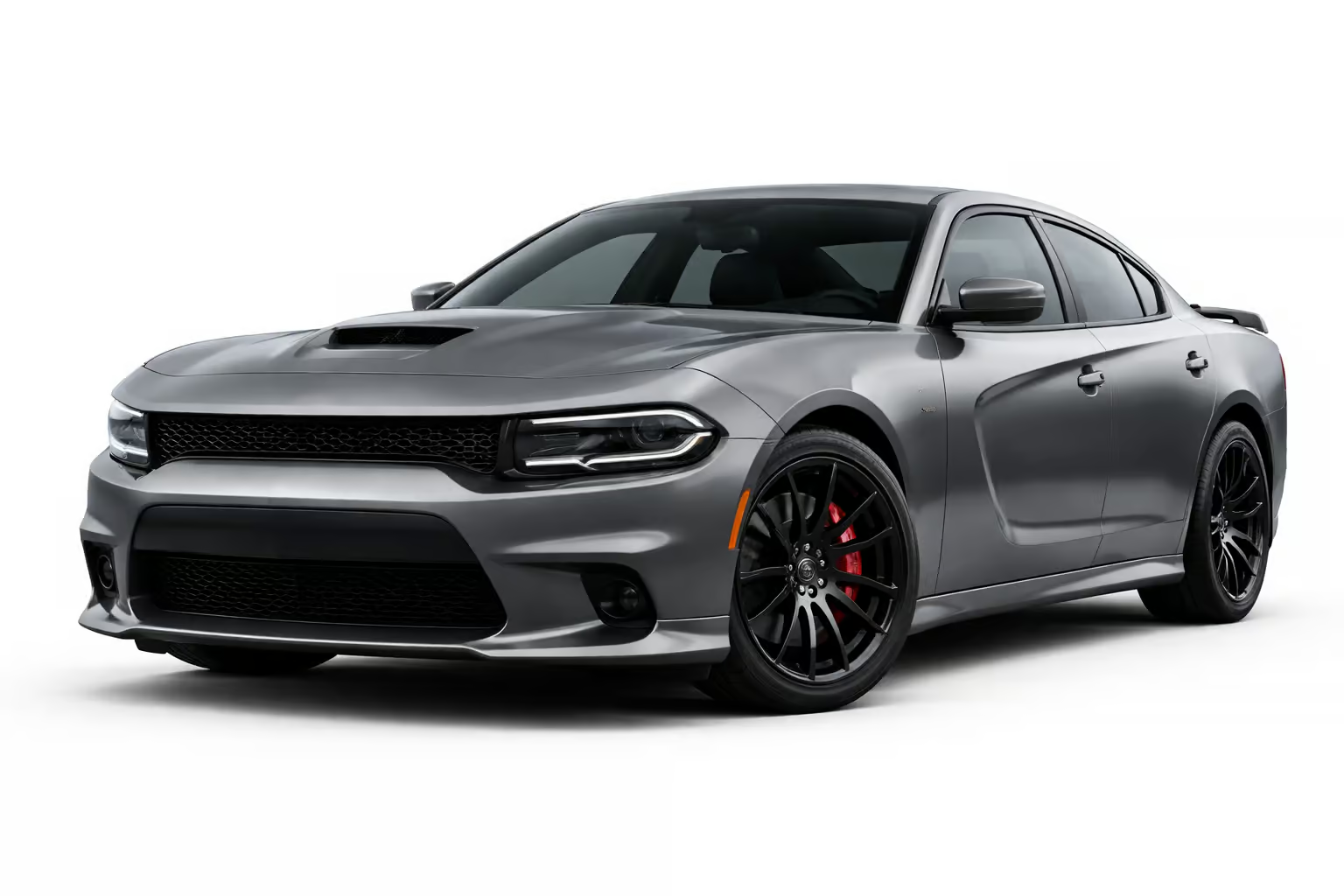
The Dodge Charger has carried the same name through several very different types of vehicles. It began as an American muscle coupe in 1966, moved through a personal luxury period, briefly became a compact front wheel drive hatchback, and eventually returned as the large performance sedan familiar to modern buyers. Powertrains changed just as dramatically. Charger engines have included four cylinder, V6, naturally aspirated V8, supercharged V8, Hurricane inline six, and electric systems. That history means the generation tells you much more than the badge alone. The timeline below covers eight Charger generations and explains the differences that matter when you are researching one to buy.

Dodge Charger Generation Timeline
More than six decades separate the original Charger from today’s model. The earliest generations belong mainly to the collector market, while the 2006 return established the modern Charger as a practical performance sedan. From there, Dodge added stronger engines, better safety equipment, improved interiors, and increasingly extreme performance models.
The biggest change arrives with the eighth generation. The familiar Hemi V8 formula gives way to Hurricane inline six engines and electric Daytona models, while the Charger returns to a two door coupe body. Your ideal generation therefore depends heavily on whether you want classic collectibility, an affordable used sedan, Hemi V8 performance, or the newest Charger technology.
1st Generation (1966–1970)

1966–1970 Engines and Buyer Information
The original Charger is the model that established the name as an American muscle car. Its two door body could be paired with engines ranging from a 318 V8 to the legendary 426 Hemi, with 361, 383, and 440 V8 choices also appearing. You should approach these cars as classics today because purchase price, originality, restoration quality, and collector value matter far more than modern daily driving practicality.
Read More
Engine choice can have an enormous effect on the value of a first generation Charger. The 426 Hemi and other desirable configurations occupy a very different part of the collector market from more common versions. Before buying, verify the vehicle’s identity, engine, documentation, restoration history, body condition, and originality. A professional inspection from someone familiar with classic Mopar vehicles can help you avoid paying collector money for a car that does not support its claimed history.
| Buyer Detail | 1966–1970 Dodge Charger |
|---|---|
| Body Style | Two door muscle coupe |
| Engine Choices | 318, 361, 383, 440 V8, 426 Hemi |
| Main Appeal | Classic muscle car |
| Best Suited For | Collectors and enthusiasts |
| Main Buying Concern | Condition, originality, documentation |
2nd Generation (1971–1974)

1971–1974 Engines and Buyer Information
The second generation gave the Charger a different appearance with more aerodynamic fastback styling while keeping V8 power at the centre of the lineup. Available engines included 318, 340, 360, 383, 400, and 440 V8s. These cars now belong firmly in the classic market, so you should evaluate them according to condition and collector value rather than comparing them with a modern Charger as everyday transportation.
Read More
A second generation Charger can appeal if you specifically want classic styling and V8 character, but age makes careful research essential. Rust, previous repairs, modifications, incomplete restoration work, and missing documentation can have a major effect on what a particular car is worth. Verify exactly what you are buying before paying a premium for a rare engine or desirable specification.
| Buyer Detail | 1971–1974 Dodge Charger |
|---|---|
| Body Style | Two door fastback coupe |
| Engine Choices | 318, 340, 360, 383, 400, 440 V8 |
| Main Appeal | Classic V8 performance and styling |
| Best Suited For | Classic car buyers |
| Main Buying Concern | Condition and authenticity |
3rd Generation (1975–1978)

1975–1978 Engines and Buyer Information
The third generation moved the Charger away from its earlier muscle car focus and toward the personal luxury coupe market. Engine choices included 318, 360, and 400 V8s, but comfort and styling played a larger role in the vehicle’s identity. For you as a modern buyer, this generation is primarily a collector or enthusiast purchase rather than a practical alternative to a newer Charger.
Read More
These Chargers occupy a more specialized part of the classic market than the earlier muscle generations. That can make individual vehicle condition particularly important because you may have fewer comparable examples available when judging price. Inspect the body, interior, drivetrain, previous repairs, and documentation carefully. Buy one because you specifically want this era of Charger, not simply because it carries the Charger name.
| Buyer Detail | 1975–1978 Dodge Charger |
|---|---|
| Body Style | Personal luxury coupe |
| Engine Choices | 318, 360, 400 V8 |
| Main Appeal | 1970s styling and collector interest |
| Best Suited For | Enthusiasts and collectors |
| Main Buying Concern | Age and overall condition |
4th Generation (1982–1987)

1982–1987 Engines and Buyer Information
The fourth generation is the unusual chapter in Charger history. Instead of a large rear wheel drive muscle car, Dodge used the Charger name for a compact front wheel drive hatchback. Engines included a 2.2 litre four cylinder and a turbocharged 2.2 litre version. You are unlikely to cross shop one with a modern Charger, but its radically different design makes it an important part of the model’s history.
Read More
This generation makes the most sense if you specifically appreciate compact performance cars from the 1980s. Turbo models provide additional enthusiast interest, but age, parts availability, modifications, and mechanical condition can make ownership very different from buying a newer Charger. Treat a surviving example as a specialty vehicle and inspect it accordingly rather than expecting modern muscle car practicality.
| Buyer Detail | 1982–1987 Dodge Charger |
|---|---|
| Body Style | Compact hatchback |
| Engine Choices | 2.2L four cylinder, 2.2L turbo |
| Drivetrain | Front wheel drive |
| Main Appeal | Unusual Charger history |
| Best Suited For | 1980s performance enthusiasts |
5th Generation (2006–2010)

2006–2010 Engines and Buyer Information
After a long absence, the Charger returned for 2006 as a full size four door sedan. Engine choices ranged from 2.7 litre and 3.5 litre V6s to the 5.7 litre Hemi V8 and 6.1 litre SRT8 V8. This generation created the basic modern Charger formula by combining passenger space and everyday usefulness with available V8 performance.
Read More
The fifth generation can provide an affordable route into modern Charger ownership, particularly if you want V8 power without paying later model prices. The tradeoff is age. Interior technology and safety equipment are older, and maintenance history becomes increasingly important. Check the engine, transmission, suspension, brakes, electronics, body condition, and service records before allowing an attractive purchase price to make the decision for you.
| Buyer Detail | 2006–2010 Dodge Charger |
|---|---|
| Body Style | Full size four door sedan |
| Base Engines | 2.7L V6, 3.5L V6 |
| V8 Engines | 5.7L Hemi, 6.1L SRT8 |
| Main Advantage | Affordable modern Charger entry |
| Main Limitation | Older technology |
- Modern sedan format returned. Four doors gave you substantially more everyday usefulness than the classic coupes.
- V8 performance returned. The 5.7 litre Hemi and 6.1 litre SRT8 restored serious performance to the Charger name.
- Safety improved. Stability control and other modern systems moved the Charger far beyond its classic predecessors.
6th Generation (2011–2023)

2011–2023 Engines and Buyer Information
The sixth generation is especially important for used buyers because it combines a modernized interior with an enormous range of performance levels. Engines included the 3.6 litre Pentastar V6, 5.7 litre Hemi V8, 6.4 litre Hemi V8, and supercharged 6.2 litre Hellcat V8. The most powerful versions reached as much as 807 hp, placing them in an entirely different performance category from an ordinary V6 Charger.
Read More
You have more choices within this generation than almost any other period in Charger history. A V6 can serve as a comfortable daily driver, while Hemi models give you traditional V8 performance and Hellcat versions move into extreme territory. Widebody models added another distinction. Because performance and value vary dramatically by trim, check the exact engine, equipment, maintenance history, modifications, and previous use before comparing prices.
| Engine | Charger Role |
|---|---|
| 3.6L Pentastar V6 | Everyday performance |
| 5.7L Hemi V8 | Traditional V8 option |
| 6.4L Hemi V8 | Higher performance |
| 6.2L Supercharged Hellcat V8 | Up to 807 hp |
- Interior improved. The cabin became considerably more modern than the 2006–2010 Charger.
- Safety technology improved. Newer equipment made the Charger easier to use as everyday transportation.
- Widebody versions arrived. Wider performance models became some of the generation’s most recognizable variants.
- Performance expanded dramatically. Available power eventually climbed as high as 807 hp.
- Used selection is broad. Thirteen model years give you a large range of trims, engines, prices, and equipment.
7th Generation (2024–2025)

2024–2025 Engines and Buyer Information
The 2024–2025 period represents the final years of the traditional Charger sedan before the next redesign. Available engines included the 3.6 litre V6, 5.7 litre Hemi V8, 6.4 litre Hemi V8, and supercharged 6.2 litre Hellcat V8. These models matter to enthusiasts because they close the chapter on the familiar Hemi powered sedan formula.
Read More
Demand can be stronger for desirable configurations because buyers recognize these vehicles as the end of the Hemi V8 Charger era. That does not mean every example automatically deserves a premium. Trim, engine, mileage, condition, modifications, maintenance, and local availability still determine whether the asking price makes sense. If collectibility matters to you, documentation and originality deserve additional attention.
| Buyer Detail | 2024–2025 Dodge Charger |
|---|---|
| Body Style | Full size performance sedan |
| V6 Engine | 3.6L |
| V8 Engines | 5.7L, 6.4L, supercharged 6.2L |
| Main Appeal | Final Hemi V8 Charger era |
| Buyer Consideration | Strong demand and resale interest |
8th Generation (2026–Present)

2026–Present Engines and Buyer Information
The eighth generation represents a complete change in Charger design and powertrain strategy. The new Charger returns to a two door coupe format and offers gasoline and electric performance rather than relying on the previous Hemi V8 formula. Hurricane inline six engines power the gasoline performance models, while Daytona versions introduce electric AWD to the Charger lineup.
Read More
Your powertrain choice now changes the Charger experience considerably. The GT uses a 305 hp 3.6 litre Pentastar V6 with rear wheel drive and an eight speed automatic. The R/T receives a 420 hp 3.0 litre Hurricane inline six, while the Scat Pack increases Hurricane output to 550 hp. Daytona models take another route entirely, offering electric AWD with up to 670 hp.
| 2026 Charger Model | Powertrain | Output | Drivetrain |
|---|---|---|---|
| GT | 3.6L Pentastar V6 | 305 hp | RWD |
| R/T | 3.0L Hurricane I6 | 420 hp | Gas performance configuration |
| Scat Pack | 3.0L Hurricane High Output I6 | 550 hp | Gas performance configuration |
| Daytona R/T | Electric | 456 hp | AWD |
| Daytona Scat Pack | Electric | 670 hp | AWD |
- Two door coupe returns. The body format reconnects the modern Charger with its earlier coupe history.
- Hurricane engines arrive. The 3.0 litre inline six replaces the V8 formula in the gasoline performance lineup.
- Electric performance arrives. Daytona gives you the first EV powertrain offered under the Charger name.
- Interior technology advances. Larger displays and a more modern cabin distinguish the redesign from previous Chargers.
- GT remains V6 powered. The entry model uses the 305 hp 3.6 litre Pentastar V6 rather than a Hurricane engine.
Dodge Charger Generations Compared
The Charger name has represented everything from classic V8 coupes to a front wheel drive hatchback, four door performance sedans, and a new generation combining gasoline and electric power. That variety makes generation research particularly important. A 1985 Charger has almost nothing mechanically in common with a 2015 Hellcat or 2026 Daytona despite sharing the same model name.
| Gen | Years | Body | Powertrains | Buyer Reason |
|---|---|---|---|---|
| 1st | 1966–1970 | Muscle coupe | V8, 426 Hemi | Classic collectibility |
| 2nd | 1971–1974 | Fastback coupe | Multiple V8 | Classic muscle |
| 3rd | 1975–1978 | Luxury coupe | 318–400 V8 | Collector niche |
| 4th | 1982–1987 | Compact hatchback | 2.2L / Turbo | 1980s interest |
| 5th | 2006–2010 | Full-size sedan | V6, 5.7 / 6.1 V8 | Affordable modern |
| 6th | 2011–2023 | Performance sedan | V6, Hemi, Hellcat | Huge used selection |
| 7th | 2024–2025 | Performance sedan | V6, Hemi V8 | Final Hemi era |
| 8th | 2026–Present | Two-door coupe | V6, Hurricane I6, EV | New generation |
How the Dodge Charger Changed Across Eight Generations
The Charger’s history does not follow a simple path from old car to newer car. The first three generations remained coupes but shifted from muscle performance toward personal luxury. The fourth generation completely changed direction with a compact front wheel drive hatchback. After disappearing for years, the Charger returned in 2006 as a large four door sedan with available Hemi V8 power.
Performance became increasingly important from 2011 onward, eventually reaching 807 hp with supercharged Hellcat power. The next major break comes with the eighth generation. Hemi V8 engines disappear from the new performance formula, Hurricane inline six engines arrive, and Daytona introduces electric AWD. The result gives today’s Charger buyer choices that would have sounded fairly wild when the original arrived in 1966.
Which Dodge Charger Generation Fits Your Needs?
Your reason for buying should narrow the enormous Charger timeline quickly. Classic generations make sense when history and collectibility matter, while the 2006 and newer cars provide the practicality expected from modern vehicles. The 2011–2023 generation offers the widest selection for used shoppers, and the newest Charger is where you should look for Hurricane or electric performance.
- For classic collectors. The 1966–1974 cars provide the strongest connection to the Charger’s original muscle era.
- For affordable modern ownership. The 2006–2010 generation gives you sedan practicality and available V8 power at older used vehicle prices.
- For used performance. The 2011–2023 generation offers everything from the 3.6 litre V6 to supercharged Hellcat models producing as much as 807 hp.
- For the final Hemi era. The 2024–2025 models represent the end of the traditional V8 Charger sedan.
- For new technology. The 2026 and newer generation introduces Hurricane inline six engines and electric Daytona performance.
What to Check Before Buying a Used Dodge Charger
A used Charger inspection should reflect the performance level you are buying. A regular V6 sedan may have spent its life commuting, while a Hellcat or other high output model may have experienced much harder use. Service history, modifications, tires, brakes, suspension, drivetrain condition, accident history, and warning lights deserve attention before you agree on a price.
- Confirm the exact engine and trim. Charger values can change substantially depending on the powertrain and equipment.
- Check maintenance records. Regular documented service gives you a clearer picture of previous ownership.
- Look for modifications. Engine, exhaust, suspension, and tuning changes can affect reliability and value.
- Inspect the tires. Uneven or unusually heavy wear can reveal alignment problems or aggressive previous use.
- Check the brakes. High performance versions can have more expensive braking hardware.
- Review accident history. Body repairs deserve particular attention on powerful or collectible versions.
- Test all electronics. Confirm displays, cameras, climate controls, driver assistance features, and other equipment operate correctly.
- Get an independent inspection. A qualified technician can identify problems that a clean exterior and enthusiastic seller may not mention.
Best Dodge Charger Generations for Buyers
There is no single best Charger because a 1969 collector car and a 2026 daily driver solve completely different problems. For most used buyers, 2015–2023 provides the strongest combination of modern equipment, engine choice, performance, and market availability. The newest generation is the better fit when you specifically want the redesigned platform and current powertrain choices.
- Best modern performance: 2026 Scat Pack and Daytona Scat Pack EV. These give you the strongest gasoline and electric performance choices in the redesigned lineup.
- Best used market value: 2015–2023. You have a broad selection of trims, engines, equipment levels, and used prices.
- Best daily driver: 2026 Charger GT. The 305 hp V6 provides the entry point into the redesigned Charger lineup.
- Best for the final Hemi era: 2023–2024 Hellcat. These models appeal when supercharged V8 performance and end of era significance matter.
Dodge Charger Safety Research Before You Buy
Safety equipment changed enormously across the Charger’s long production history, so you should evaluate the specific model year rather than treating every generation equally. Modern Chargers add electronic stability systems and increasingly advanced driver assistance technology that simply did not exist when the earliest versions were built.
For U.S. vehicles, you can check recalls, complaints, investigations, and available safety information through the National Highway Traffic Safety Administration. Canadian buyers can use Transport Canada’s vehicle recall database. Checking the VIN before purchase is particularly useful because it can tell you whether an applicable recall still requires attention.
Final Buyer Verdict
The Dodge Charger is unusual because its eight generations do not represent eight slightly improved versions of the same vehicle. Depending on the year, you could be looking at a classic muscle coupe, luxury coupe, compact hatchback, full size V8 sedan, supercharged 807 hp performance car, Hurricane powered coupe, or an electric AWD model.
For most used shoppers, 2015–2023 offers the broadest selection and strongest balance of modern features and performance choices. The final Hemi models are more relevant when V8 character or collector interest matters. Choose the 2026 and newer generation when you want the new Charger formula, with GT V6, Hurricane inline six, or Daytona electric power depending on how you want your performance delivered.


