


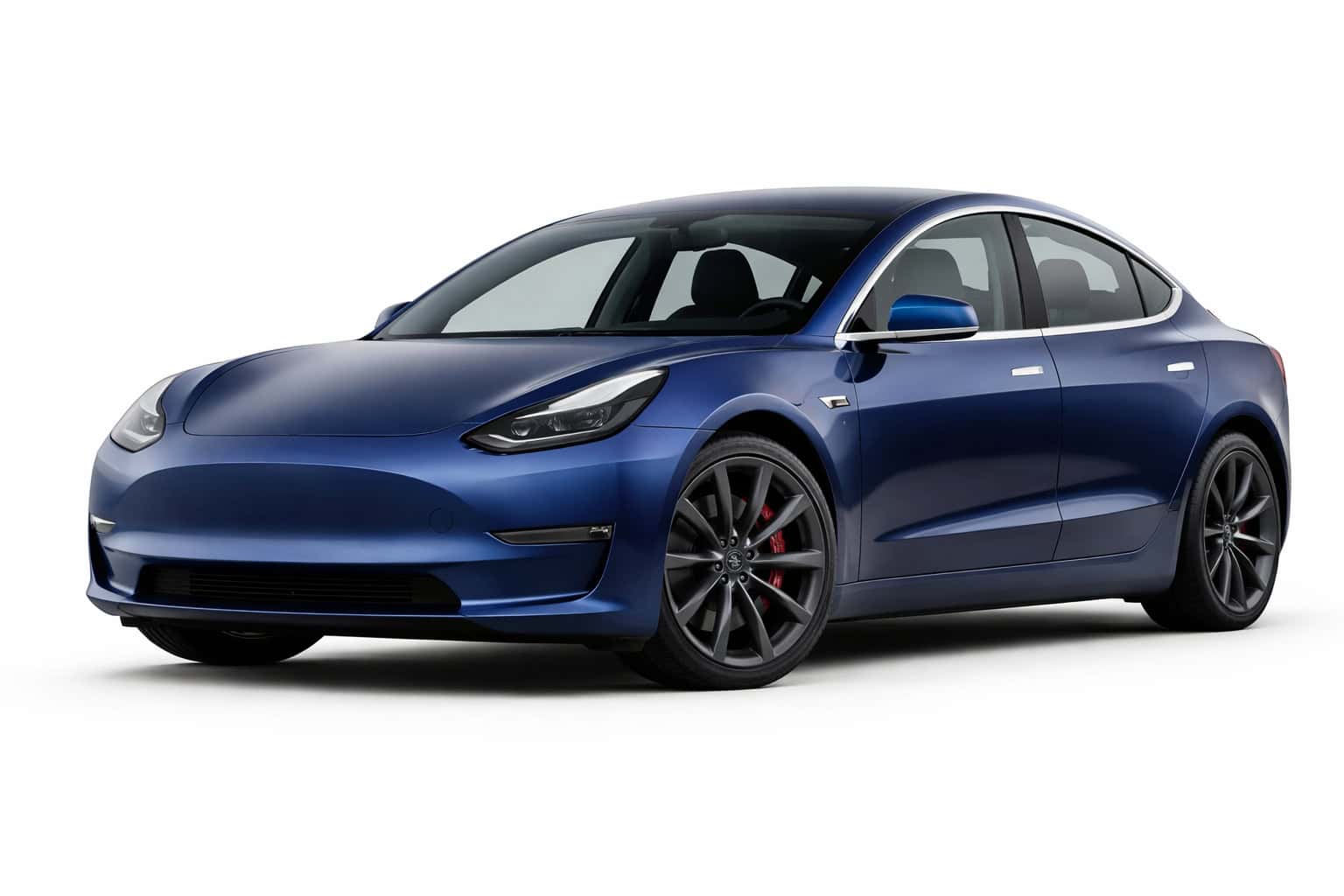
Tesla Model 3 Full Buyer’s Guide (U.S. & Canada)
The Tesla Model 3 combines strong electric efficiency, quick acceleration, useful driving range, and access to Tesla’s extensive Supercharger network across the United States and Canada. When you can charge at home, your daily electricity costs can also be relatively low because most charging happens while the car is parked. You avoid oil changes and several other routine services required by gasoline vehicles, although tires, brakes, suspension parts, cabin filters, and other wear items still need attention.
Choosing the right Model 3 requires more than comparing the range shown on a listing. Tesla has changed batteries, motors, interiors, charging hardware, suspension tuning, and standard equipment throughout the car’s production. Range also changes with temperature, highway speed, wheel size, climate-control use, and driving habits. If you are shopping used, battery condition, remaining warranty coverage, tire wear, accident history, charging performance, and the exact equipment fitted to the car all deserve attention.
Tesla Model 3 Overview
The Model 3 is designed around an electric platform rather than adapting a conventional sedan to battery power. Depending on model year, you can find Rear-Wheel Drive, Long Range All-Wheel Drive, and Performance versions. The RWD model focuses on efficiency and lower cost. Long Range AWD adds another motor, more traction, and greater travel flexibility. Performance models prioritize acceleration and handling. Tesla has changed specifications over the years, so confirm the exact model year and configuration before comparing two cars.
| Model 3 Version | Drive Layout | Main Advantage | Best Use |
|---|---|---|---|
| Rear‑Wheel Drive | Single‑motor RWD | Efficiency and lower purchase cost | Commuting and city driving |
| Long Range AWD | Dual‑motor AWD | Range and all‑weather traction | Highway travel and colder climates |
| Performance | Dual‑motor AWD | Acceleration and handling | Performance‑focused driving |
Tesla Model 3 Rear-Wheel Drive
The Rear-Wheel Drive Model 3 makes the most sense when you want an affordable route into electric driving and do not need the longest available range. Its single-motor layout keeps the configuration simple, while immediate electric response makes stop-and-go driving easy. Depending on model year, weather, speed, and battery version, real-world range can commonly fall around 220–260 miles or approximately 350–420 km. Freezing temperatures and sustained highway driving can push actual range below those figures.
What you should know
- A single electric motor powers the rear wheels.
- Purchase prices are generally lower than comparable Long Range and Performance versions.
- Electric consumption is well suited to city driving and regular commuting.
- Real-world range can fall around 220–260 miles or 350–420 km depending on year and conditions.
- Winter tires become especially important if you regularly drive the RWD version through snow and ice.
- This version works best when your daily distance is predictable and you have convenient access to charging.
Tesla Model 3 Long Range AWD
Long Range AWD gives you additional flexibility when your driving regularly extends beyond short commutes. Its dual-motor system provides all-wheel-drive traction, strong acceleration, and enough battery capacity to reduce charging stops on longer journeys. Depending on model year and conditions, real-world range can fall around 290–330 miles or approximately 470–530 km. Highway speed, freezing temperatures, headwinds, wheel choice, and cabin heating can reduce how far you actually travel between charges.
What you should know
- Two electric motors provide all-wheel drive.
- Real-world range can reach roughly 290–330 miles or 470–530 km depending on the specific version and conditions.
- Additional battery capacity gives you a larger reserve for road trips and winter driving.
- Strong acceleration makes highway merging and passing effortless.
- AWD improves traction when accelerating, but winter tires remain important for braking and cornering.
- Long Range AWD is the strongest choice when you regularly travel long distances or drive through harsh winters.
Tesla Model 3 Performance
Performance versions show how much speed an electric sedan can deliver without requiring a large engine or conventional transmission. Dual motors provide immediate acceleration, while performance-focused wheels, tires, brakes, and suspension changes give the car a sportier character. Depending on model year and conditions, you may see roughly 260–300 miles or 420–480 km of real-world range. Repeated hard acceleration and high speeds increase electricity consumption, so enthusiastic driving comes with an efficiency penalty. Physics apparently did not receive the Performance software update.
What you should know
- Dual electric motors provide all-wheel-drive traction and stronger acceleration.
- Performance tuning gives you quicker responses than the RWD and Long Range versions.
- Real-world range can fall around 260–300 miles or 420–480 km depending on year and conditions.
- Larger performance tires can increase replacement costs and electricity consumption.
- Frequent hard acceleration can reduce the distance available from each charge.
- Choose Performance when acceleration and handling matter more than maximizing range.
Tesla Model 3 Home Charging
Home charging can completely change how you think about keeping a car ready for the next trip. Instead of making a separate stop, you can connect the Model 3 after arriving home and let it charge while you sleep. A Level 2 setup is the practical choice for many owners because it can replenish a substantial amount of range overnight. Actual charging speed depends on the electrical circuit, charging equipment, vehicle configuration, battery temperature, and the maximum AC charging rate the car accepts.
You do not necessarily need to recharge to 100% every night. Your normal charge limit should follow Tesla’s recommendations for the battery fitted to your specific Model 3 because battery chemistry differs between versions and years. If you are considering a Model 3, check your home electrical service and parking arrangement before buying. An electrician can determine whether your existing panel supports the charging setup you want and what installation will cost.
Tesla Supercharging and Road Trips
Long-distance electric travel becomes much easier when fast chargers are positioned along your route. Tesla’s Supercharger network allows the Model 3 to add substantial range during a relatively short stop. Under favorable conditions, charging from approximately 10% to 80% can take around 25–30 minutes, although the actual time depends on battery temperature, charger output, the vehicle’s charging curve, and how busy the location is.
Using the car’s navigation system to route to a Supercharger can prepare the battery before you arrive, which helps it accept a higher charging rate sooner. Charging also slows as the battery becomes fuller, so road trips do not always benefit from waiting for 100%. You can check current stations and plan routes using Tesla’s official Supercharger map. For frequent highway travel, check charging coverage around the places you actually visit rather than relying only on the number of stations nationwide.
Tesla Model 3 Driving Experience
Electric power gives the Model 3 a different character from a conventional sedan. Acceleration begins immediately because an electric motor does not need to build engine speed or wait for a transmission to select a gear. The battery sits low in the vehicle, which keeps much of its weight close to the road. That layout helps the car feel planted through corners. Regenerative braking also slows the vehicle when you lift off the accelerator, allowing you to complete much of normal driving with relatively little brake-pedal use.
RWD gives you the smoothest approach to everyday commuting. Long Range AWD adds stronger acceleration and extra traction while remaining comfortable enough for normal highway travel. Performance takes the same basic electric formula much further toward sports-sedan territory. Take a proper test drive before buying any version. Regenerative braking, touchscreen controls, instant acceleration, and the unusually quiet cabin can require some adjustment if this will be your first EV.
Tesla Model 3 Interior and Comfort
Minimalism dominates the Model 3 cabin. Most vehicle information and controls appear on the central touchscreen, leaving the dashboard with very few physical switches. That design creates a clean interior, but it also means you interact with the screen for functions that would use dedicated buttons in many other cars. You get useful passenger room for a compact electric sedan, a conventional rear cargo area, and additional storage under the front hood where an engine would normally sit.
What you should check
- Test the central touchscreen and make sure it responds normally.
- Check the climate control, seat heaters, cameras, navigation, Bluetooth, and charging menus.
- Inspect the seats, door seals, glass, trim, and interior panels for excessive wear.
- Confirm which heated features are fitted to the specific model year you are considering.
- Sit in both rows to make sure passenger space works for your household.
- Inspect the front and rear storage areas for damaged seals or signs of water entry.
- Make sure every included charging cable or adapter is actually present.
Tesla Model 3 Electricity Use and Running Costs
The Model 3 is an efficient EV, but what you pay to drive it depends heavily on where and when you charge. Residential electricity rates vary across states and provinces, and some utilities offer lower overnight rates. Public DC fast charging usually costs more than charging at home. If operating cost is one of your main reasons for buying electric, calculate your expected annual kWh use and multiply it by your local electricity rate instead of relying on a generic savings claim.
This is also one area where comparing electricity with gasoline is useful. If your current car uses $200 of gasoline each month while your expected home charging costs $60, the $140 monthly difference represents a real potential saving. Your numbers may be higher or lower depending on distance, electricity prices, gasoline prices, climate, and driving habits. Calculate the comparison using your own bills because an EV cannot make expensive electricity magically cheap.
Tesla Model 3 Maintenance Costs
An electric drivetrain removes several routine jobs you may be accustomed to paying for. There is no engine oil to change, no spark plugs, and no conventional exhaust system. Regenerative braking can also reduce wear on the friction brakes because the electric motor handles part of the vehicle’s slowing. That does not make the Model 3 maintenance-free. Tires, suspension components, brake parts, filters, wipers, air conditioning, and other normal vehicle systems still require inspection and eventual replacement.
Tires can become one of your most noticeable recurring expenses. The Model 3 is relatively heavy, produces immediate torque, and Performance versions encourage exactly the sort of acceleration that tires find financially exciting. Check pressure and tread depth regularly, rotate tires when appropriate, and investigate uneven wear rather than simply replacing rubber repeatedly. Tesla provides model-specific service information through its official maintenance guidance.
Tesla Model 3 Battery Longevity
Battery capacity gradually declines as an EV ages, but there is no single degradation percentage that accurately describes every Model 3. Battery chemistry, mileage, age, temperature exposure, charging patterns, and previous use all influence long-term capacity. That means a claim such as every Model 3 losing only 5–10% after 100,000 miles or 160,000 km would give you more certainty than the individual vehicle can actually provide.
When shopping used, concentrate on the battery in front of you. Check remaining battery and drive-unit warranty coverage, review service information when available, and investigate warnings or unusual charging behavior. Do not treat the estimated range displayed on the touchscreen as a complete battery-health test. Cold weather can temporarily reduce available range and increase electricity consumption without proving that the battery has suffered permanent damage.
Tesla Model 3 Reliability and Common Problems
The Model 3 has fewer conventional drivetrain components than a gasoline sedan, but mechanical simplicity does not eliminate the possibility of repairs. Your inspection should include suspension noises, windows, climate control, charging equipment, cameras, touchscreen operation, body fit, tires, and warning messages. Software updates can correct certain electronic problems, while worn or damaged physical components still need normal repair. You can examine longer-term dependability in our Tesla Model 3 reliability guide.
Items worth checking
- Wind noise around the windows and door seals.
- Uneven body panels or signs of previous collision repairs.
- Window movement and calibration.
- Touchscreen responsiveness and recurring error messages.
- Climate-control and heat-pump operation on equipped models.
- Suspension noises over uneven pavement.
- Uneven or excessive tire wear.
- Charging-port operation.
- Successful AC charging and DC fast charging when practical.
- Battery, motor, camera, or safety-system warnings.
Tesla Model 3 Winter Range and Charging
Winter changes electric driving because both the battery and passenger cabin need heat. You should expect electricity consumption to rise during freezing weather, particularly on short trips where the car repeatedly warms itself. Highway speed, snow, wind, low tire pressure, and cabin temperature can reduce range further. Preconditioning while the Model 3 is still connected to home power allows the vehicle to begin warming before departure without relying entirely on stored battery energy once you are moving.
Heat-pump-equipped versions can use energy more efficiently for cabin heating under suitable conditions, but no Model 3 is immune to winter losses. If you live in Canada or a northern U.S. state, plan trips with a comfortable battery reserve and use scheduled departure or preconditioning when possible. Arriving at a charger with a warm battery can also improve charging performance. Planning for winter range is much nicer than discovering winter range at 11 p.m. beside a closed coffee shop.
Tesla Model 3 Winter Traction
Range is only one part of cold-weather ownership. Long Range and Performance versions give you AWD, which can improve traction when accelerating on snow-covered roads. It does not shorten braking distance by itself. Tires determine how effectively the car can grip the road while accelerating, turning, and stopping, which makes proper winter rubber especially valuable in areas that regularly experience snow and ice.
A RWD Model 3 with quality winter tires can therefore be better prepared for severe weather than an AWD version using unsuitable tires. Check tread depth before winter begins and remember that the Model 3’s instant torque can make poor traction obvious very quickly. If winter driving is a major part of your year, Long Range AWD paired with appropriate winter tires gives you the strongest combination of traction and usable range.
Buying a Used Tesla Model 3
Two used Model 3s with similar mileage can be very different purchases. Tesla made running changes to batteries, interiors, heat pumps, vehicle hardware, range, and other equipment throughout production. Remaining warranty coverage, accident history, battery condition, wheel size, software, tire condition, and charging performance can also affect value. Verify the actual vehicle rather than assuming an online listing has correctly identified every feature. Our Tesla Model 3 problems guide can help you identify model-specific areas that deserve closer inspection.
Before you buy
- Confirm the exact model year and drivetrain.
- Identify the battery configuration where possible.
- Check remaining battery and drive-unit warranty coverage.
- Review accident and repair history.
- Inspect all four tires for tread depth and uneven wear.
- Test AC charging.
- Test DC fast charging when practical.
- Check climate control, cameras, windows, seats, touchscreen, and lights.
- Confirm which paid software features remain with the vehicle.
- Inspect the underside for impact damage.
- Check the charging port for damage or unreliable operation.
- Compare the asking price with several equivalent Model 3 listings.
Tesla Model 3 Home Charging Costs
Your home electricity rate determines whether charging is merely affordable or exceptionally cheap. Suppose your Model 3 uses 250 kWh during a month. At $0.12 per kWh, the electricity itself costs about $30. At $0.20 per kWh, the same 250 kWh costs $50. Actual consumption will vary with distance, temperature, speed, charging losses, and vehicle configuration, but the calculation gives you a much more useful estimate than a nationwide average.
Installation cost matters too. If your home already has suitable electrical capacity near the parking area, adding Level 2 charging may be relatively straightforward. A long cable run, panel upgrade, or other electrical work can raise the initial expense considerably. Get an installation quote before buying if home charging is essential to your ownership plan. Once installed, the convenience of waking up to a charged car can become one of the Model 3’s biggest everyday advantages.
Which Tesla Model 3 Should You Buy?
Long Range AWD is the strongest all-around choice when your budget allows it because you gain more travel flexibility, AWD traction, and strong acceleration without choosing the Performance model solely for its additional speed. RWD is the better fit when your daily distance is modest, charging is easy, and keeping the purchase price down matters most. Performance makes sense when rapid acceleration and sharper handling are major reasons you want a Model 3.
- Best overall choice for mixed driving: Long Range AWD.
- Best lower-cost choice: Rear-Wheel Drive.
- Best acceleration and handling: Performance.
- Best choice for frequent long-distance travel: Long Range AWD.
- Best choice for cold climates: Long Range AWD with winter tires.
- Best choice for city commuting: Rear-Wheel Drive.
- Best choice when maximum efficiency matters more than performance: Rear-Wheel Drive.
Tesla Model 3 Depreciation and Used Value
Electric vehicle pricing can move quickly, and the Model 3 is no exception. New-car price changes, incentives, competing EVs, battery improvements, and used inventory can affect resale values. Mileage, accident history, configuration, battery condition, remaining warranty, wheels, and software can further change what an individual car is worth. You should therefore avoid assuming strong EV demand automatically guarantees strong resale value.
Purchase price becomes especially important when the market is changing. Paying several thousand dollars too much for a used Model 3 can outweigh a meaningful portion of the electricity savings you expected to achieve. Compare equivalent vehicles and consider how long you intend to keep yours before choosing between new and used. Our Tesla Model 3 depreciation breakdown explains the factors that can change its value as it ages.
Conclusion
The Tesla Model 3 works best when electric driving fits naturally into your routine. Rear-Wheel Drive gives you an efficient and generally less expensive starting point. Long Range AWD provides additional range and traction for road trips and colder climates. Performance sacrifices some efficiency in exchange for the strongest acceleration and sportiest driving experience. Convenient home charging makes any of the three much easier to own.
Before buying, look beyond the advertised range number. Check the exact configuration, battery and drive-unit warranty, charging access, tires, accident history, equipment, and overall condition. Then calculate your likely charging costs using the electricity rates you actually pay. Once those pieces fit together, you can choose a Model 3 based on how you really drive instead of paying for range or performance you may never need.
Add a comment Cancel reply
Comments (0)
Categories
Recent Posts
About us

Alex Demn
Blog Editor
This platform analyzes depreciation trends, resale value behavior, and long-term ownership costs, helping drivers understand how mileage, maintenance, and timing shape real financial outcomes.


- Guides
- Vehicle Research
- Tools
- Company
- Buying Guides
- Vehicle Reviews
- Fuel Cost calculator
- About Us
- Maintenance Guides
- Vehicle News
- Maintenance Cost Calculator
- Contact
- Repair Guides
- Towing & Payload Guides
- Repair Cost Estimator
- Privacy Policy
- Ownership Guides
- Fuel Economy Guides
- Ownership Cost Calculator
- Terms
- Depreciation Guides
- Reliability & Ownership
- Trade-In Value Estimator
- Disclaimer
- Depreciation Calculator
- Loan / Payment Calculator
- Car Insurance Cost Calculator