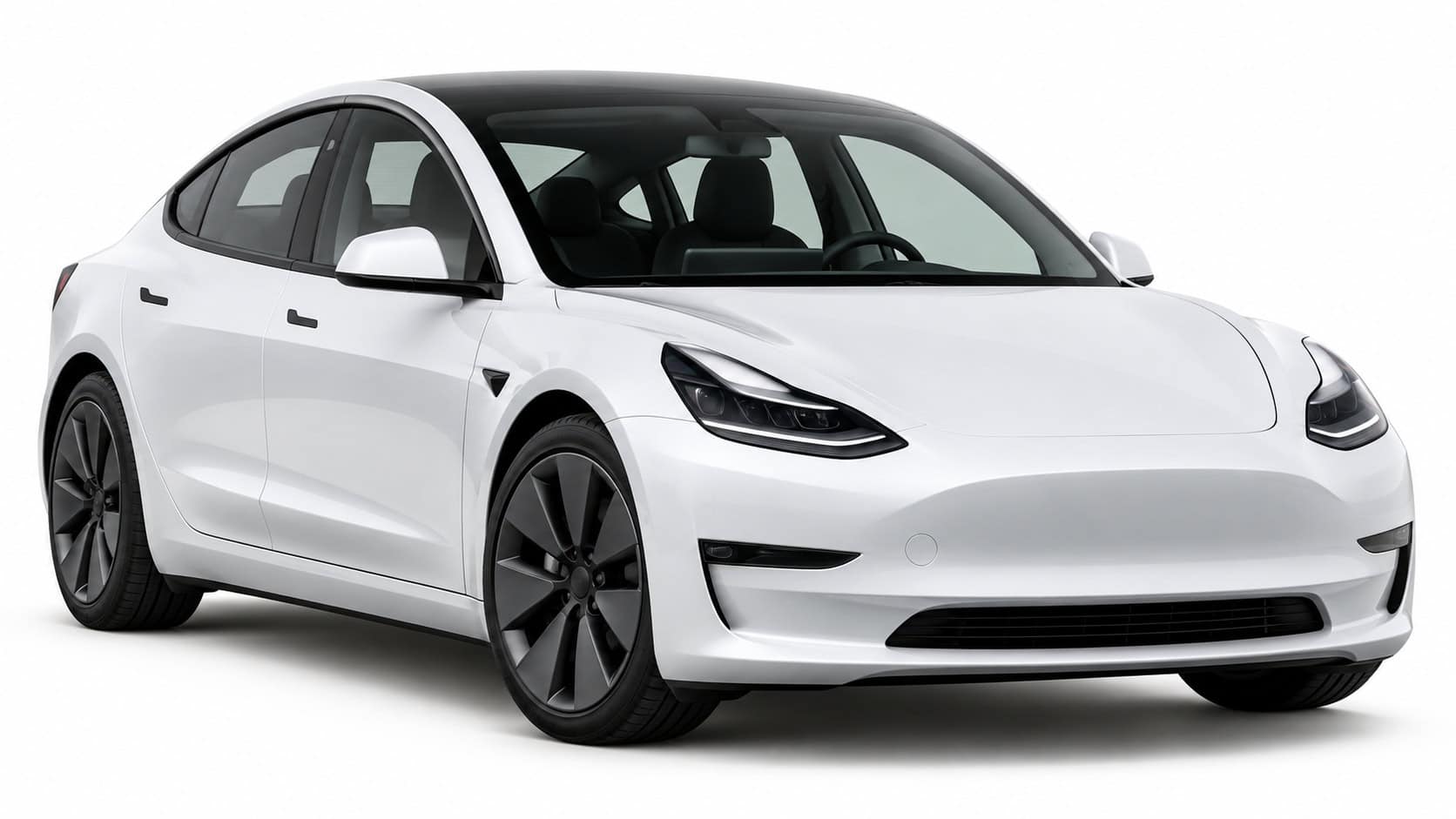
The Tesla Model 3 Rear-Wheel Drive is the entry trim in the Model 3 lineup. It gives you the core Model 3 experience without the added cost or weight of a dual-motor system. You get one rear-mounted electric motor, seating for five, a 15-inch touchscreen, regenerative braking, and roughly 260 to 272 miles of EPA range depending on the model year and wheels. Recent versions use a lithium-iron-phosphate battery, commonly called an LFP battery. This battery chemistry is well suited to frequent charging and helps make the Model 3 Rear-Wheel Drive an appealing choice for regular commuting. Acceleration is still strong despite its position at the bottom of the lineup. A roughly 5.8-second run from 0–60 mph is quicker than you may expect from an efficiency-focused sedan. The simpler drivetrain also means you are not paying for all-wheel drive or Performance hardware that you may rarely use. If most of your driving involves commuting, errands, and occasional highway trips, the RWD trim covers those jobs while keeping energy consumption low.
Trim Positioning
Choosing the Model 3 Rear-Wheel Drive means putting efficiency and purchase price ahead of maximum range or extreme acceleration. It sits below the Long Range AWD and Performance AWD trims. You lose the second electric motor and all-wheel drive, but the basic passenger space and much of the technology remain. That distinction matters when you are deciding whether moving to a more expensive Model 3 actually improves the parts of the car you use every day. The RWD trim is especially well suited to drivers who can charge at home and normally travel well below its 260 to 272-mile range. It can also reduce some ownership expenses because you have the simplest drivetrain in the Model 3 family. Before paying more for another trim, compare your normal weekly mileage and winter driving needs with what the RWD configuration already provides.
Lineup position: Entry Model 3 trim with the lowest purchase price in the core lineup.
Main priority: Efficiency, lower operating costs, and everyday transportation.
Drivetrain: One electric motor driving the rear wheels.
Best use: Commuting, city driving, highway travel, and routine family transportation.
Main tradeoff: You give up all-wheel drive, some range, and the much quicker acceleration available from higher trims.
Powertrain
A single permanent-magnet electric motor mounted at the rear axle powers the Model 3 Rear-Wheel Drive. There is no conventional automatic transmission shifting through six, eight, or 10 gears. Instead, a fixed single-speed gear transfers motor power to the rear wheels. That arrangement gives you immediate response when you press the accelerator because the car does not need to downshift first. Regenerative braking reverses part of that process when you slow down. The motor helps reduce vehicle speed while recovering energy and sending some of it back to the battery. Rear-wheel drive also gives the Model 3 balanced handling because the drive motor is positioned away from the steering wheels. Traction can be good under normal conditions, although drivers who regularly encounter deep snow may prefer the additional traction provided by Long Range AWD. Good winter tires remain important regardless of drivetrain. If you are buying used, listen for unusual drivetrain noises and check the display for warnings during your test drive. Smooth and quiet power delivery should be the normal behavior.
Battery & Range
Recent Model 3 Rear-Wheel Drive versions use an LFP battery pack, with approximate EPA range falling between 260 and 272 miles depending on the year and wheel configuration. LFP chemistry is especially useful for drivers who want simple charging habits because recent RWD versions can tolerate frequent charging to 100% better than many other lithium-ion battery chemistries. That does not mean battery condition can be ignored. Range still changes with temperature, speed, climate-control use, elevation, tires, and driving habits. A cold winter highway trip can require noticeably more energy than mild-weather city driving. You can recharge through a household outlet, a 240V Level 2 charger, or compatible DC fast charging. Tesla’s Supercharger network provides the fastest option when you are traveling. The U.S. Department of Energy also provides information about electric vehicle charging and the differences between charging levels. If you are shopping for a used Model 3 Rear-Wheel Drive, confirm the exact battery type and EPA rating for that model year rather than assuming every RWD car has the same battery.
Specification
Model 3 Rear-Wheel Drive
Battery Type
LFP on recent model years
Approx. EPA Range
260–272 miles
Level 1 Charging
120V AC
Level 2 Charging
240V AC
Fast Charging
Compatible DC fast charging
Drivetrain
Single-motor RWD
Performance
Efficiency does not make the Model 3 Rear-Wheel Drive slow. The single-motor configuration can accelerate from 0–60 mph in about 5.8 seconds and reach approximately 140 mph. Instant electric torque is a major reason the car feels responsive at normal road speeds. There is no delay while an engine builds revs or a transmission searches for a lower gear. Press the accelerator and the response arrives immediately. The RWD model cannot match the roughly 3.1-second acceleration of the Performance AWD version, but that difference matters far more during hard acceleration than during a normal commute. A 5.8-second 0–60 mph time is already enough for quick highway merging and confident passing. Rear-wheel drive also keeps the steering wheels separate from the driven wheels, which contributes to predictable responses through corners. If you are primarily buying a Model 3 for transportation rather than repeated full-throttle launches, the RWD trim gives you useful performance without sacrificing as much range and efficiency. Your tires may appreciate that decision too.
Interior Features
Step inside the Model 3 Rear-Wheel Drive and almost every major function revolves around the 15-inch central touchscreen. Speed information, navigation, climate settings, entertainment, charging information, vehicle controls, and many driver settings are presented through the display. You also get synthetic seating surfaces, heated front seats, wireless phone charging, Bluetooth connectivity, key-card access, phone-as-key operation, and a panoramic glass roof. Heated rear-seat availability and audio equipment can vary with model year, so you should verify those features on the exact vehicle you are considering. The minimalist dashboard creates an open feeling, but it also means there are fewer traditional buttons than you may be accustomed to. Spend time operating the display during a test drive. Check navigation, climate control, audio, charging menus, cameras, and phone pairing. Make sure both key cards work as well. A giant touchscreen looks wonderfully modern until you discover the feature you need is buried somewhere you did not expect, so learning the interface before buying is worthwhile.
Exterior Features
The Model 3 Rear-Wheel Drive shares its basic aerodynamic body with the other Model 3 trims. You get LED headlights and taillights, flush exterior door handles, power-adjustable mirrors, alloy wheels, and the familiar low-roof sedan shape. At approximately 184.8 inches long and 72.8 inches wide, the Model 3 remains manageable in city traffic and normal parking spaces. Wheel size varies by year and configuration. That choice can affect driving range, ride comfort, tire price, and resistance to pothole damage. The RWD trim also avoids the larger brakes, sport-oriented wheels, and lowered suspension associated with Performance versions. That is useful if your priority is regular transportation rather than track-inspired hardware. When inspecting a used Model 3 Rear-Wheel Drive, check the wheels for curb damage and examine all four tires for uneven wear. Look closely at exterior panel alignment and glass condition as well. Early Model 3 production received owner complaints about inconsistent panel fit, making a careful walkaround worthwhile even when the vehicle otherwise looks clean.
Safety & Driver Assistance
Safety equipment on the Model 3 Rear-Wheel Drive includes Automatic Emergency Braking, Forward Collision Warning, Lane Departure Warning, Blind Spot Monitoring, a rearview camera, side-collision avoidance, and adaptive cruise control. Parking assistance equipment can vary by model year because Tesla has changed the hardware and software used for some functions. Enhanced Autopilot and Full Self-Driving Capability have also been offered as software upgrades. You should verify what is actually installed and active on the individual car rather than assuming an FSD-related description means every feature is permanently included. Driver assistance still requires your attention and supervision. For independent crash information, the National Highway Traffic Safety Administration lets you search safety ratings, recalls, and other information by vehicle. This is particularly useful when researching a used Model 3 because equipment and safety updates can differ between years. During your inspection, check the cameras and display for warnings. You should also verify whether outstanding recalls or service campaigns apply to the vehicle before completing the purchase.
Dimensions & Capacity
You do not lose passenger room by choosing the Model 3 Rear-Wheel Drive instead of an AWD trim because the main body structure remains the same. General dimensions are approximately 184.8 inches in length, 72.8 inches in width, and 56.8 inches in height. The wheelbase measures about 113 inches. Seating capacity is five people. Combined storage from the rear trunk and front compartment is around 23 cu ft. The front storage area gives you another place for groceries, charging accessories, or smaller bags without using the main trunk. These measurements place the Model 3 firmly in compact sedan territory, but numbers alone do not tell you whether your family will be comfortable. Sit in the rear seat and check headroom and legroom yourself. The low roof and seating position can feel different if you normally drive an SUV. You should also load any bulky equipment you regularly carry because cargo volume does not tell you the shape of the trunk opening.
Measurement
Approximate Figure
Seating Capacity
5
Length
184.8 in
Width
72.8 in
Height
56.8 in
Wheelbase
113 in
Combined Cargo Volume
Around 23 cu ft
0–60 mph
About 5.8 sec
Top Speed
Around 140 mph
Charging & Efficiency
The Model 3 Rear-Wheel Drive earns much of its appeal from low energy consumption. Depending on model year and configuration, efficiency is around 132 MPGe combined. You can charge from a 120V household outlet, although that is the slowest method and is better suited to drivers who cover relatively few miles each day. A 240V Level 2 home charger is a much better match for regular commuting because it can restore substantially more range overnight. Compatible Tesla Superchargers provide DC fast charging when you are traveling or need energy more quickly. Charging speed is not fixed. Battery temperature, state of charge, charger output, weather, and battery management can all change how quickly energy enters the pack. LFP-equipped RWD versions also allow you to use a high state of charge more regularly. Before buying the car, work out where you will normally charge it. Home charging can turn plugging in into a simple overnight routine. Depending entirely on public fast charging changes both convenience and your electricity costs.
Reliability Overview
The Model 3 Rear-Wheel Drive has a relatively simple propulsion system because one electric motor replaces the dual-motor arrangement used by AWD versions. Recent LFP batteries also have a reputation for durability under frequent charging cycles. You still need to inspect the rest of the vehicle carefully. Owner-reported concerns have included occasional touchscreen resets, panel alignment differences on earlier cars, HVAC noise during cold weather, and replacement of the low-voltage 12V battery on older versions. Tires, suspension parts, climate-control equipment, electronics, cameras, and charging hardware can still require attention even when the main electric drivetrain is working properly. When I looked at the RWD configuration specifically, its simplicity stood out. Removing an engine and conventional transmission eliminates several familiar maintenance jobs, but it does not eliminate vehicle wear. Check the service history. Test the heating and air conditioning. Inspect tire wear and listen for suspension noises. You should also verify remaining battery and drive-unit warranty coverage because the exact terms depend on the model year and configuration.
Ownership Costs
Running a Model 3 Rear-Wheel Drive removes several expenses that you would normally budget for with a gasoline sedan. There are no engine oil changes, spark plugs, engine air filters, exhaust repairs, or conventional transmission-fluid services. Regenerative braking can also reduce friction-brake use because the electric motor performs much of the slowing. Your major recurring expenses become electricity, tires, insurance, normal wear items, and eventual repairs. Electricity costs depend on where and when you charge. Home charging at a favorable utility rate can be considerably cheaper than relying heavily on public DC fast charging. Insurance should be quoted before you buy because Tesla body, glass, electronic, and collision repairs can push premiums higher than expected. Tire condition deserves attention too. Electric torque and vehicle weight can shorten tire life when the car is driven aggressively. Depreciation is another variable because used EV values can react quickly to new-car price changes and market demand. Calculate the complete monthly cost before deciding that low maintenance automatically means a cheap car to own.
Driving Experience
You notice the biggest difference between the Model 3 Rear-Wheel Drive and a gasoline sedan at low speeds. Press the accelerator and torque arrives immediately. Lift off and regenerative braking begins slowing the vehicle while recovering some energy. Once you become accustomed to that response, normal city driving can require less movement between the accelerator and brake pedal. The rear-drive layout also gives the Model 3 predictable steering and balanced handling. Its battery pack sits low in the chassis, which helps keep the center of gravity down through corners. The ride is aimed more at everyday road use than the sharper setup of the Performance trim. You still get a 0–60 mph time of about 5.8 seconds, so merging onto a highway does not require an appointment. Drivers living in snowy areas should pay closer attention to tire choice because this version sends power only to the rear wheels. Quality winter tires can make a significant difference when temperatures drop and roads become slippery.
Competitors
If you are considering the Model 3 Rear-Wheel Drive, compare it with electric vehicles that provide similar efficiency, price, range, or rear-drive operation rather than simply putting every EV into one group. The Hyundai Ioniq 6 emphasizes aerodynamic efficiency and long-distance driving. The Polestar 2 provides a different interior and driving experience. BMW’s i4 eDrive40 moves farther into premium territory. The Kia EV6 Light RWD offers rear-wheel drive in a more crossover-shaped body. The Chevrolet Bolt EUV has competed more on affordability than outright performance or sedan-like handling. Compare purchase price, EPA range, efficiency, cargo room, charging availability, insurance, warranty coverage, and expected tire costs. Charging should receive particular attention. A difference of 20 or 30 miles of advertised range may matter less to you than reliable access to charging near home or along your normal routes. Test the vehicles you are seriously considering as well. Seating position, visibility, ride quality, and control layout are difficult to judge from a specification sheet.
Conclusion
The Tesla Model 3 Rear-Wheel Drive gives you the essential Model 3 features without requiring the dual motors or performance hardware of the more expensive trims. You get approximately 260 to 272 miles of EPA range, around 132 MPGe combined efficiency, a roughly 5.8-second 0–60 mph time, and a top speed near 140 mph. The cabin seats five and provides around 23 cu ft of combined cargo capacity. Recent versions add the charging flexibility of an LFP battery. Those numbers make the RWD trim particularly well suited to commuting and regular daily use. Before choosing one, confirm the specifications for the exact model year because Tesla has changed batteries, equipment, wheels, software, and charging hardware over time. Check battery and drive-unit warranty coverage as well. Inspect the tires, suspension, climate system, charging equipment, cameras, touchscreen, and body condition. If its range covers your normal driving and you have convenient charging access, the Model 3 Rear-Wheel Drive provides a simpler route into Model 3 ownership without paying for capability you may not need.
This platform analyzes depreciation trends, resale value behavior, and long-term ownership costs, helping drivers understand how mileage, maintenance, and timing shape real financial outcomes.