Vehicle depreciation is the gradual loss of value a car experiences as it ages, accumulates mileage, and moves further away from its original purchase condition. In simple terms, depreciation explains why a vehicle is worth less today than it was when it was new. Although fuel, insurance, and maintenance all contribute to ownership costs, depreciation is often the largest single financial factor drivers face over time.
Understanding how depreciation works is essential for anyone researching a vehicle, comparing ownership costs, or planning when to sell or trade in a car. More importantly, depreciation follows predictable patterns, which means informed decisions can significantly reduce its financial impact.
What Does Vehicle Depreciation Mean?
Vehicle depreciation refers to the difference between what you paid for a car and what it is worth at any given point in the future. While every vehicle depreciates differently, the overall process is unavoidable. As soon as a car enters regular use, its market value begins to decline.
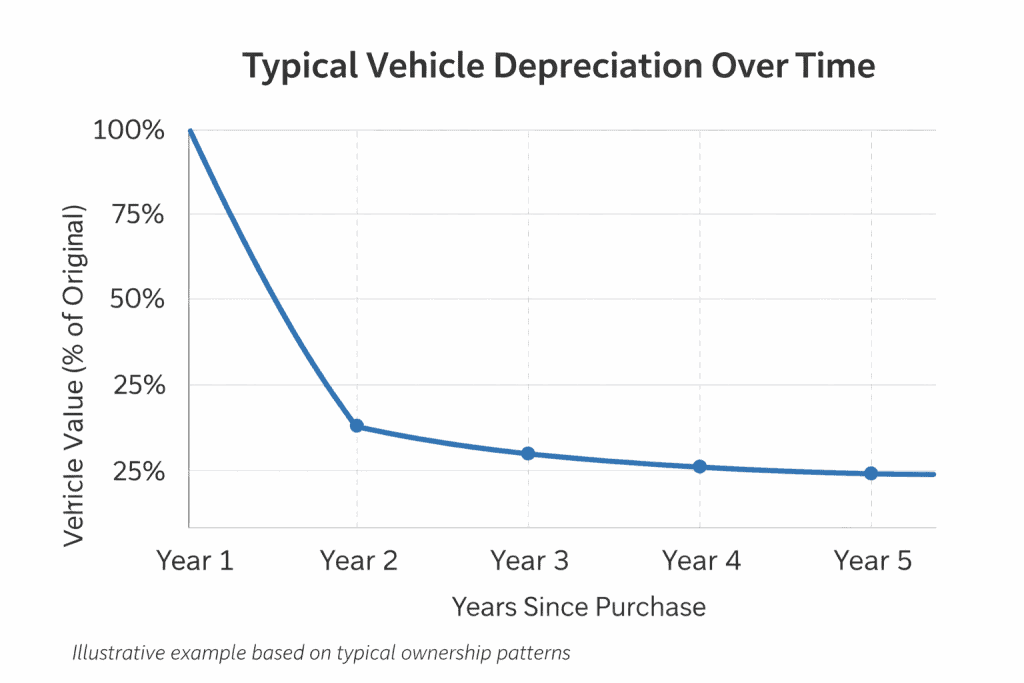
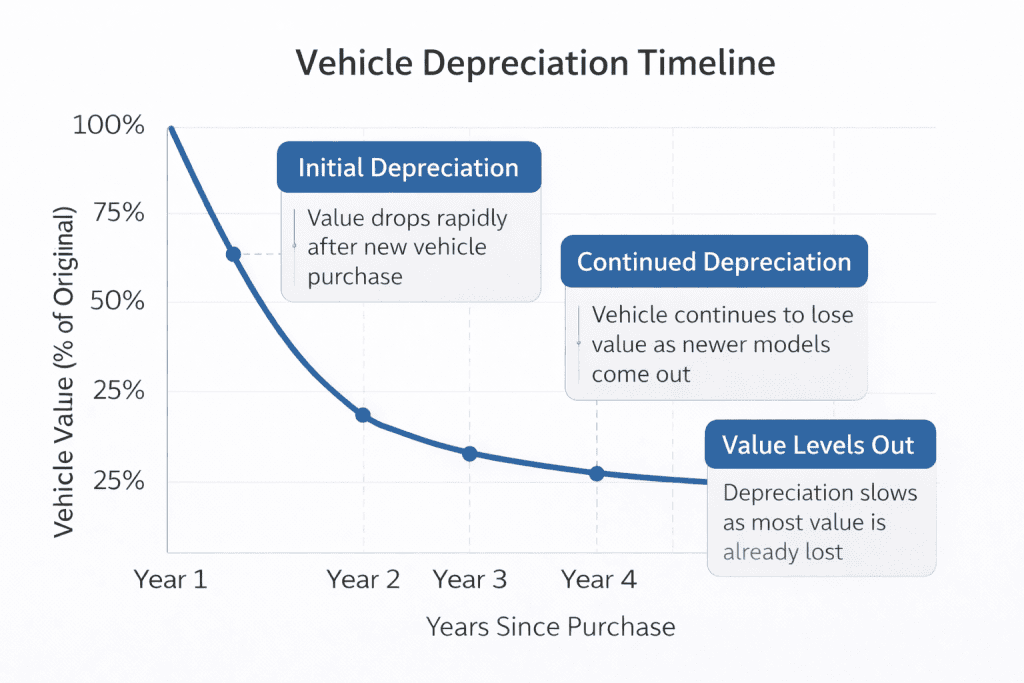
However, depreciation is not linear. Instead, it occurs in stages, with the steepest losses typically happening early in a vehicle’s life. After that, value tends to decline at a slower and more predictable pace.
Why Cars Lose Value Over Time
Several factors work together to reduce a vehicle’s value. Although age and mileage play major roles, they are not the only contributors.
1. Age and Wear
First and foremost, time affects every mechanical system. Even well-maintained vehicles experience material fatigue, interior wear, and cosmetic aging. As a result, buyers typically pay less for older vehicles, regardless of condition.
2. Mileage Accumulation
At the same time, mileage signals how much a vehicle has been used. Higher mileage generally implies increased wear on critical components such as the engine, transmission, suspension, and braking systems. Consequently, vehicles with lower mileage often retain more value than similar models driven further.
3. Market Demand and Buyer Perception
In addition, depreciation is heavily influenced by demand. Vehicles that are widely perceived as reliable, efficient, and practical tend to hold value better. Conversely, models associated with higher ownership costs or limited appeal may depreciate faster.
4. New Model Releases
Furthermore, when manufacturers release redesigned or updated versions, older models can lose value more quickly. New technology, improved fuel efficiency, or refreshed styling often shifts buyer interest toward newer vehicles.
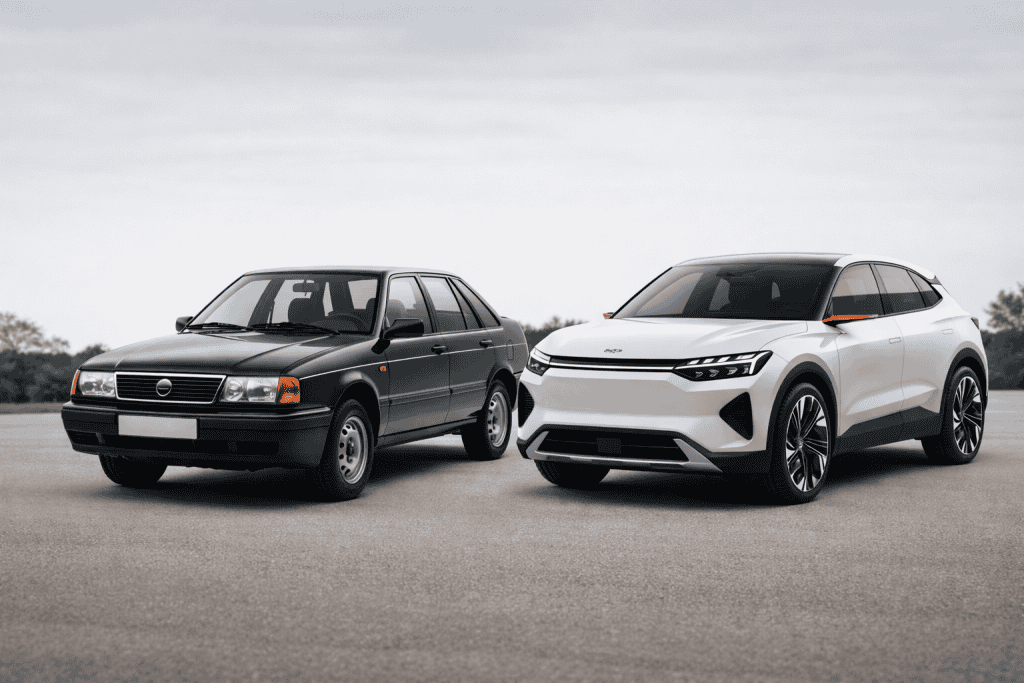
Older sedan next to a modern electric SUV, showing vehicle design and value change over time
The Typical Vehicle Depreciation Curve
Although no two vehicles depreciate exactly the same way, most follow a similar pattern over time.
Year One: The Largest Drop
Immediately after purchase, a vehicle experiences its most significant decline in value. This drop occurs because the car transitions from “new” to “used,” even if it has minimal mileage. For this reason, depreciation in the first year is often the most dramatic.
Years Two to Three: Slowing Decline
After the initial drop, depreciation usually slows. During this stage, the vehicle is still relatively modern, and its reliability profile becomes clearer. As a result, value loss tends to be steadier and more predictable.
Years Four to Five: Stabilization Phase
By this point, depreciation often begins to flatten. Although the vehicle continues to lose value, the annual decline is usually smaller compared to earlier years. For many owners, this phase represents a balance between ownership cost and retained value.
Long-Term Ownership: Gradual Decline
Beyond five years, depreciation becomes increasingly dependent on condition, mileage, and maintenance history. Well-kept vehicles may retain value surprisingly well, while poorly maintained ones can decline much faster.
New Vehicles vs Used Vehicles: Depreciation Differences
One of the most important depreciation insights is the contrast between new and used vehicles. New vehicles experience the steepest early losses, while used vehicles typically depreciate at a slower rate.
Because of this, many buyers choose used vehicles to avoid the largest initial value drop. However, new vehicles may still appeal to drivers who prioritize warranties, latest technology, and customization options. Ultimately, depreciation affects both choices, but at different points in the ownership timeline.
How Depreciation Impacts Total Ownership Cost
Depreciation is not just a theoretical concept—it directly affects real-world financial outcomes.
It determines resale and trade-in value
It influences long-term ownership cost calculations
It affects loan payoff and equity positions
Therefore, depreciation should always be considered alongside fuel expenses, maintenance costs, insurance, and repairs. In fact, many ownership cost tools and calculators rely on depreciation as a core variable.
Factors That Can Slow Depreciation
Although depreciation cannot be eliminated, it can often be reduced.
Maintaining consistent service records
Avoiding excessive mileage when possible
Preserving interior and exterior condition
Choosing vehicles with strong reliability reputations
Additionally, neutral colors and widely desired configurations often perform better in the resale market. While these details may seem minor, they can influence buyer perception significantly.
Common Myths About Vehicle Depreciation
Despite its importance, depreciation is often misunderstood.
Myth: Depreciation stops after a few years Reality: Value continues to decline, just at a slower pace.
Myth: Mileage is the only factor that matters Reality: Condition, demand, and maintenance history are equally important.
Myth: All vehicles depreciate the same way Reality: Vehicle type, ownership costs, and market trends create meaningful differences.
Using Depreciation Knowledge to Make Smarter Decisions
Depreciation is not just a theoretical concept. It directly affects real-world financial outcomes during vehicle ownership. Many drivers overlook its impact when comparing vehicles.
Over time, depreciation influences resale and trade-in value, which affects remaining equity. It also plays a role in long-term ownership cost calculations. In addition, faster value loss can reduce loan equity earlier than expected.
For this reason, depreciation should be considered alongside fuel costs, maintenance, insurance, and repairs. Looking at these factors together gives a clearer picture of total ownership cost.
[…] roughly 12,000 to 15,000 miles per year. Because of that expectation, resale pricing models assume vehicles within this range follow normal depreciation […]
[…] you want to understand this loss in detail, the depreciation factors discussed in the vehicle resale value guide help explain why some models lose value much faster than […]
[…] value in the first year. By purchasing a pre-owned vehicle, you avoid the steepest part of the depreciation curve and often get a higher-quality car for your […]
This platform analyzes depreciation trends, resale value behavior, and long-term ownership costs, helping drivers understand how mileage, maintenance, and timing shape real financial outcomes.