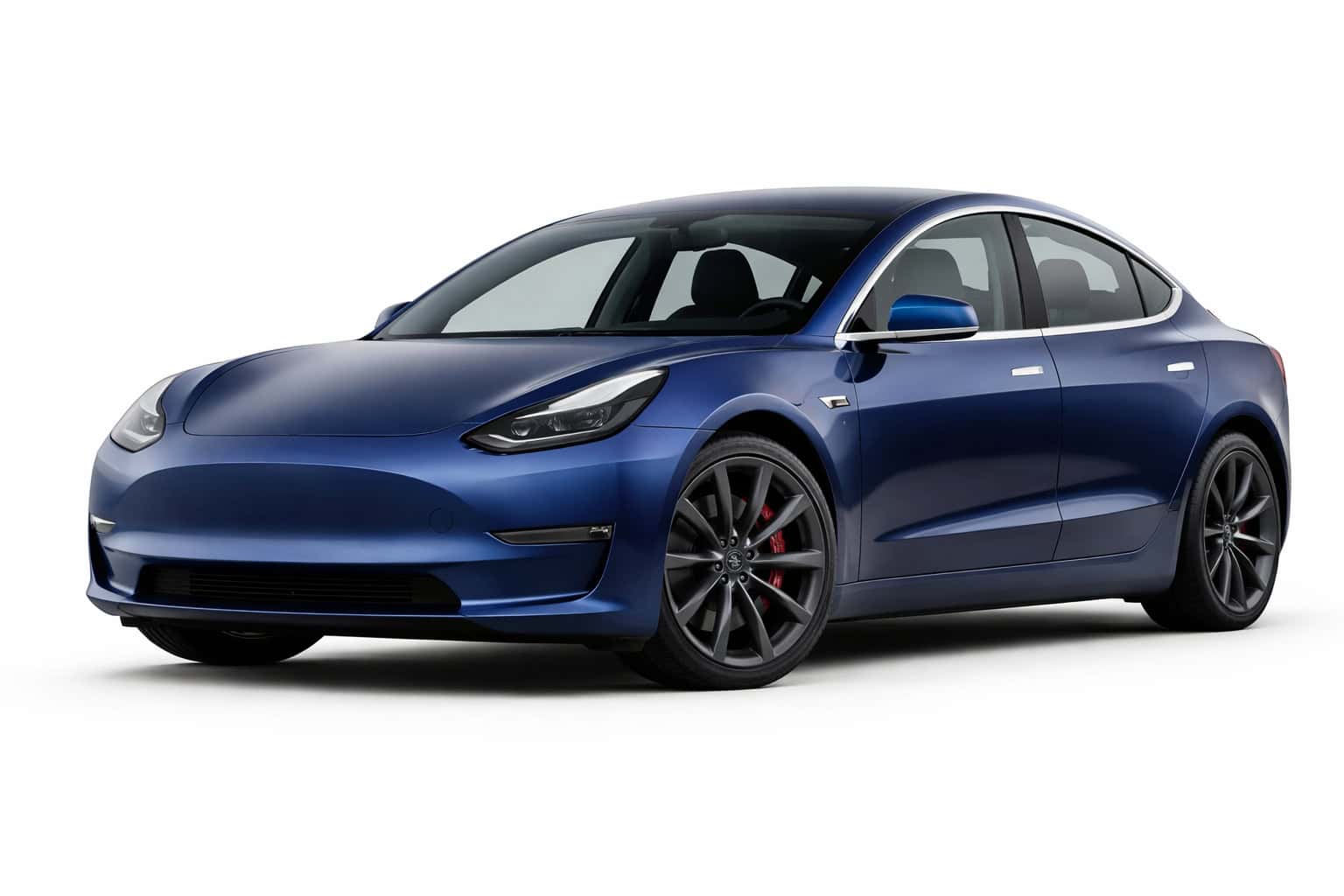
The Tesla Model 3 is a compact electric sedan built around efficiency, quick acceleration, and a technology-focused cabin. You get seating for five, a low center of gravity, a front storage compartment, and a conventional rear trunk. Depending on the trim and model year, EPA driving range runs from roughly 260 to 358 miles. That spread matters because the Model 3 lineup is not simply a choice between slower and faster versions. Battery capacity, drivetrain, acceleration, efficiency, wheels, and equipment can all change as you move through the range. The Rear-Wheel Drive model concentrates on efficiency and lower operating costs. Long Range AWD adds dual motors and considerably more driving range. Performance AWD trades some efficiency for much stronger acceleration and upgraded performance hardware. Tesla also changes specifications more frequently than many traditional automakers. If you are shopping for a used Model 3, you should confirm the exact model year, trim, wheels, battery configuration, and installed software instead of assuming two cars carrying the same trim name are identical.
Trim Lineup
The Tesla Model 3 lineup gives you three main configurations to consider. Rear-Wheel Drive is the efficiency-focused entry point. Long Range AWD adds a second motor, all-wheel drive, and the greatest approximate range in this lineup. Performance AWD sits at the top and concentrates on acceleration and sharper handling. Tesla has changed trim names, specifications, batteries, wheels, and availability over different model years, so you should treat the trim badge as the beginning of your research rather than the final answer. A used Model 3 may have equipment or performance figures that differ from a newer vehicle carrying a similar name.
Rear-Wheel Drive (RWD): Single-motor configuration with rear-wheel drive. Approximate EPA range is 260 to 272 miles, with 0–60 mph taking about 5.8 seconds.
Long Range AWD: Dual-motor configuration with all-wheel drive. Approximate EPA range reaches 330 to 358 miles, while 0–60 mph takes about 4.2 seconds.
Performance AWD: Dual-motor performance configuration with all-wheel drive. Approximate range is 300 to 315 miles, with 0–60 mph arriving in about 3.1 seconds.
Powertrain & Drivetrain
Every Model 3 uses an electric powertrain, so you do not have an engine, conventional multi-speed transmission, or exhaust system to maintain. Permanent-magnet electric motors work with a lithium-ion battery pack, while a single-speed fixed gear sends power to the wheels. Rear-Wheel Drive uses one motor and powers the rear wheels. Long Range AWD uses two motors to provide all-wheel drive and stronger acceleration. Performance AWD also uses two motors, but its configuration is tuned for substantially quicker acceleration and higher performance. The absence of conventional gear changes gives all three trims smooth power delivery when you accelerate. Your choice should therefore depend on how you intend to use the car. RWD covers normal commuting without the added complexity of a second drive motor. Long Range AWD makes more sense when additional range and four-wheel traction matter to you. Performance AWD is aimed at drivers who place acceleration and handling much higher on the priority list.
Battery & Range
Driving range is one of the biggest differences between Model 3 trims. Rear-Wheel Drive provides roughly 260 to 272 miles of EPA range. Long Range AWD stretches that figure to approximately 330 to 358 miles, making it the distance-focused configuration. Performance AWD comes in around 300 to 315 miles because its performance-oriented setup gives up some efficiency. These figures can change with model year, wheel size, software configuration, temperature, speed, and driving conditions. Cold weather is especially important when you are planning an EV trip because cabin heating and low battery temperatures can increase energy consumption. Tesla supports home AC charging as well as DC fast charging through its Supercharger network. You can also use the U.S. Department of Energy’s Alternative Fuels Data Center when researching public charging infrastructure. When comparing used cars, check the displayed range at a reasonable state of charge, but do not use that number alone as a battery-health test. Service history, age, mileage, charging habits, and actual energy consumption give you a more complete picture.
Trim
Approx. EPA Range
Drivetrain
0–60 mph
Rear-Wheel Drive
260–272 miles
RWD
About 5.8 sec
Long Range AWD
330–358 miles
AWD
About 4.2 sec
Performance AWD
300–315 miles
AWD
About 3.1 sec
Performance
Even the least powerful Model 3 feels quick because an electric motor delivers torque without waiting for an engine to build speed or a transmission to downshift. Rear-Wheel Drive reaches 60 mph in about 5.8 seconds, which is already enough for confident highway merging and passing. Long Range AWD cuts that time to roughly 4.2 seconds by using two motors and all-wheel drive. Performance AWD brings the figure down to approximately 3.1 seconds. That is a 2.7-second difference compared with RWD, and you will notice it immediately under hard acceleration. Depending on trim and model year, top speed ranges from approximately 140 to 162 mph. Those numbers are entertaining, but acceleration is not the only consideration when choosing a trim. Performance-oriented wheels and tires can affect ride comfort, efficiency, replacement costs, and driving range. If your Model 3 will spend most of its life commuting, the extra speed may be enjoyable rather than necessary. If acceleration and sharper responses are major priorities, Performance AWD is the configuration designed around them.
Interior Features
The Model 3 cabin takes a very different approach from a conventional compact sedan. Most vehicle information and controls are concentrated in a 15-inch central touchscreen instead of being spread across a traditional instrument panel filled with switches and gauges. You also get synthetic seating materials, Bluetooth connectivity, wireless phone charging, key-card access, phone-as-key capability, heated front seats, and a large panoramic glass roof. Higher configurations can add heated rear seating and upgraded audio equipment. This layout creates a clean cabin, but you should spend time using the touchscreen before buying because many functions depend on it. A short test drive is not enough if you spend the whole time admiring the acceleration. Try the climate controls, navigation, mirrors, audio settings, charging information, driver-assistance settings, and phone connection. On a used Model 3, confirm that the key cards work and that the vehicle can properly pair with your phone. You should also inspect the seats, glass roof, touchscreen, charging ports, and interior trim for damage or excessive wear.
Exterior Features
The Model 3 uses a smooth body shape designed partly around aerodynamic efficiency. Exterior equipment includes LED lighting, flush door handles, alloy wheels, and a large glass roof that flows into the rear portion of the cabin. Wheel size varies by trim and model year, and that choice can affect more than appearance. Larger performance wheels generally use lower-profile tires, which can increase replacement cost and make road impacts more noticeable. Long Range and Performance configurations can include power-folding mirrors, while Performance models add equipment such as sport-oriented wheels, larger brakes, and a lowered suspension. When you inspect a used Model 3, look closely at wheel and tire condition. Strong acceleration can make tires disappear faster than you might expect if the car has been driven enthusiastically. You should also check body-panel alignment, door operation, glass, exterior lighting, and the flush handles. Cosmetic alignment differences were reported more frequently on some earlier vehicles, so an inspection gives you a better answer than judging the car by mileage alone.
Safety & Driver Assistance
Model 3 safety equipment combines conventional crash protection with camera and software-based driver assistance. Equipment across the lineup includes Automatic Emergency Braking, Forward Collision Warning, Lane Departure Warning, Blind Spot Monitoring, a rearview camera, side-collision avoidance, and adaptive cruise control. Available software can add Enhanced Autopilot or Full Self-Driving Capability, depending on the vehicle and software configuration. You should understand that a software package name does not remove your responsibility to supervise the vehicle. Tesla’s own guidance requires drivers to remain attentive when using applicable assisted-driving functions. Before buying a used Model 3, verify exactly which software features are active on that specific vehicle instead of relying on an advertisement or seller description. Check the vehicle’s software screen and confirm the equipment yourself. You should also test cameras and warning systems for errors. Crash-test results have generally been strong, but active driver assistance and physical crash protection are separate subjects. You can review independent crash-test information through the National Highway Traffic Safety Administration when researching a particular model year.
Dimensions & Capacity
The Model 3 is compact enough for normal urban use while still providing seating for five and useful cargo capacity. General dimensions are approximately 184.8 inches long, 72.8 inches wide, and 56.8 inches tall, with a wheelbase of roughly 113 inches. Combined cargo capacity is around 23 cu ft when the rear trunk and front storage compartment are considered together. The front compartment, commonly called the frunk, is particularly useful for smaller items that you want separated from the main cargo area. The 113-inch wheelbase also helps create usable passenger room without requiring a very long body. Exact measurements can vary as Tesla updates the vehicle, so confirm specifications for the model year you are considering. If passenger space matters, sit in both rows rather than relying only on exterior measurements. The sloping roof and low seating position can feel different from an SUV or taller hatchback. You should also test your normal cargo because a 23-cu-ft combined figure does not mean every large object will fit through the rear trunk opening.
Measurement
Approximate Specification
Seating
5
Length
184.8 in
Width
72.8 in
Height
56.8 in
Wheelbase
113 in
Combined Cargo Volume
Around 23 cu ft
Charging & Efficiency
You can charge a Model 3 from a basic 120V outlet, a 240V Level 2 source, or a compatible DC fast charger. Level 1 is the slowest option and works better when daily mileage is limited. A 240V home charging setup is much better suited to regular EV ownership because it can replenish substantially more energy while the car sits overnight. Tesla Superchargers provide DC fast charging for longer trips when you need to add energy quickly. Efficiency also changes noticeably by trim. Rear-Wheel Drive is around 132 MPGe combined, while Long Range AWD is approximately 131 MPGe. Performance AWD drops to roughly 113 MPGe because its performance hardware and configuration place less emphasis on maximum efficiency. That means choosing the fastest Model 3 has an energy-cost tradeoff even though all three avoid gasoline. Your actual consumption will depend on temperature, speed, wheel and tire choice, cabin heating or cooling, and driving habits. Before buying, check whether home charging is realistic for you. Reliable overnight charging can make EV ownership much easier than depending entirely on public stations.
Reliability Overview
The Model 3 eliminates many maintenance items found on gasoline vehicles because there is no engine oil, exhaust system, spark-plug service, or conventional multi-speed transmission. That simpler powertrain can reduce routine mechanical work, but it does not mean the car is maintenance-free. Reported concerns have included panel alignment on some earlier builds, occasional touchscreen resets, HVAC noise in cold conditions, and replacement of the older 12V low-voltage battery. Battery packs and drive motors have generally been durable, but you should still evaluate an individual car carefully because repair costs can be significant when an EV-specific component does fail. Check the touchscreen for warnings and confirm that heating and air conditioning operate normally. Inspect the tires for uneven wear. Listen for suspension noises on rough pavement. You should also review the service history and verify any remaining battery or drive-unit warranty coverage for the specific model year. Low mileage should not automatically end the inspection. A newer Model 3 can still have damaged wheels, worn tires, neglected cabin filters, body repairs, or unresolved electronic faults.
Ownership Costs
A Model 3 can reduce several routine expenses because you do not need gasoline, oil changes, spark plugs, or many traditional engine services. Regenerative braking also slows the car using the electric motors, which can reduce normal brake-pad wear. Electricity becomes your main energy expense, and the actual amount depends heavily on local utility rates and whether you charge at home or rely on public fast charging. Insurance deserves equal attention. Model 3 premiums can be higher than you expect because body, glass, sensor, and collision repairs can become expensive. Tires are another cost that should not be ignored. Instant torque, vehicle weight, aggressive acceleration, and performance-oriented tire sizes can increase wear. Depreciation can also move quickly when EV prices, incentives, and new-car pricing change. Before buying, compare your insurance quote, local electricity rate, expected annual mileage, tire replacement cost, and purchase price rather than focusing only on the absence of gasoline. A lower fuel bill is useful, but it does not magically make insurance companies or tire shops forget your address.
Driving Experience
The Model 3 feels different from a gasoline sedan as soon as you press the accelerator. Electric torque arrives immediately, so there is no conventional transmission waiting to select a lower gear. The battery is mounted low in the vehicle, which lowers the center of gravity and helps the sedan remain composed through corners. Regenerative braking can also slow the car noticeably when you lift off the accelerator. You may need some time to adjust if you are moving from a conventional automatic vehicle. Rear-Wheel Drive gives you the core Model 3 experience without chasing maximum acceleration. Long Range AWD combines stronger traction with a roughly 4.2-second 0–60 mph time. Performance AWD turns acceleration into the headline feature with a time of approximately 3.1 seconds and performance-focused chassis equipment. You should test the exact trim you intend to buy because wheel size, tires, suspension tuning, and drivetrain can change how the car rides. A three-second launch is impressive. Your back will probably care more about ride quality during the other 99% of the trip.
Competitors
The Model 3 competes with several electric vehicles, but the closest alternative depends on what you value most. The Hyundai Ioniq 6 puts strong emphasis on efficiency and aerodynamic design. The Polestar 2 offers a different cabin layout and driving character. BMW’s i4 moves toward a more traditional premium-car experience, while the Kia EV6 uses a crossover-like body with greater emphasis on cargo versatility. The Chevrolet Bolt EUV has also occupied a lower-priced portion of the EV market, although its size, body style, and performance make it a less direct match. When you compare these vehicles, use the same criteria for each one. Check EPA range, charging access, charging speed, passenger space, cargo room, insurance quotes, tire prices, warranty coverage, and the purchase price you can actually obtain. Do not compare one vehicle’s base price with another vehicle loaded with options. Your charging situation should also carry significant weight. An EV that looks perfect on paper can become inconvenient if the charging setup does not fit where and how you drive.
Conclusion
The Tesla Model 3 trim lineup gives you three distinct ways to approach the same compact electric sedan. Rear-Wheel Drive concentrates on efficiency and provides roughly 260 to 272 miles of EPA range. Long Range AWD increases that figure to approximately 330 to 358 miles while adding dual-motor traction and a 0–60 mph time of about 4.2 seconds. Performance AWD moves the emphasis toward speed with approximately 300 to 315 miles of range and acceleration to 60 mph in about 3.1 seconds. Your best research should go beyond the trim name because Tesla specifications can change between model years. Confirm the battery configuration, drivetrain, wheels, active software, charging equipment, warranty status, service history, and tire condition on the exact Model 3 you are considering. If you match those details to your daily mileage and access to charging, you can determine which configuration fits your needs without paying for range, performance, or equipment that you will rarely use.
This platform analyzes depreciation trends, resale value behavior, and long-term ownership costs, helping drivers understand how mileage, maintenance, and timing shape real financial outcomes.