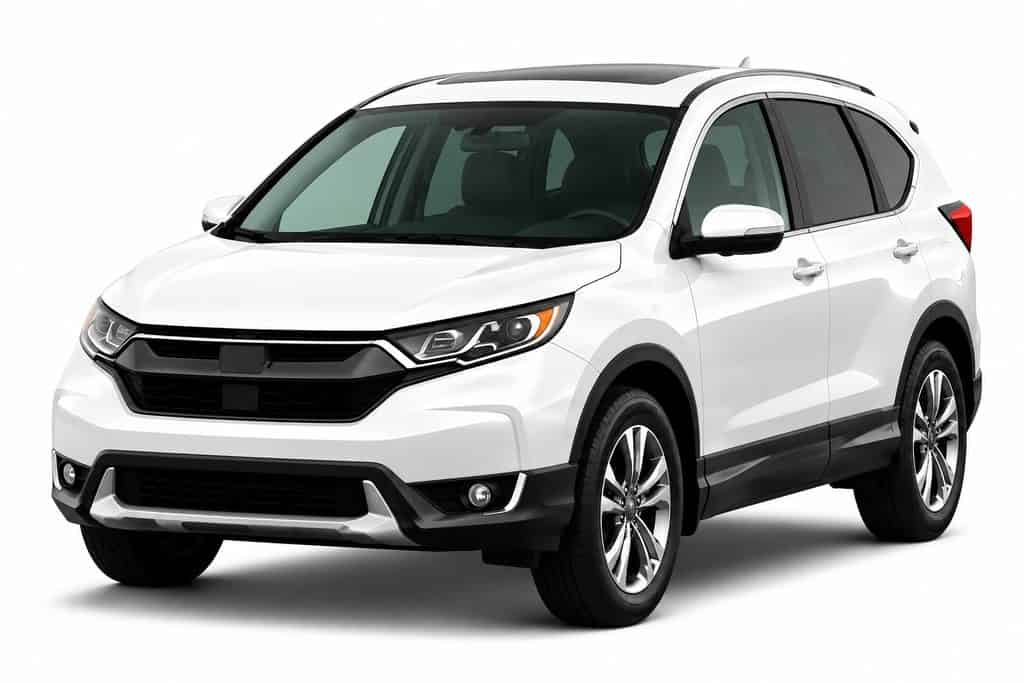
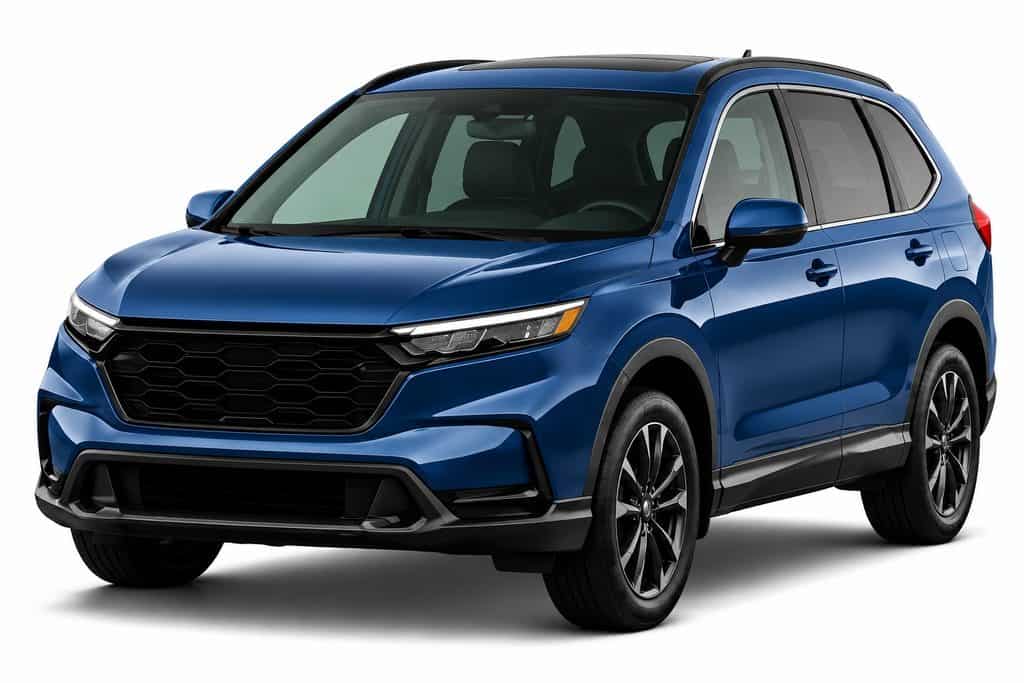
The Honda CR-V has been sold in North America since the late 1990s. It has now progressed through six generations. The early CR-V was a relatively simple compact SUV with a four-cylinder engine and available AWD. Later generations became larger and more comfortable. Honda also added better safety equipment, improved fuel economy, turbo power, and eventually a hybrid system. These changes matter when you shop used. A first-generation CR-V gives you a very different ownership experience from a fifth or sixth-generation model. Knowing the generation helps you narrow your search by engine, transmission, drivetrain, interior space, and technology. It also tells you which areas deserve closer attention before you buy.
Honda CR-V Generation Timeline
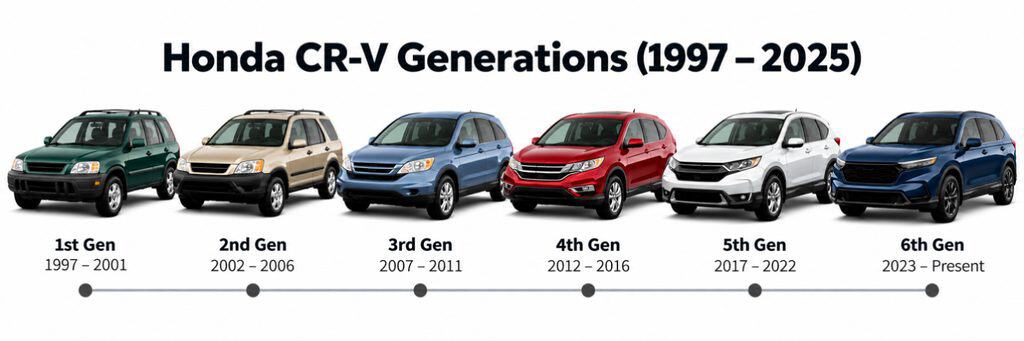
The Honda CR-V generation timeline covers almost 30 years of change. The first generation arrived for the 1997 model year with a 2.0L four-cylinder engine. The second and third generations moved to a larger 2.4L engine. The fourth generation improved fuel economy and later introduced a CVT. A major change came with the fifth generation. Honda added the 1.5L turbo engine and later expanded the CR-V lineup with hybrid power. The sixth generation continues with turbo and hybrid choices. Looking at the timeline first makes these changes easier to follow. It also helps you avoid comparing two CR-Vs that may share the same name but have very different engines, transmissions, and safety features.
1st Generation (1997–2001) Honda CR-V
1997–2001 Honda CR-V Buyer Information
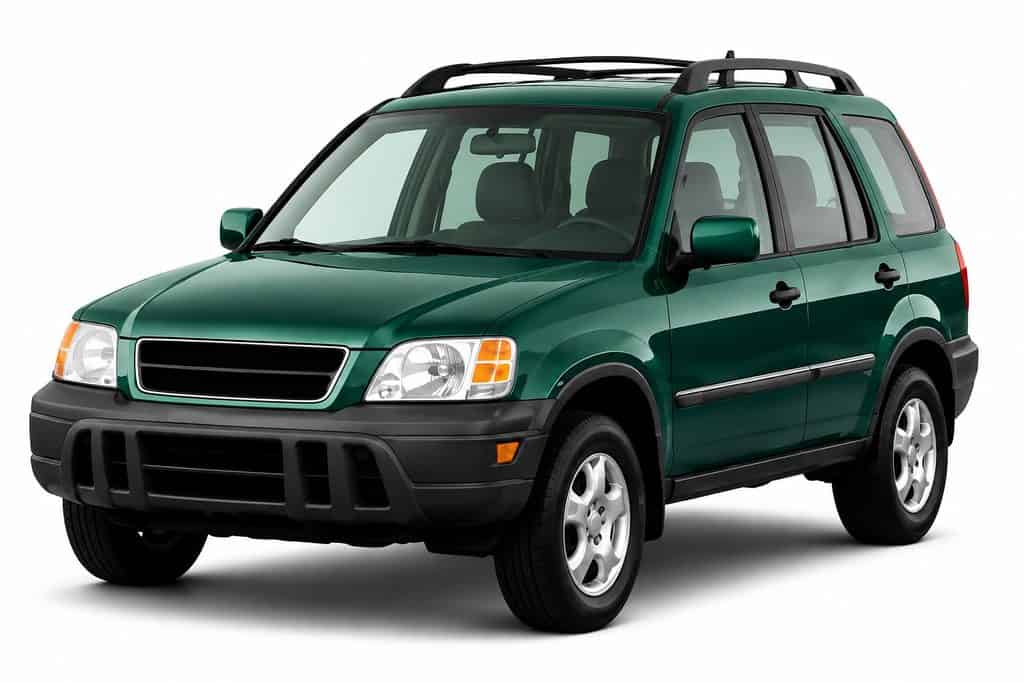
The first-generation CR-V is now an older SUV, so its condition matters more than its original reputation. You get a simple four-cylinder layout and a choice between FWD and RealTime AWD. Manual and automatic transmissions were also offered. That simplicity can appeal to you if you want an older CR-V without modern turbo or hybrid systems. Age changes the buying priorities, though. These vehicles are now more than 20 years old. Look closely for rust, fluid leaks, worn suspension parts, damaged interior pieces, and poor previous repairs. You should also check the maintenance history. A well-kept first-generation CR-V can be easier to own than one with lower mileage but years of neglected service.
Read More
1st Generation (1997–2001)
The first-generation CR-V was noticeably smaller than today’s model. Honda kept the exterior compact while giving you seating for five and a useful rear cargo area. Specifications changed slightly during the generation. Drivetrain and model year can also affect weight and ground clearance. Use these figures to understand the generation as a whole. Check the specifications for the exact year if a particular measurement matters to you.
Model years: 1997–2001
Body style: 4-door compact SUV
Engine: 2.0L four-cylinder
Power: Approximately 126–146 hp, depending on model year
Transmissions: Manual or automatic
Drivetrain: FWD or RealTime AWD, depending on year and market
Seating capacity: 5
Cargo space behind rear seats: Approximately 29 cu. ft.
Maximum cargo space: Approximately 67 cu. ft. with the rear seats folded
Length: Approximately 177–178 in
Width: Approximately 68.9 in
Height: Approximately 65–66 in
Wheelbase: Approximately 103.2 in
Ground clearance: Approximately 8 in, depending on configuration
Curb weight: Roughly 2,900–3,200 lb
Fuel tank capacity: Approximately 15.3 U.S. gal
Towing capacity: Up to approximately 1,000 lb when properly equipped
Key generation change: Established the CR-V as Honda’s compact SUV for North America
U.S. and Canada: Core specifications were very similar. AWD became a popular choice in Canada.
Buying priority: Judge the CR-V by its present condition and maintenance history. These vehicles are now old enough that condition matters more than a small mileage difference.
2nd Generation (2002–2006) Honda CR-V
2002–2006 Honda CR-V Buyer Information
Honda made the second CR-V roomier and more comfortable while keeping the basic idea familiar. The larger cabin gives you more usable passenger space than the first generation. Honda also moved to a 2.4L four-cylinder engine. Manual transmission versions were still available during the early years, which makes this generation interesting if you specifically want an older CR-V with three pedals. Safety and ride comfort also improved. Today, age should still guide your inspection. Check the body and underbody for corrosion. Test the transmission and AWD system. Look at the suspension, brakes, tires, and fluid history as well. A complete maintenance record can tell you far more about the SUV than a shiny coat of paint.
Read More
2nd Generation (2002–2006)
The second-generation CR-V grew in several useful areas. You received more passenger room and a larger cargo area. Honda also moved from the earlier 2.0L engine to a 2.4L four-cylinder. Manual and automatic transmissions were offered during this generation. Measurements can vary slightly by year and drivetrain, so treat the figures below as generation reference points.
Model years: 2002–2006
Body style: 4-door compact SUV
Engine: 2.4L four-cylinder
Power: Approximately 160 hp
Transmissions: Manual or automatic, depending on year
Drivetrain: FWD or RealTime AWD
Seating capacity: 5
Cargo space behind rear seats: Approximately 33.5 cu. ft.
Maximum cargo space: Approximately 72 cu. ft.
Length: Approximately 178–181 in
Width: Approximately 70.2 in
Height: Approximately 66–67 in
Wheelbase: Approximately 103.3 in
Ground clearance: Approximately 8 in, depending on configuration
Curb weight: Roughly 3,200–3,500 lb
Fuel tank capacity: Approximately 15.3 U.S. gal
Towing capacity: Up to approximately 1,500 lb when properly equipped
Key generation change: Added a larger engine, more interior room, and improved everyday comfort
U.S. and Canada: The basic mechanical package remained similar in both countries.
Buyer concern: Corrosion, suspension wear, fluid history, air conditioning, and age-related repairs
Buying priority: Look for complete service records and a clean body. A well-kept CR-V is usually a better starting point than a neglected SUV with fewer miles.
3rd Generation (2007–2011) Honda CR-V
2007–2011 Honda CR-V Buyer Information
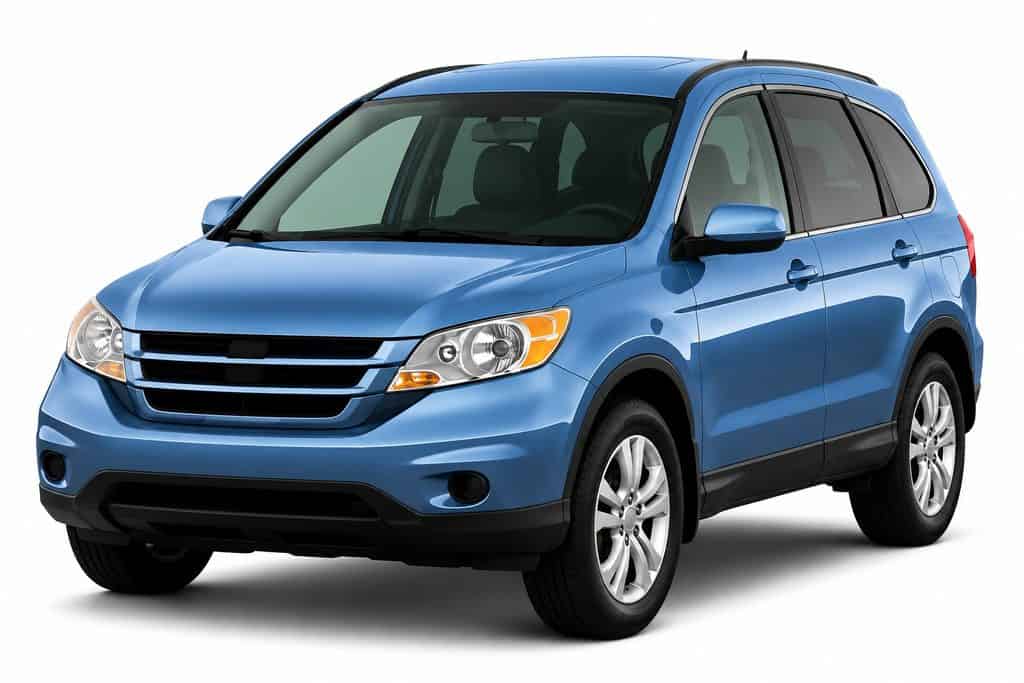
The third-generation CR-V brought a major redesign and a more polished feel. Honda kept the 2.4L four-cylinder engine but moved away from the manual transmission. You now find automatic models with either FWD or RealTime AWD. This generation also improved safety and everyday comfort. That can make it more appealing if you want an older CR-V without going back to the simpler feel of the first two generations. Canadian shoppers will see plenty of AWD models because that drivetrain became increasingly popular in colder regions. Before buying, inspect the underbody and suspension carefully. Check the brakes and transmission operation too. Service history remains important because these CR-Vs are old enough for missed maintenance to start showing up in the ownership experience.
Read More
3rd Generation (2007–2011)
The third generation moved the CR-V toward the smoother crossover design you see in later models. The cabin became more polished, while Honda retained a 2.4L four-cylinder engine. Automatic transmission became the normal setup. Cargo space remained one of the CR-V’s stronger points. Exact measurements and weight can change with year, trim, and drivetrain.
Model years: 2007–2011
Body style: 4-door compact SUV
Engine: 2.4L four-cylinder
Power: Approximately 166–180 hp, depending on model year
Transmission: Automatic
Drivetrain: FWD or RealTime AWD
Seating capacity: 5
Cargo space behind rear seats: Approximately 35 cu. ft.
Maximum cargo space: Approximately 72–73 cu. ft.
Length: Approximately 178–180 in
Width: Approximately 71.6 in
Height: Approximately 66 in
Wheelbase: Approximately 103.1 in
Ground clearance: Approximately 7–7.3 in
Curb weight: Roughly 3,300–3,600 lb
Fuel tank capacity: Approximately 15.3 U.S. gal
Towing capacity: Up to approximately 1,500 lb when properly equipped
Key generation change: Brought a major exterior redesign and a more refined cabin
U.S. and Canada: Mechanical choices remained similar. AWD continued to be especially common in Canada.
Buyer concern: Suspension wear, corrosion, brakes, air conditioning, fluid maintenance, and drivetrain condition
Buying priority: Check how the individual CR-V has been maintained. Do not let the model’s reliability reputation replace an inspection.
4th Generation (2012–2016) Honda CR-V
2012–2016 Honda CR-V Buyer Information
The fourth-generation CR-V sits between the simpler older models and the turbocharged CR-Vs that followed. Honda continued using a 2.4L four-cylinder engine. The transmission changed during the generation, with a CVT arriving later. Fuel economy improved, and the cabin received updates. Honda also expanded the available safety technology. This generation can make sense if you want a newer CR-V without moving to the 1.5L turbo engine used in the next generation. You should still research the exact model year before buying. Do not assume every 2012–2016 CR-V has the same transmission or equipment. Check its maintenance records and confirm which drivetrain it has. That small amount of homework can save you from comparing two mechanically different CR-Vs as though they were identical.
Read More
4th Generation (2012–2016)
The fourth-generation CR-V kept the familiar 2.4L engine but introduced an important transmission change. Earlier versions used a conventional automatic. Later models moved to a CVT. Passenger and cargo room remained competitive for a compact SUV. The model also became more efficient and gained newer safety technology. Specifications differ between earlier and later versions, so the model year deserves attention.
Model years: 2012–2016
Body style: 4-door compact SUV
Engine: 2.4L four-cylinder
Power: Approximately 185 hp
Transmission: Automatic on earlier models. CVT introduced later.
Drivetrain: FWD or RealTime AWD
Seating capacity: 5
Cargo space behind rear seats: Approximately 35–37 cu. ft.
Maximum cargo space: Approximately 70–71 cu. ft.
Length: Approximately 179–180 in
Width: Approximately 71.6 in
Height: Approximately 64–65 in
Wheelbase: Approximately 103.1 in
Ground clearance: Approximately 6.3–6.7 in, depending on drivetrain
Curb weight: Roughly 3,300–3,600 lb
Fuel tank capacity: Approximately 15.3 U.S. gal
Towing capacity: Up to approximately 1,500 lb when properly equipped
Key generation change: Improved fuel economy and introduced the CVT during the generation
U.S. and Canada: Both markets received similar core powertrain choices.
Buyer concern: Transmission type, CVT maintenance on later models, AWD servicing, brakes, and corrosion
Buying priority: Identify the exact model year and transmission before comparing two fourth-generation CR-Vs.
5th Generation (2017–2022) Honda CR-V
2017–2022 Honda CR-V Buyer Information
The fifth generation represents one of the larger changes in the CR-V’s history. Turbo power became part of the lineup through the 1.5L four-cylinder engine. Hybrid power arrived later. Honda also expanded driver assistance through Honda Sensing. These changes gave you better efficiency and more technology than earlier generations. They also mean you need to identify the exact engine and drivetrain before buying. A turbo CR-V and a hybrid CR-V should not be researched as though they have identical maintenance needs. AWD remained popular, particularly in Canada. Check the service history carefully on any used model. Confirm fluid maintenance and test all major technology. A newer badge on the registration does not magically make missed maintenance disappear.
Read More
5th Generation (2017–2022)
The fifth generation brought bigger mechanical changes. Honda introduced the 1.5L turbo engine and later added hybrid power. The body also grew enough to provide generous passenger and cargo room. You still received five seats, but the CR-V became easier to use as a family SUV. Gasoline and hybrid versions have different specifications. Drivetrain and trim can also change several measurements.
Model years: 2017–2022
Body style: 4-door compact SUV
Engines: 1.5L turbo four-cylinder, with hybrid power added later
Power: Approximately 190 hp for the 1.5L turbo. Hybrid output differs by model year.
Transmission: CVT on conventional gasoline models
Drivetrain: FWD or RealTime AWD, depending on version
Seating capacity: 5
Cargo space behind rear seats: Approximately 33–39 cu. ft., depending on powertrain and configuration
Maximum cargo space: Approximately 68–76 cu. ft., depending on version
Length: Approximately 181–183 in
Width: Approximately 73 in
Height: Approximately 66–67 in
Wheelbase: Approximately 104.8 in
Ground clearance: Approximately 7.8–8.2 in, depending on drivetrain
Curb weight: Roughly 3,300–3,800 lb, depending on powertrain and drivetrain
Fuel tank capacity: Approximately 14 U.S. gal
Towing capacity: Up to approximately 1,500 lb on applicable versions
U.S. and Canada: Powertrain availability changed during the generation. AWD remained especially popular in Canada.
Buyer concern: Exact engine, CVT service history, AWD maintenance, electronics, and previous servicing
Buying priority: Identify whether you are looking at a gasoline or hybrid CR-V first. Research its maintenance needs separately.
6th Generation (2023–Present) Honda CR-V
2023–Present Honda CR-V Buyer Information
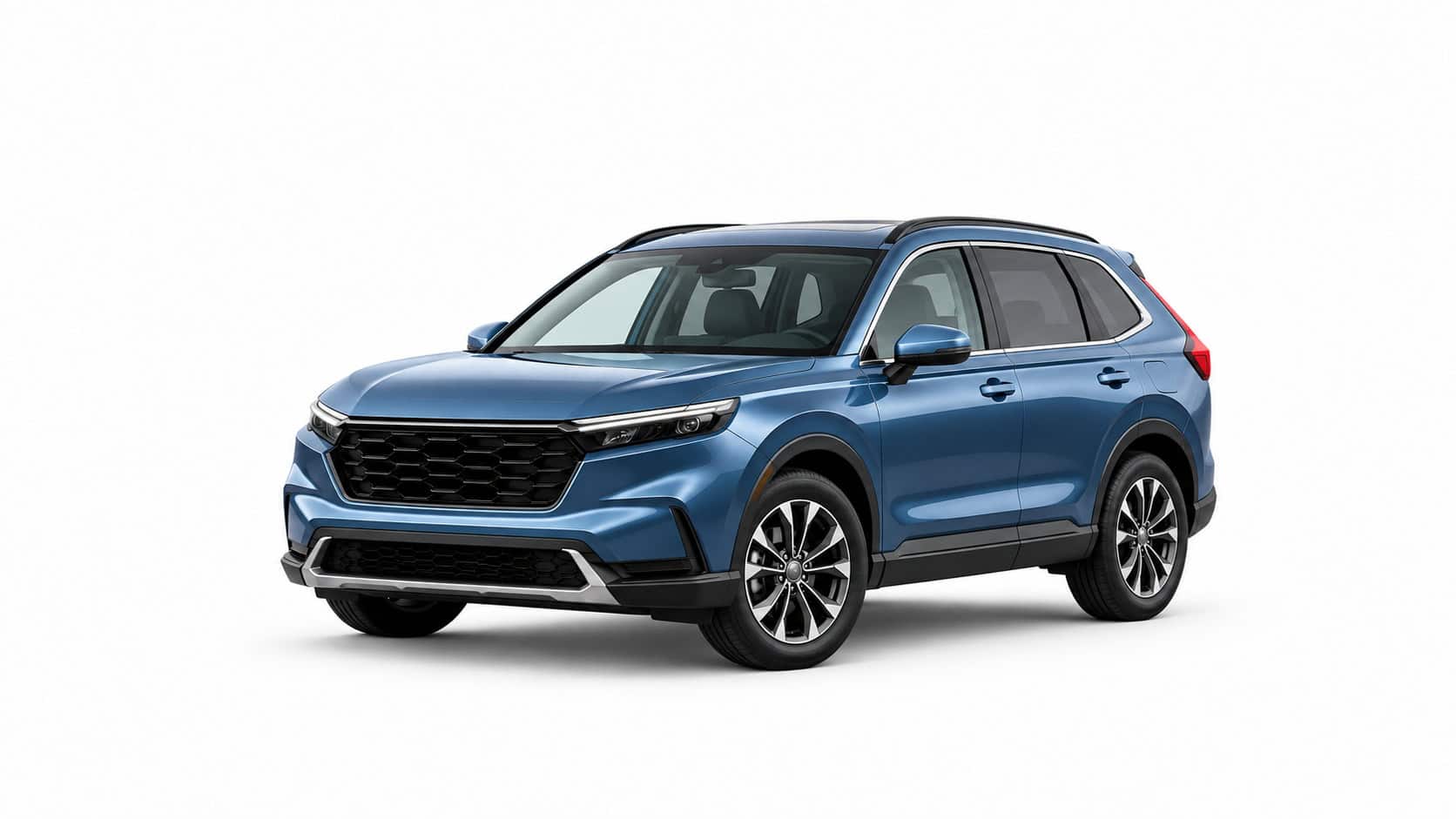
The sixth-generation CR-V gives you the newest version of Honda’s compact SUV formula. The interior grew, technology improved, and hybrid power became a much more important part of the lineup. You can choose between the 1.5L turbo and 2.0L hybrid system, depending on trim and market. FWD and RealTime AWD remain available. The generation is still relatively new, so many used vehicles may have remaining warranty coverage depending on age, mileage, and original sale date. Do not let that replace a proper inspection. Check the service history and confirm the exact powertrain. Test the cameras, driver assistance features, infotainment, and other electronics. You should also check for outstanding recalls before buying.
Read More
6th Generation (2023–Present)
The sixth generation is larger than the early CR-Vs and gives you considerably more interior space. Honda continues to offer gasoline and hybrid power. The hybrid also plays a larger role in the current lineup. Five-passenger seating remains standard. Cargo capacity changes depending on powertrain and configuration. Specifications can also change as Honda updates the generation, so verify the exact model year when shopping.
Model years: 2023–present
Body style: 4-door compact SUV
Engines: 1.5L turbo four-cylinder and 2.0L hybrid system
Power: Approximately 190 hp for the 1.5L turbo and about 204 hp combined for the hybrid system
Transmission: CVT on 1.5L turbo models. Hybrid uses its own electric drive system.
Drivetrain: FWD or AWD, depending on version
Seating capacity: 5
Cargo space behind rear seats: Approximately 34–39 cu. ft., depending on powertrain and configuration
Maximum cargo space: Approximately 76 cu. ft.
Length: Approximately 185 in
Width: Approximately 73.5 in
Height: Approximately 66–67 in
Wheelbase: Approximately 106.3 in
Ground clearance: Approximately 7.8–8.2 in, depending on drivetrain
Curb weight: Roughly 3,500–3,900 lb, depending on powertrain and drivetrain
Fuel tank capacity: Approximately 14 U.S. gal
Towing capacity: Up to approximately 1,500 lb on applicable gasoline versions. Hybrid ratings can differ.
Key generation change: Larger body, longer wheelbase, updated technology, and greater emphasis on hybrid power
U.S. and Canada: Both markets receive turbo and hybrid choices, although trims and drivetrain combinations can differ.
Buyer concern: Exact powertrain, electronics, safety systems, service history, and outstanding recalls
Buying priority: Compare the gasoline and hybrid versions separately. Their fuel use, equipment, and ownership needs are not identical.
Key Differences Between Honda CR-V Generations
Moving through six Honda CR-V generations changes much more than the age printed on the registration. Early CR-Vs give you simpler engines, manual or conventional automatic transmissions, and basic technology. The middle generations added more interior comfort and better safety equipment. Newer models introduced the CVT, 1.5L turbo engine, Honda Sensing, and hybrid power. These differences affect fuel use, maintenance, purchase price, and the equipment you get. Start by deciding how much technology you actually want. Then compare the generations that fit your budget. Once you narrow the search, investigate individual model years because important mechanical changes can happen within the same generation.
How Honda CR-V Body Style Changed
The CR-V has remained a 4-door SUV throughout all six North American generations. You will not find a CR-V coupe or a North American 3-row version within this history. What changed was the amount of space inside. Honda gradually increased passenger room and cargo usefulness as the CR-V developed. That makes the later generations more appealing when you regularly carry adults, children, luggage, or larger items. Older models still offer useful cargo space for their size. Their smaller dimensions may even suit you better if parking space is limited. Choose based on how you use the SUV rather than assuming the largest generation automatically fits your needs best.
How Honda CR-V Engines Changed
Engine development shows how much the CR-V changed over six generations. The first generation used a 2.0L four-cylinder engine. Honda moved to a 2.4L four-cylinder for the second generation and continued using that engine size through several later models. The fifth generation brought 1.5L turbo power into the picture. Hybrid technology followed. The current generation offers 1.5L turbo and 2.0L hybrid choices. Each step changed the ownership experience. If simplicity matters most to you, the older non-turbo engines may be appealing. If fuel use and newer technology matter more, the hybrid deserves closer attention. Research the actual engine in the CR-V you are considering instead of judging reliability by generation alone.
How Honda CR-V Transmissions Changed
Transmission choices became simpler as the CR-V moved through its generations. Early models could be purchased with manual or automatic transmissions. Manual availability eventually disappeared. Conventional automatics then became the normal setup before Honda introduced the CVT during the fourth generation. Modern CR-Vs rely heavily on CVT technology. That change matters when you shop used because transmission maintenance needs are not identical across all six generations. Check which transmission is actually installed before reviewing its service history. On a CVT model, look for documented fluid maintenance. If records are missing, have the vehicle inspected rather than assuming everything is fine because the transmission feels normal during a five-minute test drive.
How Honda CR-V Safety Changed
Safety equipment improved considerably as the CR-V aged. Early generations came from an era when driver assistance systems were not part of everyday SUV shopping. Later models added stronger safety equipment and more electronic assistance. Honda Sensing became an important part of the fifth-generation CR-V and continues in newer models. These systems can help with braking, lane control, and other driving situations. Equipment can still vary by year and trim. Check the actual CR-V rather than assuming every vehicle from a generation has identical features. You can use the IIHS ratings database to research crash-test information for the specific model year you are considering.
How Honda CR-V Fuel Economy Changed
Fuel economy generally improved as Honda changed the CR-V’s engines and transmissions. Early models relied on conventional four-cylinder engines. Later generations improved engine efficiency and moved toward the CVT. The 1.5L turbo provided another step in the CR-V’s development. Hybrid power then gave buyers the most fuel-focused option in the modern lineup. Do not compare fuel economy using generation names alone. Engine, drivetrain, model year, and testing method all matter. U.S. buyers should use the official EPA rating for the exact vehicle. Canadian buyers should check its NRCan rating in L/100 km. That gives you a better estimate of fuel use than assuming every CR-V from one generation performs the same way.
Honda CR-V Generations in the U.S. and Canada
The six CR-V generations broadly follow the same timeline in the United States and Canada. Core engines and drivetrain choices are also similar. The biggest differences involve trim availability, equipment, drivetrain popularity, and how fuel economy is presented. FWD CR-Vs are more common in parts of the United States. AWD has traditionally been more attractive to Canadian shoppers because of winter conditions. Canadian vehicles may also have cold-weather equipment that differs by trim. When you research a used CR-V, confirm where it was originally sold. Do not assume a U.S. review describes every feature on a Canadian model with a similar trim name.
Honda CR-V Generations in the United States
U.S. CR-V buyers have generally had greater access to FWD models alongside AWD versions. Trim choices can also change from year to year. Hybrid availability did not arrive at the same point as the original gasoline CR-V lineup, so the exact model year matters when you want an electrified version. When buying used, confirm the engine, drivetrain, and original equipment through the vehicle information. You should also check the VIN for open safety recalls. The NHTSA recall database lets you do this before you buy. A recall check takes only a few minutes. That is considerably easier than discovering an unfinished recall after the SUV is already sitting in your driveway.
Honda CR-V Generations in Canada
Canadian CR-V buyers see the same six-generation progression, but AWD is particularly common. Cold weather also changes what you should inspect on an older vehicle. Road salt can affect the underbody, brakes, suspension parts, and exposed metal. Look underneath the CR-V instead of judging its condition only from clean exterior paint. Canadian fuel consumption is also shown in L/100 km through NRCan rather than the mpg figures used in the United States. Check Canadian specifications when researching a Canadian-market CR-V. This is especially important when comparing trims because equipment can differ from similarly named U.S. versions.
Which Honda CR-V Generation Fits Your Needs?
Choosing between six CR-V generations becomes easier when you first decide what matters to you. The first three generations give you an older and simpler ownership experience. The fourth generation moves closer to a modern CR-V while retaining a 2.4L engine. Generations five and six add turbo power, more safety technology, and hybrid choices. Price is only part of the decision. Think about fuel use, safety features, repair budget, winter driving, and how much modern technology you want. An older CR-V can cost less to purchase but may need age-related repairs. A newer model costs more upfront but gives you equipment that simply did not exist when the earliest CR-Vs were built.
1st–3rd Generation Honda CR-V
The first three generations suit you best when purchase price and mechanical simplicity matter more than having current technology. These CR-Vs use conventional four-cylinder engines and come from an era before modern driver assistance became common. You may also find manual transmissions in the earlier generations. Age is now the largest concern. Even a dependable older CR-V can have rust, tired suspension parts, worn seals, or years of missed maintenance. Inspect the body and underbody carefully. Review the service records as well. If the vehicle has spent winters in Canada or a northern U.S. state, corrosion deserves extra attention before you buy.
4th Generation Honda CR-V
The fourth generation gives you a middle point between the older CR-Vs and the turbo era. You still get a 2.4L four-cylinder engine, while later versions introduce the CVT. Fuel economy, interior comfort, and available safety technology also improved. That combination may suit you if you want something newer without moving directly into a turbocharged fifth-generation model. The exact year matters because the transmission changed during this generation. Identify what you are buying before comparing maintenance needs. A good service history should carry more weight than a small mileage difference between two otherwise similar CR-Vs.
5th–6th Generation Honda CR-V
The fifth and sixth generations give you the newest technology in the CR-V family. Turbo power, Honda Sensing, modern infotainment, and hybrid availability separate these SUVs from the older generations. They also give you more powertrain choices to research. A 1.5L turbo CR-V and a hybrid should be compared separately. Fuel costs and maintenance needs can differ. Purchase prices are also generally higher than older generations. Start with the engine you want. Then compare drivetrain, safety equipment, service history, and condition. If you want the newest CR-V features and the strongest focus on fuel efficiency, these are the generations where your search should begin.
Honda CR-V Generations Summary
Across six generations, the Honda CR-V changed from a simple compact SUV into a much more advanced crossover with turbo and hybrid power. The basic formula remained familiar. You still get four doors, useful passenger space, and available AWD. What changed was everything around that formula. Engines evolved from 2.0L and 2.4L four-cylinder designs to turbo and hybrid choices. Manual transmissions disappeared. CVTs became common. Safety technology also moved from basic equipment to Honda Sensing. Your best starting point is to choose the generation that fits your budget and technology needs. Then research the exact model year, engine, drivetrain, and maintenance history before you buy.
This platform analyzes depreciation trends, resale value behavior, and long-term ownership costs, helping drivers understand how mileage, maintenance, and timing shape real financial outcomes.