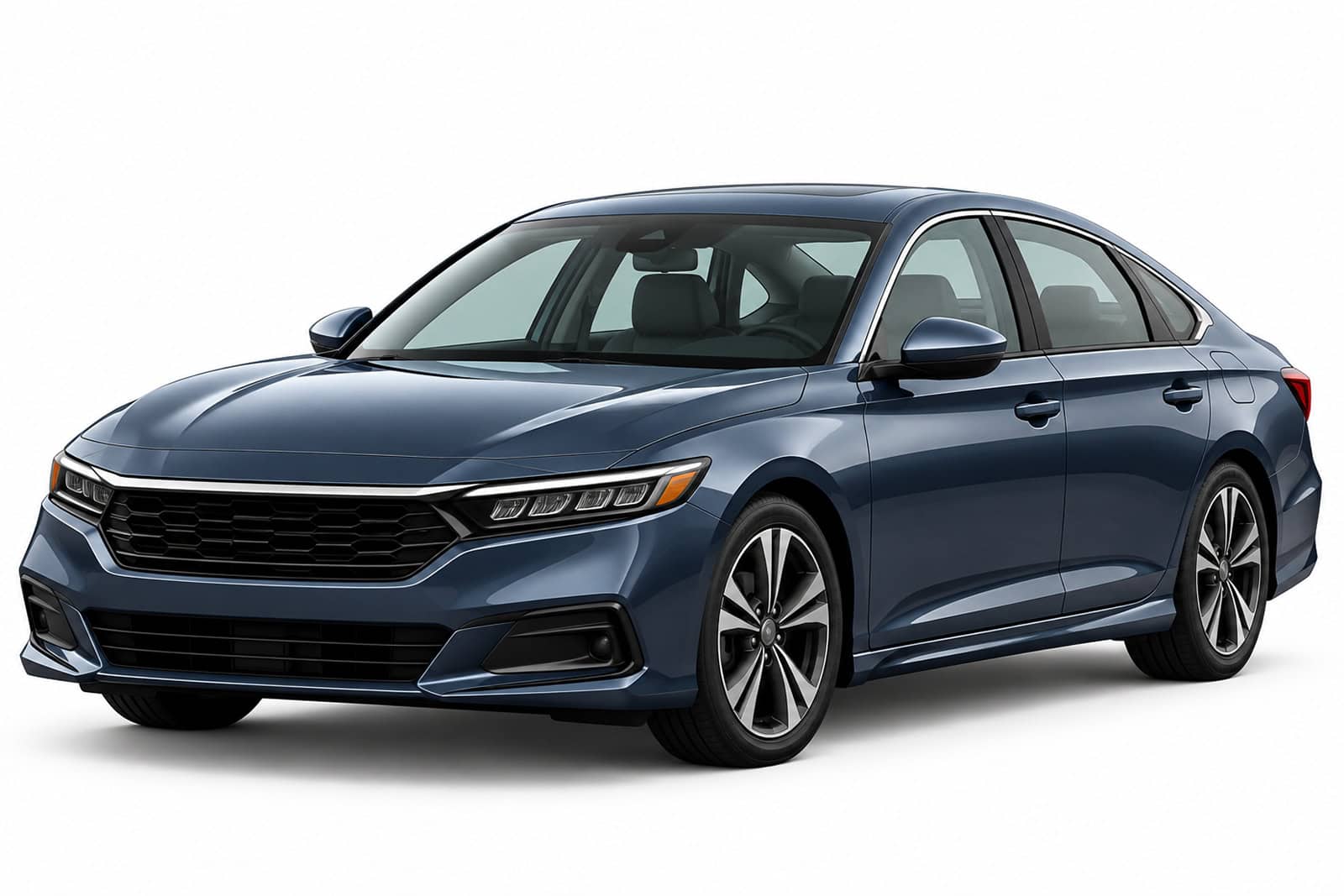
Keeping a Honda Accord running well is less about following one fixed mileage schedule and more about responding to the car’s Maintenance Minder, checking wear items regularly, and not putting off fluid service. On newer Accords, the car tracks operating conditions and tells you when specific maintenance is approaching. That makes the schedule easier to follow, but it does not mean you can ignore brakes, tires, corrosion, leaks, or unusual noises until a code appears. This Honda Accord maintenance guide covers the main service items for U.S. and Canadian owners, with extra attention on 2013–2025 models. You will find Maintenance Minder codes, oil and transmission service, filters, brake fluid, coolant, spark plugs, tires, brakes, severe driving conditions, and typical service costs. Older Accords can follow different requirements, so you should always compare this information with the owner information for your exact model year.
How the Honda Accord Maintenance Minder Works
The Honda Maintenance Minder is the car’s built-in reminder system for scheduled maintenance. Instead of asking you to remember that an oil change or tire rotation may be coming up, the Accord displays maintenance information on the instrument panel. Think of it as your car giving you a short service list. You may see something such as A1, B1, or B3. The letter tells you the main service that is needed. Any number shown beside the letter tells you what additional maintenance should be completed at the same time. The system also tracks engine oil life as a percentage. After fresh oil is installed and the system is properly reset, oil life starts at 100% and decreases as you drive. It does not simply count miles. Honda’s system considers how the vehicle is being operated when determining oil life. When the percentage becomes low, the Accord begins reminding you that service is approaching. You should not reset the Maintenance Minder just to remove the message. Reset it after the required maintenance has actually been completed.
What Do A and B Mean on a Honda Accord?
The letter is the first part of the Maintenance Minder message. It tells you the main maintenance service your Accord needs. An A service is primarily an engine-oil service. A B service is more extensive. It includes the engine oil and oil filter along with a group of inspections. You may also see a number beside the letter. Do not ignore that number because it identifies additional maintenance that is due.
Code A: Replace the engine oil.
Code B: Replace the engine oil and oil filter. The B service also calls for inspections of specified components, including the front and rear brakes, steering and suspension parts, fluid levels, exhaust system, fuel lines, and related items.
What Do the Numbers After A or B Mean?
The numbers are called subcodes. They tell you which additional maintenance items need attention. For instance, if your Accord displays A1, the A tells you to replace the engine oil and the 1 tells you to rotate the tires. If it displays B3, the B identifies the main B service and the 3 adds transmission-fluid replacement. Several numbers can appear when multiple services are due together.
Code 1: Rotate the tires.
Code 2: Replace the engine air cleaner element and cabin air filter. The specified drive-belt inspection is also included.
Code 3: Replace the transmission fluid.
Code 4: Replace the spark plugs and perform the specified valve-clearance inspection.
Code 5: Replace the engine coolant.
Code 6: Applies to the additional drivetrain-fluid service specified for vehicles that use it. Check the maintenance information for your exact Accord before assuming this code applies.
How to Read Honda Maintenance Minder Codes
Once you understand the letter-and-number system, the dashboard message becomes much easier to read. Start with the letter. That tells you whether the main service is A or B. Then read every number that follows it. Each number adds another job to the visit. This is why telling a repair shop that you have a “maintenance light” is less useful than telling them the exact code displayed on the dashboard.
A1: Replace the engine oil and rotate the tires.
B1: Replace the engine oil and filter, complete the B-service inspections, and rotate the tires.
A12: Replace the engine oil, rotate the tires, replace the engine and cabin air filters, and complete the specified Code 2 inspection.
B13: Complete the B service, rotate the tires, and replace the transmission fluid.
B145: Complete the B service and the work identified by Codes 1, 4, and 5.
The exact combination you see depends on what your Accord determines is due. You do not need to memorize every possible combination. Read the letter, then match each number to its maintenance item. That little code is basically your Accord handing you its shopping list, only thankfully it is not asking for snacks.
Engine Oil and Oil Filter
Oil service is the maintenance item you will deal with most often. The supplied schedule places typical U.S. oil service around 7,500–10,000 miles and Canadian service around 8,000–12,000 km, with severe-use service potentially occurring around 5,000 miles or 8,000 km. On an Accord equipped with Maintenance Minder, however, the displayed oil-life information and A or B service notification should guide the actual service timing rather than treating those mileage figures as universal Honda deadlines. Do not stretch an oil change simply because the engine still sounds normal. Oil protects internal engine parts from heat, friction, and contamination. This deserves extra attention on turbocharged Accords because the turbo also depends on proper lubrication. Check the oil level between services, especially before a long trip. If the level repeatedly drops, investigate why instead of continually topping it up and hoping the engine has simply developed a thirst.
Transmission Fluid: CVT and Automatic
Transmission fluid is one of the services worth taking seriously because transmission repairs can cost far more than routine fluid replacement. The supplied ranges place service around 30,000–60,000 miles in the U.S. and 50,000–100,000 km in Canada, depending on operating conditions. Accords use different transmissions across generations, including conventional automatics, CVTs, and a 10-speed automatic on certain newer models. Use the correct Honda-specified fluid for the transmission installed in your car. The 2013–2017 Accord deserves particular attention because many four-cylinder versions use a CVT. If you are buying one used, look for transmission-fluid service records instead of assuming it was done. During a test drive, watch for hesitation, unusual noises, shuddering, or inconsistent operation. If Maintenance Minder displays subcode 3, deal with the transmission-fluid service rather than postponing it. Saving money by skipping fluid service can become impressively expensive later.
Engine Air Filter
Your engine air filter prevents dirt and debris from entering the engine. The supplied service range is approximately 15,000–30,000 miles in the U.S. or 24,000–48,000 km in Canada. Actual replacement timing depends heavily on where you drive. Dusty roads and dirty environments can shorten filter life, so mileage alone should not decide when you replace it. A dirty filter can restrict airflow and should be replaced when inspection shows it is due. Fortunately, this is one of the simpler Honda Accord maintenance items. Have the filter inspected during routine service, especially if you regularly drive in dusty areas. Do not pay for an unnecessary replacement just because someone waves a slightly gray filter at you. Dirt buildup and restriction matter more than the filter looking factory fresh.
Cabin Air Filter
The cabin filter cleans air entering the heating and air-conditioning system. A common replacement range in the supplied schedule is 15,000–30,000 miles or 24,000–48,000 km. Heavy dust, smoke, pollen, leaves, and dirty winter conditions can shorten that interval. A musty smell, reduced airflow through the vents, or a visibly dirty filter are good reasons to inspect it sooner. This service affects cabin comfort rather than engine survival, but ignoring the filter can reduce HVAC airflow. If your Accord suddenly seems reluctant to push air through the vents, check the filter before assuming something expensive has failed. It is also worth inspecting before heavy summer air-conditioning use or a Canadian winter, when you depend on strong airflow for heating and windshield defrosting.
Brake Fluid
Brake fluid ages with time, which makes this service different from maintenance based mainly on mileage. The supplied schedule calls for replacement every 3 years in both the United States and Canada. That means an Accord driven only 5,000 miles per year can still need brake-fluid service even though its odometer barely moves. Moisture gradually enters brake fluid and can reduce its ability to perform properly under demanding conditions. Keep a dated service record so you know when the fluid was last changed. If you buy a used Accord without proof of brake-fluid service, have the condition checked and establish a new maintenance starting point rather than guessing what the previous owner did.
Engine Coolant
Coolant controls engine temperature while also protecting the cooling system against freezing and corrosion. The supplied schedule places the first coolant replacement at approximately 10 years or 120,000 miles in the U.S., followed by 5 years or 60,000 miles. The Canadian figures supplied are 10 years or 200,000 km initially, followed by 5 years or 100,000 km. Do not confuse coolant replacement with simply filling an overflow reservoir. If the coolant level keeps falling, there may be a leak that needs diagnosis. Check hoses and visible cooling-system components during routine inspections, and never open a hot cooling system. Once the initial long service period has passed, keeping track of the shorter follow-up interval becomes important because it is easy to forget a service that happens only every several years.
Spark Plugs and Valve Clearance
The supplied maintenance information places spark-plug replacement around 100,000 miles in the U.S. or 160,000 km in Canada. That is a long interval, which also makes it easy for second or third owners to lose track of whether the service was completed. Maintenance Minder subcode 4 identifies spark-plug service and the associated valve-clearance inspection requirements. If you buy a higher-mileage Accord, ask for proof that this work was completed rather than relying on a verbal promise. Worn plugs can contribute to poor running, difficult starting, misfires, and reduced performance. Use the correct replacement plugs specified for your engine. The Accord has used several different engines over the years, so a part that fits one generation should never be assumed correct for another.
Does the Honda Accord Have a Timing Belt or Timing Chain?
This is one area where the model year and engine matter. You should not apply a blanket “all Accords use timing chains” rule across the Accord’s long history. Modern four-cylinder Accord engines commonly use timing chains, while some older V6 Accord engines use timing belts. That distinction is important because a timing chain normally does not have the same routine replacement schedule as a timing belt. If your Accord uses a timing chain, there is generally no normal mileage-based replacement simply because the odometer reaches a certain number. Proper oil maintenance helps protect the chain and related components. If you own an older V6 Accord with a timing belt, check the maintenance requirements for that exact engine and model year. Do not assume the belt can stay there forever. Rubber has yet to negotiate that deal.
Tire Rotation and Tire Inspection
Regular rotation helps the four tires wear more evenly. The supplied interval is about 7,500 miles in the United States or 12,000 km in Canada, and Maintenance Minder subcode 1 identifies tire rotation on equipped Accords. Rotation is also a convenient time to inspect tread depth, uneven wear, sidewall damage, and tire pressure. Uneven wear can tell you more than simply when to buy tires. Wear concentrated on one edge may point toward an alignment or suspension problem, while unusual differences between tires deserve investigation. Canadian owners should also inspect seasonal tires before installation instead of discovering in the first snowfall that last winter used up the remaining tread. Correct pressure should be checked when the tires are cold using the specification provided for your Accord.
Brake Pads and Rotors
Brake life varies too much for one replacement mileage to work for every Accord. The supplied ranges put brake-pad life around 30,000–70,000 miles in the U.S. and roughly 40,000–90,000 km in Canada. City traffic, hills, driving style, vehicle load, road salt, and long periods of sitting can all change those numbers. Rotors also need inspection because corrosion or uneven wear can require attention even when some pad material remains. Listen for grinding or persistent squealing. Pay attention to vibration during braking, changes in pedal feel, or a car that pulls while stopping. Canadian cars and Accords from northern U.S. states deserve extra inspection for rotor and brake-component corrosion. Have the brakes measured during service rather than replacing parts based only on mileage. Actual remaining thickness tells you far more than a generic replacement interval.
Honda Accord Maintenance in Canada
Canadian Accord maintenance needs additional attention in winter because salt, slush, moisture, ice, and repeated temperature changes attack parts underneath the car. Even if the engine and transmission follow similar service requirements, brakes and exposed metal components can age differently from those on a car that has spent its life in a dry climate. Regular washing during salt season helps, but it does not replace inspection.
Underbody: Check for corrosion and damaged protective coatings.
Brakes: Inspect rotors, calipers, lines, and related hardware for corrosion and wear.
Suspension: Look for worn bushings, damaged components, and problems caused by rough winter roads.
Tires: Inspect winter-tire tread, pressure, age, and condition before the cold season.
Wheel bearings: Investigate humming or growling noises rather than allowing them to worsen.
Exhaust: Check exposed components for corrosion and damage.
Fluids: Follow the correct service requirements for your exact model and driving conditions.
Honda Accord Maintenance in the United States
Where you live in the U.S. matters more than the country name alone. An Accord driven through Minnesota winters can face salt and corrosion conditions much closer to those of a Canadian car than an Accord living in Arizona. Hot climates create their own concerns. High temperatures put extra demands on cooling systems, batteries, tires, and air conditioning. Dusty areas can also shorten air-filter life.
Northern states: Inspect the underbody, brake components, suspension, and exhaust for salt-related corrosion.
Hot climates: Watch coolant condition, battery health, tire pressure, and air-conditioning performance.
Dusty regions: Inspect the engine and cabin air filters more frequently.
Heavy traffic: Pay closer attention to oil life, brakes, tires, and transmission service.
Short-trip driving: Do not assume low annual mileage automatically means easy operating conditions.
Long highway use: Continue following Maintenance Minder and inspect tires regularly despite relatively steady driving.
Honda Accord Maintenance Costs in the United States
Maintenance prices vary by model year, engine, location, parts used, and whether you visit a Honda dealer or an independent repair shop. The figures below are the supplied planning ranges, not fixed Honda prices. A turbocharged Accord, hybrid, older V6, and four-cylinder model can require different parts and labor. Use the ranges to build a budget, then request an itemized quote for your exact Accord before approving larger services.
Service
Typical U.S. Cost
Oil and filter
$60–$120
CVT/ATF fluid
$150–$300
Brake fluid
$90–$150
Coolant
$150–$250
Spark plugs
$250–$450
Front brakes
$250–$450
Rear brakes
$200–$350
Tire rotation
$20–$40
Honda Accord Maintenance Costs in Canada
Canadian prices in the supplied information are generally higher, with location, labor rates, taxes, and parts prices contributing to the difference. Winter-related brake and corrosion work can also add expenses that do not fit neatly into a scheduled maintenance table. Before approving service, ask what is required now, what is simply recommended for later, and whether the quoted price includes parts, labor, shop fees, and taxes.
Service
Typical Canada Cost
Oil and filter
$80–$150
CVT/ATF fluid
$180–$350
Brake fluid
$120–$180
Coolant
$180–$300
Spark plugs
$300–$500
Front brakes
$300–$550
Rear brakes
$250–$450
Tire rotation
$25–$50
How to Lower Honda Accord Maintenance Costs Without Skipping Service
Saving money on Honda Accord maintenance does not require ignoring the Maintenance Minder. The cheaper approach is catching ordinary wear before it turns into a larger repair. Check fluid levels and tire pressure between services. Keep invoices. Follow transmission-fluid requirements. Deal with leaks and warning lights early. When a shop recommends additional work, ask what was measured or observed and why the repair is needed now.
Some basic jobs, such as replacing certain filters, may also cost less if you are comfortable doing them yourself and can follow the correct procedure. For larger work, compare written quotes from reputable shops. Do not choose a service solely because it is the cheapest. Correct fluids, suitable parts, and competent labor matter. Saving $40 on the wrong transmission fluid is not much of a victory if the transmission later needs a four-figure repair.
Honda Accord Maintenance Checklist for a Used Car
A used Accord with 60,000 miles can need more immediate maintenance than another one with 100,000 miles if the first owner ignored service. That is why you should review records before deciding what the car needs. Start with the engine oil, transmission fluid, brakes, tires, coolant, filters, and any age-based maintenance. Then check whether warning lights or Maintenance Minder codes have simply been reset without the corresponding work being documented.
Service records: Confirm oil changes, transmission-fluid service, brake-fluid replacement, coolant service, and other scheduled work.
Engine oil: Check the level and look for leaks or signs of neglected servicing.
Transmission: Review fluid history and test the vehicle for abnormal operation.
Brakes: Inspect pad thickness, rotor condition, brake-fluid history, and corrosion.
Tires: Check tread depth, age, pressure, uneven wear, and whether all four tires are suitable for the car.
Cooling system: Check coolant history, level, hoses, and signs of leakage.
Filters: Inspect engine and cabin filters if replacement history is unknown.
Warning lights: Investigate illuminated warnings rather than assuming they only need to be reset.
Maintenance Minder: Compare displayed service information with invoices to confirm the work was actually performed.
Recall status: U.S. owners can enter the VIN into the NHTSA recall lookup to check for open safety recalls.
What Honda Accord Maintenance Should You Prioritize?
Start with the services that protect expensive components and affect safety. Engine oil belongs near the top because every gasoline Accord depends on proper lubrication. Transmission fluid deserves similar attention, especially on CVT-equipped cars. Brakes and tires directly affect stopping and control, while coolant protects the engine from overheating and freezing. Once those items are accounted for, filters, spark plugs, inspections, and other scheduled work become easier to plan. The simplest system is to keep one maintenance record for the car. Write down the date, mileage or kilometres, service performed, and the next expected service. Keep the invoices with it. When Maintenance Minder displays a code, compare it with your records and have the required work completed. That gives you something far more useful than trying to remember whether the transmission fluid was changed “a couple of summers ago.”
This platform analyzes depreciation trends, resale value behavior, and long-term ownership costs, helping drivers understand how mileage, maintenance, and timing shape real financial outcomes.