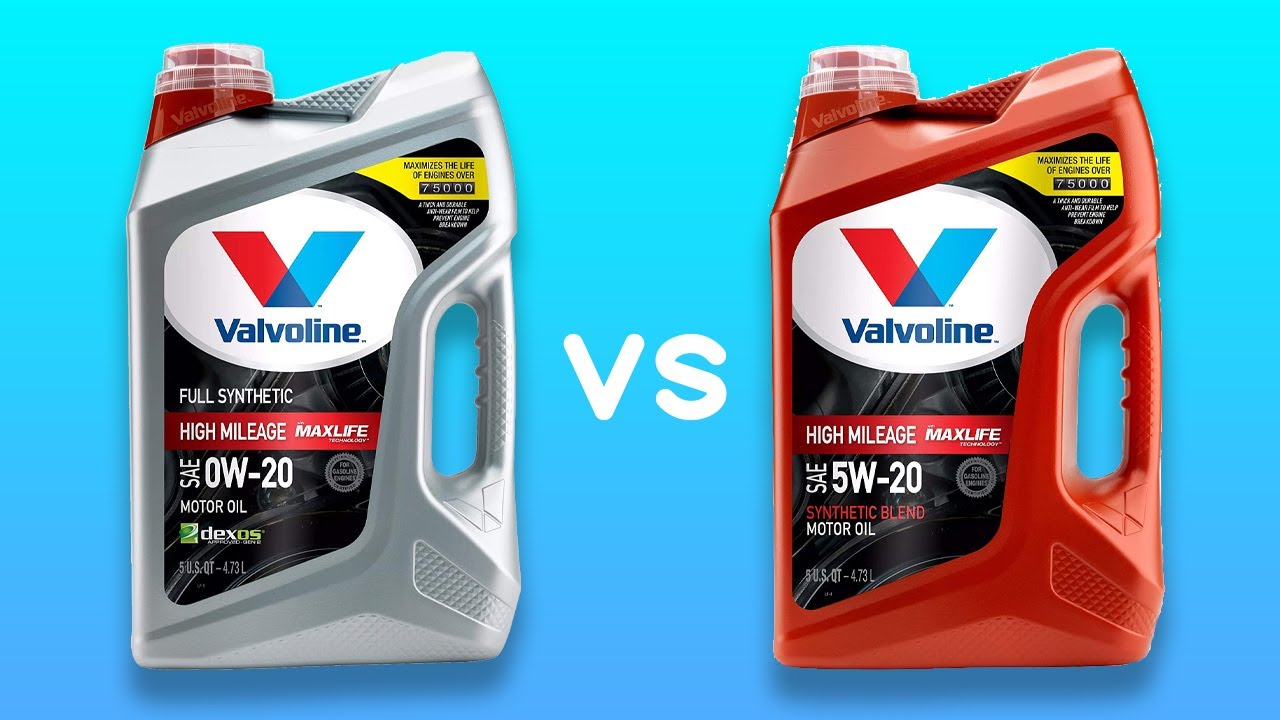
Choosing the right motor oil is crucial for engine longevity and performance—especially in Canada, where temperatures can plunge to -40°C in winter and soar past 30°C in summer. Among the most commonly recommended oils for modern vehicles are 0W-20 and 5W-20. But what’s the difference, and which one is better for Canadian conditions?
In this article, we’ll compare 0W-20 vs 5W-20 in terms of viscosity, cold-weather performance, fuel economy, vehicle compatibility, and long-term engine protection. If you live in Canada and are unsure which oil is right for your car or truck, this guide is for you.
🧪 Understanding Oil Grades: What Do 0W-20 and 5W-20 Mean?
The numbers in motor oil labels refer to viscosity, or the oil’s resistance to flow. The “W” stands for “Winter”, not weight. Here’s how it breaks down:
0W-20: Flows like a 0-weight oil in winter and a 20-weight oil at normal engine operating temperatures.
5W-20: Flows like a 5-weight oil in cold temperatures and also acts like a 20-weight oil when hot.
Both are multi-grade oils, meaning they adapt to temperature changes, but 0W-20 is thinner at cold start.
❄️ Cold Weather Performance in Canada
Canada’s long, cold winters make low-temperature oil performance a top concern.
Milder winters (e.g., Vancouver Island, Southern Ontario)
Why It Matters:
Cold starts are the most stressful time for engines.
0W-20 flows more easily at -30°C or lower, reducing engine wear at startup.
In extreme cold, 5W-20 may take longer to reach engine components, increasing friction.
Conclusion: For most Canadians—especially those outside southern B.C.—0W-20 is a better winter choice.
🔥 Warm Weather & Summer Driving
In warmer months, both 0W-20 and 5W-20 behave like SAE 20-weight oils when the engine is at operating temperature (typically ~100°C).
Factor
0W-20
5W-20
Summer Protection
Excellent
Excellent
Highway Driving
Fully capable
Fully capable
Towing/Heavy Load
Adequate, but 5W-30 or 5W-40 might be better in extreme cases
Conclusion: In summer, there’s virtually no performance difference between 0W-20 and 5W-20. If your engine runs hotter (e.g., from towing), consider 5W-30 or manufacturer-approved synthetic blends.
🛢️ Engine Protection and Longevity
When comparing engine wear over time:
0W-20 may reduce startup wear more significantly, especially in cold climates.
5W-20 still provides excellent protection but may lag slightly in winter cold starts.
Both oils:
Meet API SP or SN Plus specifications
Include detergent and anti-wear additives
Are commonly synthetic or synthetic-blend
Conclusion: For long-term engine health in cold climates, 0W-20 has a slight edge.
⛽ Fuel Economy
Automakers increasingly recommend low-viscosity oils like 0W-20 and 5W-20 for fuel efficiency.
Oil Type
Fuel Economy Impact
0W-20
Slightly better (1–2% gain)
5W-20
Still efficient
0W-20’s thinner flow at startup reduces engine drag slightly more than 5W-20, which could translate into minor fuel savings over time, especially for city driving with frequent starts.
🚗 Manufacturer Recommendations
Most modern vehicles in Canada (2011 and newer) specify either 0W-20 or 5W-20 depending on the make and model.
Vehicle Brand
Common Oil Recommendation
Toyota, Honda, Subaru
0W-20
Ford, GM
5W-20 or 0W-20
Hyundai, Kia
0W-20 or 5W-20
Mazda
0W-20
🔧 Important: Always follow your owner’s manual or manufacturer’s oil spec. Switching from 5W-20 to 0W-20 is generally safe, but verify that it’s approved for your engine.
🌍 Environmental Impact
Both oils are usually synthetic or synthetic-blend, meaning they:
Last longer than conventional oils (7,500 to 16,000 km)
Offer reduced environmental waste due to extended change intervals
Are recyclable in Canadian oil recycling programs (e.g., BC Used Oil Management Association, Ontario’s Orange Drop)
📊 Summary Table: 0W-20 vs 5W-20 for Canadian Drivers
Feature
0W-20
5W-20
Cold Start Protection
✅ Excellent (best for Canada)
⚠️ Good (milder climates)
Warm Temp Protection
✅ Excellent
✅ Excellent
Fuel Efficiency
✅ Slight edge
✅ Efficient
Engine Wear Reduction
✅ Better startup flow
⚠️ Slightly slower flow
Recommended For
Most new vehicles in Canada
Some older/newer vehicles
🧰 When to Choose One Over the Other
Use 0W-20 if:
You live in cold climates (e.g., Edmonton, Winnipeg, Ottawa)
Your manufacturer recommends it
You want maximum fuel economy
You perform frequent short trips or cold starts
Use 5W-20 if:
You live in a milder region (e.g., Vancouver, Victoria)
Your vehicle’s manual specifies 5W-20
You’re topping off between oil changes in compatible engines
🇨🇦 Canadian Oil Brands and Availability
Top synthetic oil brands available across Canadian tire shops and dealerships:
Brand
Available at
Typical Price (5L jug)
Mobil 1
Canadian Tire, Costco
$39–$52
Pennzoil Platinum
Walmart, NAPA
$36–$49
Castrol EDGE
Canadian Tire, PartSource
$42–$55
Kirkland (0W-20)
Costco
~$38 (2-pack of 5L)
Tip: Look for API SP or ILSAC GF-6 certification for best engine protection.
🔚 Final Verdict: 0W-20 vs 5W-20 in Canada
In Canada’s climate, especially for drivers outside the west coast, 0W-20 is typically the better choice. It offers better low-temperature protection, potentially better fuel economy, and aligns with the specifications of many Canadian vehicles.
That said, 5W-20 remains a solid choice for vehicles designed for it, particularly in milder areas or when doing oil top-ups between services.
Bottom line: Follow your manufacturer’s recommendation, and if you’re driving in cold provinces, 0W-20 is the safest bet for Canadian winters.
[…] Canadian drivers, the choice between 0W-20 and 5W-20 motor oil hinges largely on climate and manufacturer recommendations. While both oils provide excellent […]
This platform analyzes depreciation trends, resale value behavior, and long-term ownership costs, helping drivers understand how mileage, maintenance, and timing shape real financial outcomes.