A smart Used Car Inspection Checklist is not just a list of things to look at. It is a financial filter. Every inspection point should connect to cost, probability, and consequence. Because of that, numbers matter.
For many drivers, regret doesn’t begin at the dealership. It begins when the first unexpected repair bill arrives.
Why Does Failure Probability Matter?
Transmission problems are often described vaguely. Yet major transmission repairs typically range between $2,000 and $5,000, and industry data suggests they represent roughly 15–20% of significant post-purchase repair claims in used vehicles.
That statistic changes the weight of a small symptom.
Most drivers notice a slight hesitation when shifting. Then it slips once during highway acceleration. Weeks later, engagement becomes inconsistent. One repair estimate later, the savings from buying used disappear.
“It drove fine for the first month.”
That is a common ownership story.
Because of that risk, a thorough pre-purchase car inspection should include extended driving at varying speeds and checking fluid condition before the engine warms fully. Ignoring early shift irregularities increases the chance of inheriting a major expense.
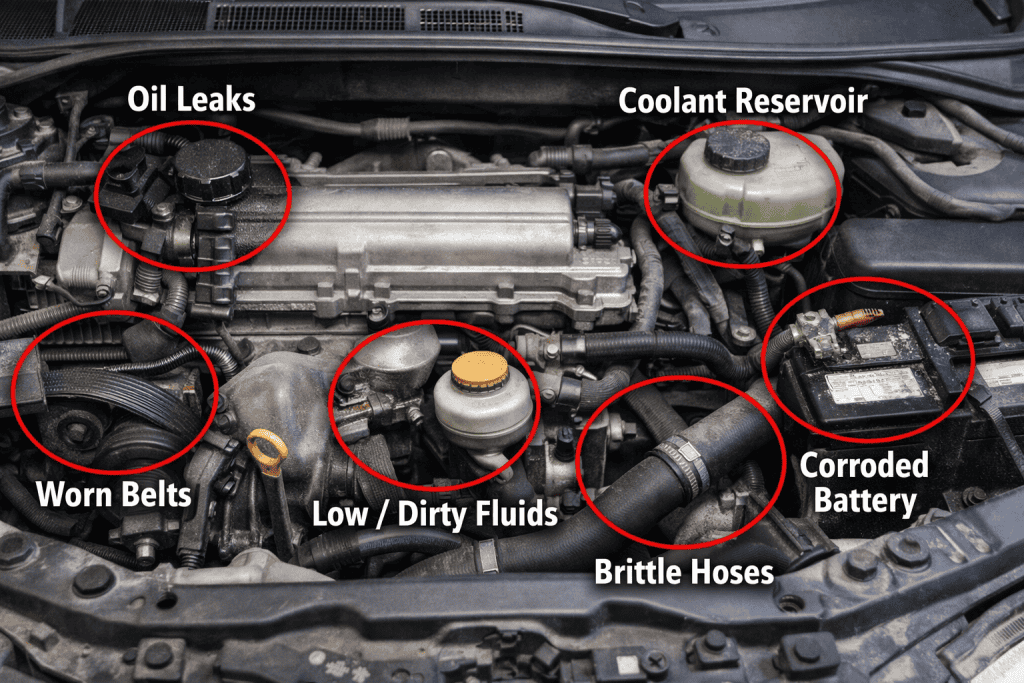
Engine Oil Leaks: Minor Drip or Major Expense?
Vehicle engine compartment highlighting fluid leak zones and belt wear during pre-purchase evaluation.
Sometimes the first sign is a faint oil smell after parking. Other times it is visible residue around the valve cover.
Typical repair ranges include:
Minor gasket repair: $150–$600
Valve cover replacement: $300–$900
Major engine reseal: $1,500+
Because oil loss reduces lubrication, internal wear accelerates if levels drop repeatedly. A $400 repair today can evolve into multi-thousand-dollar internal engine damage if ignored.
One buyer replaced a leaking valve cover gasket, only to discover brittle coolant hoses during the same visit. That’s when one issue exposes another.
A structured vehicle inspection checklist prevents that chain reaction from becoming your responsibility.
If calipers are sticking or rotors are warped, replacing pads alone may not resolve vibration. As a result, uneven wear continues and new parts degrade prematurely.
For many drivers, a pulsating brake pedal feels minor. However, it may signal deeper hydraulic imbalance. Ignoring that sign compromises safety and resale value.
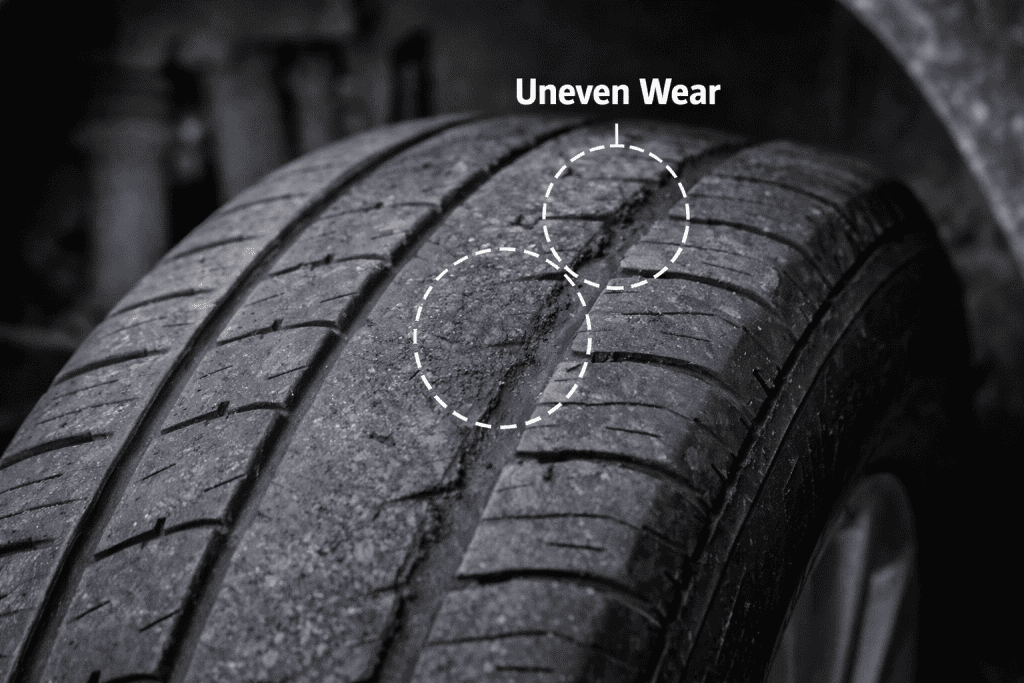
Suspension and Steering: What Does Uneven Tire Wear Signal?
Close-up of tire tread showing alignment-related wear patterns before purchase.
One of the clearest indicators of suspension problems is uneven tread depth.
Repair ranges commonly include:
Control arms: $400–$1,200
Struts (per axle): $600–$1,500
Wheel alignment: $80–$200
Because worn suspension components alter alignment angles, tires can lose up to 25% of expected lifespan prematurely. Replace tires without correcting suspension issues, and you may repeat the expense within months.
A quick glance at tire edges can reveal thousands of dollars in hidden risk.
Image: Uneven Tire Wear Example Alt text: Close-up of tire tread showing alignment-related wear patterns before purchase.
Battery and Charging System: Small Part, Larger Risk?
A battery replacement typically costs $120–$250, and average lifespan ranges between 3–5 years.
Yet what happens if the battery is not the real issue?
A buyer once replaced a weak winter battery only to discover the alternator output was inconsistent. That follow-up repair added another $700. That’s when a routine replacement becomes a system diagnosis.
What matters most is testing voltage output under load, because charging system instability can affect multiple components.
Depreciation: How Fast Does Value Decline?
A new vehicle generally loses about 20% of its value in the first year. By year five, average depreciation reaches 50–60%.
For used buyers, overpaying even slightly reduces future resale recovery. If accident history exists, resale value may decline an additional 10–25%, depending on severity and documentation quality.
Because of that, reviewing vehicle history is a financial decision — not merely informational. Official recall status can be checked through the NHTSA database: https://www.nhtsa.gov/recalls
Unresolved recalls can affect both safety and market value.
Are Service Records Worth More Than Low Mileage?
Nearly 1 in 5 used vehicles shows prior collision history. Meanwhile, vehicles lacking maintenance documentation are statistically more likely to require major repairs within the first year.
Low mileage does not guarantee reliability. Rubber seals degrade with time regardless of use. A vehicle that sat idle may require suspension bushings, tires, or fluid replacement even if the odometer is modest.
“I thought lower miles meant lower risk.”
That assumption often overlooks maintenance history.
First-Year Ownership Costs: What Should You Expect?
Approximately 30% of buyers underestimate first-year maintenance expenses. Typical early ownership costs may include:
Tires: $500–$1,200
Brake service: $300–$1,000
Fluid services: $150–$400
Battery replacement: $120–$250
Because these costs frequently cluster, budgeting an additional 5–10% of purchase price for immediate service creates financial stability.
Without that margin, routine maintenance feels like unexpected hardship.
When Should You Walk Away?
If projected repairs exceed 10–15% of vehicle market value, reconsideration becomes logical.
If multiple moderate issues appear — worn suspension, aging brakes, minor leaks — combined repair totals may approach $2,000–$3,000 quickly.
That accumulation matters.
For many buyers, the tipping point is not one large defect but several smaller ones stacked together.
Final Evaluation Strategy
A disciplined Used Car Inspection Checklist connects:
Mechanical condition
Cost ranges
Failure probabilities
Depreciation impact
Ownership budgeting
Because each inspection point ties directly to measurable expense, the process becomes analytical rather than emotional.
Ignoring warning signs increases financial exposure. Addressing them before purchase protects resale value, safety, and long-term stability.
Confidence comes from quantified evaluation — not assumptions.
This platform analyzes depreciation trends, resale value behavior, and long-term ownership costs, helping drivers understand how mileage, maintenance, and timing shape real financial outcomes.









![Lease A Used Car [ Canada Guide ]](https://spcdn.shortpixel.ai/spio/ret_img,q_cdnize,to_auto,s_webp:avif/flipcars.ca/wp-content/uploads/2025/12/lease-a-used-car-canada-670x372.jpg)