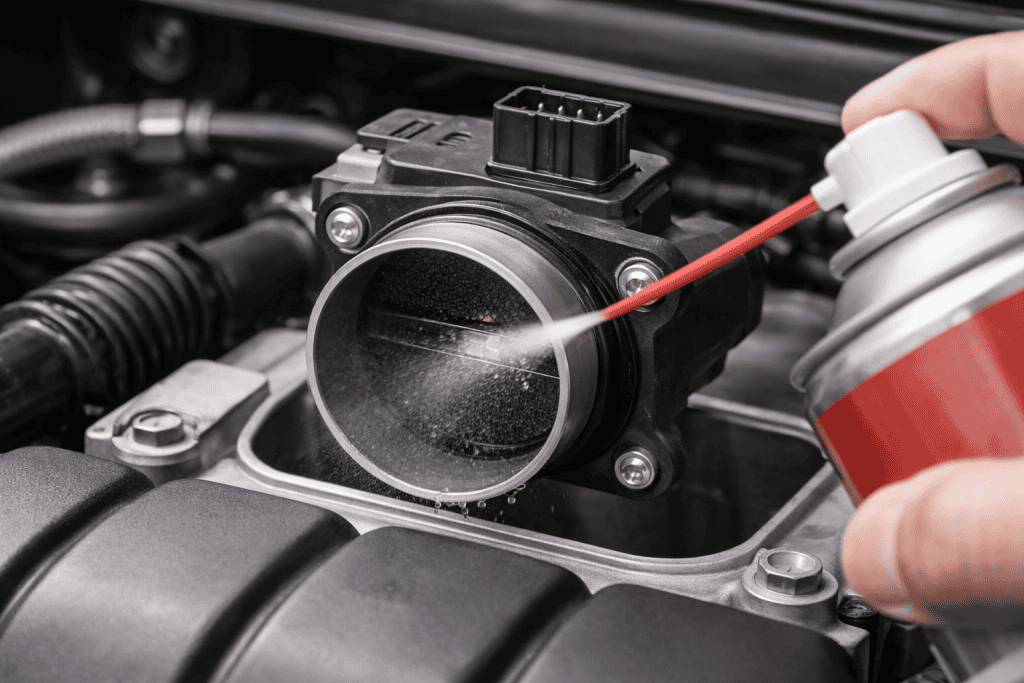
A dirty Mass Air Flow (MAF) sensor can quietly disrupt engine performance by sending inaccurate airflow data to the engine control unit. As a result, fuel delivery may become inconsistent, leading to hesitation, rough idle, or reduced efficiency. Fortunately, cleaning a MAF sensor is a routine maintenance step that can restore accurate airflow readings without disassembly or recalibration.
This guide explains how to clean a MAF sensor safely, what symptoms suggest contamination, and when cleaning is appropriate versus when replacement or diagnosis is needed.
What the MAF Sensor Does
The MAF sensor measures the amount of air entering the engine and relays that information to the engine management system. Because fuel delivery depends directly on this data, even small amounts of dirt or oil residue on the sensor element can affect drivability.
Over time, airborne debris, dust, and oil vapors may coat the sensor, especially in vehicles driven in urban or dusty conditions.
Common Signs a Dirty MAF Sensor May Be Affecting Performance
Next, carefully unplug the electrical connector. Avoid pulling on the wiring, as the connector tabs can be fragile.
3. Remove the Sensor
Once unplugged, remove the mounting screws and gently lift the sensor out of the housing. Be careful not to touch the sensor element.
4. Clean the Sensor Element
Spray MAF cleaner directly onto the sensor element from several angles. Allow the cleaner to wash away residue naturally. Do not wipe, brush, or touch the element.
5. Allow to Dry Completely
After spraying, let the sensor air-dry fully for at least 10–15 minutes. This step is essential to prevent damage during reinstallation.
6. Reinstall and Reconnect
Finally, reinstall the sensor, tighten the screws snugly (not overtightened), reconnect the electrical plug, and ensure the intake system is sealed.
What to Expect After Cleaning
In many cases, drivers notice:
Smoother idle
Improved throttle response
Reduced hesitation
More consistent engine behavior
However, if symptoms persist, the sensor itself may be failing, or another airflow-related issue may be present.
When Cleaning Isn’t Enough
Although cleaning often restores performance, ongoing issues may indicate:
Failing MAF sensor
Vacuum leaks
Intake air leaks
Fuel delivery problems
In those cases, professional diagnostics may be required.
Important Precautions
Never touch the sensor element
Use only MAF-specific cleaner
Avoid reinstalling while wet
Do not attempt calibration manually
Additionally, some vehicles may require a short relearning period after cleaning, although no special procedure is usually necessary.
Cleaning a Mass Air Flow sensor is a low-risk, high-value maintenance task that helps restore accurate airflow data and improve drivability. When performed carefully, it can resolve hesitation and idle issues while serving as an effective first step before more advanced diagnosis.
This platform analyzes depreciation trends, resale value behavior, and long-term ownership costs, helping drivers understand how mileage, maintenance, and timing shape real financial outcomes.