Lemon laws protect vehicle buyers when a newly purchased vehicle develops serious defects that cannot be repaired within a reasonable number of attempts. Because both federal rules and individual state laws influence consumer protection, understanding how lemon laws work at each level helps owners know their rights, pursue repairs correctly, and determine when replacement or refund options may apply. Therefore, learning how federal protections interact with state-specific lemon statutes is essential for any vehicle owner facing persistent defects.
How Federal Lemon Law Protections Work
At the federal level, consumer vehicle protections mainly come from the Magnuson-Moss Warranty Act. This law governs written warranties on consumer products, including vehicles. Rather than defining a strict “lemon” classification itself, the federal framework ensures manufacturers honor warranty obligations and repair commitments.
If a manufacturer fails to repair a defect covered by warranty within a reasonable timeframe, consumers may pursue compensation or legal remedies under this federal warranty law. Additionally, the federal system allows recovery of legal fees in successful cases, which can make pursuing claims more accessible for consumers.
However, federal protections typically operate as a backstop. In practice, most lemon determinations rely on state-specific statutes that define the exact thresholds for replacement or refund.
How State Lemon Laws Work
Each state maintains its own lemon law with specific criteria defining when a vehicle qualifies as a lemon. Although the details differ, most state laws include similar core requirements.
Typically, a vehicle may qualify if:
A substantial defect affects safety, use, or value
The defect occurs within a defined warranty period or ownership timeframe
The manufacturer has attempted multiple repairs without success
The vehicle spends an excessive number of days out of service
If these conditions are met, the state may require the manufacturer to repurchase the vehicle or provide a replacement.
Because definitions of “reasonable repair attempts” and “eligible timeframe” vary widely, checking local state rules is critical before filing a claim.
How Federal and State Laws Work Together
Federal and state lemon protections are not competing systems; instead, they operate together. State laws usually provide the primary legal path for replacement or refund, while federal warranty law strengthens enforcement if manufacturers fail to meet obligations.
For example, if a state lemon claim fails due to technical eligibility limits, federal warranty protections may still allow compensation for unresolved defects. Therefore, consumers often rely on both frameworks during disputes.
This layered protection system ensures that warranty promises remain enforceable even when state lemon thresholds are narrowly defined.
How Vehicle Eligibility Is Determined
Most lemon laws apply primarily to new vehicles, although some states extend coverage to certified used vehicles or dealer-sold used cars with warranties. Additionally, eligibility often depends on the defect appearing within the first year or first several thousand miles of ownership.
Importantly, routine wear items or maintenance issues generally do not qualify. Instead, lemon classifications focus on manufacturing defects that significantly impair vehicle operation, safety, or reliability.
Because eligibility windows can close quickly, documenting repair visits, service invoices, and communication with the manufacturer helps support any future claim.
How the Lemon Law Claim Process Typically Works
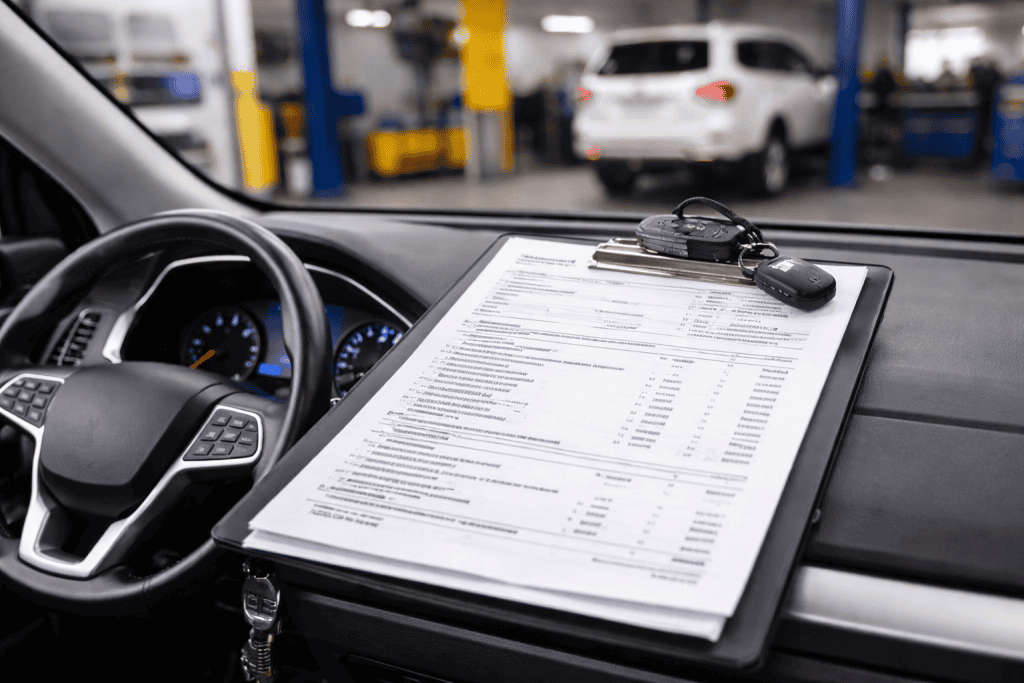
Vehicle inside a dealership service center with repair paperwork on the dashboard and personal details blurred.
The claim process usually begins with repeated warranty repair attempts at an authorized service center. If the defect persists, the owner may formally notify the manufacturer and request final repair resolution.
Afterward, many states require arbitration programs or dispute resolution procedures before a lawsuit can proceed. These programs often review repair history, defect severity, and downtime duration.
If the claim is approved, compensation may include:
Vehicle replacement with a comparable model
Refund of purchase price minus usage allowance
Payment for related costs such as towing or rental
Because procedures differ by state, following the documented process carefully improves the likelihood of successful resolution.
How Lemon Law Buybacks Affect Future Vehicle Titles
When manufacturers repurchase vehicles under lemon law rulings, the vehicle is often resold later. In many states, these vehicles receive permanent title branding indicating manufacturer buyback or lemon history.
As a result, future buyers can see that the vehicle previously qualified for lemon protection. Although the vehicle may be repaired and legally resold, the branding ensures transparency for subsequent ownership transfers.
Why Understanding Lemon Laws Matters for Vehicle Owners
Understanding how federal and state lemon laws function helps buyers protect their investment, enforce warranty rights, and respond effectively to persistent defects. While most vehicles never require lemon claims, knowing the legal thresholds and documentation requirements prevents missed eligibility deadlines.
Therefore, maintaining detailed repair records, monitoring warranty coverage, and acting quickly when defects persist ensures that lemon protections remain available if needed.
This platform analyzes depreciation trends, resale value behavior, and long-term ownership costs, helping drivers understand how mileage, maintenance, and timing shape real financial outcomes.