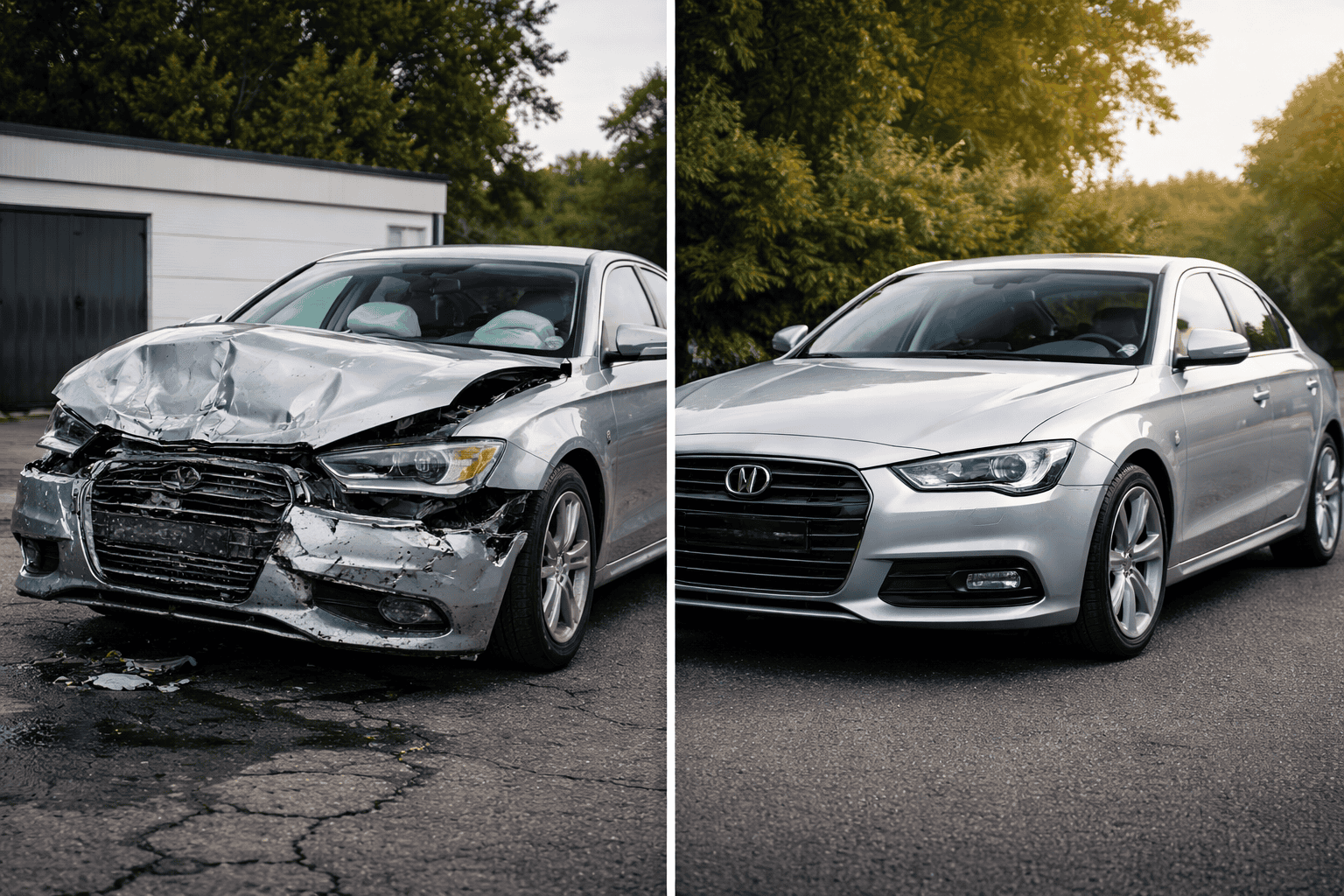
A vehicle’s accident history can influence far more than resale price. In practice, once structural damage, airbag deployment, or insurance claims appear in records, buyers and dealerships immediately reassess risk. That’s why understanding how accident history affects car value is essential before making any purchase decision.
Real value isn’t just about mileage or trim level. Instead, the history behind the vehicle often determines long-term ownership costs, insurance premiums, and buyer confidence. For many drivers, the first sign of trouble isn’t visible damage — it’s simply a lower asking price than similar listings.
That’s when careful research matters most.
How Accident Severity Changes Resale Value
Not every accident reduces value equally. Minor cosmetic repairs typically lower resale value slightly, while structural damage can reduce it dramatically.
For example:
Light body repair may reduce value by 5–10%
Moderate collision repair often lowers value 15–25%
Structural frame damage can reduce value 30% or more
The reality is that even well-repaired vehicles carry a permanent accident record. Because of that, future buyers assume additional risk, even if the car drives normally.
Sometimes the first sign is uneven resale comparisons — two identical models priced very differently.
What Buyers Should Check After an Accident
What matters most is confirming whether the accident affected critical mechanical systems.
Drivers should always verify:
Frame alignment and structural repairs
Airbag deployment history
Suspension or steering replacement
Electronic safety system recalibration
Paint consistency and panel alignment
One of the clearest indicators appears during inspection. In practice, a car that pulls slightly to one side or shows uneven tire wear may have unresolved alignment issues from previous damage.
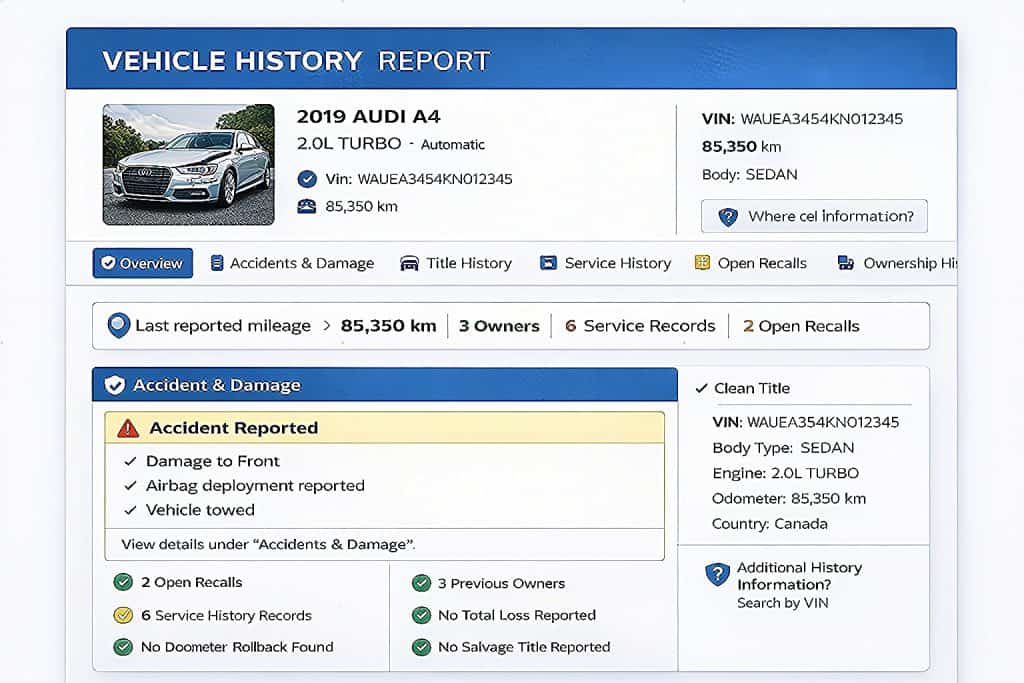
Vehicle history report example showing a sedan listing with VIN details, mileage, ownership history, service records,
and an accident reported with front damage and airbag deployment.
For many drivers, the surprise comes after purchase. A seemingly good deal can quickly become expensive once insurance quotes reflect prior damage records.
Many buyers eventually ask the same question: does accident history lower resale value, and in most cases the answer is yes because recorded damage permanently changes how future buyers assess risk.
In real ownership scenarios, someone may buy a repaired vehicle cheaply only to discover higher insurance plus reduced resale flexibility later. The savings disappear fast.
So Before committing to any used vehicle, I always recommend reviewing an official history report through a trusted provider like Carfax, because this is where accident records, insurance claims, and damage reports usually surface first.
When Accident Damage Becomes a Deal Breaker
Not all accident vehicles should be avoided. However, certain warning signs suggest walking away is safer.
Avoid vehicles with:
Structural frame repairs
Salvage or rebuilt titles
Multiple accident claims
Airbag deployment with unclear repair documentation
The reality is simple: hidden structural issues often surface later. And once they do, repair costs can escalate quickly — especially if suspension, electronics, or safety sensors were compromised.
Ignoring these risks usually leads to higher long-term expenses.
Real Ownership Impact Over Time
Accident history affects more than purchase price — it shapes the entire ownership cycle.
Because resale buyers check reports, vehicles with accident history often:
Sell slower
Require lower pricing
Receive stricter inspections
Trigger dealer trade-in reductions
Sometimes the first sign appears years later. A driver preparing to trade in their vehicle may suddenly learn its value is thousands lower due to a single reported collision.
Understanding how accident history affects car value protects buyers from overpaying and prevents long-term ownership surprises. What matters most isn’t whether a car was in an accident — it’s how severe the damage was, how well it was repaired, and how that history influences future resale, insurance, and reliability.
Smart research today prevents expensive regret later.
This platform analyzes depreciation trends, resale value behavior, and long-term ownership costs, helping drivers understand how mileage, maintenance, and timing shape real financial outcomes.