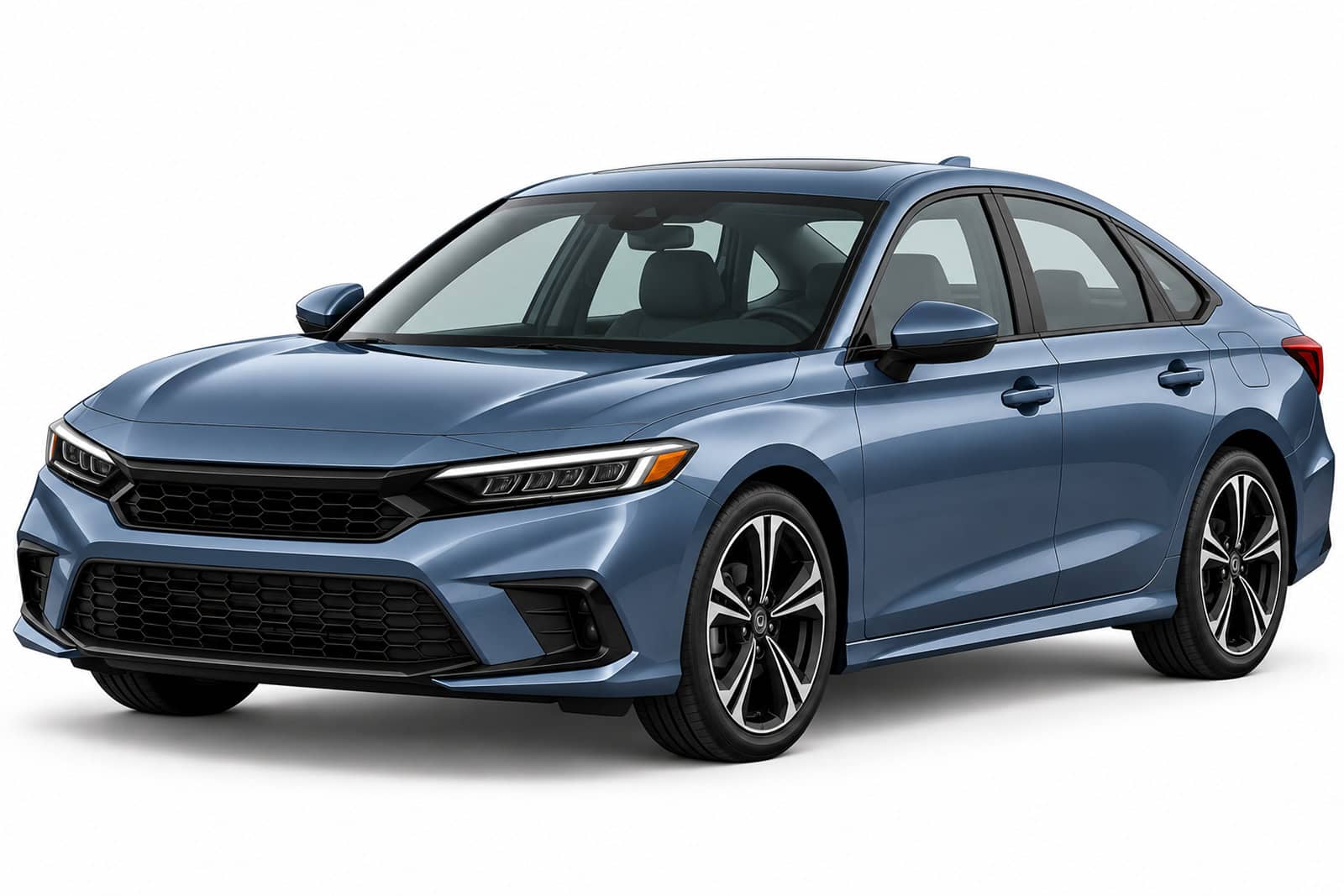
The Honda Civic reached North America for the 1973 model year and has now passed through 11 generations. The original Civic was a tiny economy car built for an era when fuel prices and efficiency were becoming serious concerns. It did not stay tiny for long. Over the following decades, Honda added sedans, wagons, coupes, sportier Si models, VTEC engines, hybrid power, turbocharging, the Type R, and increasingly advanced safety technology. The Civic also grew into a much more comfortable everyday car while keeping front-wheel drive at the heart of the North American lineup. For you as a buyer, Honda Civic generations matter because each redesign can bring different engines, transmissions, body styles, safety equipment, and ownership concerns. Knowing the generation first makes it much easier to narrow down the individual years you should research.
Honda Civic Generation Timeline
The Honda Civic generation timeline shows how dramatically the car changed over more than 50 years. The 1970s cars concentrated on low weight and economical transportation. Civics from the 1980s and 1990s added fuel injection, sportier Si versions, better suspension designs, and eventually VTEC engines. The 2000s brought the Civic Hybrid and more safety equipment. Turbocharging, the North American Type R, and a renewed hatchback followed with the 10th generation. The 11th generation brought another major interior redesign and returned hybrid power to the U.S. and Canadian Civic lineup. Looking at the timeline first helps you separate these major changes before comparing individual model years.
1st Generation (1973–1979) Honda Civic
1973–1979 Honda Civic Buyer Information
The first Civic is very different from the compact car you know today. Honda built it around small exterior dimensions, low weight, and economical transportation. Hatchback-style models became an important part of the Civic identity, while the later CVCC engine helped Honda meet stricter U.S. emissions requirements without relying on the same emissions equipment used by many competitors. If you are considering one today, you are shopping for a collector-age vehicle rather than an inexpensive old commuter. Rust, previous restoration work, deteriorated rubber, old wiring, and replacement-part availability can matter far more than the mileage shown on the odometer. Inspect the structure and repair history carefully before worrying about small differences between original trims.
Read More
1st Generation (1973–1979)
The original North American Civic used very small four-cylinder engines and produced modest power by modern standards. That was intentional. Honda was concentrating on low weight and fuel use rather than acceleration. Engine displacement and output increased as the generation developed, while CVCC became one of its defining technologies.
Model years: 1973–1979
Body styles: 2-door, 3-door hatchback, and later 4-door and wagon configurations
Engines: Approximately 1.2L to 1.5L four-cylinder gasoline engines, depending on year
Power: Roughly 50–63 hp depending on engine and model year
Transmissions: Manual and automatic choices
Drivetrain: Front-wheel drive
Hybrid: Not available
Major milestone: CVCC engine technology became a major part of Honda’s emissions and fuel-efficiency story during the 1970s.
Buyer concern: Structural rust, deteriorated seals and hoses, old electrical components, and scarce original parts
Buying priority: Judge the car by its body condition and restoration quality rather than expecting its original reliability reputation to erase more than 45 years of aging.
2nd Generation (1980–1983) Honda Civic
1980–1983 Honda Civic Buyer Information
Honda made the second Civic larger and more developed without abandoning the small-car formula that established the name. You could choose hatchback, sedan, or wagon versions, giving the Civic a wider range of uses than the original car. CVCC technology continued, while additional interior room made the Civic easier to live with every day. These cars are now more than 40 years old, so shopping by specifications alone makes little sense. Corrosion, previous body repairs, worn suspension pieces, brittle interior parts, and aging electrical connections deserve more attention. A complete, well-kept Civic can be worth paying more for because finding missing trim or generation-specific components may be considerably harder than replacing ordinary maintenance items.
Read More
2nd Generation (1980–1983)
The second generation retained small four-cylinder engines but increased displacement and output as Honda developed the Civic. Different configurations were offered during its short 4-model-year run, so the exact engine should be confirmed before you buy.
Model years: 1980–1983
Body styles: Hatchback, sedan, and wagon
Engines: Approximately 1.3L to 1.5L four-cylinder gasoline engines
Power: Generally around 55–67 hp depending on year and engine
Transmissions: Manual and automatic
Drivetrain: Front-wheel drive
Hybrid: Not available
Engine technology: CVCC continued during this generation
Main change: More passenger room and a broader selection of body styles
Buyer concern: Corrosion, aging wiring, suspension wear, deteriorated weather seals, and parts availability
Buying priority: Inspect the complete car for age-related deterioration instead of assuming low mileage means fewer problems.
3rd Generation (1984–1987) Honda Civic
1984–1987 Honda Civic Buyer Information
The third Civic gave buyers much more variety. The lineup included conventional hatchbacks and sedans as well as the Civic CRX and the unusually roomy Civic Wagon. Performance also became a bigger part of the Civic story. Fuel-injected Si versions helped move the Civic beyond its economy-car image and gave enthusiasts a lightweight platform with noticeably stronger performance. Surviving cars now need careful inspection because modifications are common and rust can hide underneath otherwise presentable bodywork. If you find one that interests you, look for evidence of engine swaps, altered wiring, suspension changes, and previous collision repairs. Originality is particularly valuable when you want a car that will be easier to maintain and understand.
Read More
3rd Generation (1984–1987)
This generation expanded the Civic family significantly. Engine choices differed by model, and the fuel-injected Si became especially important to the Civic’s developing performance reputation.
Model years: 1984–1987
Body styles: Hatchback, sedan, wagon, and CRX
Engines: Approximately 1.3L to 1.5L four-cylinder gasoline engines in North American models
Power: Roughly 60 hp in economy-focused versions to about 91 hp in later Si models
Transmissions: Manual and automatic
Drivetrain: Front-wheel drive on most models, with 4WD available on certain Civic Wagons
Hybrid: Not available
Performance milestone: Fuel-injected Civic Si models strengthened the Civic’s enthusiast appeal.
Buyer concern: Rust, previous modifications, engine swaps, worn suspension, and aging electrical work
Buying priority: Confirm what remains original and identify modifications before deciding what the car is worth.
4th Generation (1988–1991) Honda Civic
1988–1991 Honda Civic Buyer Information
The fourth Civic became one of the generations enthusiasts still talk about because Honda combined low weight with a sophisticated suspension and increasingly capable engines. Sedan and hatchback models covered normal transportation needs, while the CRX and Si gave buyers much sportier choices. The Civic Wagon also remained part of the family. These cars are now old enough that a completely untouched one is unusual. If you are shopping for one, do not assume aftermarket parts improve it. Poor suspension modifications, badly completed engine swaps, cut wiring, and hidden corrosion can turn a fun older Civic into a repair project. A clean body with documented maintenance is usually a much better starting point than a heavily changed car with an impressive parts list but no paperwork.
Read More
4th Generation (1988–1991)
Honda introduced a double-wishbone suspension layout during this generation, a design that contributed to the Civic’s handling reputation. North American engines ranged from economy-focused units to stronger Si versions.
Model years: 1988–1991
Body styles: Hatchback, sedan, wagon, and CRX
Engines: Primarily 1.5L and 1.6L four-cylinder gasoline engines
Power: Approximately 62–108 hp depending on year and version
Transmissions: Manual and automatic
Drivetrain: Front-wheel drive on most models; certain wagons offered 4WD
Hybrid: Not available
Suspension: Double-wishbone suspension became a defining mechanical feature.
Performance model: Civic Si
Buyer concern: Rust, modified suspension, engine swaps, old wiring, and accident repairs
Buying priority: Inspect modifications closely and give body condition more weight than cosmetic upgrades.
5th Generation (1992–1995) Honda Civic
1992–1995 Honda Civic Buyer Information
The fifth generation moved the Civic into the smoother, rounder styling associated with 1990s Hondas. Sedan, coupe, and hatchback versions gave you three distinct body choices, while VTEC technology appeared in important North American Civic models. The generation became enormously popular with commuters and enthusiasts, which is both an advantage and a warning for today’s buyer. There are still cars available, but many have been modified during their lives. Look beyond wheels and paint. Check the engine, wiring, suspension, exhaust, body structure, and interior for evidence of previous work. If you want dependable transportation rather than a restoration or tuning project, a largely stock Civic with maintenance records is normally easier to evaluate.
Read More
5th Generation (1992–1995)
Engine output varied considerably because Honda sold economy-focused Civics alongside more powerful versions. VTEC became one of the generation’s major mechanical developments and would become closely associated with Honda during the 1990s.
Model years: 1992–1995
Body styles: Sedan, coupe, and hatchback
Engines: Primarily 1.5L and 1.6L four-cylinder gasoline engines
Power: Approximately 70–125 hp depending on engine and trim
Transmissions: 5-speed manual and automatic choices
Drivetrain: Front-wheel drive
Hybrid: Not available
Major technology: VTEC available on select Civic versions
Performance model: Civic Si hatchback was available during this generation.
Buying priority: Verify the engine and modifications rather than assuming the car still matches its original factory specification.
6th Generation (1996–2000) Honda Civic
1996–2000 Honda Civic Buyer Information
Honda refined the Civic further for the sixth generation while keeping sedan, coupe, and hatchback body styles in the North American family. Engine choices remained relatively small, but different versions gave buyers a wide spread between basic economy cars and sportier models. The Civic Si returned in the U.S. late in the generation, while Canadian trim choices did not always mirror U.S. naming exactly. Age now matters more than these cars’ original reputation. Check oil leaks, cooling-system condition, suspension wear, corrosion, previous modifications, and evidence of poor collision repairs. A 25-year-old Civic with careful maintenance can be much easier to own than a lower-mileage car that spent years being modified and neglected.
Read More
6th Generation (1996–2000)
The sixth generation continued with four-cylinder power throughout the North American lineup. VTEC was available on several versions, while the performance-focused Si became one of the best-known Civics from this period.
Buying priority: Confirm the installed engine, service history, and quality of any modifications before buying.
7th Generation (2001–2005) Honda Civic
2001–2005 Honda Civic Buyer Information
The seventh generation marked a major turning point because electrification finally reached the Civic. Honda introduced the Civic Hybrid for the 2003 model year in North America, giving fuel-conscious shoppers another choice beyond the conventional gasoline models. Sedans and coupes made up the mainstream lineup, while the Si returned in hatchback form. This generation is now old enough that maintenance history should influence your decision more than reputation alone. A gasoline Civic and Civic Hybrid also need to be researched separately. If you are considering the hybrid, investigate the condition and history of its battery system. With any version, check fluid maintenance, suspension condition, corrosion, air conditioning, and transmission operation before buying.
Read More
7th Generation (2001–2005)
Most mainstream North American Civics used a 1.7L four-cylinder engine, while the Si used a larger 2.0L engine. The Civic Hybrid combined a gasoline engine with electric assistance and became the first hybrid Civic sold in North America.
Model years: 2001–2005
Body styles: Sedan and coupe, plus Si hatchback
Main gasoline engine: 1.7L four-cylinder
Si engine: 2.0L four-cylinder
Power: Roughly 115–160 hp among conventional gasoline and Si versions
Transmissions: Manual, automatic, and CVT depending on version
Drivetrain: Front-wheel drive
Hybrid: Yes; North American Civic Hybrid arrived for the 2003 model year
Hybrid technology: Gasoline engine paired with Honda’s Integrated Motor Assist system
Buyer concern: Aging hybrid components on hybrid models, transmission condition, suspension wear, corrosion, and overdue maintenance
Buying priority: Identify the exact powertrain first because gasoline, Si, and hybrid versions have different inspection needs.
8th Generation (2006–2011) Honda Civic
2006–2011 Honda Civic Buyer Information
The eighth Civic looked and felt considerably more modern than the car it replaced. Honda introduced a distinctive two-level instrument display, improved occupant protection, and continued offering both ordinary commuter models and enthusiast versions. Sedan and coupe body styles remained central to the North American lineup. You could also choose the Civic Hybrid, while the Si provided substantially more power than the standard car. Plenty remain on the used market, but they are no longer young vehicles. Check service records, air conditioning, suspension components, corrosion, tires, brakes, and fluid condition. You should also research the exact model year for known issues instead of treating the entire 6-year generation as mechanically identical.
Read More
8th Generation (2006–2011)
Mainstream Civics moved to a 1.8L four-cylinder, while the Si used a higher-output 2.0L engine. Hybrid models continued with Honda’s gasoline-electric system.
Model years: 2006–2011
Body styles: Sedan and coupe
Standard engine: 1.8L four-cylinder
Standard engine power: Approximately 140 hp
Si engine: 2.0L four-cylinder
Si power: Approximately 197 hp
Transmissions: Manual, automatic, and hybrid CVT depending on model
Drivetrain: Front-wheel drive
Hybrid: Available
Major change: Redesigned cabin with a two-level instrument layout and increased safety equipment
Buyer concern: Age-related suspension and air-conditioning repairs, corrosion, fluid history, and model-year-specific issues
Buying priority: Check the exact year, engine, and maintenance record before relying on the generation’s overall reliability reputation.
9th Generation (2012–2015) Honda Civic
2012–2015 Honda Civic Buyer Information
The ninth Civic had a relatively short production run, but Honda changed the car noticeably during those 4 model years. The initial 2012 model was followed by significant updates, making model year especially important when comparing these Civics. Sedan and coupe body styles continued. The regular Civic retained 1.8L power, the Si used a larger 2.4L engine, and hybrid buyers still had a gasoline-electric choice. These cars can now offer a useful middle ground between much older Civics and the more complex turbocharged generation that followed. Check the service history, transmission operation, air conditioning, suspension, brakes, and corrosion. Canadian cars and Civics from northern U.S. states deserve an especially careful underbody inspection after years of winter road salt.
Read More
9th Generation (2012–2015)
Honda used several distinct powertrains during this generation. The regular Civic used a 1.8L engine, while the Si moved to a 2.4L four-cylinder. The Civic Hybrid remained available, and transmission choices changed during the generation.
Model years: 2012–2015
Body styles: Sedan and coupe
Standard engine: 1.8L four-cylinder
Standard engine power: Approximately 140–143 hp depending on model year
Si engine: 2.4L four-cylinder
Si power: Approximately 201–205 hp depending on model year
Transmissions: Manual, automatic, and CVT depending on year and version
Drivetrain: Front-wheel drive
Hybrid: Available
Major update: Honda revised the Civic substantially after the 2012 model year, including styling and interior improvements.
Buyer concern: Maintenance history, CVT or automatic operation where applicable, corrosion, air conditioning, and suspension wear
Buying priority: Compare exact model years because a 2012 Civic and later ninth-generation Civic do not provide exactly the same equipment or driving experience.
10th Generation (2016–2021) Honda Civic
2016–2021 Honda Civic Buyer Information
The tenth generation transformed the Civic lineup. Honda introduced a 1.5L turbocharged engine alongside the naturally aspirated 2.0L, returned the hatchback to North America, and eventually offered sedan, coupe, hatchback, Si, and Type R versions within one generation. Honda Sensing also became much more important as driver assistance technology spread across the lineup. The coupe disappeared after 2020, making this your final generation if you specifically want a relatively modern 2-door Civic. When shopping used, identify the engine and trim before researching reliability or maintenance. A 2.0L sedan, turbo hatchback, Si, and Type R may share a generation, but they are very different cars to buy and maintain.
Read More
10th Generation (2016–2021)
This generation had one of the broadest power ranges in Civic history. Mainstream models started with a 2.0L naturally aspirated engine, turbocharged versions added more torque, and the Type R took Civic output beyond 300 hp.
Model years: 2016–2021
Body styles: Sedan, coupe, and hatchback
Base engine: 2.0L four-cylinder
Base engine power: Approximately 158 hp
Turbo engine: 1.5L turbocharged four-cylinder
Turbo power: Common mainstream versions produced roughly 174–180 hp depending on year and trim.
Si: 1.5L turbo, approximately 205 hp
Type R: 2.0L turbo, approximately 306 hp in North American specification
Transmissions: CVT and 6-speed manual depending on model
Drivetrain: Front-wheel drive
Hybrid: Not offered as a North American tenth-generation Civic
Safety milestone: Honda Sensing became standard on U.S. Civic sedan and coupe trims for 2019, with equipment varying by year and market.
Buyer concern: Exact engine, maintenance history, air-conditioning operation, previous modifications, and performance-model use
Buying priority: Research the specific powertrain and trim instead of applying one reliability assessment to every tenth-generation Civic.
11th Generation (2022–Present) Honda Civic
2022–Present Honda Civic Buyer Information
The 11th-generation Civic arrived with cleaner styling, a redesigned cabin, newer Honda Sensing technology, and sedan and hatchback body styles. Honda continued offering naturally aspirated and turbocharged gasoline engines while keeping the Si and Type R alive for performance buyers. Hybrid power later returned to the North American Civic lineup, adding another major choice within the same generation. This means a 2022 Civic and a newer Civic Hybrid should not be treated as identical simply because they share the same basic generation. If you are shopping for one, start with the exact year and trim. Then compare its engine, transmission, safety equipment, warranty status, service history, and recall record before deciding whether the newer technology justifies the price.
Read More
11th Generation (2022–Present)
The current generation covers everything from a naturally aspirated 2.0L commuter model to the 315-hp Type R. Hybrid models add a 2.0L gasoline-electric powertrain, giving buyers a high-efficiency alternative without moving to a plug-in vehicle.
Model years: 2022–present
Body styles: Sedan and hatchback
2.0L gasoline engine: Approximately 150–158 hp depending on model year and specification
1.5L turbo engine: Approximately 180 hp in applicable mainstream models
Si: 1.5L turbo, approximately 200 hp
Type R: 2.0L turbo, 315 hp
Hybrid: 2.0L two-motor hybrid system, approximately 200 hp total system output on current North American models
Transmissions: CVT, hybrid direct-drive arrangement, and 6-speed manual depending on version
Major change: Civic Hybrid returned to the U.S. lineup for the 2025 model year and is also offered in Canada.
Buyer concern: Powertrain and equipment vary considerably by year and trim within this generation.
Buying priority: Verify the exact model year and powertrain before comparing price, fuel economy, warranty coverage, or equipment.
Honda Civic Generations: Key Differences
Moving through the 11 Honda Civic generations changes far more than the age of the car. Early Civics were extremely small vehicles built around lightweight construction and modest engines. The middle generations brought fuel injection, VTEC, better crash protection, more comfortable cabins, and eventually hybrid technology. The newest Civics add turbocharging, Honda Sensing, modern infotainment, and power ranging from an economical everyday 2.0L engine to a Type R producing more than 300 hp. These differences directly affect what you should inspect and what you will pay to own the car. When two used Civics fall within the same budget, compare their generation, engine, transmission, condition, and safety equipment before deciding that the newer one automatically gives you better value.
How Honda Civic Body Styles Changed
Body-style variety was much broader during several earlier Honda Civic generations than it is today. Early buyers could find small hatchbacks, sedans, wagons, and other compact configurations. By the 1990s, sedan, coupe, and hatchback Civics had become familiar choices. The 10th generation briefly brought sedan, coupe, and hatchback models together again, but the coupe ended after the 2020 model year. The 11th generation now concentrates on sedan and hatchback models. Your preferred body style can therefore narrow the generation search immediately. If you want a relatively modern coupe, you must shop used. If carrying taller or awkward cargo matters more, the hatchback gives you a larger rear opening than the sedan. Decide how you will use the car before allowing styling alone to choose the body.
How Honda Civic Engines Changed
Civic engine development stretches from tiny four-cylinder engines producing around 50 hp in the 1970s to a current Type R with 315 hp. Between those extremes, Honda introduced fuel injection, VTEC, hybrid assistance, and turbocharging. The 7th generation brought the first North American Civic Hybrid. The 10th introduced a 1.5L turbo to mainstream buyers and a 2.0L turbo in the Type R. The current generation combines conventional gasoline, turbocharged, performance, and hybrid choices. That variety is why you should research the engine rather than simply searching for “Honda Civic reliability.” A 2.0L naturally aspirated Civic and a turbocharged Type R have completely different performance and ownership demands even when both carry the Civic name.
How Honda Civic Transmissions Changed
Transmission choices evolved alongside Civic engines. Early generations relied mainly on conventional manual and automatic transmissions. Manuals remained common for decades and became especially important to Civic performance models. The arrival of the Civic Hybrid added CVT technology, while CVTs later became widespread in mainstream gasoline Civics. Modern Si and Type R models preserve the 6-speed manual for drivers who specifically want to shift for themselves. For used-car shopping, the transmission installed in the actual Civic matters more than a broad generation label. Check its maintenance history and operation during a test drive. If you want a manual, identify the years and trims that offered one before searching listings. That prevents you from spending an afternoon discovering that nearly every Civic in your search results has a CVT.
How Honda Civic Safety Improved
A 1970s Civic and a current Civic may share a name, but their safety technology comes from completely different eras. Over successive generations, Honda added improved crash structures, airbags, anti-lock brakes, stability control, and eventually Honda Sensing driver assistance. Modern systems can help with braking, lane positioning, and maintaining distance from traffic ahead. Equipment still varies by year and trim, particularly when you move back through older generations. Check the actual model rather than assuming every car from a generation received identical technology. You can compare U.S. crash-test results through the IIHS ratings database and use the specific Civic model year you are considering. Canadian shoppers should likewise verify the safety equipment fitted to the Canadian-market trim.
How Honda Civic Fuel Economy Changed
Fuel economy has been central to the Civic since 1973, but the method Honda uses to save fuel has changed considerably. Early Civics depended heavily on small engines and low vehicle weight. Later cars added electronic fuel injection, more efficient transmissions, improved engine controls, and eventually hybrid power. Turbocharging allowed Honda to extract more performance from relatively small engines, while current hybrid Civics combine a 2.0L gasoline engine with electric drive. Comparing published fuel economy across 50 years requires care because government test procedures have changed. For your buying decision, use the official rating for the exact model year rather than comparing an old historical mpg figure directly with a modern EPA result. That gives you a much more useful estimate of what the Civic may cost to fuel.
Honda Civic Generations in the U.S. and Canada
The major Honda Civic generation changes generally line up between the United States and Canada, but that does not mean every trim, engine, or equipment package is identical. Canadian-market Civics have sometimes used different trim names or standard equipment, while particular performance and specialty models can vary by year. Fuel consumption is also presented differently. U.S. buyers normally see EPA ratings in mpg, while Canadian buyers see Natural Resources Canada figures in L/100 km. When you research a used Civic, confirm the country where it was originally sold before relying on a trim guide. This becomes especially important with imported vehicles. Two Civics from the same generation can look almost identical while carrying different equipment because one was originally configured for the U.S. and the other for Canada.
Honda Civic Generations in the United States
U.S. buyers have seen everything from inexpensive Civic economy models to the 315-hp Type R. The lineup has also included the Civic Hybrid, Si, CRX, coupes, hatchbacks, and several generations of conventional sedans. Availability can change within a generation, so the first year of a redesign does not automatically offer every version that appears later. That is particularly important with the current generation because hybrid availability arrived after the generation was already underway. Used buyers should confirm the VIN and original equipment when a specific engine or safety feature matters. You can also enter the VIN into the NHTSA recall database to check for open safety recalls before completing a purchase.
Honda Civic Generations in Canada
Canadian Civic generations broadly follow the same redesign cycle, but trims and equipment can differ from U.S. models. That distinction matters when you use American reviews to research a Canadian car. Verify the Canadian specification before assuming an engine, heated feature, safety system, or trim package matches what was sold south of the border. Climate also changes the inspection priorities for older Civics. Cars exposed to years of winter salt can develop corrosion underneath even when the exterior still looks clean. Inspect structural areas, brake components, suspension mounting points, and exposed metal carefully. When calculating fuel costs, use the Canadian model’s official L/100 km rating rather than simply converting an American mpg figure and assuming the two test results are identical.
Which Honda Civic Generation Fits Your Needs?
Choosing between Honda Civic generations becomes easier when you stop treating all 11 as direct alternatives. Generations 1 through 6 are now older vehicles that appeal heavily to enthusiasts, collectors, and drivers comfortable dealing with age-related repairs. Generations 7 through 9 bring you closer to a modern commuter while adding features such as hybrid power and improved safety. Generations 10 and 11 provide newer driver assistance, turbocharged engines, modern infotainment, and the strongest performance choices. Your budget still matters, but so does your tolerance for repairs and older technology. Start by deciding whether you want an older enthusiast car, an affordable everyday Civic, or a newer vehicle with current safety and convenience features. Then compare individual years within that smaller group.
1st–6th Generation Civic
The first 6 generations are best approached as older vehicles rather than simply cheap Civics. Even the newest sixth-generation cars are now more than 25 years old. Earlier models are approaching or exceeding 40 to 50 years. You may find lightweight construction, manual transmissions, VTEC engines, and the straightforward driving experience that built the Civic’s enthusiast following. You can also find rust, worn suspension, aging wiring, engine swaps, missing original parts, and decades of previous repairs. If one interests you, pay for a thorough inspection and learn what has been changed. Condition should carry more weight than mileage. A carefully maintained older Civic can cost more upfront, but rescuing a neglected one can turn a bargain into a very expensive hobby.
7th–9th Generation Civic
Generations 7 through 9 bridge the gap between classic Civics and the newer turbo era. These cars introduced or continued hybrid power, offered increasingly modern safety and comfort, and remained available with conventional gasoline engines. Depending on the generation, you can also find Si models with considerably more power than the standard Civic. Their age now makes maintenance records important. Check fluid changes, suspension condition, air conditioning, brakes, tires, corrosion, and transmission operation. Civic Hybrid buyers should also research the hybrid system separately because its inspection needs differ from those of a normal gasoline model. These generations can make sense when you want a used commuter without paying for the technology and purchase price of a much newer Civic.
10th–11th Generation Civic
The newest 2 Civic generations give you the broadest selection of modern technology and performance. The 10th generation introduced mainstream turbo power and brought the Type R to North American buyers, while the 11th generation added a redesigned interior, newer Honda Sensing technology, and the return of Civic Hybrid power. Depending on the model, output ranges from roughly 150 hp in current mainstream gasoline versions to 315 hp in the Type R. That range also means you cannot judge ownership costs by generation alone. Insurance, tires, fuel, maintenance, and purchase price can differ sharply between a regular Civic and a performance model. Once you have chosen the generation, use the Honda Civic buying guide to narrow your research to the individual years and versions that suit your budget.
Honda Civic Generations Summary
Across 11 generations, the Honda Civic changed from a roughly 50-hp economy car into a compact lineup that can now include gasoline, hybrid, Si, and 315-hp Type R models. The transformation also brought major improvements in passenger comfort, crash protection, emissions, fuel management, infotainment, and driver assistance. For you as a buyer, the generation is the starting point rather than the final answer. Use it to narrow the body style, engine family, transmission, technology, and age you are comfortable owning. Then investigate the individual model year because important changes can happen halfway through a generation. Check service history, inspect the actual vehicle, verify its equipment, and research its recall status. That approach gives you a much clearer picture than choosing a Civic simply because a particular generation has a good reputation.
This platform analyzes depreciation trends, resale value behavior, and long-term ownership costs, helping drivers understand how mileage, maintenance, and timing shape real financial outcomes.