

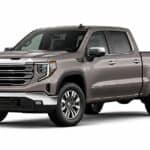
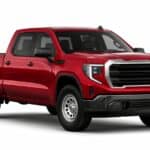



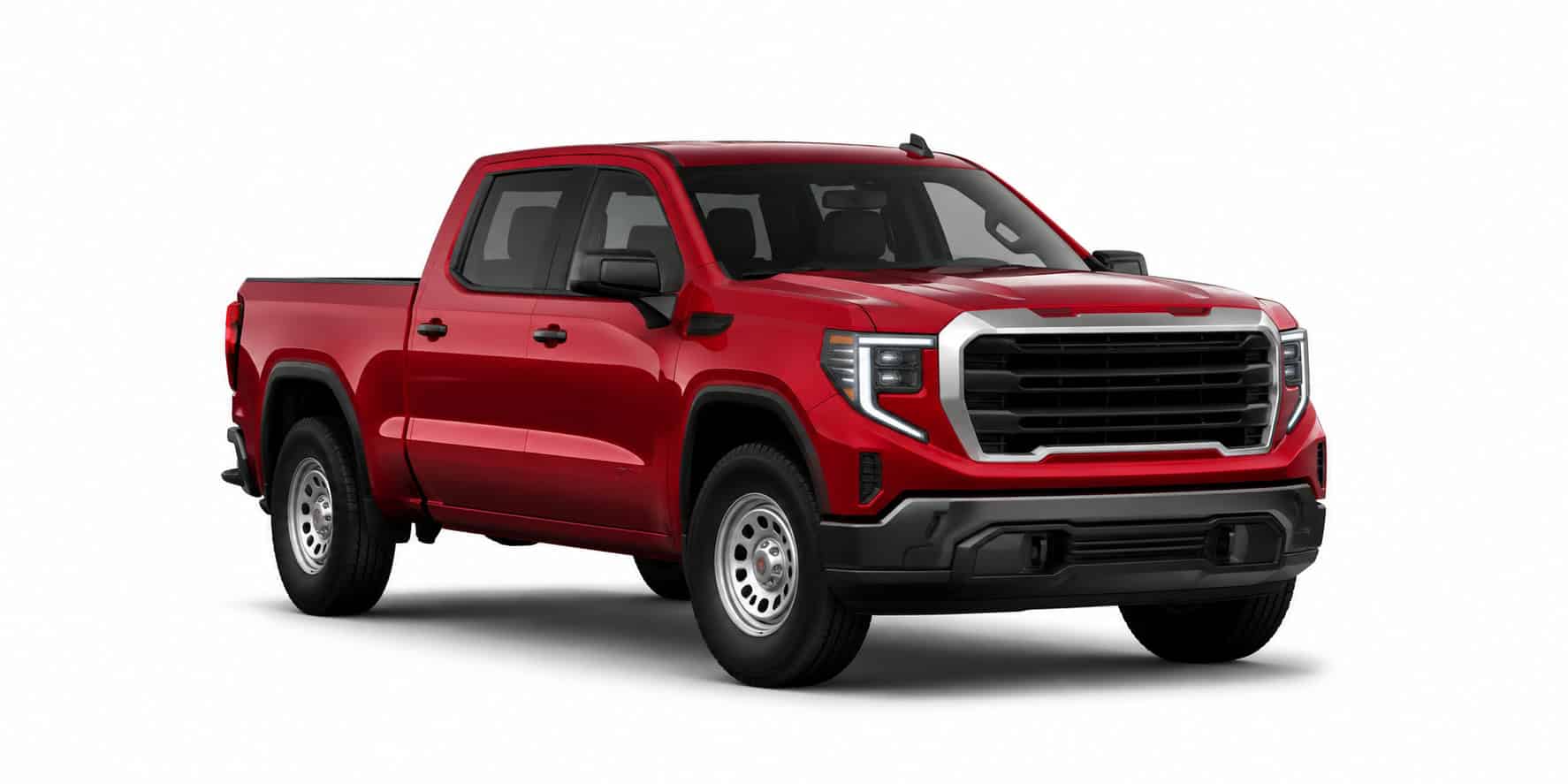
2026 GMC Sierra 1500 Pro Specs, Features and Pricing
Introduction
Buying a full-size pickup doesn’t mean you have to spend $70,000 on leather seats, enormous wheels, and features you may rarely use. The 2026 GMC Sierra 1500 Pro focuses on the essentials, giving you a powerful engine, a spacious cabin, useful towing capability, and a cargo bed built for everyday work. In the Crew Cab configuration with a 5.8-foot short bed, the 2.7L TurboMax engine produces 310 horsepower and 430 lb-ft of torque through an eight-speed automatic transmission. This rear-wheel-drive truck can tow up to 9,400 lb and carry a maximum payload of 2,000 lb, according to the supplied Edmunds specifications. You also receive seating for six, standard driver assistance technology, and wireless smartphone connectivity. Fuel economy reaches an EPA-rated 20 mpg combined, while the selected Crew Cab configuration carries a $44,200 USD MSRP. If you’re considering the Sierra Pro for work, family transportation, or occasional towing, understanding its equipment and ownership expenses will help you decide whether paying more for the SLE or Elevation makes sense.
Trim Positioning
GMC places the Sierra 1500 Pro at the entry point of its full-size pickup lineup. Its main purpose is to deliver the Sierra’s core mechanical capability without the premium interior materials, larger screens, and additional convenience equipment found in higher trims. You still receive the 2.7L TurboMax engine, which develops more peak torque than GMC’s available 5.3L V8, along with modern safety assistance and a full-size Crew Cab. The Pro also offers optional equipment for towing, work use, and everyday convenience. These upgrades let you customize the truck, although adding several packages can narrow its price advantage. Buyers who primarily need passenger space, a useful cargo bed, and strong pulling power may find the Pro sufficient without moving into the SLE, Elevation, or SLT.
United States
American buyers can enter the broader Sierra 1500 Pro lineup at a published starting MSRP of $38,600 USD. However, that figure applies to an entry configuration and should not be confused with the specific Crew Cab examined here. Edmunds lists the 2026 Sierra 1500 Pro Crew Cab with the 2.7L TurboMax engine, eight-speed automatic transmission, rear-wheel drive, and 5.8-foot short bed at $44,200 USD. That is $5,600 above the general lineup entry price. The supplied pricing references also place the SLE at approximately $51,295 USD and the Elevation at approximately $53,095 USD, although those figures represent other configurations. Comparing identical cab sizes and drivetrains is essential when deciding whether a higher trim is worth its additional cost.
- Pro lineup starting MSRP: $38,600 USD.
- Selected Pro Crew Cab MSRP: $44,200 USD.
- SLE reference starting price: Approximately $51,295 USD.
- Elevation reference starting price: Approximately $53,095 USD.
- SLT reference starting price: $55,400 USD.
- Additional expenses: Destination freight, taxes, registration, dealer fees, optional equipment, and financing.
Canada
Canadian Sierra buyers can use the supplied $53,498 CAD starting MSRP as a reference for the Pro lineup. However, that amount is not a confirmed Canadian price for the exact Crew Cab rear-wheel-drive configuration covered in this article. Canadian equipment combinations and drivetrain availability may also change the final price. The supplied references place configured examples of the SLE near $67,398 CAD, Elevation near $70,098 CAD, and SLT at $76,398 CAD. These figures are useful for understanding the lineup’s price progression, but they should not be treated as directly comparable configurations. Before purchasing, request a Canadian build quotation that identifies the cab, bed, drivetrain, packages, freight, and applicable taxes.
- Pro lineup starting MSRP: $53,498 CAD.
- SLE reference price: Approximately $67,398 CAD.
- Elevation reference price: Approximately $70,098 CAD.
- SLT reference price: $76,398 CAD.
- Exact Pro Crew Cab RWD MSRP: Not established by the supplied Canadian pricing.
- Additional expenses: Applicable taxes, freight/PDI where excluded, registration, dealer fees, accessories, and financing.
Powertrain & Performance
Under the hood, the Sierra 1500 Pro uses a 2.7L TurboMax turbocharged inline-four engine producing 310 horsepower at 5,600 rpm and 430 lb-ft of torque at 3,000 rpm. Its torque output is particularly useful for a pickup because it provides strong pulling power during normal acceleration and when carrying cargo. The engine uses direct fuel injection, double overhead camshafts, variable valve timing, and cylinder deactivation. An eight-speed shiftable automatic transmission sends power to the rear wheels in the selected configuration. Edmunds also lists independent front suspension, a front stabilizer bar, and a curb weight of 4,760 lb. Although the Pro is the entry-level Sierra, its standard engine provides enough output for everyday driving, hauling, and towing within the vehicle’s rated limits.
| Performance Specification | 2026 Sierra 1500 Pro |
|---|---|
| Engine | 2.7L TurboMax turbocharged inline-four |
| Displacement | 2.7 litres |
| Horsepower | 310 hp @ 5,600 rpm |
| Torque | 430 lb-ft @ 3,000 rpm |
| Cylinders | 4 |
| Valves | 16 |
| Camshaft design | Double overhead camshaft |
| Fuel injection | Direct injection |
| Variable valve timing | Standard |
| Cylinder deactivation | Standard |
| Transmission | 8-speed shiftable automatic |
| Drivetrain | Rear-wheel drive |
| Fuel requirement | Regular unleaded gasoline |
| Front suspension | Independent |
| Front stabilizer bar | Standard |
| Curb weight | 4,760 lb |
| Gross vehicle weight rating | 6,800 lb |
Available Engine and Mechanical Upgrades
GMC provides several mechanical options for buyers who want additional towing equipment, traction assistance, or different engine characteristics. The supplied Edmunds options list includes an integrated trailer brake controller for $275, an automatic locking rear differential for $395, and an engine block heater for $100. A 5.3L EcoTec3 V8 is also listed as an alternative engine, with a quoted $1,595 option price. The same list includes a negative $1,350 TurboMax engine credit, which is a pricing adjustment associated with engine selection. It should not be treated as an independent discount automatically available on every truck. Fleet buyers can also consider specific work-oriented equipment, subject to eligibility and configuration restrictions.
| Mechanical Option | Listed Price (USD) |
|---|---|
| Integrated Trailer Brake Controller | +$275 |
| EcoTec3 5.3L DI V8 Engine | +$1,595 |
| TurboMax Engine Credit | −$1,350 |
| Engine Block Heater | +$100 |
| Auto-Locking Rear Differential | +$395 |
| Heavy-Duty Air Filter | +$25 |
| Skid Plates (Fleet) | +$150 |
These are the supplied Edmunds option prices. Engine credits, package requirements, fleet eligibility, and compatibility may affect the final configured price.
Acceleration & Driving Character
Driving the TurboMax Sierra feels different from operating an older pickup with a naturally aspirated V8. Its 430 lb-ft of torque arrives at 3,000 rpm, giving the engine useful pulling power without requiring extremely high engine speeds. The eight-speed automatic handles gear changes, while rear-wheel drive provides a relatively straightforward mechanical layout. The supplied Edmunds specifications do not include a verified 0–60 mph acceleration result for this exact configuration, so an acceleration time is not quoted. At 231.9 inches long and 81.2 inches wide without mirrors, the Sierra also requires more room than a compact SUV when parking or turning. Its 46.3-foot turning circle can become noticeable in crowded parking lots. If you’re planning to use the Pro as your daily vehicle, test its ride quality on uneven pavement, evaluate transmission response, and make sure you’re comfortable with its overall size.
Fuel Economy
Fuel consumption deserves attention when buying a full-size pickup, especially if you drive long distances or regularly carry equipment. Edmunds lists the selected 2026 Sierra 1500 Pro at 18 mpg city, 21 mpg highway, and 20 mpg combined under EPA testing. Its 24-gallon gasoline tank provides an estimated 432 miles of city range and 504 miles of highway range using those ratings. The engine runs on regular unleaded gasoline, helping avoid the additional cost associated with premium fuel. However, real-world consumption can increase when towing, idling for extended periods, driving in severe winter weather, or carrying heavy cargo. The following estimates use the supplied Edmunds combined rating and clearly stated fuel-price assumptions.
Fuel Economy (United States)
American drivers covering 12,000 miles annually would use approximately 600 gallons of gasoline at 20 mpg combined. Assuming regular gasoline costs $3.75 USD per gallon, that produces an estimated annual expense of $2,250 USD, or approximately $188 per month. Increasing annual driving to 15,000 miles raises gasoline use to about 750 gallons and annual spending to $2,812.50 under the same assumptions. These calculations are useful for budgeting, but they do not predict exact consumption. A driver who spends most of the week towing a trailer may experience substantially higher fuel expenses than someone using the truck primarily for commuting.
| Fuel Economy Specification | U.S. Figure |
|---|---|
| City | 18 mpg |
| Highway | 21 mpg |
| Combined | 20 mpg |
| Fuel tank | 24 US gallons |
| Estimated city range | 432 miles |
| Estimated highway range | 504 miles |
| Fuel type | Regular unleaded |
| Annual driving example | 12,000 miles |
| Annual gasoline consumption | 600 gallons |
| Assumed gasoline price | $3.75 USD/gal |
| Estimated annual fuel expense | $2,250 USD |
| Estimated five-year fuel expense | $11,250 USD |
Official U.S. fuel economy information is available through the EPA fuel economy database.
Fuel Economy (Canada)
Canadian owners can use a mathematical conversion of the U.S. EPA combined rating for an initial fuel budget. The supplied 20 mpg U.S. rating converts to approximately 11.8 L/100 km. At 20,000 km annually, that represents roughly 2,360 litres of gasoline. Assuming a fuel price of $1.70 CAD per litre, annual spending would reach approximately $4,012 CAD. Over five years, the same assumptions produce about $20,060 CAD in gasoline expenses. This is a converted estimate, not an official Natural Resources Canada fuel consumption rating. Canadian testing uses its own methodology, and winter conditions can increase actual fuel use. If you’re regularly hauling or towing, allow additional room in your budget.
| Canadian Fuel Budget | Estimated Figure |
|---|---|
| Converted combined consumption | 11.8 L/100 km |
| Annual driving distance | 20,000 km |
| Annual gasoline use | 2,360 litres |
| Assumed gasoline price | $1.70 CAD/L |
| Estimated annual fuel expense | $4,012 CAD |
| Estimated five-year fuel expense | $20,060 CAD |
Official Canadian fuel consumption ratings can be checked through Natural Resources Canada.
Towing & Payload Capability
Towing capability is one of the Sierra Pro’s strongest selling points, but the correct rating depends on the exact truck. Edmunds lists a maximum towing capacity of 9,400 lb for the selected 2026 Pro Crew Cab with the 2.7L TurboMax engine and rear-wheel drive. Maximum payload is listed at 2,000 lb. These figures should not be replaced by the higher towing maximum advertised for other Sierra 1500 configurations. Payload includes passengers, cargo, accessories, and trailer tongue weight. For example, five passengers weighing 180 lb each would account for 900 lb of the available payload before luggage, tools, or trailer tongue weight are added. Always check the truck’s door-jamb loading label and factory towing documentation before operating near its limits.
| Towing & Hauling Specification | 2026 Sierra 1500 Pro |
|---|---|
| Maximum towing capacity | 9,400 lb |
| Maximum towing capacity, metric | Approximately 4,264 kg |
| Maximum payload | 2,000 lb |
| Maximum payload, metric | Approximately 907 kg |
| Curb weight | 4,760 lb |
| Gross vehicle weight rating | 6,800 lb |
| Engine torque | 430 lb-ft |
| Drivetrain | Rear-wheel drive |
| Cargo bed length | 69.9 inches |
Trailer Loading and Equipment
Connecting a trailer safely involves more than installing a hitch. Conventional trailers commonly place approximately 10–15% of their loaded weight on the tow vehicle’s hitch, although the appropriate percentage depends on the trailer and towing setup. A 7,000 lb trailer could therefore impose approximately 700–1,050 lb of tongue weight. That amount counts against the truck’s payload alongside passengers and cargo. The supplied Edmunds options include an integrated trailer brake controller for $275 and a Trailering Package for $395. However, the exact equipment included in the package has not been established by the supplied source. Verify hitch ratings, wiring, brake-control equipment, axle specifications, and the vehicle’s actual towing limits before hauling a heavy trailer.
Exterior Features
GMC gives the Sierra 1500 Pro a straightforward exterior built around durability and everyday usefulness. The selected Crew Cab measures 231.9 inches long, 81.2 inches wide without mirrors, and 75.5 inches tall. Its 147-inch wheelbase supports a spacious passenger compartment and a 69.9-inch cargo bed. Standard 17-inch painted steel wheels and all-season tires suit the truck’s work-oriented positioning. LED headlights, daytime running lights, and heated exterior mirrors are included in the supplied Edmunds equipment list. Exterior colour choices include Summit White, Cardinal Red, Sterling Metallic, and Onyx Black. Buyers who want additional styling or cargo protection can consider available packages, but individual equipment and pricing should be checked against the selected vehicle’s build sheet.
- Body style: Four-door Crew Cab pickup.
- Cargo bed: 69.9-inch short bed.
- Wheels: 17 × 8.0-inch painted steel.
- Tires: All-season.
- Headlights: LED with automatic operation and delayed shutoff.
- Daytime running lights: Standard.
- Exterior mirrors: Heated.
- Available colours: Summit White, Cardinal Red, Sterling Metallic, and Onyx Black.
- Exterior upgrades: Additional equipment may be offered through selected packages.
Interior Features
Inside the Sierra 1500 Pro, passenger space and durable materials take priority over luxury finishes. The selected Crew Cab seats six people using a front 40/20/40 split bench and a three-passenger rear bench. Standard cloth upholstery and four-way manual adjustment for both front seats keep the interior relatively simple. Edmunds also identifies Jet Black cloth and vinyl interior choices, depending on configuration. Front occupants receive 44.5 inches of legroom, while rear passengers have 43.4 inches. Those measurements make the Crew Cab useful for carrying adults, family members, or coworkers without requiring a larger SUV. The split-folding rear seatback also provides additional flexibility when transporting smaller items inside the cabin.
- Seating capacity: Six passengers.
- Front seating: 40/20/40 split bench.
- Standard upholstery: Cloth.
- Interior options: Jet Black cloth or vinyl, depending on configuration.
- Driver seat: Four-way manual adjustment.
- Front passenger seat: Four-way manual adjustment.
- Rear seat: Split-folding bench.
- Rear centre armrest: Standard.
- Cab configuration: Four full-size passenger doors.
Comfort & Convenience
Everyday comfort in the Pro comes from useful standard equipment instead of expensive luxury features. Air conditioning, cruise control, electric power steering, and a tilt-adjustable steering wheel are included in the supplied configuration. Four one-touch power windows and remote keyless door locks make daily operation easier, while rear ventilation ducts help circulate air to second-row passengers. Heated exterior mirrors are useful in cold or wet weather. However, the standard manual front seats and single-zone climate system are more basic than the equipment found in higher Sierra trims. If you spend several hours driving each day, evaluate the seat adjustment range and driving position before deciding whether the Pro provides enough comfort.
- Climate control: Single-zone air conditioning.
- Rear ventilation ducts: Standard.
- Cruise control: Standard.
- Steering wheel: Tilt-adjustable.
- Power steering: Electric.
- Power windows: Four one-touch windows.
- Door locks: Remote keyless power locks.
- Heated mirrors: Standard.
- Storage: Front cupholders and front/rear door pockets.
- Trip computer: Standard.
- Outside temperature display: Standard.
- Rearview camera: Standard.
Technology & Infotainment
Technology in the 2026 Sierra 1500 Pro covers the essentials without matching the larger displays offered in higher trims. Edmunds lists a 7-inch infotainment touchscreen, six speakers, AM/FM radio, USB connectivity, and wireless Apple CarPlay and Android Auto. Wireless smartphone integration allows compatible navigation, communication, and entertainment applications to operate through the vehicle’s display without requiring a cable. Speed-sensitive volume control is also included. The selected Pro does not have the 13.4-inch touchscreen or 12.3-inch digital driver display associated with higher Sierra configurations as standard equipment. Buyers who want additional technology should confirm availability through the vehicle’s equipment list instead of assuming that features advertised elsewhere in the Sierra lineup are included.
- Infotainment display: 7 inches.
- Audio system: Six speakers.
- Radio: AM/FM.
- Apple CarPlay: Wireless.
- Android Auto: Wireless.
- USB connectivity: Standard.
- Speed-sensitive volume: Standard.
- Trip computer: Standard.
- Exterior temperature display: Standard.
- Tachometer: Standard.
- Clock: Standard.
Telematics & Connected Services
Connected services add another layer of assistance beyond the Sierra Pro’s touchscreen and smartphone features. The supplied Edmunds equipment list identifies emergency service support, airbag deployment notification, stolen vehicle tracking or assistance, hands-free calling, roadside assistance, concierge service, and destination guidance as standard-listed telematics capabilities. These functions can be useful during emergencies or when travelling in unfamiliar areas. However, a standard-listed telematics feature does not necessarily mean that every associated service remains free indefinitely. Activation, connected-service plans, trial periods, and subscription requirements may apply. Buyers should confirm the services included with their specific vehicle and how long access remains active.
| Telematics Feature | Edmunds Listing |
|---|---|
| Emergency Service | Standard |
| Airbag Deployment Notification | Standard |
| Stolen Vehicle Tracking/Assistance | Standard |
| Hands-Free Calling | Standard |
| Roadside Assistance | Standard |
| Concierge Service | Standard |
| Destination Guidance / Turn-by-Turn Navigation | Standard |
| Destination Download | Standard |
Safety & Driver Assistance
Modern driver assistance technology gives the Sierra 1500 Pro more safety support than older work trucks offered. The supplied equipment list includes lane departure warning, lane keep assist, a pre-collision system, emergency braking assistance, stability control, traction control, and a rearview camera. GMC Pro Safety also includes functions such as automatic emergency braking, forward collision alert, front pedestrian braking, and following distance indication on applicable configurations. These systems can help detect certain hazards, but they do not eliminate the need for attentive driving. A full-size pickup weighing 4,760 lb before passengers and cargo requires sufficient stopping distance, especially when towing. Road conditions, weather, tire condition, and sensor visibility can also affect driver assistance performance.
- Automatic Emergency Braking: Helps respond to certain potential frontal collisions.
- Forward Collision Alert: Warns of possible collisions ahead.
- Front Pedestrian Braking: Can help respond to pedestrians detected in the vehicle’s path.
- Following Distance Indicator: Provides information about the gap to a vehicle ahead.
- Lane Keep Assist: Provides steering assistance under certain conditions.
- Lane Departure Warning: Alerts drivers to unintended lane departures.
- Pre-Collision Safety System: Standard.
- Post-Collision Safety System: Standard.
- Stability Control: Standard.
- Traction Control: Standard.
- Four-Wheel ABS: Standard.
- Ventilated Disc Brakes: Front and rear.
- Emergency Braking Assist: Standard.
- Tire Pressure Monitoring: Standard.
- Rearview Camera: Standard.
- Front Side Airbags: Standard.
- Front and Rear Curtain Airbags: Standard.
- Passenger Occupant Sensing: Standard.
- Child Seat Anchors: Standard.
- Rear Door Child Safety Locks: Standard.
- Engine Immobilizer: Standard.
For crash-test information, consult the National Highway Traffic Safety Administration and the Insurance Institute for Highway Safety, using the correct model year and body configuration.
Cargo & Interior Space
Passenger accommodation is one of the strongest reasons to choose the Crew Cab over a smaller cab configuration. Front occupants receive 43.0 inches of headroom and 44.5 inches of legroom, while rear passengers have 40.1 inches of headroom and 43.4 inches of legroom. The front centre seating position is narrower than the outer seats, but it allows the selected truck to accommodate six people. Outside, the 69.9-inch bed provides room for tools, luggage, building materials, and recreational equipment. Its short length makes the truck easier to manage than a longer-bed Crew Cab, although large cargo may require additional planning and securement. The maximum payload rating is 2,000 lb, including passengers and other loads carried by the truck.
| Interior Specification | 2026 Sierra 1500 Pro |
|---|---|
| Seating capacity | 6 |
| Front headroom | 43.0 in |
| Front legroom | 44.5 in |
| Front shoulder room | 66.0 in |
| Front hip room | 61.2 in |
| Rear headroom | 40.1 in |
| Rear legroom | 43.4 in |
| Rear shoulder room | 65.2 in |
| Rear hip room | 60.2 in |
| Front seating | 40/20/40 split bench |
| Rear seating | Split-folding bench |
| Cargo bed length | 69.9 in |
| Maximum payload | 2,000 lb |
Exterior Dimensions
Parking a full-size Crew Cab requires more room than parking a compact car or crossover. The Sierra Pro measures 231.9 inches long, or approximately 19.3 feet, and stands 75.5 inches tall. Its width without mirrors is 81.2 inches, while the wheelbase measures 147 inches. Edmunds also lists a 46.3-foot turning circle and 7.9 inches of ground clearance. These dimensions help explain why the truck offers generous passenger space but can be challenging in narrow parking areas. If you plan to keep it in a residential garage, measure the available length, width, and door height before purchasing.
| Exterior Specification | Measurement |
|---|---|
| Length | 231.9 in |
| Width without mirrors | 81.2 in |
| Height | 75.5 in |
| Wheelbase | 147.0 in |
| Cargo bed length | 69.9 in |
| Turning circle | 46.3 ft |
| Ground clearance | 7.9 in |
| Curb weight | 4,760 lb |
| Gross vehicle weight rating | 6,800 lb |
| Wheel size | 17 × 8.0 in |
| Wheel material | Painted steel |
| Listed final assembly locations | Mexico / United States |
Warranty Coverage
Warranty protection is important when purchasing a new pickup that may be used for commuting, business, or towing. Edmunds lists a three-year or 36,000-mile basic warranty for the selected U.S. Sierra 1500 Pro. The additional warranty information supplied for this article identifies drivetrain coverage, corrosion protection, roadside assistance, and complimentary maintenance. However, the extract includes two different drivetrain warranty entries: five years or 100,000 miles and five years or 60,000 miles. These should not be treated as interchangeable coverage for the same gasoline truck. The 60,000-mile entry is used below for the selected TurboMax configuration, while the longer entry remains unassigned because the supplied data does not identify its applicable powertrain or conditions.
United States
American buyers receive a basic limited warranty of three years or 36,000 miles, whichever occurs first. The supplied information also lists five years or 60,000 miles for drivetrain coverage and roadside assistance, along with six years or 100,000 miles for rust coverage. Complimentary maintenance is listed for one year with unlimited mileage, subject to the applicable program terms. If you drive 12,000 miles annually, the basic warranty mileage limit would arrive after approximately three years. Drivers covering 20,000 miles annually would reach the same mileage limit in about 1.8 years.
| Warranty Type | Listed U.S. Coverage |
|---|---|
| Basic limited warranty | 3 years / 36,000 miles |
| Drivetrain, selected gasoline configuration | 5 years / 60,000 miles |
| Rust coverage | 6 years / 100,000 miles |
| Roadside assistance | 5 years / 60,000 miles |
| Complimentary maintenance | 1 year / unlimited miles |
Warranty coverage remains subject to GMC’s official terms, exclusions, and eligibility requirements.
Canada
Canadian Sierra 1500 warranty coverage uses kilometres instead of miles. The additional information supplied for this article identifies a three-year or 60,000-km basic warranty, along with five-year or 100,000-km powertrain and roadside assistance coverage. At 20,000 km annually, the basic warranty mileage limit would arrive after approximately three years. A driver covering 30,000 km annually would reach 60,000 km in about two years. The supplied information does not establish Canadian corrosion coverage or complimentary maintenance terms for this exact configuration, so those details are not assigned numerical limits here.
| Warranty Type | Supplied Canadian Coverage |
|---|---|
| Basic limited warranty | 3 years / 60,000 km |
| Powertrain limited warranty | 5 years / 100,000 km |
| Roadside assistance | 5 years / 100,000 km |
| Corrosion coverage | Confirm applicable GMC Canada terms |
| Complimentary maintenance | Confirm applicable GMC Canada terms |
Pricing & Cost of Ownership
Purchasing the Sierra 1500 Pro involves more than choosing the lowest advertised MSRP. Cab size, bed length, drivetrain, mechanical options, and equipment packages can all change the final price. The selected Crew Cab configuration starts at $44,200 USD, while the broader Pro lineup begins at $38,600 USD. Canadian pricing starts at $53,498 CAD for the lineup, but the exact Canadian price for this Crew Cab RWD configuration has not been established. Once purchased, the truck also generates fuel, insurance, servicing, registration, tire, and repair expenses. Depreciation becomes another consideration when you eventually sell or trade the vehicle. Comparing the complete purchase and ownership budget helps determine whether the Pro provides better value than a higher-equipped Sierra.
United States
For the selected 2026 Sierra Pro Crew Cab, Edmunds lists a $44,200 USD MSRP. Using the supplied approximate destination charge of $2,795 produces a calculated pre-tax amount of $46,995 USD, assuming destination is not already included in the quoted MSRP. This is not a confirmed dealership out-the-door price. A hypothetical 6% sales tax applied to $46,995 would add $2,819.70, bringing the example total to $49,814.70 before registration, documentation fees, and other expenses. Optional equipment also changes the price. For example, adding the listed $395 Trailering Package and $275 integrated trailer brake controller would increase the example pre-tax total by $670, assuming both are separately chargeable and compatible.
| U.S. Pricing Detail | Amount |
|---|---|
| General Pro lineup starting MSRP | $38,600 |
| Selected Crew Cab MSRP | $44,200 |
| Approximate destination charge | $2,795 |
| Calculated pre-tax total | $46,995 |
| Example 6% sales tax | $2,819.70 |
| Example total including 6% tax | $49,814.70 |
| Optional Trailering Package | +$395 |
| Optional trailer brake controller | +$275 |
Canada
Canadian buyers can use the supplied $53,498 CAD starting MSRP as a reference for the Sierra Pro lineup, but it is not a confirmed price for the exact American Crew Cab configuration. Freight, PDI, provincial taxes, registration, and dealer charges can affect the final amount. Some Canadian vehicle prices may already include freight and preparation charges, so those amounts should not be added a second time without checking the quotation. The supplied information does not establish a reliable configured Canadian MSRP or complete pre-tax total for this exact truck. A dealership build quotation is therefore the appropriate reference for the final purchase price.
| Canadian Pricing Detail | Amount |
|---|---|
| General Pro lineup starting MSRP | $53,498 CAD |
| Exact Crew Cab RWD MSRP | Not established |
| Freight/PDI | Confirm whether included |
| Federal A/C excise tax | $100 CAD where applicable |
| Sales taxes | Depend on province |
| Registration and dealer charges | Vary |
| Final purchase price | Requires configured quotation |
Ownership Costs
Keeping a Sierra 1500 Pro for five years involves expenses beyond the initial purchase price. Fuel, insurance, maintenance, repairs, registration, and depreciation can add up, even when the truck remains in good mechanical condition. The supplied ownership estimate assigns $16,500 USD to depreciation, $8,250 to insurance, $3,500 to maintenance, $1,500 to repairs, and $3,500 to registration and fees over five years. These are illustrative budgeting assumptions, not a verified Edmunds True Cost to Own or KBB forecast for the selected 2026 configuration. Using the authoritative Edmunds fuel economy rating of 20 mpg, annual driving of 12,000 miles, and an assumed gasoline price of $3.75 per gallon produces a five-year fuel estimate of $11,250. Financing is shown separately because interest expenses depend on the buyer’s loan terms.
| Five-Year Expense | Illustrative U.S. Cost |
|---|---|
| Depreciation | $16,500 |
| Fuel | $11,250 |
| Insurance | $8,250 |
| Maintenance | $3,500 |
| Repairs | $1,500 |
| Registration and fees | $3,500 |
| Total excluding financing | $44,500 |
| Example financing expense | $6,000 |
| Total including example financing | $50,500 |
These estimates are intended for budgeting. Depreciation represents a reduction in vehicle value, not a recurring cash payment. Taxes and fees may also overlap with initial purchase expenses, while financing depends on the loan amount, interest rate, and repayment period.
Insurance & Tire Costs
Insurance premiums for the Sierra 1500 Pro depend on the driver’s age, location, driving record, annual mileage, coverage level, and vehicle use. The supplied five-year estimate allocates $8,250 USD to insurance, equivalent to $1,650 annually, but that figure is an illustrative assumption rather than a verified quote. Commercial use may require additional coverage, especially if the truck carries business equipment or is driven by employees. Tire expenses also deserve consideration. The selected Pro uses 17-inch painted steel wheels with all-season tires, which may provide more affordable replacement choices than larger luxury-trim wheels. Actual tire costs depend on size, load rating, brand, and intended use. Canadian drivers should also consider suitable winter tires for snow and ice.
Maintenance Considerations
Regular servicing helps preserve the Sierra Pro’s performance, towing capability, and long-term condition. Its 2.7L TurboMax engine uses turbocharging and direct fuel injection, making correct engine oil, timely servicing, and cooling-system care important. The eight-speed automatic transmission also needs maintenance according to GMC’s schedule, particularly if the truck is regularly used for towing or heavy hauling. Brakes, tires, suspension components, and steering equipment should be inspected according to operating conditions. The supplied data does not establish a complete model-specific maintenance schedule, so owners should follow GMC’s official 2026 maintenance guidance and the vehicle’s oil-life monitoring system.
- Engine oil and filter: Use GMC-approved oil and follow the applicable service guidance.
- Turbocharger: Investigate unusual noises, reduced power, or warning messages.
- Cooling system: Monitor coolant condition and inspect for leaks.
- Transmission: Follow the recommended service requirements, especially under severe-use conditions.
- Brakes: Inspect pads, rotors, fluid, and braking performance.
- Tires: Monitor inflation pressure, tread depth, and uneven wear.
- Suspension: Inspect components after frequent heavy hauling or rough-road use.
- Steering: Investigate looseness, vibration, or unusual noises.
- Battery: Check condition and electrical connections.
- Trailer equipment: Inspect hitch components, wiring, connectors, and brake-control equipment where fitted.
- Service records: Keep maintenance documentation for warranty and resale purposes.
Available Packages
Optional packages allow buyers to customize the Sierra 1500 Pro for towing, business use, exterior appearance, and everyday convenience. The supplied Edmunds information identifies eight package entries, including fleet-specific equipment, a Convenience Package, a Graphite Edition, and a Pro Value Package. Prices range from $175 for the fleet-only Enhanced Capability Package to $2,650 for the Graphite Edition, excluding the Utility Wall Package, which has no listed price. However, the supplied extract does not identify every component included in each package. Package names and prices can be presented accurately, but specific equipment contents should not be assumed without a factory build sheet. Compatibility and availability may also depend on cab configuration, engine, drivetrain, and fleet eligibility.
| Package | Listed Price (USD) |
|---|---|
| Trailering Package | +$395 |
| Fleet Convenience Package (Fleet) | +$290 |
| Utility Wall Package | Price not available |
| Enhanced Capability Package (Fleet) | +$175 |
| Convenience Package | +$840 |
| GMC Protection Package | +$495 |
| Graphite Edition | +$2,650 |
| Pro Value Package | +$735 |
Trailering Package
Buyers who regularly tow should examine the $395 Trailering Package alongside the separately listed $275 integrated trailer brake controller. The supplied prices establish the cost of these options, but the exact contents of the Trailering Package are not provided. Confirm whether the selected truck includes the required hitch, electrical connections, brake-control equipment, and any applicable towing hardware. Adding a package does not automatically increase the vehicle’s maximum towing capacity beyond its factory rating.
Convenience and Pro Value Packages
Everyday comfort upgrades can make an entry-level pickup easier to live with, especially when it serves as both a work vehicle and family transportation. Edmunds lists a Convenience Package for $840 and a Pro Value Package for $735. The supplied extract does not establish the individual features included in either package, so buyers should compare the actual equipment list with the standard Pro configuration. If the combined price of several upgrades approaches the cost of an SLE, compare both trims before deciding.
Graphite Edition
Exterior appearance is another area where buyers can customize the Pro. Edmunds lists the Graphite Edition at $2,650, making it the most expensive named package in the supplied extract. Its specific equipment contents have not been established by the provided data. Buyers interested in this edition should review the factory window sticker to determine which appearance and convenience features are included, and whether the package offers better value than selecting a higher trim.
Fleet and Work Equipment
Business buyers have access to additional options identified as fleet equipment in the supplied list. These include the $290 Fleet Convenience Package, $175 Enhanced Capability Package, and $150 fleet skid plates. A Utility Wall Package is also listed without a published price. Fleet eligibility and package compatibility should be confirmed before ordering. These options may be useful for commercial operations, but their exact equipment contents are not established by the supplied extract.
GMC Protection Package
Vehicle protection equipment may appeal to owners who regularly carry tools, transport building materials, or operate in demanding environments. Edmunds lists the GMC Protection Package at $495. However, the supplied information does not identify its individual components. Review the official package description before purchasing, especially if you’re also considering separate bed protection or dealer-installed accessories.
Trim Comparison: Sierra 1500 Pro vs SLE
Choosing between the Pro and SLE depends on whether you value lower purchase cost or additional comfort and technology. Both belong to the Sierra 1500 family, and applicable configurations use the 2.7L TurboMax engine producing 310 horsepower and 430 lb-ft of torque. The Pro examined here includes a 7-inch touchscreen, standard cloth seating, and a front bench accommodating six passengers. Recent SLE configurations offer a larger 13.4-inch touchscreen and 12.3-inch digital driver display, along with additional convenience equipment. The selected Pro Crew Cab carries a $44,200 USD MSRP, while the supplied SLE lineup reference is approximately $51,295 USD. Because these prices represent different configurations, the $7,095 gap is not the exact cost of upgrading an identically equipped truck.
| Specification | 2026 Sierra 1500 Pro | 2026 Sierra 1500 SLE |
|---|---|---|
| Trim position | Entry-level | Above Pro |
| Reference U.S. MSRP | $44,200, selected Crew Cab | Approximately $51,295, lineup reference |
| TurboMax horsepower | 310 hp | 310 hp on applicable configurations |
| TurboMax torque | 430 lb-ft | 430 lb-ft on applicable configurations |
| TurboMax transmission | 8-speed automatic | 8-speed automatic |
| Infotainment display | 7 inches | 13.4 inches on recent configurations |
| Driver display | Basic instrumentation | 12.3-inch digital display on recent configurations |
| Seating focus | Work-oriented | Additional comfort equipment |
| Main appeal | Lower purchase cost | More technology and convenience |
Competitor Comparison
Shopping for an entry-level full-size pickup means comparing the Sierra Pro with other work-oriented trucks in the same segment. The Chevrolet Silverado 1500 WT, Ford F-150 XL, and Ram 1500 Tradesman are relevant alternatives, but their engine choices, towing capacities, standard equipment, and starting prices vary by configuration. A lower advertised MSRP may apply to a smaller cab or different drivetrain, while a more expensive truck may include equipment that costs extra on the Sierra. The supplied research does not establish verified matching 2026 competitor specifications, so numerical comparisons are not presented here. Buyers should compare Crew Cab models with similar bed lengths, drivetrains, and towing equipment before deciding which offers the strongest value.
- Chevrolet Silverado 1500 WT: A closely related work-focused full-size pickup worth comparing for pricing, equipment, and mechanical capability.
- Ford F-150 XL: An entry-level full-size pickup with multiple engine and configuration choices.
- Ram 1500 Tradesman: A work-oriented alternative with its own engine and equipment combinations.
- GMC Sierra 1500 SLE: A higher-equipped Sierra option for buyers who want additional technology and comfort.
Who Should Buy the GMC Sierra 1500 Pro
Choosing the Sierra 1500 Pro makes sense when you want full-size truck capability without paying for equipment you won’t use. The selected Crew Cab combines 310 horsepower, 430 lb-ft of torque, seating for six, a 69.9-inch bed, and a maximum towing rating of 9,400 lb. Its 20 mpg combined EPA rating also provides a useful starting point for estimating gasoline expenses. However, the basic interior, manual front seats, and smaller touchscreen may disappoint buyers who expect luxury-SUV comfort. If you regularly travel long distances or want more convenience features, the SLE deserves consideration. The Pro is most appealing when its lower purchase price and mechanical capability align with your everyday needs.
Contractors and tradespeople: If you transport tools, materials, and coworkers regularly, the Pro provides a spacious cabin and useful cargo capacity. Its 2,000 lb payload rating supports substantial loads, but passengers and trailer tongue weight count against that capacity.
Small-business owners: If you’re purchasing a truck for business use, the Pro’s simpler equipment may help control acquisition costs. Fleet-specific packages also provide additional ordering choices, subject to eligibility and availability.
Families needing a pickup: If you regularly carry passengers, the Crew Cab’s 43.4 inches of rear legroom and six-passenger seating are useful advantages. Check child-seat fit and front centre-seat comfort before purchasing.
Drivers who tow occasionally: If you pull a utility trailer, small camper, or recreational equipment, the 9,400 lb maximum towing rating provides meaningful capability. Verify the truck’s towing equipment and actual weight limits before connecting a trailer.
Budget-conscious buyers: If your priority is obtaining a new full-size pickup at a lower price than premium trims, the Pro deserves attention. Compare the selected $44,200 Crew Cab MSRP with the equipment included on higher trims before assuming the lowest trim always offers the best overall value.
Canadian buyers: If winter driving is common, consider whether rear-wheel drive suits your local conditions. Suitable winter tires are important, and a four-wheel-drive configuration may provide additional traction where available.
Long-term owners: If you plan to keep the truck for several years, focus on maintenance requirements, warranty coverage, and realistic ownership expenses. The TurboMax engine provides strong output, but regular servicing remains essential.
Related Pages
If you’re researching the GMC Sierra 1500 lineup, these pages can help you compare trims, understand engine options, and examine long-term ownership considerations.
- GMC Sierra 1500 Overview
- GMC Sierra 1500 Trim Guide
- GMC Sierra 1500 Generations
- GMC Sierra 1500 Engine Guide
- GMC Sierra 1500 Towing Capacity Guide
- GMC Sierra 1500 Payload Capacity Guide
- GMC Sierra 1500 Fuel Economy Guide
- GMC Sierra 1500 Reliability
- GMC Sierra 1500 Maintenance Guide
- GMC Sierra 1500 Ownership Costs
- GMC Sierra 1500 Problems & Common Issues
- 2026 GMC Sierra 1500 SLE Specs, Features and Pricing
- 2026 GMC Sierra 1500 Elevation Specs, Features and Pricing
- 2026 GMC Sierra 1500 SLT Specs, Features and Pricing
Add a comment Cancel reply
Categories
Recent Posts
About us

Alex Demn
Blog Editor
This platform analyzes depreciation trends, resale value behavior, and long-term ownership costs, helping drivers understand how mileage, maintenance, and timing shape real financial outcomes.


- Guides
- Vehicle Research
- Tools
- Company
- Buying Guides
- Vehicle Reviews
- Fuel Cost calculator
- About Us
- Maintenance Guides
- Vehicle News
- Maintenance Cost Calculator
- Contact
- Repair Guides
- Towing & Payload Guides
- Repair Cost Estimator
- Privacy Policy
- Ownership Guides
- Fuel Economy Guides
- Ownership Cost Calculator
- Terms
- Depreciation Guides
- Reliability & Ownership
- Trade-In Value Estimator
- Disclaimer
- Depreciation Calculator
- Loan / Payment Calculator
- Car Insurance Cost Calculator