





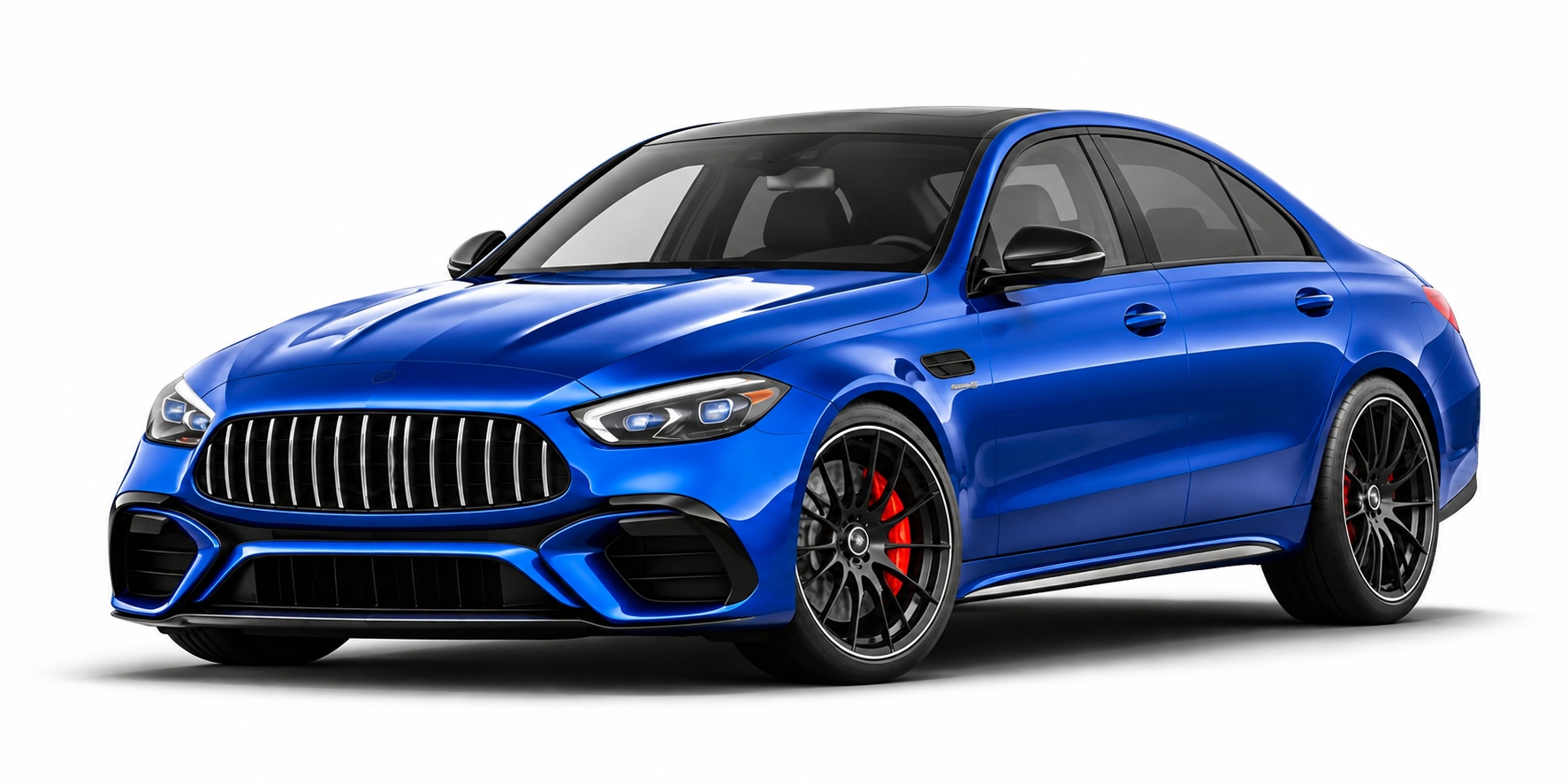
2026 Mercedes-AMG C 63 S E PERFORMANCE Specs, Features and Pricing
Introduction
Imagine a luxury sedan with a four-cylinder engine that produces more horsepower than many V8 performance cars. That’s what makes the 2026 Mercedes-AMG C 63 S E PERFORMANCE unusual. Its 2.0L turbocharged gasoline engine works with an electric performance system to deliver a combined 671 horsepower and 752 lb-ft of torque. Mercedes-Benz claims a 0–60 mph time of just 3.3 seconds. You also get all-wheel drive, a nine-speed automatic transmission, seating for five, and a separate trunk. However, this isn’t an ordinary plug-in hybrid designed to cover your daily commute on electricity. Its EPA-rated electric range is only 1 mile, while gasoline consumption reaches 20 mpg combined when the battery is depleted. The C 63 also weighs 4,817 lb, making it considerably heavier than the AMG C 43. Starting at $88,000 USD, this sedan demands a closer look at more than its acceleration figures. Before buying, you’ll want to understand its performance technology, fuel consumption, available equipment, purchase price, and the expenses involved in maintaining a specialized AMG drivetrain.
Trim Positioning
Mercedes-Benz gives the C 63 S E PERFORMANCE a distinct position within the C-Class family. The regular C 300 models are designed around luxury, everyday comfort, and manageable performance. Moving to the AMG C 43 brings a substantial increase in horsepower and more specialized handling equipment. The C 63 takes another approach by combining a highly tuned four-cylinder gasoline engine with an electric motor and performance battery. That combination produces 255 horsepower more than the C 43, although it also introduces additional weight and mechanical complexity. You aren’t simply paying for a larger engine. You’re paying for a drivetrain developed to deliver exceptional acceleration through gasoline and electrical power working together. If you’re still comparing the entire range, the Mercedes-Benz C-Class trim guide explains how the regular and AMG configurations fit into the lineup.
United States
American buyers have several performance levels to consider before reaching the C 63. The C 300 starts at $50,900 USD, while the all-wheel-drive C 300 4MATIC starts at $52,900 USD. The AMG C 43 increases the starting MSRP to $64,150 USD, and the C 63 reaches $88,000 USD. That creates a $23,850 difference between the two AMG models before destination charges, taxes, and options. The additional money buys considerably more power, but it doesn’t automatically mean the C 63 will be the better everyday sedan for every driver. If you spend most of your time commuting, the C 43 already provides substantial acceleration. The C 63 is intended for buyers who place greater importance on maximum output and its specialized hybrid performance system.
- C 300: 255 horsepower, rear-wheel drive, and a $50,900 USD starting MSRP.
- C 300 4MATIC: 255 horsepower, all-wheel drive, and a $52,900 USD starting MSRP.
- AMG C 43: 416 horsepower, 369 lb-ft of torque, and a $64,150 USD starting MSRP.
- AMG C 63 S E PERFORMANCE: 671 horsepower, 752 lb-ft of torque, and an $88,000 USD starting MSRP.
- AMG price difference: The C 63 starts $23,850 USD above the C 43.
Canada
Canadian buyers face a higher purchase budget, and the exact Canadian MSRP requires an important qualification. The estimated starting price for the 2026 C 63 S E PERFORMANCE is $112,500 CAD. Adding $3,995 CAD for freight and pre-delivery inspection and $100 CAD for the federal air-conditioning excise tax produces an estimated $116,595 CAD before provincial taxes. This is a planning estimate, not a confirmed official Canadian MSRP. You should also consider the expenses of driving a high-performance sedan through winter. All-wheel drive can help the car accelerate on slippery pavement, but it cannot compensate for tires that lack adequate winter grip. A separate winter tire setup, insurance coverage, and regular maintenance should be part of the purchase budget.
- Estimated MSRP: $112,500 CAD.
- Estimated freight and PDI: $3,995 CAD.
- Federal A/C excise tax: $100 CAD.
- Estimated pre-tax total: $116,595 CAD.
- Additional expenses: Provincial taxes, registration, dealer fees, options, financing, and seasonal tires.
Powertrain & Performance
Under the hood sits one of the most unusual powertrains in the compact performance-sedan category. Mercedes-AMG uses a 2.0L turbocharged inline-four gasoline engine alongside a plug-in hybrid performance system. The combined drivetrain produces 671 horsepower and 752 lb-ft of torque. Those are total system figures, not the output of the gasoline engine operating by itself. The four-cylinder engine uses 16 valves, double overhead camshafts, variable valve timing, and dual fuel injection. These systems help manage airflow, fuel delivery, and combustion as engine speed and load change. Power travels through a nine-speed shiftable automatic transmission to an all-wheel-drive system. Edmunds also lists a centre limited-slip differential, independent suspension at all four wheels, and front and rear stabilizer bars as standard mechanical equipment. Each component has a job to do when a car weighing nearly 4,800 lb accelerates this quickly.
| Performance Specification | 2026 AMG C 63 S E PERFORMANCE |
|---|---|
| Gasoline engine | 2.0L turbocharged inline-four |
| Powertrain | Plug-in performance hybrid |
| Combined horsepower | 671 hp |
| Combined torque | 752 lb-ft |
| Horsepower listing | 6,750 rpm |
| Torque listing | 5,000 rpm |
| Cylinders | 4 |
| Valves | 16 |
| Camshaft design | Double overhead camshaft (DOHC) |
| Valve timing | Variable |
| Fuel injection | Dual fuel injection |
| Transmission | 9-speed shiftable automatic |
| Drivetrain | All-wheel drive |
| Centre limited-slip differential | Standard |
| Suspension | Four-wheel independent |
| Stabilizer bars | Front and rear |
| Manufacturer 0–60 mph | 3.3 seconds |
| Curb weight | 4,817 lb |
Acceleration & Driving Character
Pressing the accelerator in a C 63 involves more than a conventional turbocharged engine building power. The electric performance system contributes to the drivetrain’s response, helping deliver the enormous combined output. Mercedes-Benz quotes 3.3 seconds from 0 to 60 mph, a figure that puts the sedan in high-performance territory. However, acceleration is only one part of how a car behaves. At 4,817 lb, the C 63 carries 652 lb more weight than the supplied AMG C 43 specification. That additional mass must be managed when slowing down, changing direction, or travelling over uneven pavement. Independent suspension and stabilizer bars help control body movement, while all-wheel drive supports traction when accelerating. If you’re comparing the two AMG models, test how each responds to steering inputs, braking, and ordinary road surfaces. The fastest car on paper isn’t necessarily the one you’ll prefer on your daily route.
Fuel Economy
Hybrid technology can create the impression that a vehicle will use very little gasoline, but the C 63’s system serves a different purpose. Its electric components are primarily there to improve performance, not to turn the sedan into an efficient long-range commuter. Edmunds lists 19 mpg city, 22 mpg highway, and 20 mpg combined when the battery is depleted. Premium unleaded gasoline is required. The car carries a 17.4-gallon fuel tank, giving it an EPA-based estimated range of 330.6 miles in city driving and 382.8 miles on the highway. Heavy acceleration, traffic, cold weather, and short trips can increase consumption. If you regularly use the car’s available performance, your actual gasoline expenses may be considerably higher than a calculation based on the combined rating.
Fuel Economy (United States)
American owners can use the 20 mpg combined rating to build a realistic annual gasoline budget. Driving 12,000 miles would require approximately 600 gallons of premium fuel. At an example price of $4.00 per gallon, that works out to $2,400 annually, or about $200 per month. A driver covering 15,000 miles under the same conditions would use approximately 750 gallons, increasing the example expense to $3,000 annually. These are calculations, not fixed ownership costs. Gasoline prices vary by region, and the car’s fuel consumption will change with driving conditions.
| Fuel Economy Specification | U.S. Figure |
|---|---|
| City | 19 mpg |
| Highway | 22 mpg |
| Combined, battery depleted | 20 mpg |
| Fuel tank | 17.4 US gallons |
| Estimated city range | 330.6 miles |
| Estimated highway range | 382.8 miles |
| Fuel requirement | Premium unleaded |
| Annual gasoline at 12,000 miles | Approximately 600 gallons |
| Annual cost at $4.00/gal | Approximately $2,400 USD |
You can compare official gasoline and electricity consumption ratings through the EPA fuel economy database. Make sure you’re looking at the C 63’s specific plug-in hybrid rating, not the regular C-Class sedan.
Fuel Economy (Canada)
For Canadian readers, the supplied U.S. combined rating of 20 mpg converts to approximately 11.8 L/100 km. This is a mathematical conversion and shouldn’t be confused with a separately certified Canadian rating. If you drive 20,000 km annually, the converted consumption suggests approximately 2,360 litres of premium gasoline. At $1.70 CAD per litre, the annual cost would be about $4,012 CAD. Over five years, the same assumptions produce approximately $20,060 CAD in gasoline expenses. Winter driving can increase that amount through cold starts, longer warm-up periods, traffic delays, and reduced road efficiency. The estimate is useful for planning, but your actual fuel bill will depend on how and where you drive.
| Canadian Fuel Budget | Estimated Figure |
|---|---|
| Converted combined consumption | 11.8 L/100 km |
| Annual driving distance | 20,000 km |
| Annual gasoline use | 2,360 litres |
| Example gasoline price | $1.70 CAD/L |
| Annual gasoline expense | $4,012 CAD |
| Five-year gasoline expense | $20,060 CAD |
For Canadian test-cycle figures, consult Natural Resources Canada and select the exact model year and powertrain.
Plug-In Hybrid System & Electric Range
Calling the C 63 a plug-in hybrid is technically correct, but it doesn’t tell the whole story. Many plug-in hybrids are designed to travel substantial distances without starting their gasoline engines. This AMG uses its battery primarily as a performance component. Edmunds lists an EPA electric driving range of just 1 mile, equivalent to approximately 1.6 km. That makes the system unsuitable for meaningful gasoline-free commuting. Its electrical power is intended to work with the turbocharged engine, contributing to the combined output during demanding driving conditions. The EPA figures also include 37 MPGe combined, 36 MPGe city, and 38 MPGe highway. MPGe measures energy use using a gasoline-equivalent standard. It isn’t the same measurement as the 20 mpg gasoline rating. Edmunds reports electricity consumption of 57 kWh per 100 miles and a 1.2-hour charging time at 240 volts. Charging information should be interpreted in the context of this small electric driving range, not as evidence of long-distance EV capability.
| Hybrid & Charging Specification | 2026 AMG C 63 |
|---|---|
| Hybrid type | Plug-in performance hybrid |
| EPA electric range | 1 mile |
| Approximate metric range | 1.6 km |
| City electric efficiency | 36 MPGe |
| Highway electric efficiency | 38 MPGe |
| Combined electric efficiency | 37 MPGe |
| Electricity consumption | 57 kWh/100 miles |
| Listed charging time at 240V | 1.2 hours |
| Gasoline economy, battery depleted | 20 mpg |
Exterior Features
AMG gives the C 63 a more purposeful appearance than the regular C-Class, with performance-oriented body styling that suits its position in the lineup. The sedan measures 190.6 inches long, 74.4 inches wide without mirrors, and 57.4 inches tall. Its body is slightly longer than the C 43, although both remain compact luxury sedans with four doors and separate trunks. Cooling is particularly important in a vehicle combining a turbocharged gasoline engine with high-output electrical components. The front-end design and airflow management therefore serve engineering needs as well as appearance. Buyers should pay attention to the actual wheel design, exterior finish, and installed appearance equipment when comparing vehicles. These details can change with configuration, and they may also influence replacement costs after wheel or body damage.
- AMG-specific exterior styling: Gives the C 63 a more aggressive appearance than regular C-Class sedans.
- Four-door body: Provides conventional access to front and rear seating.
- Performance-oriented front design: Supports the model’s visual character and cooling requirements.
- Rear exterior treatment: Complements the AMG performance design.
- Exterior dimensions: Longer body than the supplied AMG C 43 configuration.
- Available finishes and wheel designs: Exact selections depend on the vehicle configuration and market.
Interior Features
Inside the C 63, the emphasis shifts from exterior performance styling to the driver’s environment. Mercedes-Benz retains the familiar five-passenger sedan layout, making this AMG usable for more than occasional weekend drives. A modern C-Class cabin also provides the foundation for digital instrumentation and vehicle controls, while the AMG model adds the need to display performance-related information. The important consideration is how the seating position, controls, and interior materials suit you. A performance sedan should hold its driver securely during cornering without becoming uncomfortable after an hour in traffic. Rear passengers also need enough room for normal travel. Edmunds confirms five seats and an 11.6-cubic-foot trunk, but the equipment extract doesn’t identify every upholstery choice or seat feature for the exact 2026 C 63 configuration. Those details should be established from the vehicle’s official equipment sheet, not borrowed from a C 300 or C 43.
- Seating capacity: Five occupants.
- Cabin layout: Four-door luxury sedan with front and rear seating.
- Driver-focused controls: Supports the AMG’s performance-oriented operation.
- Digital vehicle information: Important for monitoring driving and hybrid functions.
- Rear passenger accommodation: Conventional second-row seating.
- Luggage compartment: 11.6 cu ft of trunk capacity.
Comfort & Convenience
Living with a high-performance sedan involves far more ordinary driving than full-throttle acceleration. You may spend your morning crawling through traffic, parking in a crowded garage, or travelling over roads that haven’t seen fresh pavement in years. The C 63’s suspension has to handle those situations while also controlling a powerful, heavy vehicle during faster driving. Edmunds confirms four-wheel independent suspension and front and rear stabilizer bars. Those components support wheel movement and help manage body roll, but they don’t establish exactly how soft or firm the car will feel on every road. Tire selection and wheel configuration can also affect ride comfort. If this will be your main vehicle, evaluate it at low speeds, over broken pavement, and during ordinary highway travel. You’ll learn more about everyday comfort from that experience than from an acceleration figure alone.
- Four-wheel independent suspension: Allows individual wheel movement over road surfaces.
- Front and rear stabilizer bars: Help manage body roll during cornering.
- Nine-speed automatic transmission: Handles gear changes without requiring manual shifting.
- All-wheel drive: Supports traction during acceleration.
- Five-passenger layout: Maintains everyday sedan usability.
- Comfort equipment: Seating and climate-control specifications should be checked against the selected vehicle.
Technology & Infotainment
Digital technology plays an important role in the modern C-Class, but the C 63 has additional information to manage because of its electrified drivetrain. Drivers need access to conventional vehicle functions alongside performance and hybrid-system information. Mercedes-Benz uses its MBUX infotainment architecture across the C-Class family, with digital interfaces supporting entertainment, communication, and vehicle settings. The exact standard screen sizes, audio equipment, navigation functions, and smartphone features for the 2026 C 63 should be confirmed from its model-specific equipment list. A similarly shaped dashboard in a C 300 doesn’t guarantee identical standard equipment in an AMG. When comparing dealership vehicles, spend time using the display menus and steering-wheel controls. An interface that looks impressive in photographs should also be easy to operate when you’re actually driving.
- MBUX infotainment architecture: Mercedes-Benz’s digital vehicle interface.
- Digital driving displays: Present driving and vehicle information.
- Hybrid-system information: Relevant to the electrified performance drivetrain.
- Entertainment and communication: Functions depend on the installed equipment.
- Navigation and smartphone functions: Confirm the exact configuration before purchase.
- Optional audio equipment: Availability and specifications depend on the selected vehicle.
Available Technology
Much of the C 63’s most important technology operates without appearing on the centre display. Its performance hybrid system must coordinate gasoline and electrical power, while the nine-speed transmission and all-wheel-drive hardware manage how that output reaches the road. A centre limited-slip differential is also listed as standard. These systems help explain why the C 63 is mechanically more specialized than the regular C-Class. Optional cabin technology is a separate purchase decision. Advanced displays, upgraded sound systems, lighting equipment, and driver assistance functions may be offered through different configurations, but exact availability must be established for the 2026 C 63. If you’re deciding whether an upgrade is worthwhile, focus on the functions it adds and how often you’ll use them. Expensive technology is only valuable when it improves your experience behind the wheel.
Safety & Driver Assistance
With 671 horsepower available, careful throttle control and suitable tires are especially important. The C 63’s all-wheel-drive system helps distribute power, while its independent suspension and stabilizer bars support handling. Its centre limited-slip differential is another part of the mechanical drivetrain. However, none of these components can eliminate the limits of tire grip or compensate for excessive speed. Driver assistance is a separate area of safety. The C-Class family offers electronic safety and assistance technologies, but the supplied C 63 equipment extract doesn’t establish which individual systems are standard or optional on this exact model. Buyers should examine the vehicle’s equipment sheet for collision avoidance, lane assistance, blind-spot monitoring, parking cameras, and related features. Check the installed systems and their operating limits, especially if you frequently drive in heavy rain or snow.
- All-wheel drive: Helps manage traction during acceleration.
- Centre limited-slip differential: Standard mechanical drivetrain equipment.
- Independent suspension: Supports handling and road control.
- Front and rear stabilizer bars: Help reduce body movement during cornering.
- Driver assistance systems: Verify the exact installed equipment and package contents.
- Tire condition: Essential for braking, steering, and wet-weather grip.
Independent crash-test results should be checked through the Insurance Institute for Highway Safety and the National Highway Traffic Safety Administration. Use results that correspond to the appropriate model year and vehicle.
Cargo & Interior Space
Choosing the most powerful C-Class doesn’t mean giving up the normal usefulness of a sedan. The C 63 seats five and provides 11.6 cubic feet of trunk capacity. That is the same listed luggage volume as the C 300 4MATIC and C 43 in the supplied specifications. For daily errands, smaller suitcases, backpacks, and shopping bags, the separate trunk should provide useful storage. Larger items may be harder to accommodate because a sedan’s trunk opening limits what can fit through it. The car also retains four passenger doors, which makes rear-seat access more convenient than in a two-door coupe. If you regularly carry tall adults or bulky luggage, inspect the rear seating area and trunk opening before purchasing. Horsepower won’t help when a suitcase refuses to fit.
| Cargo & Interior Specification | AMG C 63 S E PERFORMANCE |
|---|---|
| Seating capacity | 5 |
| Trunk capacity | 11.6 cu ft |
| Body style | Four-door sedan |
| Drivetrain | All-wheel drive |
| Main use | Performance driving and everyday transportation |
Exterior Dimensions
Parking space becomes a more immediate concern when you compare the C 63’s measurements with your garage or driveway. The sedan is 190.6 inches long and 74.4 inches wide without mirrors. Including the mirrors, overall width reaches 80.0 inches. Its 113.1-inch wheelbase supports the car’s proportions, while the listed 39.7-foot turning circle gives you an indication of the space required for tight manoeuvres. Height is 57.4 inches. Although the C 63 remains a compact luxury sedan, it is not particularly light at 4,817 lb. That weight influences the demands placed on its tires, brakes, and suspension. Edmunds also identifies South Africa as the country of final assembly.
| Exterior Specification | Measurement |
|---|---|
| Length | 190.6 in |
| Width without mirrors | 74.4 in |
| Width with mirrors | 80.0 in |
| Height | 57.4 in |
| Wheelbase | 113.1 in |
| Turning circle | 39.7 ft |
| Curb weight | 4,817 lb |
| Final assembly | South Africa |
Warranty Coverage
A complicated drivetrain makes factory warranty coverage worth examining carefully. The C 63 combines a highly tuned gasoline engine, turbocharging, electrical performance components, and an automatic transmission. These systems can require specialized diagnostic equipment if a fault develops. Edmunds lists a four-year or 50,000-mile basic warranty for the U.S. model. That gives American buyers a defined period of new-vehicle protection, although individual components and exclusions are governed by the manufacturer’s warranty documents. Scheduled maintenance and normal wear remain separate expenses. If you’re planning to keep the vehicle beyond its original coverage, the maintenance history and condition of its hybrid equipment become especially important. You can also review the broader Mercedes-Benz C-Class reliability guide for model-family ownership context, while keeping in mind that regular C-Class repair experiences aren’t identical to those of this specialized AMG.
United States
American owners receive four years or 50,000 miles of basic warranty coverage, whichever limit comes first. At 12,000 miles per year, you would accumulate approximately 48,000 miles in four years. A driver travelling 20,000 miles annually could reach the mileage limit after about two and a half years. The supplied specifications do not establish the complete separate warranty conditions for the C 63’s hybrid components, so those should be confirmed in the official warranty booklet before purchasing.
| Warranty Type | U.S. Coverage |
|---|---|
| Basic new-vehicle warranty | 4 years / 50,000 miles |
| Powertrain protection | Governed by applicable warranty terms |
| Hybrid components | Check component-specific warranty terms |
| Roadside assistance | Subject to program conditions |
Canada
Canadian Mercedes-Benz new-vehicle warranty coverage generally uses a four-year or 80,000-km framework. For the exact C 63 S E PERFORMANCE, buyers should confirm the applicable Canadian warranty booklet, including any separate conditions for electrified components. At 20,000 km annually, you would reach 80,000 km in four years. Someone driving 30,000 km per year could reach that distance after approximately two years and eight months. That distinction is important for drivers who travel frequently between cities or accumulate substantial highway mileage.
| Warranty Type | Canadian Reference |
|---|---|
| New-vehicle limited warranty | 4 years / 80,000 km |
| Powertrain protection | Confirm applicable Canadian terms |
| Hybrid components | Confirm component-specific terms |
| Roadside assistance | Subject to program conditions |
Pricing & Cost of Ownership
A performance sedan’s advertised MSRP is only the starting point for calculating what you’ll spend. Taxes, registration, financing, optional equipment, and insurance can increase the final purchase amount. The C 63 also requires premium gasoline and uses specialized performance components that may cost more to service or replace than ordinary sedan parts. Depreciation is another consideration, particularly when purchasing a luxury vehicle at this price level. I would compare the complete purchase price with a realistic five-year ownership budget before committing. The Mercedes-Benz C-Class depreciation guide provides broader model-family context, although the C 63’s resale value should be evaluated separately from the regular C 300.
United States
Mercedes-Benz and Edmunds list the 2026 AMG C 63 S E PERFORMANCE at $88,000 USD MSRP. Adding the estimated $1,150 destination charge brings the calculated total to $89,150 USD before sales taxes and other fees. This is not an out-the-door dealership price. Registration, optional equipment, financing charges, and dealer fees may increase the final amount. For example, a hypothetical 6% sales tax applied to the $89,150 reference total would add $5,349, bringing the calculation to $94,499 before registration and other charges. Actual tax rules and rates depend on your location, so request an itemized dealership quote.
| U.S. Pricing Detail | Amount |
|---|---|
| MSRP | $88,000 USD |
| Estimated destination charge | $1,150 USD |
| Total before taxes | $89,150 USD |
| Example 6% sales tax | $5,349 USD |
| Example total including 6% tax | $94,499 USD |
| Other expenses | Registration, dealer fees, options, financing |
Canada
For Canadian buyers, the estimated MSRP is $112,500 CAD. Adding estimated freight and PDI of $3,995 CAD and the $100 CAD federal air-conditioning excise tax produces a calculated pre-tax total of $116,595 CAD. This estimate should not be presented as an official Mercedes-Benz Canada price. Provincial tax rates, optional equipment, registration, and financing will influence the final amount. At this purchase level, it’s useful to compare the total loan cost instead of focusing only on the monthly payment. A longer financing term may reduce the monthly amount while increasing the interest paid over the life of the loan.
| Canadian Pricing Detail | Estimated Amount |
|---|---|
| MSRP | $112,500 CAD |
| Freight and PDI | $3,995 CAD |
| Federal A/C excise tax | $100 CAD |
| Total before taxes | $116,595 CAD |
| Additional expenses | Provincial taxes, registration, dealer fees, options, financing |
Ownership Costs
Owning a C 63 involves expenses that aren’t obvious during a dealership test drive. Insurance, premium gasoline, scheduled servicing, performance tires, brakes, and depreciation can account for a substantial share of the five-year cost. The supplied model-specific data does not establish a complete Edmunds True Cost to Own estimate for this 2026 C 63, so a precise five-year total would be unsupported. That doesn’t mean you have to purchase without planning. You can calculate gasoline use from the EPA rating, request insurance quotes, obtain local tire prices, and ask a Mercedes-Benz service department about scheduled maintenance. For a broader explanation of these expenses, the Mercedes-Benz C-Class ownership costs guide is a useful starting point. Just remember that the C 63’s performance hardware can create expenses that don’t apply to the regular models.
Fuel Expenses
Gasoline is one ownership expense you can estimate directly from the C 63’s published consumption rating. At 20 mpg combined, 12,000 miles of annual driving would use approximately 600 gallons. Using $4.00 USD per gallon gives an estimated annual expense of $2,400. In Canada, the converted 11.8 L/100 km figure produces an estimated $4,012 CAD annually at 20,000 km and $1.70 CAD per litre. Electricity expenses are not included in these examples. Neither are increases in fuel prices or consumption from frequent hard acceleration. Use the estimates as a starting budget, then adjust them to match your driving distance and local premium gasoline prices.
| Annual Fuel Cost Example | United States | Canada |
|---|---|---|
| Distance | 12,000 miles | 20,000 km |
| Consumption | 20 mpg | 11.8 L/100 km |
| Gasoline used | 600 gallons | 2,360 litres |
| Assumed price | $4.00 USD/gal | $1.70 CAD/L |
| Annual expense | $2,400 USD | $4,012 CAD |
Insurance & Tire Costs
Before purchasing the C 63, obtain an insurance quote using the exact model and coverage you intend to carry. Its high purchase price, strong acceleration, and specialized mechanical components can influence repair expenses, although premiums also depend on your age, location, driving history, annual mileage, and insurer. Tires deserve equal attention. A high-performance sedan needs tires that meet the correct size, load, and speed specifications. The C 63’s considerable weight and available acceleration can place significant demands on them, particularly during enthusiastic driving. The supplied Edmunds extract doesn’t establish the exact tire sizes for the selected configuration, so replacement pricing should be based on the vehicle’s actual equipment. If you drive in Canada or another region with regular snow and ice, a suitable winter tire set may add a meaningful expense to the first year of ownership.
Maintenance Considerations
Keeping the C 63 in good condition requires attention to both its gasoline engine and its electrical performance system. The turbocharged four-cylinder needs approved engine oil and scheduled servicing, while the hybrid components require technicians familiar with high-voltage systems. Its nine-speed automatic transmission, all-wheel-drive hardware, and limited-slip differential also have specific maintenance requirements. Regular inspections of the braking system and tires are particularly important because of the car’s weight and performance capability. Warning messages should be investigated promptly, even when the car still appears to drive normally. Keep detailed service records, follow Mercedes-Benz’s recommended intervals, and avoid using generic maintenance advice intended for the regular C 300. The Mercedes-Benz C-Class maintenance schedule provides general service context, but the AMG C 63’s exact requirements should take priority.
- Engine oil and filter: Use Mercedes-Benz-approved oil and follow the specified service intervals.
- Turbocharger: Investigate unusual noises, warning messages, or changes in engine response.
- Hybrid battery and electronics: Use qualified technicians for electrical diagnosis and repair.
- Cooling systems: Maintain the components responsible for managing engine and electrical temperatures.
- Transmission: Follow the manufacturer’s fluid and service requirements.
- All-wheel-drive system: Inspect related components according to the service schedule.
- Limited-slip differential: Use the correct servicing procedures and approved fluids.
- Brakes: Monitor pad wear, rotor condition, and brake fluid.
- Tires: Check pressure, tread depth, alignment, and uneven wear.
- Charging equipment: Inspect connectors and cables for damage.
- Maintenance records: Keep invoices and service documentation for future resale.
Available Packages
Optional equipment deserves careful attention because the C 63’s high starting price doesn’t automatically mean every luxury or driver assistance feature is included. Mercedes-Benz offers different appearance, comfort, and technology configurations across the C-Class family, but equipment packages can vary by model and market. A package offered on the C 300 may have different contents or availability on the C 63. The model-specific specifications provided here do not establish a complete 2026 C 63 package catalogue, so individual package names should not be treated as confirmed options without checking the manufacturer’s configuration information. When comparing vehicles, examine the actual installed equipment, its price, and whether it provides a benefit you’ll use regularly.
Exterior Styling Options
Appearance upgrades can change the C 63’s character without affecting its combined horsepower. Darker exterior accents, different wheel designs, and alternative finishes may appeal to buyers who want a particular look. Wheel choices also deserve attention because they can influence replacement tire costs and ride comfort. If you’re comparing two vehicles with different appearance equipment, check the actual wheel specifications and included exterior components before deciding which offers better value.
Performance Equipment
Performance-related options should be evaluated for their effect on the driving experience, not just their names. The C 63 already has a highly specialized hybrid drivetrain, all-wheel drive, independent suspension, and a limited-slip differential. Additional chassis or performance equipment, where offered, should be compared with the standard configuration. If an option changes handling or ride characteristics, consider whether those changes suit the roads you use most often.
Luxury & Interior Equipment
Interior upgrades can be worthwhile when they improve seating comfort, cabin convenience, or the quality of equipment you use every day. However, buyers should not assume that an Exclusive or Pinnacle package from another C-Class model is available with identical contents on the C 63. Compare the actual upholstery, seat functions, audio equipment, and digital features on the selected vehicle. A long equipment list isn’t automatically valuable if most of the additions go unused.
Driver Assistance Equipment
Advanced assistance systems may appeal to drivers who spend considerable time on highways or in heavy traffic. Features such as adaptive cruise control and lane-related assistance should be checked against the selected C 63’s official equipment list to establish whether they are standard or optional. Even when fitted, these systems have operating limits and require driver supervision. If you regularly travel through heavy rain, snow, or poorly marked roads, understanding those limits is just as important as knowing which functions are included.
Trim Comparison: AMG C 43 vs AMG C 63 S E PERFORMANCE
Choosing between the AMG C 43 and C 63 comes down to more than deciding how much horsepower you want. Both use turbocharged 2.0L four-cylinder engines, nine-speed automatic transmissions, and all-wheel drive. The C 43 combines its gasoline engine with mild-hybrid assistance, while the C 63 uses a more powerful plug-in performance hybrid system. That change raises combined output from 416 to 671 horsepower and torque from 369 to 752 lb-ft. It also increases curb weight from 4,165 to 4,817 lb. The C 43 returns 22 mpg combined, compared with 20 mpg for the C 63. Starting MSRPs are $64,150 and $88,000 USD, respectively. For buyers who want a quick luxury sedan without the C 63’s additional cost and complexity, the C 43 is worth a serious look. You can examine its equipment and performance in the 2026 Mercedes-AMG C 43 specifications guide.
| Specification | 2026 AMG C 43 | 2026 AMG C 63 S E PERFORMANCE |
|---|---|---|
| Engine | 2.0L turbo inline-four | 2.0L turbo inline-four |
| Electrification | Mild hybrid | Plug-in performance hybrid |
| Horsepower | 416 hp | 671 hp |
| Torque | 369 lb-ft | 752 lb-ft |
| Transmission | 9-speed automatic | 9-speed automatic |
| Drivetrain | All-wheel drive | All-wheel drive |
| U.S. MSRP | $64,150 | $88,000 |
| Combined fuel economy | 22 mpg | 20 mpg |
| Curb weight | 4,165 lb | 4,817 lb |
| Trunk capacity | 11.6 cu ft | 11.6 cu ft |
| Electric driving range | Not a plug-in hybrid | 1 mile EPA |
| Main appeal | Lower weight and purchase price | Greater power and electrified performance |
Competitor Comparison
At $88,000 USD before destination charges, the C 63 enters a category where buyers have several performance sedans to consider. The BMW M3 Competition xDrive is a relevant alternative for drivers interested in a turbocharged six-cylinder engine and all-wheel drive. The Cadillac CT4-V Blackwing offers a different experience through its twin-turbocharged V6 and rear-wheel-drive layout. Audi’s RS performance models are also worth examining, although the exact model and availability need to match the market and year you’re shopping in. Each takes a different approach to power delivery, handling, and everyday comfort. The C 63’s distinctive feature is its combination of a small turbocharged gasoline engine with a powerful electrical performance system. When comparing alternatives, use the exact model-year specifications and look beyond horsepower. Curb weight, fuel economy, acceleration, equipment, and total ownership expenses can change which vehicle is the better fit.
- BMW M3 Competition xDrive: Performance sedan with a turbocharged six-cylinder engine and all-wheel drive.
- Cadillac CT4-V Blackwing: Rear-wheel-drive performance sedan powered by a twin-turbocharged V6.
- Audi RS performance models: Alternatives to examine using the correct model year and market availability.
- Mercedes-AMG C 43: Lower-priced alternative within the C-Class family, with 416 horsepower and a lighter drivetrain.
Who Should Buy the AMG C 63 S E PERFORMANCE
The C 63 S E PERFORMANCE is best suited to buyers who specifically want its unusual combination of luxury-sedan usability and very high performance. Its 671-horsepower hybrid drivetrain delivers acceleration far beyond what most drivers need for ordinary commuting, while the five-seat cabin and separate trunk preserve everyday usefulness. However, the 4,817 lb curb weight, 20 mpg combined rating, and $88,000 USD starting price mean there are real trade-offs. If you want a comfortable C-Class with enough power for highway driving, a regular C 300 may be sufficient. If you want a powerful AMG without paying for the C 63’s more complex drivetrain, the C 43 deserves consideration. The C 63 becomes more appealing when its distinctive engineering and acceleration are the reasons you’re shopping.
Performance-focused drivers: If strong acceleration is a priority, the C 63 offers 671 horsepower and a manufacturer-stated 3.3-second 0–60 mph time. Its drivetrain is designed to combine gasoline and electric power for exceptional output. Evaluate braking, steering, and ride quality alongside acceleration before deciding.
AMG enthusiasts: If you’re interested in Mercedes-AMG’s move toward electrified performance, the C 63 provides a distinctive example. Its four-cylinder hybrid layout is very different from older AMG models that relied on larger gasoline engines. Buyers who prefer traditional engine characteristics should compare both approaches.
Luxury sedan shoppers: If you want performance without giving up four doors and seating for five, the C 63 retains the basic usefulness of a compact sedan. Its 11.6 cu ft trunk can handle everyday luggage, although larger items may be difficult to load.
Daily commuters: If you travel long distances regularly, pay attention to fuel expenses and suspension comfort. At 12,000 miles annually, the 20 mpg combined rating suggests approximately 600 gallons of premium gasoline. Insurance and maintenance should also be included in your budget.
Drivers in snowy regions: If winter conditions are common where you live, all-wheel drive can support acceleration on slippery roads. However, suitable winter tires remain essential for steering and braking. Don’t assume the drivetrain can compensate for poor tire grip.
Technology-focused buyers: If you’re interested in performance-oriented hybrid engineering, the C 63 offers an unusual system to explore. Just remember that its 1-mile EPA electric range isn’t intended for substantial gasoline-free commuting.
First-time AMG buyers: If this is your first AMG, compare the C 63 with the C 43 before committing. The C 43 provides 416 horsepower at a substantially lower MSRP. The C 63 adds much more output, but it also brings additional weight, purchase expense, and hybrid-system complexity.
Related Pages
If you’re still researching the Mercedes-Benz C-Class, the following FlipCars pages can help you compare other models, examine maintenance requirements, and understand long-term ownership expenses.
Add a comment Cancel reply
Comments (0)
Categories
Recent Posts
About us

Alex Demn
Blog Editor
This platform analyzes depreciation trends, resale value behavior, and long-term ownership costs, helping drivers understand how mileage, maintenance, and timing shape real financial outcomes.


- Guides
- Vehicle Research
- Tools
- Company
- Buying Guides
- Vehicle Reviews
- Fuel Cost calculator
- About Us
- Maintenance Guides
- Vehicle News
- Maintenance Cost Calculator
- Contact
- Repair Guides
- Towing & Payload Guides
- Repair Cost Estimator
- Privacy Policy
- Ownership Guides
- Fuel Economy Guides
- Ownership Cost Calculator
- Terms
- Depreciation Guides
- Reliability & Ownership
- Trade-In Value Estimator
- Disclaimer
- Depreciation Calculator
- Loan / Payment Calculator
- Car Insurance Cost Calculator