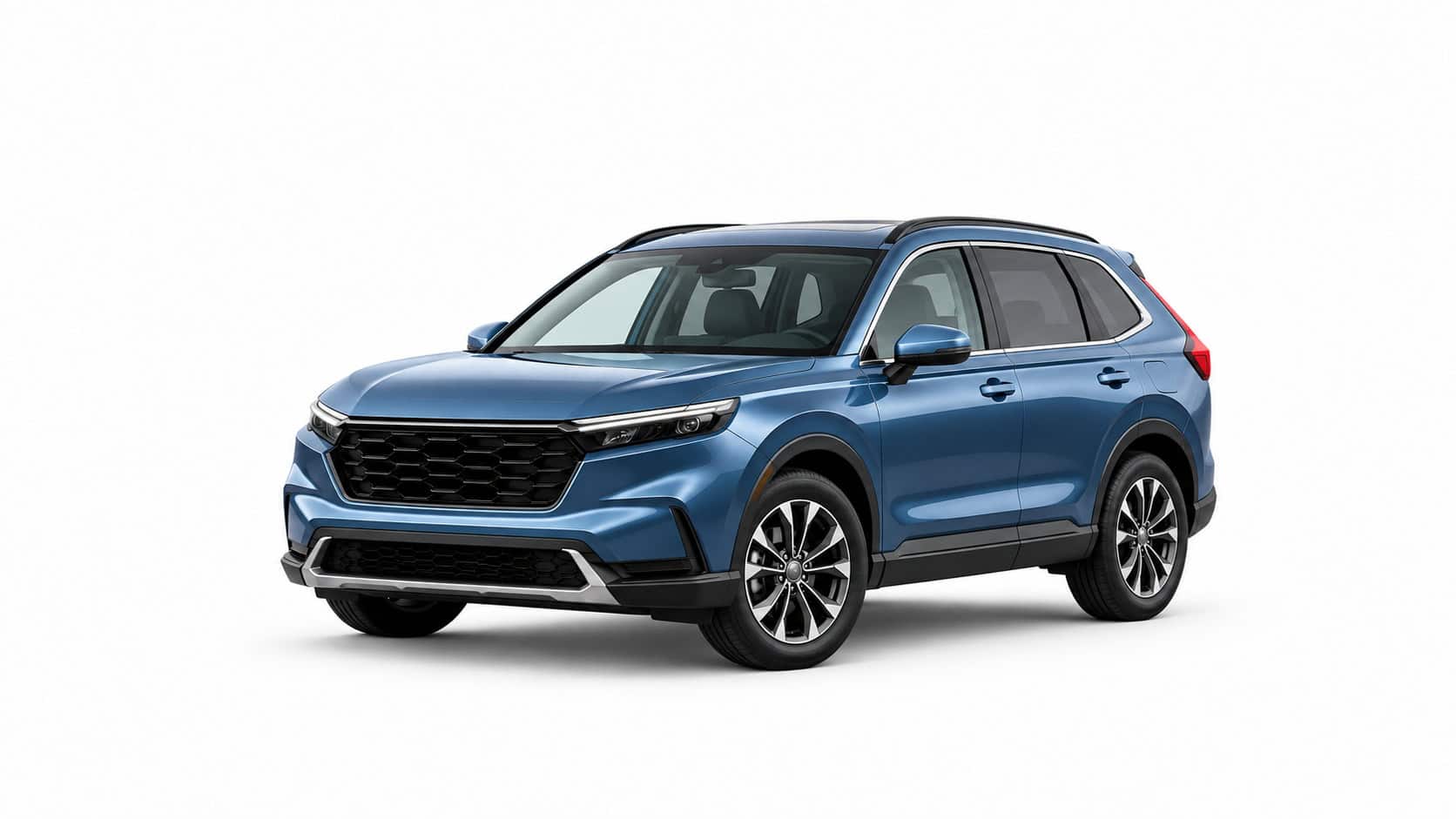
The Honda CR-V has grown from a small crossover into one of the most familiar compact SUVs on roads across the United States and Canada. If you are shopping for one, its appeal is fairly easy to understand. You get seating for 5 people, useful cargo room, available all-wheel drive, and a choice of gasoline or hybrid power on newer models. Older CR-Vs also remain common on the used market, giving you options across a wide range of budgets. The important part is choosing the right generation and powertrain for your needs. Fuel economy, technology, maintenance requirements, and available features have changed considerably over the years, so a 10-year-old CR-V can provide a very different ownership experience from a current model.
Positioning in the Compact SUV Market
When you compare the Honda CR-V with compact SUVs such as the Toyota RAV4, Subaru Forester, Mazda CX-5, Hyundai Tucson, Kia Sportage, and Nissan Rogue, you are looking at one of the most competitive vehicle classes in North America. The CR-V’s main strengths are its roomy 5-passenger cabin, useful cargo capacity, available AWD, and efficient powertrain choices. It is designed more around everyday driving than heavy towing or serious off-road use. That distinction matters when you are comparing SUVs that look similar on a dealer lot. If your priorities include commuting, family transportation, highway trips, groceries, and dealing with winter weather, the CR-V covers those jobs without requiring you to move into a larger and usually more expensive midsize SUV.
Honda CR-V Body Style and Drivetrain
Every CR-V is built around the basic idea of a compact crossover SUV, but the vehicle has become larger and more refined through successive generations. Recent North American models seat 5 passengers and are offered with front-wheel drive or all-wheel drive, depending on the trim and market. AWD can make sense if you regularly encounter snow, slippery hills, or poorly cleared roads, although it does not replace proper winter tires. Canadian shoppers may find AWD particularly useful during winter, while drivers in warmer areas can benefit from the simplicity and fuel economy of FWD. Cargo capacity is another major reason to consider the CR-V. The upright SUV body gives you considerably more flexibility for luggage, strollers, sports equipment, and larger purchases than you would normally get from a compact sedan.
Honda CR-V Gasoline and Hybrid Powertrains
The engine under the hood depends heavily on the CR-V generation you buy. Older models commonly used a naturally aspirated 2.4L four-cylinder engine, while recent gasoline versions have moved to a smaller 1.5L turbocharged four-cylinder. Newer CR-Vs are also available with Honda’s two-motor hybrid system, giving you another route if reducing fuel use is important. These choices should not be treated as interchangeable simply because they are all CR-Vs. The older 2.4L engine offers a different driving and maintenance experience from the newer turbo engine, while the hybrid adds electric assistance to reduce gasoline consumption. When buying used, identify the exact engine and drivetrain first. That makes it much easier to research the correct maintenance requirements, fuel economy, and known problems for the CR-V you are actually considering.
Honda CR-V Fuel Economy
Fuel use is one area where choosing the right CR-V powertrain can make a noticeable difference over several years. Based on the figures in this overview, recent U.S. 1.5L turbo models return roughly 30 mpg combined with FWD and about 28 mpg with AWD, while hybrid versions are around 37 to 40 mpg combined. Canadian figures are approximately 7.6 to 8.1 L/100 km for turbo FWD models, 8.1 to 8.4 L/100 km for turbo AWD versions, and roughly 6.0 to 6.4 L/100 km for hybrids. Your actual consumption will change with temperature, speed, traffic, tires, and driving habits. If you cover a lot of city kilometres or miles each year, the hybrid’s lower fuel consumption can become much more meaningful. Before buying, compare the exact model year and drivetrain rather than assuming every CR-V gets similar mileage.
Interior, Cargo Space and Technology
Inside the CR-V, you get a cabin designed around passenger room and straightforward everyday use rather than an overly complicated dashboard. Recent generations provide generous rear-seat space, a large cargo area with a low loading floor, touchscreen infotainment, Apple CarPlay and Android Auto, plus available equipment such as heated seats, a digital instrument display, and upgraded audio. Exact equipment changes by model year and trim, so a feature you see on one CR-V may be missing from another parked right beside it. This becomes particularly important when you shop used because trim names alone do not always tell the entire story across different generations. Check the actual vehicle for the technology you care about. Your phone takes about 30 seconds to connect during a test drive, which is much easier than discovering after purchase that the feature you expected is not there.
Honda CR-V Safety and Driver Assistance
Newer CR-V models use the Honda Sensing suite to provide driver-assistance features such as Collision Mitigation Braking, Lane Keeping Assist, Adaptive Cruise Control, Road Departure Mitigation, and Traffic Sign Recognition, although availability and individual features can vary by model year and trim. These systems are designed to assist you rather than take over the job of driving. If safety performance is an important part of your purchase, check the exact year with the IIHS rather than applying a newer CR-V’s test result to an older generation. You should also test warning lights, cameras, sensors, and driver-assistance functions when inspecting a used vehicle. Previous collision damage or windshield replacement can matter because modern safety systems may rely on cameras and sensors that need to be installed and calibrated correctly.
Honda CR-V Reliability and Resale Value
Reliability is one of the reasons many shoppers put the CR-V on their shortlist, but the badge alone cannot tell you how a particular used SUV was maintained. Engine choice, model year, mileage, climate, previous repairs, and service history all influence what you may spend after purchase. A CR-V with complete maintenance records can be a much safer proposition than one with fewer kilometres or miles but an unknown history. Resale value also matters because the amount you recover when you eventually sell or trade the vehicle affects your real ownership cost. AWD and hybrid models can appeal to particular buyers, but condition and maintenance still matter. Before buying, check the specific model year’s CR-V reliability information and verify that scheduled servicing has actually been completed.
Who the Honda CR-V Is Best For
The CR-V makes the most sense when you need more passenger and cargo flexibility than a compact car provides but do not need the size of a 3-row SUV. You may find it particularly suitable for a family of up to 5 people, a longer daily commute, regular highway travel, or Canadian winters where available AWD is useful. The hybrid deserves closer attention if you drive enough each year for lower fuel consumption to offset its potentially higher purchase price. A gasoline model may make more sense when its lower purchase cost matters more than maximizing fuel savings. If you routinely need a third row, substantial towing capacity, or serious off-road capability, another vehicle class may suit those jobs better. Your driving pattern should decide which CR-V configuration you investigate, rather than simply choosing the highest trim.
Key Advantages of the Honda CR-V
The CR-V combines several qualities that are useful when one vehicle has to handle commuting, passengers, shopping, and longer trips. You do not need every advantage below to justify buying one. Instead, identify which ones actually reduce your costs or make the vehicle easier to use. A driver covering 20,000 km per year, for instance, may care much more about hybrid fuel consumption than someone driving only 7,000 km annually.
- Roomy 5-passenger interior: You get useful rear-seat space without moving into a much larger SUV.
- Large cargo area: The crossover body gives you room for everyday loads and larger items when needed.
- Efficient powertrains: Recent gasoline models offer competitive consumption, while hybrids can reduce fuel use further.
- Available AWD: You can choose additional traction for snow and slippery roads.
- Gasoline and hybrid choices: You can balance purchase price, fuel consumption, and driving needs.
- Modern safety technology: Newer models offer Honda Sensing driver-assistance features.
- Strong used-market appeal: Multiple generations and configurations give you a wide selection when shopping used.
Key Limitations of the Honda CR-V
A CR-V still involves compromises, and understanding them before you buy can prevent an expensive mismatch later. The 1.5L turbo engine makes regular servicing important, while a hybrid introduces components that are not present in a conventional gasoline model. The CR-V also remains a compact 5-seat crossover, so it cannot suddenly become a minivan just because you fold a few seats. If your needs include carrying more passengers or towing heavier loads regularly, look carefully at those requirements before concentrating on price or fuel economy.
- No third-row seating: You are limited to 5 passenger positions, so larger families may need a different SUV.
- Turbo maintenance matters: Keep oil changes and other scheduled service up to date on 1.5L turbo models.
- Hybrid purchase prices can be higher: Compare the added purchase cost with the fuel savings your annual driving could produce.
- Towing is not its main strength: Check the exact model year’s rating before planning to tow a trailer.
- Features vary between years: Do not assume two CR-Vs with similar trim names have identical equipment.
Honda CR-V Overview Summary
The Honda CR-V gives you a broad choice of compact SUVs rather than one identical formula across every year. Older 2.4L models, newer 1.5L turbo versions, FWD and AWD configurations, and newer hybrids each come with different reasons to buy them. Your best starting point is to decide how much passenger space, winter traction, fuel economy, and technology you actually need. From there, compare the exact generation, engine, drivetrain, service history, and condition. If you are shopping used, the CR-V buyer’s guide can help you narrow the model years further. The CR-V’s broad North American availability gives you plenty of choice, so there is little reason to rush into one that lacks the maintenance history or equipment you want.