

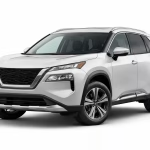


The Honda Pilot has been part of Honda’s North American lineup since the 2003 model year. Honda introduced it as a three-row midsize SUV for families that wanted more passenger space than a smaller SUV could provide without moving into a full-size vehicle. The original Pilot used a 3.5L V6, offered seating for 8, and could be equipped with Honda’s VTM-4 AWD system. That basic idea proved durable. More than 20 years later, the Pilot still uses a 3.5L V6 and offers three rows, but almost everything around that formula has changed. Four Honda Pilot generations have been sold in the United States and Canada. Power increased from roughly 240 hp in the first generation to 285 hp in the current model. Maximum towing capacity increased from 4,500 lb to 5,000 lb on properly equipped AWD versions. Safety technology, cabin comfort, transmissions, and infotainment have also moved forward. If you are buying used, knowing where each redesign begins helps you separate an older lower-cost Pilot from newer versions with more safety equipment, technology, and passenger comfort.
Honda Pilot Generation Timeline
The Honda Pilot timeline begins with the 2003–2008 first generation, followed by the larger 2009–2015 model. A major redesign arrived for 2016 and remained through 2022, bringing 280 hp, newer safety technology, and a choice of 6-speed or 9-speed automatic transmissions depending on year and trim. Honda redesigned the Pilot again for 2023 with a more upright body, 285 hp V6, 10-speed automatic, larger interior, and the TrailSport. Those changes mean two Pilots parked beside each other can provide very different ownership experiences even though both carry the same name. Earlier generations can lower your purchase cost, while newer ones give you more technology and safety equipment. Your best starting point is to decide how much space, towing ability, technology, and comfort you actually need. From there, you can narrow your search to the generation that covers those needs without paying for features you will rarely use.

1st Generation (2003–2008)

2003–2008 Honda Pilot Buyer Information
The first Honda Pilot established the basic layout that would carry the SUV through later generations. It uses a 3.5L V6 producing roughly 240 hp, a 5-speed automatic transmission, and either FWD or Honda’s VTM-4 AWD system. Seating for 8 made it useful for larger households, while maximum towing capacity reached 4,500 lb in the supplied specifications. Today, age should be one of your biggest considerations. These Pilots are roughly 18 to 23 years old, so a clean maintenance history matters more than simply finding the lowest mileage. Check the brakes, suspension, fluids, tires, electrical equipment, and underside before buying. If the vehicle has spent years driving through Canadian or northern U.S. winters, corrosion deserves a particularly close inspection.
Read More
The first-generation Pilot can still provide an affordable way into a three-row Honda SUV, but you need to shop according to condition rather than reputation alone. The 3.5L V6 has a strong durability record in the supplied information, and VTM-4 AWD can provide useful winter traction. Its biggest disadvantages come from age. Safety equipment and cabin technology are far behind newer Pilots, and road noise is more noticeable.
- Model years: 2003–2008.
- Engine: 3.5L V6.
- Power: Approximately 240 hp.
- Transmission: 5-speed automatic.
- Drivetrain: FWD or VTM-4 AWD.
- Seating: Up to 8 passengers.
- Towing capacity: Up to 4,500 lb.
- Main strength: Durable V6, useful passenger space, and available AWD.
- Main limitation: Older safety equipment, basic cabin technology, and more road noise than later Pilots.
- Buying priority: Check maintenance history, corrosion, suspension wear, brakes, tires, fluids, and electrical equipment before deciding whether the lower purchase price is worth it.
2nd Generation (2009–2015)

2009–2015 Honda Pilot Buyer Information
Honda made the second-generation Pilot larger and gave it a much more squared-off appearance. The 3.5L V6 continued with roughly 250 hp in the supplied information, while a 5-speed automatic handled the shifting. FWD and AWD remained available, seating stayed at 8 passengers, and towing capacity reached 4,500 lb. Interior room is one of this generation’s main attractions for used buyers. The upright shape gives you plenty of passenger space and good visibility from the driver’s seat. You are still shopping for a vehicle that is at least 11 years old, however. Maintenance records, corrosion, suspension condition, fluid changes, and previous repairs should be part of your inspection rather than something you worry about after bringing the Pilot home.
Read More
A second-generation Pilot can make sense when you need three rows and plenty of cabin room but want to keep your purchase price below newer Pilot generations. Its mechanical layout is familiar, and the supplied information points to a strong reliability record. The tradeoff is age. The 5-speed automatic and cabin technology now feel dated, while the 3.5L V6 and larger body are not aimed at shoppers chasing the lowest possible fuel bill.
- Model years: 2009–2015.
- Engine: 3.5L V6.
- Power: Approximately 250 hp.
- Transmission: 5-speed automatic.
- Drivetrain: FWD or AWD.
- Seating: Up to 8 passengers.
- Towing capacity: Up to 4,500 lb.
- Main strength: Roomy interior, good outward visibility, and a strong reliability record.
- Main limitation: Older transmission technology, modest fuel economy, and an interior that now shows its age.
- Buying priority: Look for consistent maintenance and inspect the brakes, suspension, tires, fluids, electrical equipment, and underside. Road salt exposure deserves additional attention in Canada and colder U.S. states.
3rd Generation (2016–2022)

2016–2022 Honda Pilot Buyer Information
The third generation marked a major change for the Honda Pilot. Its exterior became smoother and more rounded, while the 3.5L V6 increased to 280 hp. Depending on year and trim, Honda used a 6-speed or 9-speed automatic. Seating configurations accommodate 7 or 8 passengers, FWD and AWD are available, and properly equipped AWD models can tow up to 5,000 lb. This generation also brought newer safety equipment, a quieter cabin, and more modern technology. Honda Sensing became available or standard depending on year and trim. If you are comparing used Pilots from this period, pay close attention to the transmission fitted to each vehicle. The supplied information notes concerns with early 9-speed transmission behavior and improvements after 2019.
Read More
The 2016–2022 Pilot gives you a large step forward from the first two generations without requiring you to buy the current model. Its 280 hp V6 provides stronger highway acceleration, and the cabin is better suited to long trips when you regularly carry several passengers. Strong resale value in both the United States and Canada can help when you eventually sell, although it can also keep used purchase prices higher.
- Model years: 2016–2022.
- Engine: 3.5L V6.
- Power: 280 hp.
- Transmissions: 6-speed automatic on certain lower trims and 9-speed automatic on higher trims.
- Drivetrain: FWD or AWD.
- Seating: 7 or 8 passengers depending on configuration.
- Towing capacity: Up to 5,000 lb with properly equipped AWD models.
- Safety: Honda Sensing became available or standard depending on year and trim.
- Main strength: Stronger V6 performance, quieter cabin, newer safety equipment, and high resale value.
- Main limitation: Early 9-speed transmission behavior deserves attention, while infotainment in some pre-2020 models can feel dated.
- Buying priority: Identify the transmission before buying. Test low-speed and highway shifting, review maintenance records, and check whether transmission servicing has been kept current.
4th Generation (2023–Present)

2023–Present Honda Pilot Buyer Information
Honda redesigned the Pilot again for 2023 with a more upright exterior and a larger, more refined cabin. The 3.5L V6 now produces 285 hp and works with a 10-speed automatic. You can still choose FWD or AWD, seating remains available for 7 or 8 passengers, and properly equipped AWD models can tow up to 5,000 lb. The bigger changes are found beyond the extra 5 hp. You get newer infotainment and safety technology, improved cabin materials, easier third-row access, and the TrailSport option for mild off-road driving. This is also the most expensive Honda Pilot generation to buy simply because it is the newest. Compare those improvements against the price of a well-maintained 2016–2022 model before deciding how much the newer equipment matters to you.
Read More
The fourth generation is aimed at buyers who want the latest version of the Pilot without giving up its familiar V6 formula. The 10-speed automatic replaces the previous transmission choices, while the updated cabin gives passengers a more modern place to spend longer trips. TrailSport also expands what you can do away from pavement, although it remains a family SUV rather than a dedicated off-road vehicle.
- Model years: 2023–Present.
- Engine: 3.5L V6.
- Power: 285 hp.
- Transmission: 10-speed automatic.
- Drivetrain: FWD or AWD.
- Seating: 7 or 8 passengers depending on configuration.
- Towing capacity: Up to 5,000 lb with properly equipped AWD models.
- TrailSport: Adds equipment aimed at mild off-road driving.
- Main strength: Updated interior, newer technology, easier third-row access, and smoother overall driving.
- Main limitation: Higher purchase price without a major fuel economy improvement over the previous generation.
- Buying priority: Decide whether the newer cabin, 10-speed transmission, technology, and TrailSport availability provide enough benefit to justify paying more than you would for a third-generation Pilot.
How the Honda Pilot Changed Across Four Generations
More than two decades separate the first Honda Pilot from the current SUV, but Honda has kept several parts of the original formula intact. Every generation covered here uses a naturally aspirated 3.5L V6. Seating has remained available for as many as 8 passengers, and AWD continues to give U.S. and Canadian shoppers another drivetrain choice. The major changes are found in power, transmissions, towing capacity, safety equipment, interior comfort, and technology. The first-generation Pilot produced roughly 240 hp, while the second generation increased output to around 250 hp. The 2016 redesign brought 280 hp and increased maximum towing capacity to 5,000 lb on properly equipped AWD versions. The current Pilot reaches 285 hp and uses a 10-speed automatic. If you mainly care about passenger room and a lower purchase price, those newer features may not justify spending thousands more. If safety technology, a quieter cabin, easier third-row access, and newer infotainment matter every day, the later generations give you meaningful improvements.
Which Honda Pilot Generation Fits Your Needs?
There is no single Pilot generation that fits every buyer. Your annual mileage, family size, winter conditions, towing needs, and budget should determine where you start shopping. An older Pilot can cost less upfront, but age can bring repairs and overdue maintenance. A newer Pilot costs more to buy but gives you updated safety systems, technology, and cabin improvements.
- Lower purchase budget: The 2003–2008 Pilot gets you into the lineup for less, but condition and maintenance history should lead your decision.
- More space for less money: The 2009–2015 generation gives you a roomy cabin, seating for 8, and a 3.5L V6 without newer-model pricing.
- Newer used features: The 2016–2022 Pilot combines 280 hp, modern safety equipment, available AWD, and up to 5,000 lb of towing capacity.
- Newest cabin and technology: The 2023-present Pilot adds a 285 hp V6, 10-speed automatic, updated interior, and improved third-row access.
- Mild off-road driving: The 2023-present TrailSport is the generation and trim combination to investigate when you occasionally travel beyond maintained pavement.
- Regular winter driving: AWD is available across the generations, but good winter tires remain important for snow and ice.
What to Check Before Buying a Used Honda Pilot
A generation guide can narrow your search, but the condition of the Pilot sitting in front of you ultimately matters more than the generation name. Older vehicles deserve careful checks for corrosion, suspension wear, leaks, aging tires, brakes, and electrical problems. On 2016–2022 models, the transmission fitted to the vehicle deserves additional attention because the supplied information identifies early 9-speed behavior as a concern and notes improvements after 2019.
- Service history: Confirm that oil changes, transmission servicing, brakes, and other scheduled maintenance have been kept current.
- Transmission operation: Test the Pilot when cold and warm. Pay attention to hesitation, rough shifting, or unusual behavior.
- Corrosion: Inspect the underside carefully if the SUV has spent years in Canada or a northern U.S. state where road salt is common.
- Tires and brakes: A three-row SUV can turn four worn tires and overdue brake work into a sizeable first repair bill.
- Electrical equipment: Test windows, locks, climate controls, cameras, seat controls, USB ports, and infotainment features.
- AWD system: Make sure the AWD system has been maintained and operates normally if you are buying an AWD Pilot.
- Recall history: U.S. buyers can check the VIN through the NHTSA recall lookup. Canadian shoppers should check the vehicle through Transport Canada.
Honda Pilot Reliability Across Generations
Long-term reliability is one reason the Honda Pilot has remained attractive to used buyers. The 3.5L V6 appears across all four generations, but a proven engine does not make every 10-year-old or 20-year-old Pilot equally dependable. How the previous owner treated the SUV matters. Regular oil changes, transmission service, brake maintenance, good tires, and timely repairs can make a large difference once mileage starts climbing. The first and second generations have the longest ownership histories, while the 2016–2022 Pilot gives you a newer vehicle with years of reliability information already available. The 2023-present generation has less long-term history simply because it has not been on the road as long. When comparing two used Pilots, do not automatically choose the newer one because of its model year. A properly maintained older Pilot with complete records can be a safer purchase than a newer vehicle that has missed important service.
Final Honda Pilot Generation Buying Advice
The Honda Pilot generations give you four noticeably different ways to buy the same basic three-row SUV idea. The 2003–2008 generation is now mainly a budget choice where condition should come first. The 2009–2015 Pilot gives you more cabin room while retaining the 3.5L V6 and 5-speed automatic. Moving into 2016–2022 gets you 280 hp, newer safety technology, a quieter cabin, and up to 5,000 lb of towing capacity with properly equipped AWD models. The 2023-present Honda Pilot is where you get the newest cabin, 285 hp V6, 10-speed automatic, improved third-row access, and available TrailSport. You will normally pay more for those improvements, so compare the actual benefit against a well-maintained third-generation Pilot before spending the extra money. Whichever generation you choose, inspect the SUV, review its maintenance records, test its major systems, and check its recall history. The generation tells you what Honda built. The condition of the individual Pilot tells you what you are actually buying.


