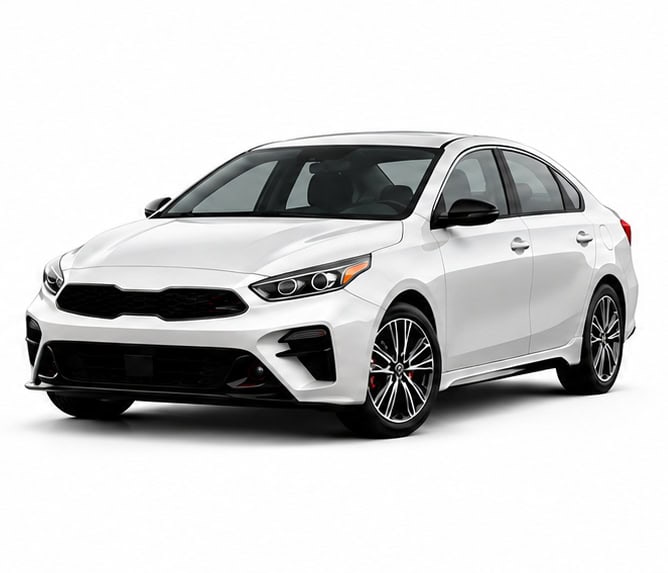
The Kia Forte arrived in North America for the 2010 model year as the replacement for the Kia Spectra. Kia had already shown the new compact car during 2009, and its launch came during a major change in the company’s design direction. The Forte adopted Kia’s emerging Tiger Nose grille and gave buyers more choices than a simple four-door economy sedan. Over its life, the Forte family included a sedan, two-door Koup, five-door hatchback, naturally aspirated engines, and eventually a turbocharged GT.
Only three Kia Forte generations were sold between 2010 and 2024, but a lot changed during those 15 model years. The second generation arrived for 2014, while another complete redesign followed for 2019. Technology, safety equipment, engines, transmissions, and body-style choices changed along the way. The 2024 Forte became the final model year before the Kia K4 replaced it for 2025. If you want to research the model beyond its generation history, the Kia Forte overview covers the broader ownership picture.
Kia Forte Generation Timeline
The Kia Forte generation timeline is relatively short compared with compact cars that have been around for several decades. The first generation covered 2010–2013 and established the Forte name with sedan, Koup, and hatchback choices. Kia redesigned the car for 2014, beginning the five-model-year second generation that ran through 2018. The third generation arrived for 2019 with a new sedan design, later gained the performance-focused GT, received a facelift for 2022, and continued through the final 2024 model year. Kia then retired the Forte name in North America and introduced the K4 for 2025.
1st Generation / 2010–2013 Kia Forte
2010–2013 Kia Forte Buyer Details
The first Kia Forte generation is where the North American story began. Introduced for the 2010 model year after its 2009 debut, the Forte replaced the Spectra and gave Kia a new compact-car identity. It also arrived as Kia was introducing the Tiger Nose grille that would become a familiar part of the brand’s styling. The sedan formed the core of the range, while the two-door Koup and five-door hatchback gave you alternatives that later Forte buyers would eventually lose.
Power came from four-cylinder engines, including 2.0L and 2.4L choices depending on the year, trim, and body style. Manual and automatic transmissions were available, and transmission offerings evolved during the generation. Today, however, specifications are only part of the buying decision. A 2010 Forte is roughly 15 years older than a 2024 model, so maintenance history, corrosion, fluid leaks, suspension wear, brakes, and previous repairs can matter more than a long equipment list. The Forte problems guide can help you investigate issues after you narrow down a particular year.
Read More
A first-generation Forte can still provide inexpensive transportation, but you should shop for the condition of the individual car rather than assuming every low-mileage example is automatically a bargain. An older vehicle that has been serviced consistently can make more sense than one with fewer kilometres or miles but years of neglected maintenance.
Generation: First Kia Forte generation sold in North America.
Model years: 2010, 2011, 2012, and 2013.
Historical importance: Replaced the Kia Spectra and established the Forte name for Kia’s North American compact-car lineup.
Body styles: Four-door sedan, two-door Forte Koup, and five-door hatchback were offered during this generation.
Engine choices: 2.0L and 2.4L four-cylinder engines were available, depending on year, trim, body style, and market.
Transmissions: Manual and automatic transmissions were offered, with transmission choices changing as the generation developed.
Design: The Forte arrived during Kia’s move toward the Tiger Nose grille and a more recognizable family appearance.
Cabin: Equipment varied considerably by trim, so features should be checked on the actual vehicle rather than assumed from the model year.
Age-related checks: Look carefully at brakes, suspension components, hoses, belts, fluid leaks, battery condition, exhaust parts, and other wear items.
Corrosion: Cars driven through Canadian winters or northern U.S. winters deserve a close inspection underneath for road-salt damage.
Buying priority: Maintenance records and current mechanical condition should carry more weight than cosmetic appearance alone.
2nd Generation / 2014–2018 Kia Forte
2014–2018 Kia Forte Buyer Details
The second Kia Forte generation started with a full redesign for the 2014 model year. Kia gave the car a smoother exterior, a more modern interior, and newer convenience features while keeping much of the body-style variety that made the original Forte unusual in the compact segment. Depending on year and market, you could still shop for a sedan, hatchback, or Koup rather than being limited to one body shape.
Engine choices included 1.8L and 2.0L four-cylinder units, although the exact engine depended on configuration and market. Kia also made changes later in the generation, including styling and equipment updates around the 2017–2018 period. That means a 2014 Forte should not be treated as mechanically or visually identical to a 2018 simply because both belong to generation two. When you compare used examples, check the VIN, trim, engine, service records, and actual equipment. The Forte maintenance schedule can help you determine whether important servicing has been kept up.
Read More
This generation sits in an interesting part of the used market. It is newer than the original Forte but old enough that purchase prices can be considerably below newer compact cars. That makes inspection important. Saving money at the dealership is less exciting when brakes, tires, suspension work, and overdue maintenance arrive together a month later.
Generation: Second Kia Forte generation.
Model years: 2014, 2015, 2016, 2017, and 2018.
Major milestone: Kia completely redesigned the Forte for 2014 rather than simply updating the first-generation body.
Body styles: Sedan, hatchback, and Koup versions continued during the generation, although availability changed by year and market.
Engine choices: 1.8L and 2.0L four-cylinder engines formed important parts of the lineup, depending on the version you choose.
Transmissions: Manual and automatic choices were offered in different configurations during the generation.
Later updates: Styling and equipment changes around 2017–2018 distinguish later examples from the cars sold at the beginning of the generation.
Technology: Available cabin features improved over the previous Forte, but equipment still varies substantially between trims.
Used-car checks: Test every electrical feature, inspect the tires and brakes, listen for unusual suspension noises, and look for warning lights during the road test.
Service history: Ask for oil-change and maintenance records where available instead of relying only on the odometer reading.
Body-style choice: This generation is particularly useful if you want a Forte hatchback or Koup because those choices disappeared from the later North American Forte lineup.
Buying priority: Compare condition and service history first, then use trim and equipment to separate otherwise similar cars.
3rd Generation / 2019–2024 Kia Forte
2019–2024 Kia Forte Buyer Details
The third Kia Forte generation arrived for 2019 and represented another major change. Its longer, cleaner sedan shape borrowed some visual influence from Kia’s larger Stinger, while the interior moved toward the screen-based layout buyers increasingly expected from newer compact cars. Unlike the earlier Forte families, the North American third generation centered on the four-door sedan. The Koup and Forte hatchback were no longer part of the U.S. and Canadian Forte lineup.
Most mainstream versions used a 2.0L four-cylinder engine, while the GT brought a 1.6L turbocharged engine and gave the Forte a much more performance-focused option. Transmission choices differed between regular models and the GT, including Kia’s continuously variable-style automatic on mainstream versions and a seven-speed dual-clutch transmission with the turbo engine, with manual availability on certain configurations. Kia refreshed the Forte for 2022 with styling and technology changes. Production under the Forte name continued through 2024, making this the final generation before the K4 arrived.
Read More
If you want the newest Forte technology without moving to the K4, this is the generation you will be shopping. Even here, however, a six-model-year span creates meaningful differences. A 2019 base car and a well-equipped 2024 model can have very different technology, safety equipment, performance, price, and remaining useful life.
Generation: Third and final Kia Forte generation in North America.
Model years: 2019, 2020, 2021, 2022, 2023, and 2024.
Body style: Four-door sedan was the North American Forte body style during this generation.
Main engine: A naturally aspirated 2.0L four-cylinder powered mainstream versions.
GT engine: The Forte GT used a 1.6L turbocharged four-cylinder and gave buyers a stronger performance option.
Transmissions: Choices depended on engine and model year and included manual, continuously variable-style automatic, and seven-speed dual-clutch arrangements.
2019 redesign: The new generation brought different exterior proportions, a redesigned cabin, and a more modern overall presentation.
2022 facelift: Kia revised the Forte’s appearance and updated available technology during the generation.
Safety technology: Later cars offered more driver-assistance equipment than early Fortes, although availability still depends on trim and year.
GT shopping: Confirm that a used GT has been maintained properly and inspect modifications carefully. A turbo badge is fun. Somebody else’s questionable weekend project may be less fun.
Final model year: 2024 was the last North American model year carrying the Forte name.
Buying priority: Decide whether you need the GT’s additional performance or whether a regular 2.0L Forte better matches your daily driving and budget.
How Kia Forte Engines Changed Across Generations
Engine changes show how Kia gradually repositioned the Forte. The first generation offered 2.0L and 2.4L four-cylinder engines. The second generation moved to 1.8L and 2.0L choices in its mainstream North American lineup. By the third generation, the regular Forte centered around a naturally aspirated 2.0L four-cylinder, while the GT introduced a 1.6L turbocharged engine for buyers who wanted substantially more performance from the compact sedan.
Transmissions changed just as noticeably. Early cars were available with manual and conventional automatic gearboxes, while six-speed transmissions became part of the Forte story as the model matured. The third generation moved mainstream automatic models toward Kia’s continuously variable-style transmission, while the turbocharged GT could use a seven-speed dual-clutch transmission. You should therefore identify the exact engine and transmission before researching reliability or maintenance. Advice for one Forte powertrain does not automatically apply to another.
How Kia Forte Body Styles Changed
The Forte began with far more body-style variety than it had when production ended. The first generation offered a conventional four-door sedan, the sportier two-door Forte Koup, and a five-door hatchback. Kia continued those basic choices into the second generation, although availability varied as the lineup changed. If you want a Forte with two doors or the additional cargo flexibility of a hatchback, these earlier generations are where you need to look.
The third generation simplified everything. In the U.S. and Canada, the Forte became a sedan-focused model for 2019–2024. That makes body style an easy way to narrow a used search. You can focus on the third generation if a newer sedan is what you want. If the Koup’s appearance or the hatchback’s cargo area is important, your search immediately moves toward an older Forte. Just remember that those cars also bring more years of wear, so condition should remain part of the decision.
How Kia Forte Technology Changed
Technology changed dramatically during the Forte’s 15-model-year run. The earliest cars came from an era when a compact vehicle could feel reasonably well equipped without the large touchscreens, smartphone connections, and broad driver-assistance packages expected today. Each redesign moved the Forte further into the modern cabin experience, while higher trims generally added features before they became common farther down the range.
The third generation creates the biggest contrast with the original Forte. Infotainment, smartphone connectivity, available driver-assistance features, and other convenience equipment became much more important parts of the package. The 2022 facelift pushed the car farther in that direction. You should still verify equipment on the actual vehicle because a feature available for a particular year may not have been standard on every trim. For safety-related research, U.S. buyers can also check a specific VIN through the NHTSA recall lookup rather than assuming every car from a model year has the same recall history.
How Kia Forte Driving Feel Changed
The original Forte was designed primarily to provide affordable compact transportation. Different engines, body styles, wheels, tires, and trims could change the experience, but comfort, practicality, and price remained important reasons to buy one. The second generation became more polished as Kia improved the car’s design and interior, making it easier to see the Forte as more than a low-cost alternative to established compact sedans.
The third generation widened that range considerably with the GT. Its 1.6L turbo engine and different transmission choices gave buyers a Forte aimed more directly at drivers who wanted stronger acceleration and a sportier character. You should not assume that makes the GT the right version for everyone. If most of your driving consists of commuting, errands, and highway trips, the regular 2.0L models may suit you perfectly well. Match the version to how you actually drive rather than paying for performance you rarely use.
Kia Forte Reliability Across Generations
A generation badge cannot tell you how carefully a particular Forte has been maintained. First-generation cars are now the oldest, so time itself becomes an important reliability factor. Rubber parts age. Batteries fail. Suspension components wear. Corrosion can develop. A low odometer reading does not reverse 12 or 15 winters of exposure. With second-generation cars, maintenance history and current condition remain important because even the newest 2018 examples have accumulated years of real-world use.
Third-generation Fortes are newer, but you still need to research the specific year, engine, transmission, and service history. Check warning lights, fluids, tires, brakes, steering, suspension, electronics, previous collision repairs, and maintenance records before buying. A pre-purchase inspection can reveal things a polished sales photo will never show. For a deeper model-specific review, the Kia Forte reliability guide covers long-term considerations, while the existing problems guide can help you investigate particular trouble areas.
Kia Forte Safety Improvements Across Generations
Safety equipment naturally changed as the Forte moved from 2010 to 2024. The first generation came from an earlier period of compact-car design, while later redesigns benefited from newer structures, electronics, and safety technology. By the third generation, available driver-assistance features had become a much more visible part of the Forte’s equipment list. That can make a later car more appealing if modern collision-avoidance technology is high on your shopping list.
Do not assume that every safety feature advertised for a model year is installed on every Forte from that year. Trim, option packages, production changes, and market differences can affect the equipment you actually receive. Check the specific vehicle rather than a generic online specification page. You should also check outstanding recalls by VIN before buying. U.S. owners can use NHTSA, while Canadian buyers can check Transport Canada’s vehicle recall database for Canadian-market information.
Kia Forte Differences Between the U.S. and Canada
The same three-generation timeline applies across the United States and Canada, but the cars were not always packaged identically. Trim names, standard equipment, optional features, and some powertrain combinations could differ between the two markets. That becomes particularly important when you are researching a Canadian used car with information taken from a U.S. brochure, or the other way around. The model year may match while the equipment list does not.
Climate creates another difference that has nothing to do with the factory specification sheet. A Forte that spent 10 years in a road-salt region deserves more underbody attention than a comparable dry-climate car. Canadian cars and vehicles from northern U.S. states should be checked carefully around suspension mounting areas, brake components, exhaust parts, and other exposed metal. Warranty terms also vary by market and circumstance, so confirm remaining coverage using the VIN rather than assuming the original new-car warranty still applies to a used purchase.
Kia Forte Maintenance Needs as the Generations Age
Maintenance priorities change as a Forte gets older. A first-generation car may need attention because of age even when its mileage appears modest. Fluids, brakes, tires, batteries, belts, hoses, suspension parts, and other wear items do not last forever. Second-generation cars sit in the middle. Many are still practical daily drivers, but deferred maintenance can quickly turn an inexpensive purchase into a repair list.
Later third-generation cars may have fewer years of accumulated wear, but they are not maintenance-free. Turbocharged GT models also should not automatically be treated like regular 2.0L cars when you research servicing. I did some research on the Forte’s maintenance picture, and the useful lesson is simple. Start with the exact year and powertrain, then compare the service records with what should have been done. The Forte maintenance guide gives you a model-specific place to continue that research.
What Happened to the Kia Forte After 2024?
Kia ended the Forte nameplate in North America after the 2024 model year. Rather than releasing a fourth-generation Forte for 2025, the company introduced the Kia K4 as its new compact sedan. That makes 2024 historically important because it closes a nameplate that began with the 2010 model year and remained in the market for three generations.
The change does not suddenly make a 2024 Forte obsolete. Used-car ownership depends much more on condition, parts and service availability, depreciation, insurance, and operating costs than whether a manufacturer still sells a new vehicle under the same name. If you are comparing the outgoing Forte with its successor, the Kia K4 guide provides more information on the model that followed it.
Kia Forte Ownership Costs Across Generations
An older Forte can have a much lower asking price, but purchase price does not tell you what the car will cost during the next several years. A first- or second-generation car may need tires, brakes, suspension work, a battery, fluid service, or other age-related repairs sooner than a newer example. The third generation generally costs more to buy used, but you are paying for a newer vehicle with fewer years of accumulated wear and, depending on trim, newer technology.
Fuel, insurance, maintenance, repairs, and depreciation should be considered together. A $2,000 difference between two used cars can disappear quickly if the cheaper one immediately needs several major wear items. Compare service records and current condition before deciding which price is actually lower. The Forte ownership-cost breakdown goes deeper into ongoing expenses, while the Forte depreciation guide explains how age and time affect the model’s resale value.
Which Kia Forte Generation Should You Buy?
Your needs should determine where you start. The 2010–2013 Forte gives you access to the original sedan, Koup, and hatchback at the oldest end of the used market. The 2014–2018 generation provides a newer version of that varied lineup and can make sense if you specifically want a Forte hatchback or Koup. The 2019–2024 generation is where you should concentrate if newer technology, newer available safety equipment, sedan practicality, or the turbocharged GT are priorities.
Once you choose a generation, stop comparing generations for a moment and compare the actual cars for sale. A clean 2018 with documented servicing can be a better purchase than a neglected 2019 simply because one crosses a generation boundary. Mileage, maintenance records, accident history, corrosion, modifications, tires, brakes, warning lights, and price all deserve attention. A thorough used-car inspection can help you check the vehicle itself before you commit your money.
Conclusion
The Kia Forte went through three generations during its 2010–2024 North American run. The first generation replaced the Spectra and established the Forte as a sedan, Koup, and hatchback family. The second generation arrived for 2014 with a complete redesign and continued much of that body-style variety through 2018. The third generation began in 2019, concentrated on the sedan, added the turbocharged GT, received a facelift for 2022, and finished the Forte story with the 2024 model year.
Those generation dates give you a useful starting point, but the individual vehicle still determines whether you are getting a good used car. Choose the generation that provides the body style, performance, technology, and features you need. Then research its exact year and powertrain, inspect its condition, and verify its maintenance history. When Kia replaced the Forte with the K4 for 2025, it closed a 15-model-year chapter, but it also left you with a large used-car selection ranging from inexpensive early Fortes to much newer GT and 2.0L models.
This platform analyzes depreciation trends, resale value behavior, and long-term ownership costs, helping drivers understand how mileage, maintenance, and timing shape real financial outcomes.