


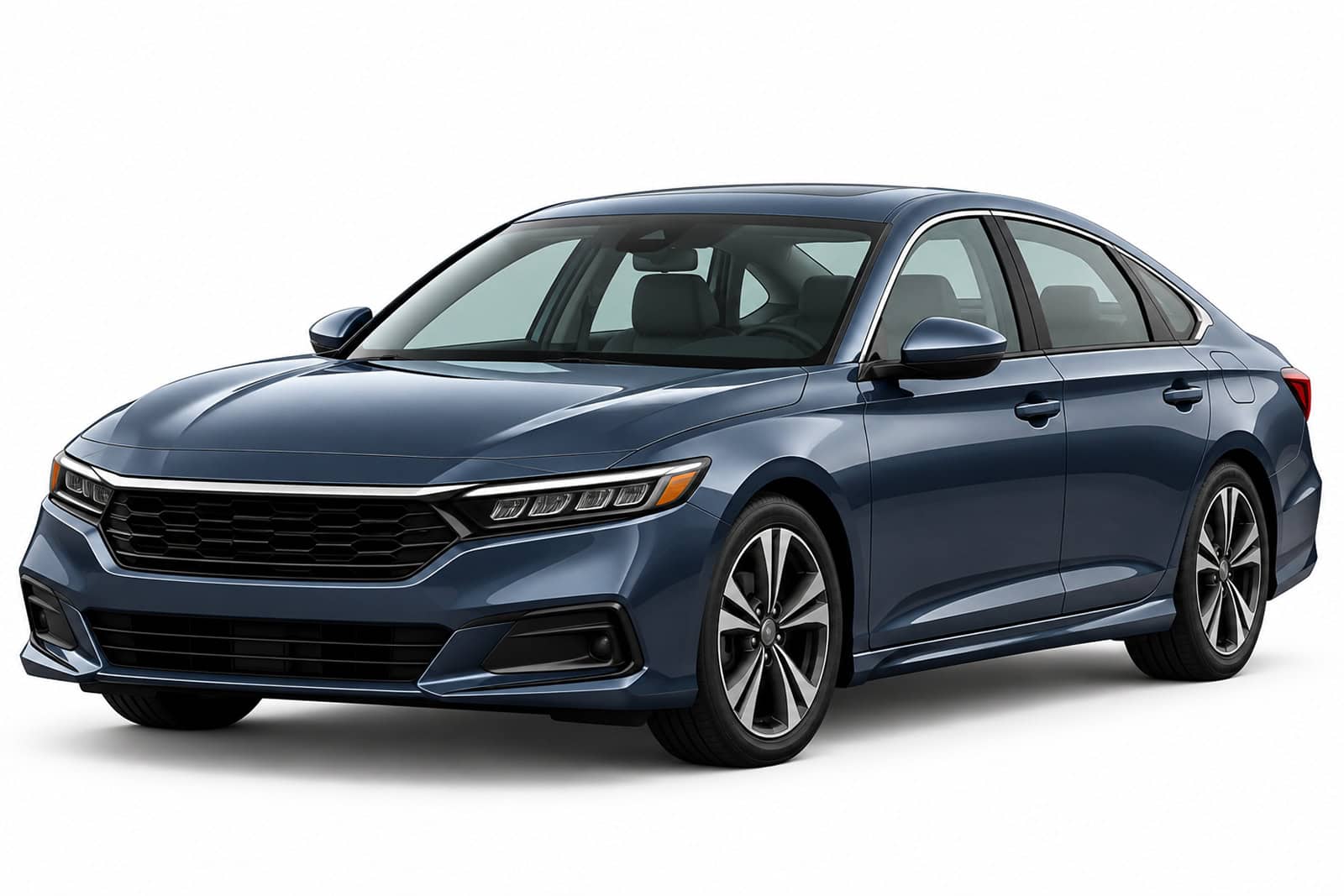
The Honda Accord has been sold since 1976, giving it nearly five decades of history by the 2025 model year. It started as a compact three-door hatchback during a period when fuel economy was becoming increasingly important to buyers. A sedan followed, and the Accord gradually grew in size, power, comfort, and popularity. By the 1990s, it had moved firmly toward the family sedan role most buyers associate with the name today. Later generations added V6 engines, hybrid power, CVTs, turbocharged engines, Honda Sensing, and much more advanced cabin technology. There are 11 Honda Accord generations covered in this guide. The differences between them go far beyond styling. An Accord from the 1990s gives you a very different ownership experience from a 2018 model, while the 2023 redesign places much greater emphasis on hybrid efficiency and newer technology. If you are shopping used, understanding the Honda Accord generations helps you narrow down the years that match your budget, fuel needs, reliability expectations, and comfort requirements before you start comparing individual vehicles.
How the Honda Accord Has Evolved Over Time
Nearly 50 years of Accord development can be divided into three broad periods. Early Honda Accord generations concentrated on smaller dimensions, simple operation, and fuel economy. The car grew substantially during the 1990s and 2000s as buyers expected more passenger room, stronger engines, and better highway comfort. From 2008 onward, safety technology, fuel efficiency, infotainment, hybrid power, and driver assistance features became increasingly important. Those changes affect what you pay to buy, maintain, fuel, and eventually sell an Accord.

1st Generation (1976–1981)

1976–1981 Honda Accord Buyer Information
The first Honda Accord arrived in 1976 as a compact hatchback during a period when fuel prices had changed what many buyers wanted from a car. Its small dimensions and 1.6L engine put fuel economy and affordability ahead of outright power. A sedan later expanded the Accord beyond its original hatchback format and helped establish a body style that would become central to the name for decades. Buying one today is very different from buying an ordinary used Accord. Vehicles from this generation are now more than 40 years old, parts can be difficult to find, and modern safety equipment is absent. You are more likely to encounter one as a collector or enthusiast vehicle than as an everyday family sedan. Condition, rust, originality, and parts availability should therefore matter more than mileage alone.
Read More
The first-generation Accord was much smaller and simpler than the sedan you know today. Honda initially sold it as a three-door hatchback, with the four-door sedan arriving later. Engine output was modest, but low weight and small four-cylinder engines suited the Accord’s original focus on fuel economy. If you are considering one today, age, rust, previous repairs, and parts availability matter far more than the original performance figures.
- Model years: 1976–1981
- Body styles: 3-door hatchback and 4-door sedan
- Engines: Small four-cylinder engines, including 1.6L and later 1.8L units
- Power: Roughly 68–72 hp depending on year and configuration
- Transmissions: Manual and automatic
- Drivetrain: Front-wheel drive
- Hybrid: Not available
- Buyer concern: Rust, aging mechanical parts, limited parts availability, and very old safety equipment
- Buying priority: Check corrosion, previous repairs, fluid leaks, and whether replacement parts are readily available before committing to the car.
2nd Generation (1982–1985)

1982–1985 Honda Accord Buyer Information
The second-generation Accord continued the hatchback while giving the sedan a much more important place in the lineup. This period also carries major historical importance because Accord production began in the United States. That move helped establish Honda’s long manufacturing presence in North America and placed the Accord closer to the market that would become one of its most important.
Age is now the biggest consideration when buying one. Even a well-kept 1985 Accord is roughly 40 years old in 2025. Rubber parts, wiring, seals, suspension components, corrosion, and previous repairs can matter more than the original reputation for durability. If you find one for sale, inspect the actual car rather than assuming an old Accord will automatically be inexpensive to keep running.
Read More
2nd Generation (1982–1985)
The second-generation Accord remained compact but became more refined and established the sedan as an increasingly important part of the lineup. Four-cylinder power continued, while Honda added features and improved the car throughout the generation. These Accords are now around 40 years old, so their current condition matters considerably more than small differences in original engine output or equipment.
- Model years: 1982–1985
- Body styles: 3-door hatchback and 4-door sedan
- Engines: Four-cylinder engines, primarily around 1.8L
- Power: Approximately 75–101 hp depending on year and engine
- Transmissions: Manual and automatic
- Drivetrain: Front-wheel drive
- Hybrid: Not available
- Major milestone: U.S. Accord production began in Ohio during this generation
- Buyer concern: Corrosion, old wiring, worn suspension components, deteriorated seals, and increasingly difficult parts sourcing
- Buying priority: Inspect the entire vehicle for age-related deterioration instead of assuming low mileage means fewer problems.
3rd Generation (1986–1989)

1986–1989 Honda Accord Buyer Information
Honda made a meaningful engineering change with the third-generation Accord by introducing a double-wishbone suspension design. The goal was better handling and ride quality, helping the Accord feel more refined as competition among Japanese family cars increased. This period also shows how quickly the Accord was moving beyond the simple transportation role of its earliest years. For a buyer today, mechanical condition matters much more than the suspension design did when the car was new. Every vehicle from this generation is now more than 35 years old. Check for rust, suspension wear, leaks, neglected maintenance, electrical problems, and poor previous repairs. Finding a car that has actually been cared for is more important than chasing a particular odometer reading.
Read More
3rd Generation (1986–1989)
The third-generation Accord brought a more advanced chassis and considerably more power than the earliest cars. Honda’s double-wishbone suspension was an important change because it improved handling while keeping the ride comfortable. Buyers also had several body configurations during this period. Today, however, mechanical condition and corrosion should determine whether one is worth owning.
- Model years: 1986–1989
- Body styles: Sedan, hatchback and coupe, with the Aerodeck offered in some markets
- Engine: Primarily 2.0L four-cylinder engines in North America
- Power: Approximately 98–120 hp depending on year and configuration
- Transmissions: 5-speed manual or 4-speed automatic
- Drivetrain: Front-wheel drive
- Hybrid: Not available
- Key engineering change: Double-wishbone suspension
- Buyer concern: Rust, suspension wear, fluid leaks, electrical aging, and previous repairs
- Buying priority: Inspect the suspension and underside closely because more than 35 years of road use can matter more than the original specification sheet.
4th Generation (1990–1993)

1990–1993 Honda Accord Buyer Information
The fourth-generation Accord marked a clear move toward the larger family sedan that many drivers now associate with the name. Honda increased the car’s size and placed greater emphasis on passenger comfort. The Accord was no longer simply a small, fuel-conscious alternative to larger cars. It was becoming a mainstream family vehicle in its own right. These Accords can still appeal to enthusiasts who appreciate older Honda design, but age again changes the buying equation. A 1990 model is 35 years old by 2025. Maintenance records may be incomplete, and years of road use can leave wear in the suspension, steering, cooling system, brakes, interior, and body. Inspect first. Nostalgia is considerably cheaper when the car underneath it is not rusty.
Read More
4th Generation (1990–1993)
The fourth-generation Accord grew substantially and moved closer to the midsize family sedan that later generations would become. A 2.2L four-cylinder became the main North American engine, providing more usable power than the smaller engines found in previous generations. You still get a relatively straightforward mechanical layout, but age now makes maintenance history and current condition major buying considerations.
- Model years: 1990–1993
- Body styles: Sedan, coupe and wagon
- Engine: 2.2L four-cylinder
- Power: Approximately 125–140 hp depending on year and version
- Transmissions: 5-speed manual or 4-speed automatic
- Drivetrain: Front-wheel drive
- Hybrid: Not available
- Major change: Larger dimensions and increased passenger room
- Buyer concern: Cooling-system wear, suspension components, oil leaks, corrosion, and neglected maintenance
- Buying priority: Look beyond mileage. A well-serviced higher-mileage Accord can be a much safer purchase than one that spent years sitting with little maintenance.
5th Generation (1994–1997)

1994–1997 Honda Accord Buyer Information
Reliability and straightforward ownership are major reasons the fifth-generation Accord still has a following. These cars developed a reputation for long engine life and relatively manageable repair costs. The supplied information notes that a properly maintained Accord from this period can exceed 200,000 miles, but reaching that mileage depends heavily on how the car was serviced during the previous three decades. You should not buy one based on that 200,000-mile figure alone. Confirm that routine maintenance has been kept up to date and inspect the engine, transmission, cooling system, suspension, brakes, and underside. A lower odometer reading does not undo years of missed fluid changes or corrosion. At this age, service history and current condition tell you much more than the badge on the trunk.
Read More
5th Generation (1994–1997)
The fifth-generation Accord continued with four-cylinder power while also bringing V6 availability to North American buyers during the generation. That gives you an important distinction when shopping because engine choice affects performance, fuel consumption, and the components you need to inspect. These cars have a reputation for lasting a long time, but by 2025 every one of them is approaching or beyond 30 years old.
- Model years: 1994–1997
- Body styles: Sedan, coupe and wagon
- Engines: 2.2L four-cylinder; 2.7L V6 available on certain models
- Power: Roughly 130–170 hp depending on engine and year
- Transmissions: Manual and automatic
- Drivetrain: Front-wheel drive
- Hybrid: Not available
- Potential longevity: More than 200,000 miles is possible when maintenance has been consistent
- Buyer concern: Age-related leaks, cooling-system wear, suspension deterioration, corrosion, and incomplete maintenance records
- Buying priority: Service history should carry more weight than a surprisingly low odometer reading.
6th Generation (1998–2002)

1998–2002 Honda Accord Buyer Information
The sixth-generation Accord brought improvements in interior quality and engine performance as Honda continued moving the car further into the mainstream family-sedan market. You get a more modern cabin than earlier generations and stronger performance, making these cars noticeably closer to what many buyers now expect from an Accord. Transmission trouble is the main concern identified in the supplied information. That matters because a major transmission repair can quickly erase the savings from buying an inexpensive older car. During a test drive, pay attention to delayed engagement, slipping, rough shifts, or unusual behavior once the car is fully warmed up. Maintenance records are also valuable because they can show whether previous owners kept up with required servicing.
Read More
6th Generation (1998–2002)
Engine choice became more significant with the sixth-generation Accord. Four-cylinder models covered everyday driving needs, while the available 3.0L V6 brought a noticeable increase in power. That V6 performance came with an important used-car consideration because automatic transmission trouble is associated with some vehicles from this period. A careful road test is therefore essential.
- Model years: 1998–2002
- Body styles: Sedan and coupe
- Engines: 2.3L four-cylinder or 3.0L V6
- Power: Approximately 135–200 hp depending on engine and year
- Transmissions: Manual and automatic
- Drivetrain: Front-wheel drive
- Hybrid: Not available
- Main performance option: 3.0L V6 with up to about 200 hp
- Buyer concern: Automatic transmission problems on some vehicles, along with normal age-related suspension and cooling-system wear
- Buying priority: Test transmission operation both cold and fully warmed. Delayed engagement, slipping, or rough shifting deserves further inspection before you buy.
7th Generation (2003–2007)

2003–2007 Honda Accord Buyer Information
Honda continued improving power, safety, and refinement with the seventh-generation Accord. Stronger V6 engines gave buyers considerably more performance than earlier models, while safety features and cabin comfort continued moving forward. This generation can therefore appeal when you want an older Accord without going all the way back to the much simpler cars of the 1990s. The supplied information identifies automatic transmission wear in V6 models as an area to watch. That does not mean every V6 Accord will have a transmission problem. It does mean you should test one carefully and pay attention to its maintenance history. Smooth shifts, consistent operation when warm, and documented servicing should carry more weight than a freshly cleaned engine bay.
Read More
7th Generation (2003–2007)
The seventh generation gave Accord buyers a broader power range and introduced hybrid technology to the North American Accord lineup. Four-cylinder models remained the more economical choice, while the 3.0L V6 provided substantially stronger acceleration. The Accord Hybrid arrived for the 2005 model year and paired its electric assistance with V6 power rather than focusing solely on maximum fuel economy.
- Model years: 2003–2007
- Body styles: Sedan and coupe
- Engines: 2.4L four-cylinder and 3.0L V6
- Power: Approximately 160–253 hp depending on engine, year and hybrid configuration
- Transmissions: Manual and automatic, depending on model
- Drivetrain: Front-wheel drive
- Hybrid: Available beginning with the 2005 model year
- Main performance option: V6 models offered considerably more power than the standard four-cylinder
- Buyer concern: Automatic transmission condition deserves particular attention on V6 cars
- Buying priority: Check transmission behavior, maintenance records, suspension condition, brakes, cooling system, and the condition of hybrid components when considering an Accord Hybrid.
8th Generation (2008–2012)

2008–2012 Honda Accord Buyer Information
The eighth-generation Accord grew noticeably larger, giving passengers more interior room and making the car feel more substantial than its predecessors. That additional size worked well for families and drivers who regularly spent time on the highway, but there was a tradeoff. The supplied information notes slightly lower fuel efficiency and higher maintenance costs compared with earlier Accord generations. Buying one today requires balancing that extra room against its age and running costs. You should check maintenance records, suspension condition, brakes, tires, fluid history, and all electrical equipment. If you regularly carry adults in the rear seats or need more cabin space than older Accords provide, the larger body can be worthwhile. If fuel use is your main concern, later generations deserve a closer look.
Read More
8th Generation (2008–2012)
The eighth-generation Accord became considerably larger while retaining the familiar four-cylinder and V6 engine choices. Four-cylinder versions make sense when fuel consumption matters more to you, while the 3.5L V6 provides substantially stronger performance. The larger body also gives passengers more room, which is one reason this generation works well for buyers who need a spacious used sedan.
- Model years: 2008–2012
- Body styles: Sedan and coupe
- Engines: 2.4L four-cylinder or 3.5L V6
- Power: Approximately 177–271 hp depending on engine, trim and year
- Transmissions: Manual and automatic
- Drivetrain: Front-wheel drive
- Hybrid: Not offered during this North American generation
- Major change: Larger body and increased passenger room
- Buyer concern: Fuel consumption is higher with the V6, while age now makes brakes, suspension, fluids, and service history increasingly important
- Buying priority: Decide whether you actually need V6 performance. The four-cylinder can reduce fuel use and may better suit everyday commuting.
9th Generation (2013–2017)

2013–2017 Honda Accord Buyer Information
Efficiency moved back toward the front of the Accord story for the ninth generation. Honda introduced a CVT, improved hybrid models, and delivered combined fuel economy of roughly 30–36 mpg in the supplied information depending on configuration. The result is a generation that gives you newer comfort and technology without moving into the turbocharged engines used from 2018 onward. These years can be attractive when you want a used Accord with better fuel economy while keeping the purchase price below many newer models. CVT condition should still be part of your inspection. Ask for service records, listen for unusual noises, and make sure acceleration is smooth during the test drive. A properly maintained vehicle should take priority over choosing one simply because it has fewer miles.
Read More
9th Generation (2013–2017)
The ninth generation changed the Accord’s powertrain choices considerably. A 2.4L four-cylinder remained the volume engine, but Honda paired many versions with a CVT. A 3.5L V6 remained available for buyers wanting more power, and the Accord Hybrid returned with a 2.0L gasoline-electric system. This gives you three noticeably different ownership choices within one Honda Accord generation.
- Model years: 2013–2017
- Body styles: Sedan and coupe
- Engines: 2.4L four-cylinder, 3.5L V6, and 2.0L hybrid system
- Power: Approximately 185–278 hp for conventional gasoline models
- Transmissions: CVT, manual, and automatic depending on engine and model
- Drivetrain: Front-wheel drive
- Hybrid: Available during the generation
- Fuel economy: Roughly 30–36 mpg combined for many four-cylinder configurations in the supplied information, with hybrid models designed for still lower fuel use
- Buyer concern: CVT maintenance and operating condition should be checked carefully
- Buying priority: Choose the powertrain around your driving. The four-cylinder suits everyday commuting, the V6 gives you more performance, and the Hybrid makes more sense when reducing fuel consumption is the priority.
10th Generation (2018–2022)

2018–2022 Honda Accord Buyer Information
The 2018 redesign changed the Accord significantly. Turbocharged engines replaced the previous engine approach, the exterior and interior were completely redesigned, and Honda Sensing became standard. You also get a much more modern cabin and stronger integration of the safety and convenience technology buyers increasingly expected during this period. This generation combines newer features with several years of depreciation already behind it, which can make it attractive in the used market. Turbocharged engines bring additional parts and systems to maintain compared with older naturally aspirated Accords, so service history remains important. Resale value is another consideration. Kelley Blue Book provides current vehicle value information that can help you compare asking prices before you buy.
Read More
10th Generation (2018–2022)
The tenth-generation Accord replaced the previous naturally aspirated four-cylinder and V6 choices with turbocharged four-cylinder engines. A 1.5L turbo became the main engine, while a 2.0L turbo offered substantially more power. Honda also continued the Accord Hybrid with a separate 2.0L gasoline-electric powertrain. Standard Honda Sensing added another important difference from older Honda Accord generations.
- Model years: 2018–2022
- Body style: Sedan
- Engines: 1.5L turbo four-cylinder, 2.0L turbo four-cylinder, and 2.0L hybrid system
- Power: Approximately 192 hp with the 1.5L turbo and 252 hp with the 2.0L turbo
- Transmissions: CVT, 10-speed automatic, and manual on certain versions
- Drivetrain: Front-wheel drive
- Hybrid: Available
- Safety: Honda Sensing became standard
- Buyer concern: Turbocharged engines make regular oil changes and correct maintenance especially important
- Buying priority: Match the engine to your needs. The 1.5L turbo emphasizes everyday efficiency, the 2.0L turbo provides considerably stronger performance, and the Hybrid is the choice to investigate when fuel use is your main concern.
11th Generation (2023–2025)

2023–2025 Honda Accord Buyer Information
The eleventh-generation Accord shifts more attention toward hybrid power and fuel efficiency. The trim lineup became simpler, and hybrid models now play a much larger role. According to the supplied information, fuel economy can reach up to 48 mpg combined. That can make a meaningful difference if you cover a lot of miles every year or spend much of your driving time in traffic. Technology and long-term operating costs are also major parts of the appeal. These Accords are newer, so you generally face a higher purchase price than you would with a ninth or tenth-generation car. The tradeoff is newer safety equipment, updated cabin technology, and the potential for lower fuel spending. You can use a fuel calculator to compare how much the difference in mpg could save you based on your own annual driving.
Read More
11th Generation (2023–2025)
The eleventh-generation Accord simplified the powertrain lineup around a 1.5L turbo engine and Honda’s 2.0L hybrid system. Unlike the previous generation, there is no 2.0L turbo performance engine. Hybrid power is much more central to the lineup and can deliver up to about 48 mpg combined depending on configuration. That distinction makes engine choice particularly important when comparing trims.
- Model years: 2023–2025
- Body style: Sedan
- Engines: 1.5L turbo four-cylinder or 2.0L gasoline-electric hybrid system
- Power: About 192 hp for the 1.5L turbo and 204 hp total system output for the hybrid
- Transmission: CVT with the 1.5L turbo; Honda’s electric-continuously-variable hybrid drive system on hybrid models
- Drivetrain: Front-wheel drive
- Hybrid: Available and used extensively across the lineup
- Fuel economy: Up to about 48 mpg combined depending on trim and configuration
- Buyer concern: Purchase price is higher than older generations, so expected fuel savings should be compared with the additional upfront cost
- Buying priority: Compare the 1.5L turbo and hybrid based on your annual mileage. If you drive frequently in city traffic, the hybrid’s lower fuel consumption can have a much larger effect on your operating costs.
Honda Accord Generations Comparison
Looking across all 11 Honda Accord generations shows how dramatically the car has changed since 1976. Early models appeal mainly because of their history and simplicity, while Accords from the 1990s and 2000s can still provide lower-cost transportation when condition is good. The ninth generation adds stronger fuel economy, the tenth moves firmly into modern safety and turbocharged power, and the eleventh places much more emphasis on hybrid efficiency. Use the comparison below as a starting point, then judge the actual vehicle by its maintenance history and condition.
| Generation | Years | Key Strength | Main Limitation | Buyer Focus |
|---|---|---|---|---|
| 1st–3rd | 1976–1989 | Simple design | Age and outdated safety | Collectors and enthusiasts |
| 4th–5th | 1990–1997 | Reliability | Age and safety limitations | Lower-budget shoppers |
| 6th | 1998–2002 | Improved comfort | Transmission concerns | Lower-cost used buyers |
| 7th | 2003–2007 | Stronger performance | V6 transmission wear | Buyers wanting older V6 power |
| 8th | 2008–2012 | Interior space | Fuel consumption | Families needing more room |
| 9th | 2013–2017 | Fuel efficiency | CVT condition needs checking | Value-focused used buyers |
| 10th | 2018–2022 | Technology and efficiency | Added turbo complexity | Buyers wanting newer features |
| 11th | 2023–2025 | Hybrid fuel economy | Higher purchase price | Buyers focused on newer technology and fuel savings |
How Much Does Each Honda Accord Generation Cost to Own?
Ownership costs depend on mileage, condition, location, insurance, fuel prices, and how well the previous owner maintained the car. The supplied figures estimate annual maintenance at $600–$900 for 2008–2012 models, $500–$750 for 2013–2017, $450–$700 for 2018–2022, and $400–$650 for 2023 and newer vehicles. Treat those figures as planning ranges rather than guaranteed bills. One neglected transmission or major repair can change the numbers quickly, particularly on an older Accord.
| Model Years | Estimated Annual Maintenance | Fuel Cost Level | Insurance Level |
|---|---|---|---|
| 2008–2012 | $600–$900 | High | Moderate |
| 2013–2017 | $500–$750 | Moderate | Moderate |
| 2018–2022 | $450–$700 | Low | Moderate |
| 2023+ | $400–$650 | Lowest | Moderate |
What Should You Check Before Buying a Used Honda Accord?
A Honda Accord generation can tell you what equipment, engines, transmissions, and technology were available, but it cannot tell you how the previous owner treated the car. Before buying, confirm that routine maintenance has been kept up to date even when the Accord has relatively low mileage. Newer vehicles can still have missed oil changes, worn tires, overdue service, or neglected brakes. Older Accords need additional attention because corrosion, aging rubber parts, leaks, suspension wear, and previous repairs become increasingly important.
- Maintenance records: Look for regular oil changes, fluid servicing, brake work, tire replacement, and other scheduled maintenance.
- Transmission condition: Test engagement and shifting when the car is both cold and fully warmed up.
- Engine operation: Listen for unusual noises, check for leaks, and make sure acceleration is smooth.
- Warning lights: Make sure the dashboard does not show unexplained engine, transmission, brake, airbag, or safety-system warnings.
- Corrosion: Inspect underneath older Accords, particularly vehicles driven for years in Canada or northern U.S. states.
- Technology: On newer generations, test the infotainment system, cameras, USB ports, climate controls, and driver assistance features.
- Recall history: U.S. shoppers can check the VIN through the NHTSA recall lookup and confirm that required recall work has been completed.
Why Newer Honda Accords Can Cost Less to Own Long-Term
Paying more for a newer Accord does not automatically mean your total ownership cost will be higher. Later generations can use less fuel, require fewer age-related repairs, and retain more resale value. The difference becomes more noticeable if you drive 12,000 to 15,000 miles per year because fuel consumption has more time to affect your budget. A newer car may also postpone expenses for worn suspension parts, aging hoses, corrosion, and other repairs that become increasingly common as a vehicle gets older. The purchase price still matters. An older Accord that has been carefully maintained can cost less overall than financing a much newer vehicle, particularly if you drive relatively little. Compare the purchase price with expected maintenance, fuel, insurance, and depreciation rather than looking at one expense by itself. You can run your own numbers with the ownership cost calculator, maintenance cost calculator, and insurance cost calculator before deciding how new you actually need to go.
Final Thoughts
Nearly 50 years of Honda Accord generations give you a much wider range of choices than the name alone suggests. The earliest cars are now largely collector or enthusiast vehicles, while Accords from the 1990s and 2000s can still appeal when your budget is limited and you find one with good maintenance history. The 2013–2017 generation brings stronger fuel economy, 2018–2022 adds turbocharged engines and standard Honda Sensing, and the 2023–2025 generation moves further toward hybrid power with fuel economy reaching up to 48 mpg combined in the supplied information. Whichever Honda Accord generation you consider, condition should carry more weight than reputation alone. Review the service records. Test the engine and transmission properly. Inspect older cars for corrosion and age-related wear, and make sure newer cars have not skipped routine maintenance simply because they have fewer miles. The generation tells you how Honda designed the Accord. The inspection and maintenance history tell you whether the particular car you are considering is worth buying.


