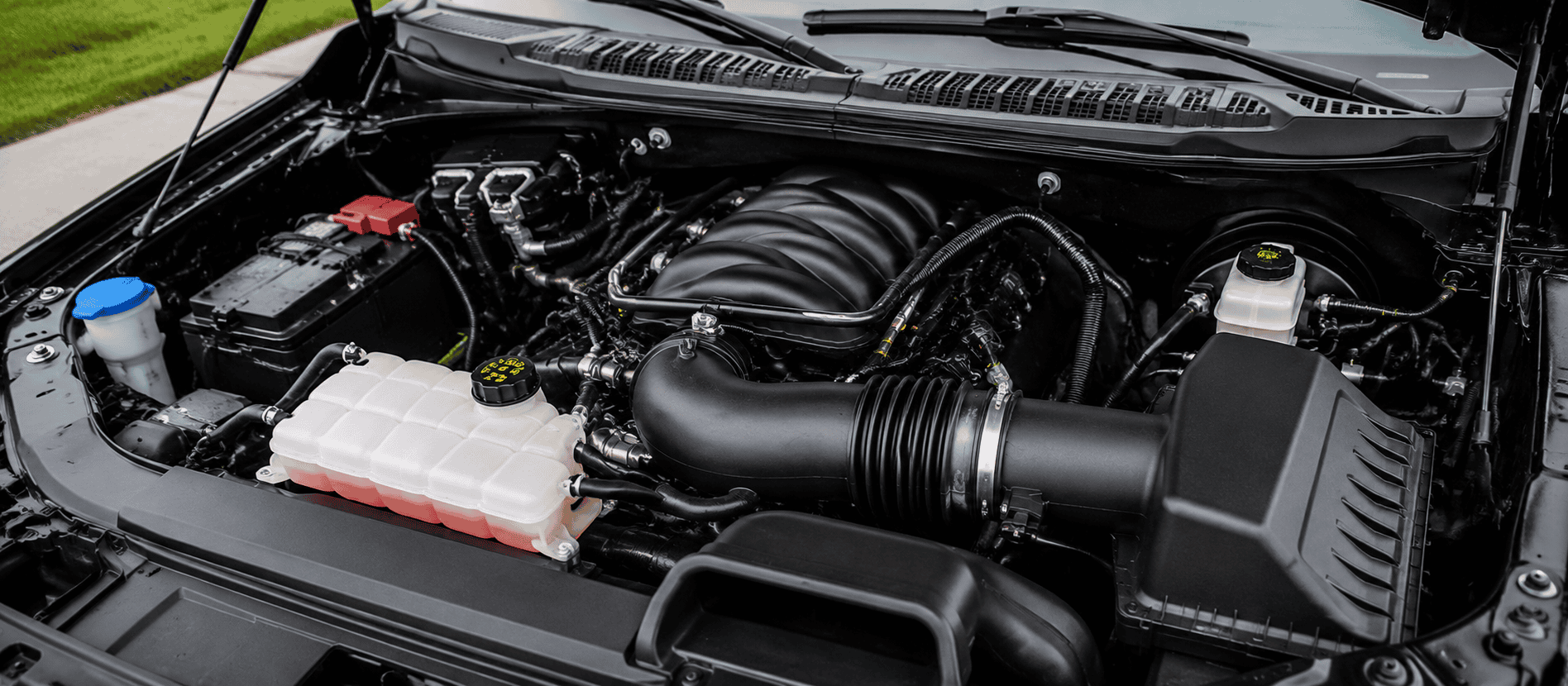
Few engines have had a greater impact on the modern performance truck market than the High Output 3.5L EcoBoost found in the 2019 Ford F-150 Raptor. While it shares its basic foundation with the standard 3.5L EcoBoost available in other F-150 models, the Raptor’s version was engineered with a very different goal in mind. Rather than focusing primarily on towing, fuel economy, or fleet use, this engine was designed to deliver high speed performance across rough terrain while still maintaining everyday drivability.
Ford’s EcoBoost name refers to the company’s family of turbocharged engines that combine turbocharging, direct fuel injection, and advanced engine management systems to produce strong power from relatively small displacement. The High Output version used in the Raptor takes that formula further through upgraded calibration, increased output, and performance focused tuning. The result is one of the most powerful engines available in any 2019 half ton pickup.
The Raptor itself occupies a unique position within the truck market. Most full size pickups are designed around towing, hauling, and work related tasks. The Raptor was engineered to add another capability entirely: high speed off road performance. That mission places different demands on the engine, transmission, cooling system, suspension, and drivetrain than a traditional F-150 experiences during normal ownership.
As a result, buyers considering a used Raptor often ask different questions than buyers shopping for other F-150 models. Performance, reliability, maintenance costs, fuel economy, long term durability, and ownership expectations can all differ from the standard truck lineup. Understanding those differences is important because the High Output 3.5L EcoBoost is not simply another F-150 engine. It is a specialized powertrain developed specifically for one of Ford’s most capable and recognizable performance trucks.
Engine Specs
Category
Details
Engine Family
EcoBoost V6
Engine Size
3.5 Liters
Engine Layout
Twin Turbocharged V6
Horsepower
450 hp @ 5,000 RPM
Torque
510 lb ft @ 3,500 RPM
Fuel Delivery System
Port & Direct Injection
Compression Ratio
10.5:1
Valve Design
Dual Overhead Cam, 24 Valves
Transmission
10 Speed Automatic
Fuel Requirement
Premium Recommended
Drive System
Four Wheel Drive
Available In
2019 Ford F-150 Raptor
Generating 450 hp and 510 lb ft of torque was never the goal of a typical work truck engine. Ford developed the High Output 3.5L EcoBoost specifically for the Raptor, giving it substantially more power than every other engine available in the 2019 F-150 lineup. Even the standard 3.5L EcoBoost, 5.0L V8, 2.7L EcoBoost, and 3.3L V6 fall short of the Raptor’s output figures.
Much of that performance comes from the twin turbocharger system. A turbocharger captures energy from exhaust gases and uses it to force additional air into the engine. More air allows more fuel to be burned, which increases power without requiring a larger engine. By using two turbochargers, Ford improved both responsiveness and power delivery, helping the engine produce strong acceleration throughout a broad RPM range.
Fuel delivery technology contributes to the engine’s performance as well. Rather than relying on a single injection system, the High Output EcoBoost uses both direct injection and port injection. Direct injection delivers fuel directly into the cylinders for precise control and improved efficiency, while port injection sprays fuel into the intake ports and helps reduce carbon deposits on intake valves. Working together, the two systems allow the engine to balance performance, fuel economy, emissions requirements, and long term durability more effectively than many older engine designs.
Category
Horsepower
Torque
3.3L V6
290 hp
265 lb ft
2.7L EcoBoost
325 hp
400 lb ft
5.0L V8
395 hp
400 lb ft
3.5L EcoBoost
375 hp
470 lb ft
High Output 3.5L EcoBoost
450 hp
510 lb ft
Looking at the numbers, the Raptor’s mission becomes obvious. Maximum fuel economy was never the priority, nor was minimizing ownership costs. Instead, Ford engineered the High Output 3.5L EcoBoost to deliver exceptional performance in situations where most trucks begin to feel limited. High speed desert running, steep climbs, deep sand, highway passing, towing, and everyday driving all benefit from the engine’s substantial power reserves. The horsepower helps maintain acceleration at higher speeds, while the 510 lb ft of torque provides strong pulling power whenever the driver asks for it.
Power alone would not create the driving experience that defines the Raptor. Much of the credit also belongs to the 10 speed automatic transmission. With ten forward gears available, the transmission can keep the engine operating within its most effective RPM range more often than older six speed designs. That flexibility helps the truck accelerate harder, respond more quickly to throttle inputs, manage heavy loads more effectively, and maintain efficiency during highway cruising. The result is a powertrain that feels responsive across a remarkably wide range of driving conditions.
Category
Purpose
Twin Turbochargers
Increase Power And Torque
Port & Direct Injection
Improve Fuel Delivery And Help Reduce Deposits
Dual Overhead Cam Valve Design
Improve Airflow At Higher RPM
10 Speed Automatic
Keep The Engine In Its Optimal Power Range
Electronic Engine Controls
Manage Performance And Efficiency
Taken together, these features explain why the High Output 3.5L EcoBoost remains one of the most powerful engines ever offered in a production F-150. It combines substantial horsepower, impressive torque, advanced fuel delivery technology, and a sophisticated transmission into a package designed specifically for the Raptor’s unique performance focused mission.
Performance & Driving Experience
Category
High Output 3.5L EcoBoost
Horsepower
450 hp
Torque
510 lb ft
Peak Torque RPM
3,500 RPM
Transmission
10 Speed Automatic
Drive System
Four Wheel Drive
Performance Focus
High Speed Off Road Capability
Climb behind the wheel of a Raptor and the difference becomes apparent almost immediately. Unlike most engines in the 2019 F-150 lineup, which were developed primarily for work duties, towing, or fuel efficiency, the High Output 3.5L EcoBoost was engineered with performance as a primary objective. The result is an engine that feels eager to accelerate and consistently delivers power across a broad range of driving situations.
What stands out most is how quickly the engine produces torque. Torque is the force that gets a vehicle moving, and having 510 lb ft available gives the Raptor a level of responsiveness that few trucks in its class could match at the time. Rather than requiring high engine speeds to access its strongest performance, the twin turbocharged setup generates substantial pulling power early in the RPM range. A light press of the accelerator is often enough to move the truck forward with authority, whether merging onto a highway, passing slower vehicles, or powering through loose terrain. The combination of strong low end torque and rapid throttle response is a major reason why the Raptor feels faster than its size might suggest.
2019 F-150 Engine
Horsepower
Torque
3.3L V6
290 hp
265 lb ft
2.7L EcoBoost
325 hp
400 lb ft
5.0L V8
395 hp
400 lb ft
3.5L EcoBoost
375 hp
470 lb ft
High Output 3.5L EcoBoost
450 hp
510 lb ft
Comparing the available engines makes it easy to see where the Raptor fits within the F-150 lineup. No other 2019 F-150 engine matches the High Output EcoBoost’s combination of 450 hp and 510 lb ft of torque. More importantly, those numbers create real world benefits that drivers can feel every day. Highway passing requires less planning, merging into fast moving traffic feels effortless, and carrying passengers, cargo, or off road gear has less impact on overall performance. Even at higher speeds, the engine rarely feels strained or short on power.
Helping maximize that performance is Ford’s 10 speed automatic transmission. Rather than making large jumps between gears, the transmission has numerous gear ratios available to keep the engine operating near its strongest power range. This allows the truck to accelerate smoothly while remaining responsive when additional power is requested. Some drivers notice the transmission shifting more frequently than older six speed automatics, but that behavior is largely intentional. The transmission is constantly adjusting to driving conditions, engine load, terrain, and throttle input in an effort to balance performance, drivability, and efficiency.
Driving Situation
Performance Experience
City Driving
Strong Throttle Response
Highway Merging
Excellent Acceleration
Passing Traffic
Minimal Effort Required
Towing
Strong Mid Range Power
Sand Or Dirt Trails
Excellent Torque Delivery
High Speed Off Road Driving
Designed For This Environment
The final row is what separates the Raptor from most trucks. High speed off road driving places enormous demands on an engine because the vehicle is constantly accelerating, absorbing impacts, and operating in challenging terrain. The High Output EcoBoost was specifically developed with those conditions in mind. Large cooling systems, performance focused tuning, and substantial torque reserves help the truck maintain performance in situations that would challenge many conventional pickups.
Drivers moving from the 5.0L V8 may notice a different power delivery style. The V8 builds power in a smooth and predictable manner as RPM increases, while the High Output EcoBoost delivers a stronger surge of torque earlier in the rev range. Neither approach is inherently better. They simply create different driving experiences.
Performance Metric
Approximate Result
0 To 60 MPH
Mid 5 Second Range
Quarter Mile
Approximately 14 Seconds
Top Speed
Electronically Limited
Power Delivery
Strong Low And Mid Range Torque
For a full size pickup weighing well over 5,000 lbs, these numbers are impressive. More importantly, the truck feels quick in everyday driving situations where owners actually spend their time. Whether merging onto a highway, climbing a steep grade, or accelerating through loose terrain, the engine rarely feels short on power.
The High Output 3.5L EcoBoost ultimately delivers one of the most unique driving experiences available in a modern pickup. It combines sports car like acceleration, substantial towing power, and genuine off road performance into a single package. Buyers looking for a traditional truck driving experience may still prefer the sound and character of the 5.0L V8, but drivers seeking maximum performance will quickly understand why the Raptor’s engine has developed such a strong following.
Fuel Economy
Category
EPA Estimate (4WD)
City Driving
15 MPG
Highway Driving
18 MPG
Combined Driving
16 MPG
Fuel Type
Premium Recommended
Fuel Tank Capacity
36 Gallons
Fuel economy is one area where the High Output 3.5L EcoBoost reminds buyers that it was engineered for performance first. Producing 450 hp and 510 lb ft of torque requires fuel, and the Raptor’s larger tires, specialized suspension, four wheel drive system, and increased weight all contribute to higher consumption compared with many other F-150 models.
The EPA ratings place the Raptor near the lower end of the 2019 F-150 fuel economy range. However, numbers on paper do not always tell the full story. Real world fuel economy often depends on driving style, terrain, weather conditions, tire selection, payload weight, and how often the turbochargers are asked to deliver maximum performance.
Driving Situation
Typical Fuel Economy
Highway Cruising
17 To 20 MPG
Mixed Driving
14 To 17 MPG
Heavy City Traffic
12 To 15 MPG
Off Road Driving
Often Below 15 MPG
Towing
Frequently 9 To 14 MPG
Many owners report highway fuel economy that meets or slightly exceeds EPA estimates when driving conservatively. The opposite can also be true. Aggressive acceleration, frequent boost pressure, larger aftermarket tires, and extended off road use can reduce fuel economy significantly. The engine’s performance capabilities make it very easy to consume more fuel than originally planned. The throttle pedal has a way of encouraging behavior that fuel economy does not always appreciate.
2019 F-150 Engine
Combined MPG
3.3L V6
22 To 23 MPG
2.7L EcoBoost
22 MPG
5.0L V8
19 MPG
3.5L EcoBoost
20 MPG
High Output 3.5L EcoBoost
16 MPG
The comparison highlights the tradeoff buyers make when choosing the Raptor engine. The High Output EcoBoost delivers the strongest performance in the lineup, but it does so at the expense of fuel economy. Buyers focused primarily on minimizing fuel costs will likely find the 2.7L EcoBoost or standard 3.5L EcoBoost more appealing.
Premium fuel is recommended for maximum performance, although the engine can operate on regular unleaded fuel if necessary. Using premium fuel allows the engine management system to take full advantage of the available boost and ignition timing, helping deliver the horsepower and torque figures that made the Raptor famous. Owners who regularly tow, drive in hot climates, or frequently use the truck’s performance potential often choose premium fuel for that reason.
Annual Mileage
Fuel Used At 16 MPG
10,000 Miles
About 625 Gallons
12,000 Miles
About 750 Gallons
15,000 Miles
About 938 Gallons
20,000 Miles
About 1,250 Gallons
These estimates help put ownership costs into perspective. Fuel is often one of the largest ongoing expenses associated with a Raptor, particularly for drivers who accumulate high annual mileage. Buyers considering a used example should account for fuel expenses alongside maintenance, insurance, and tire replacement costs.
Ultimately, fuel economy is unlikely to be the primary reason someone purchases a 2019 Raptor. The truck was designed to deliver exceptional performance on pavement and off road, and that mission naturally comes with higher fuel consumption. Most owners accept that tradeoff because the engine provides a level of acceleration and capability that few other factory trucks of its era could match.
Known Issues
Problem Area
Frequency
Typical Severity
Cam Phaser Wear
Moderate
Moderate To High
Timing Chain Wear
Low To Moderate
Moderate
Intercooler Condensation
Low
Low To Moderate
Ignition Coil Failures
Low
Low
Carbon Buildup
Low
Moderate
Sensor Failures
Low
Low
The High Output 3.5L EcoBoost is generally considered a capable and durable performance engine, but it is not immune to problems. In fact, many of the concerns reported by Raptor owners are similar to those found in the standard 3.5L EcoBoost because both engines share much of the same underlying design. The difference is that the Raptor’s version often operates under higher performance demands, which can place additional stress on certain components over time.
One of the most discussed issues involves cam phasers. A cam phaser is a component within the variable valve timing system that adjusts valve timing as engine speed and load change. Variable valve timing helps improve performance, fuel economy, and emissions, but worn cam phasers can sometimes produce a rattling noise during cold starts. Ford released multiple service updates addressing this issue across various EcoBoost applications.
Mileage Range
Common Ownership Concerns
Under 50,000 Miles
Mostly Routine Maintenance
50,000 To 100,000 Miles
Occasional Cam Phaser Complaints
100,000 To 150,000 Miles
Increased Wear Related Repairs
150,000+ Miles
Greater Importance On Maintenance History
The mileage ranges should be viewed as broad ownership trends rather than predictions. Some Raptors accumulate well over 150,000 miles without major engine repairs, while others may require component replacements earlier. Maintenance history, driving habits, modification history, and overall vehicle care often have a larger impact on reliability than mileage alone.
Timing chain wear occasionally appears in owner discussions as well. The timing chain synchronizes crankshaft and camshaft movement, ensuring valves open and close at the correct time. Although widespread timing chain failures are not common, neglected oil changes and poor maintenance habits can accelerate wear over the long term. This is one reason many experienced owners prioritize regular synthetic oil changes.
Potential Symptom
Possible Cause
Rattle During Cold Start
Cam Phaser Wear
Check Engine Light
Sensor Or Engine Management Fault
Rough Idle
Ignition Or Fuel System Issue
Reduced Power
Turbocharger Or Sensor Concern
Hesitation Under Acceleration
Multiple Possible Causes
Engine Misfire
Ignition Coil Or Spark Plug Issue
The symptoms above are not unique to a single failure. A rough idle, for example, may be caused by ignition components, fuel delivery issues, sensor faults, or intake related problems. Proper diagnosis remains important because replacing parts based solely on symptoms can become expensive very quickly.
One advantage of the second generation 3.5L EcoBoost found in the 2019 Raptor is its dual injection system. By using both direct injection and port injection, Ford reduced one of the most common concerns associated with direct injection only engines: excessive intake valve carbon buildup. Carbon deposits can still occur over time, but the issue tends to be less severe than on many earlier direct injection designs.
Inspection Item
What To Check
Cold Start
Listen For Unusual Rattles
Service Records
Verify Oil Change History
Check Engine Light
Confirm No Active Warnings
Test Drive
Watch For Hesitation Or Power Loss
Turbocharger Response
Ensure Smooth Boost Delivery
Diagnostic Scan
Check For Stored Trouble Codes
A used Raptor inspection should always include a cold start because cam phaser related noises are often easiest to identify before the engine reaches operating temperature. Reviewing maintenance records is equally important, especially on performance trucks that may have experienced aggressive driving, aftermarket tuning, or frequent off road use. A diagnostic scan can provide additional insight into hidden issues that may not trigger an active warning light.
Overall, the High Output 3.5L EcoBoost does not suffer from widespread catastrophic engine failures, but it does have several known concerns that buyers should understand before purchasing. Cam phasers, timing chain wear, ignition related issues, and normal aging components account for many of the complaints found in owner forums and service records. Buyers who prioritize maintenance history and perform a thorough inspection often place themselves in the best position for successful long term ownership.
Engine Oil & Filter
Category
Details
Recommended Oil Type
Full Synthetic
Recommended Viscosity
SAE 5W30
Ford Oil Standard
WSS M2C961 A1
OEM Oil
Motorcraft Full Synthetic 5W30
Popular Alternatives
Mobil 1 Advanced Full Synthetic, Pennzoil Platinum, Valvoline Advanced Full Synthetic
Oil Capacity
Approximately 6 Quarts With Filter
OEM Oil Filter
Motorcraft FL-2062
Premium Filter Alternatives
WIX XP, Mobil 1 Extended Performance
The High Output 3.5L EcoBoost depends heavily on clean oil because engine oil performs more than one job. In addition to lubricating bearings, pistons, timing components, and valvetrain parts, the oil also helps cool and protect the twin turbochargers. Turbochargers can spin at extremely high speeds and generate substantial heat, making lubrication quality especially important.
Ford specifies SAE 5W30 full synthetic oil for this engine. Most owners choose Motorcraft Full Synthetic because it matches factory requirements, although Mobil 1, Pennzoil Platinum, and Valvoline Advanced Full Synthetic are also commonly used. More important than the brand itself is using a quality full synthetic oil that meets Ford’s specifications and changing it at reasonable intervals.
Driving Style
Suggested Oil Change Interval
Highway Driving
7,500 To 10,000 Miles
Mixed Driving
Around 7,500 Miles
Frequent Towing
Around 5,000 Miles
Off Road Use
Around 5,000 Miles
Performance Driving
Around 5,000 Miles
Severe Duty Use
Around 5,000 Miles
The intervals above reflect how the truck is actually used. A Raptor that spends most of its life cruising on highways places far less stress on the oil than one that regularly tows trailers, runs through sand dunes, or sees frequent hard acceleration. Many experienced owners follow 5,000 mile intervals because the cost of an oil change is small compared with the cost of turbocharger or timing system repairs.
Oil filters deserve attention as well. The Motorcraft FL-2062 remains the most common replacement because it was designed specifically for this application. Premium alternatives from WIX and Mobil 1 are also widely available and offer excellent filtration performance. Regardless of brand, using a quality filter helps remove contaminants before they circulate throughout the engine.
Potential Warning Sign
What It May Indicate
Low Oil Level
Oil Consumption Or Leak
Burnt Oil Smell
Excessive Heat Exposure
Oil Around Turbo Components
Possible Leak
Sludge Deposits
Extended Oil Change Intervals
Metallic Particles In Oil
Internal Component Wear
Blue Exhaust Smoke
Oil Burning Concern
These warning signs do not automatically indicate a major problem, but they should never be ignored. Low oil levels can reduce lubrication to critical components, while sludge buildup may indicate that oil changes have been delayed for too long. Metal particles found during service deserve immediate investigation because they can signal internal wear.
For buyers shopping for a used 2019 Raptor, oil change records are often one of the best indicators of overall maintenance quality. Consistent service history suggests the previous owner understood the demands of a high output turbocharged engine. When it comes to long term reliability, few maintenance items have a greater impact than using quality synthetic oil, a reputable filter, and sensible service intervals.
Spark Plugs
Category
Details
Factory Spark Plug Type
Motorcraft Iridium
OEM Replacement Brand
Motorcraft
Popular Alternatives
NGK Iridium, Denso Iridium
Normal Replacement Interval
Around 100,000 Miles
Severe Duty Interval
60,000 To 80,000 Miles
Total Spark Plugs
6
Spark plugs are responsible for igniting the air and fuel mixture inside each cylinder. Every time the engine fires, the spark plugs create the electrical spark that starts the combustion process. In a high output turbocharged engine such as the Raptor’s 3.5L EcoBoost, spark plugs operate under greater pressure and heat than they do in many naturally aspirated engines, making their condition especially important.
Ford equipped this engine with iridium spark plugs because they provide longer service life and better durability than traditional plug materials. While many owners can approach the 100,000 mile replacement interval under normal driving conditions, trucks that tow frequently, see aggressive driving, or spend time off road often benefit from earlier replacement.
Driving Style
Suggested Spark Plug Service
Highway Driving
Up To 100,000 Miles
Mixed Driving
80,000 To 100,000 Miles
Frequent Towing
60,000 To 80,000 Miles
Off Road Use
60,000 To 80,000 Miles
Performance Driving
60,000 To 80,000 Miles
Severe Duty Use
Earlier Inspection Recommended
Turbocharged engines place greater demands on ignition components because cylinder pressures increase whenever boost is produced. Healthy spark plugs help ensure smooth acceleration, consistent fuel economy, and proper power delivery. Allowing worn plugs to remain in service too long can increase stress on ignition coils and contribute to misfires.
Spark plug condition can also reveal valuable information about engine health. During replacement, technicians often inspect the old plugs for unusual deposits, oil contamination, excessive wear, or signs of abnormal combustion. In some cases, spark plugs provide early clues that help identify developing problems before they become major repairs.
Potential Warning Sign
What It May Indicate
Rough Idle
Worn Spark Plugs
Engine Misfire
Ignition System Wear
Hesitation During Acceleration
Weak Spark
Reduced Fuel Economy
Incomplete Combustion
Hard Starting
Ignition Performance Decline
Check Engine Light
Misfire Detection
The symptoms above can sometimes be caused by other components, including ignition coils, fuel injectors, or sensors. However, spark plugs are often one of the first items technicians inspect because they directly affect combustion quality in every cylinder. A simple spark plug replacement can often restore performance that has gradually declined over thousands of miles.
For most owners, Motorcraft Iridium plugs remain the safest replacement choice because they match the factory specifications. Quality alternatives from NGK and Denso are also widely respected within the automotive industry. Regardless of brand, replacing spark plugs before they become excessively worn helps maintain performance, protect ignition components, and support the long term reliability expected from the High Output 3.5L EcoBoost.
Ignition Coils
Category
Details
Ignition System Type
Coil On Plug
Number Of Ignition Coils
6
OEM Replacement Brand
Motorcraft
Popular Alternatives
Delphi, NGK
Replacement Interval
As Needed
Inspection Opportunity
During Spark Plug Service
The High Output 3.5L EcoBoost uses a coil on plug ignition system, often shortened to COP. This design places an individual ignition coil directly above each spark plug rather than using traditional spark plug wires. Each coil is responsible for generating the electrical energy needed to create a spark inside its cylinder. The arrangement improves ignition precision, supports higher performance levels, and helps the engine maintain smooth operation under boost.
Unlike spark plugs, ignition coils do not have a scheduled replacement interval. Some original coils remain in service well beyond 150,000 miles, while others may fail earlier because of heat, vibration, age, or normal wear. Since the Raptor’s engine regularly produces high cylinder pressures when the turbochargers are building boost, the ignition system works harder than it would in many naturally aspirated engines.
Mileage Range
Typical Ignition System Experience
Under 75,000 Miles
Few Coil Related Issues
75,000 To 150,000 Miles
Occasional Coil Replacement
150,000+ Miles
Increased Monitoring Recommended
These mileage ranges are general ownership trends rather than guarantees. Many trucks never experience an ignition coil failure, while others may require replacement earlier. Factors such as maintenance history, driving style, tuning modifications, and overall vehicle condition can all influence coil lifespan.
Because ignition coils work directly with the spark plugs, many technicians inspect both components during the same service visit. Replacing worn spark plugs on schedule can help reduce unnecessary stress on the coils and support consistent ignition performance.
Potential Warning Sign
What It May Indicate
Engine Misfire
Weak Or Failed Coil
Rough Idle
Ignition System Concern
Hesitation Under Acceleration
Weak Spark Output
Reduced Fuel Economy
Incomplete Combustion
Check Engine Light
Misfire Detection
Loss Of Power Under Boost
Ignition Related Issue
The symptoms above can often feel more noticeable on a turbocharged engine because boost pressure places additional demands on the ignition system. A weak coil that seems acceptable during normal driving may struggle when the engine is producing maximum power. This is one reason some owners first notice ignition problems during hard acceleration or while towing.
Modern diagnostic tools make coil related problems easier to identify than in older vehicles. In many cases, the engine computer can identify which cylinder is misfiring, helping technicians narrow down the source of the problem without replacing unnecessary parts.
For most owners, ignition coils are not considered a common weakness of the High Output 3.5L EcoBoost. They are wear items that occasionally require replacement as mileage accumulates. Using quality spark plugs, addressing misfires promptly, and choosing reputable replacement parts such as Motorcraft or Delphi coils can help maintain smooth operation and reliable performance throughout the life of the engine.
Air Filters
Category
Details
OEM Engine Air Filter
Motorcraft FA-1902
Popular Alternatives
WIX, FRAM Ultra, ACDelco
Engine Air Filter Inspection
Every 15,000 Miles
Engine Air Filter Replacement
Around 30,000 Miles
OEM Cabin Air Filter
Motorcraft FP-79
Cabin Air Filter Replacement
15,000 To 20,000 Miles
Clean airflow is essential to the performance of the High Output 3.5L EcoBoost. The engine relies on a steady supply of clean air to support combustion and allow the twin turbochargers to operate efficiently. Because turbochargers force additional air into the engine, restrictions in the intake system can affect performance more noticeably than they might on some naturally aspirated engines.
The engine air filter protects the intake system and turbochargers from dust, dirt, sand, and other debris. This becomes especially important for Raptor owners because many trucks spend time on trails, gravel roads, construction sites, beaches, or other dusty environments. Allowing contaminants into the intake system can increase wear on sensitive components and potentially affect long term engine health.
Driving Environment
Inspection Frequency
Highway Driving
Every 15,000 Miles
Mixed Driving
Every 15,000 Miles
Gravel Roads
Every 10,000 Miles
Off Road Use
Every 10,000 Miles
Dusty Conditions
Inspect Frequently
Desert Driving
Inspect After Major Trips
The inspection intervals above become increasingly important as off road use increases. A filter that may last 30,000 miles during normal commuting can become heavily contaminated much sooner when exposed to dust and sand. Fortunately, inspecting an air filter is quick, inexpensive, and often takes only a few minutes.
A restricted air filter can gradually reduce airflow to the turbochargers and engine. Because the change occurs slowly, many owners do not notice the decline until a fresh filter is installed.
Potential Warning Sign
What It May Indicate
Reduced Fuel Economy
Restricted Airflow
Sluggish Acceleration
Dirty Air Filter
Reduced Power Under Boost
Airflow Restriction
Excessive Intake Noise
Damaged Filter Element
Dirty Intake Components
Poor Filter Condition
These symptoms do not always indicate a filter problem, but they can serve as useful inspection clues. The High Output EcoBoost depends heavily on airflow to achieve its performance targets, so maintaining a clean intake path helps support both power and efficiency.
The cabin air filter is often overlooked during ownership. While it does not affect engine performance, it plays an important role in passenger comfort by filtering dust, pollen, and airborne contaminants before they enter the cabin. A clogged cabin filter can reduce airflow from the heating and air conditioning system, making the interior feel less comfortable during extreme weather.
For most owners, Motorcraft filters provide a straightforward replacement option that matches factory specifications. Quality alternatives from WIX, FRAM Ultra, and ACDelco are also widely available. Regardless of brand, routine filter inspections remain one of the simplest and most cost effective maintenance tasks on the High Output 3.5L EcoBoost, particularly for trucks that regularly venture beyond paved roads.
Fuel System Care
Category
Details
Fuel Type
Regular Unleaded Accepted
Recommended Fuel
Premium Unleaded
Fuel Delivery System
Port & Direct Injection
Fuel Injector Cleaner
Chevron Techron, Gumout Regane
Fuel Quality Recommendation
Top Tier Fuel Preferred
Fuel Filter
Integrated Into Fuel Tank System
The High Output 3.5L EcoBoost uses a sophisticated fuel delivery system designed to support both performance and efficiency. Unlike older engines that relied on a single fuel injection method, this engine uses both direct injection and port injection. Direct injection sprays fuel directly into the cylinders for precise fuel control and improved power, while port injection sprays fuel into the intake ports and helps keep intake valves cleaner over time.
Fuel quality plays a larger role in this engine than it does in many standard truck engines. Although the engine can operate on regular unleaded fuel, Ford recommends premium fuel to achieve the advertised horsepower and torque figures. Premium fuel helps the engine maintain optimal ignition timing and boost pressure, particularly during hard acceleration, towing, or high temperature operation.
Fuel Type
Expected Performance
Premium Unleaded
Maximum Power Output
Mid Grade Fuel
Slightly Reduced Performance Possible
Regular Unleaded
Acceptable For Normal Driving
Many owners use regular fuel without experiencing problems, but buyers should understand that the engine management system may reduce performance slightly when lower octane fuel is detected. The difference may not be noticeable during daily commuting, but it can become more apparent when towing, accelerating aggressively, or driving in demanding conditions.
One advantage of the dual injection system is its ability to reduce carbon buildup concerns that affected some earlier direct injection engines. Because fuel periodically passes through the intake ports, deposits are less likely to accumulate on intake valves than they are in direct injection only designs. This does not eliminate carbon buildup completely, but it helps reduce the likelihood of severe deposit formation over long ownership periods.
Fuel System Maintenance Item
Suggested Service
Fuel Injector Cleaner
Every 10,000 To 15,000 Miles
Fuel System Inspection
During Major Services
Diagnostic Scan
Annually Or When Symptoms Appear
Fuel Quality Monitoring
Ongoing
Products such as Chevron Techron and Gumout Regane are commonly used as preventative maintenance. These fuel system cleaners cannot repair mechanical failures, but they may help remove minor deposits and maintain injector performance over time. Many owners add a cleaner periodically, particularly on vehicles that accumulate significant mileage.
Potential Warning Sign
What It May Indicate
Rough Idle
Fuel Delivery Concern
Hesitation During Acceleration
Injector Or Fuel System Issue
Hard Starting
Fuel Related Problem
Reduced Fuel Economy
Injector Deposits Or Sensor Issue
Check Engine Light
Multiple Possible Fuel System Faults
Engine Misfire
Fuel Or Ignition Related Concern
The symptoms above can originate from several different systems, which is why proper diagnosis remains important. A rough idle or misfire does not automatically mean an injector has failed. Ignition components, sensors, airflow issues, and other engine systems can create similar symptoms.
For most owners, the fuel system requires very little maintenance beyond using quality fuel and monitoring for developing problems. The combination of direct injection and port injection is one of the more beneficial upgrades found in the second generation 3.5L EcoBoost. When paired with quality fuel and routine maintenance, the system generally provides reliable performance while helping the High Output EcoBoost deliver the power levels that make the Raptor unique.
Cooling System
Category
Details
Recommended Coolant
Motorcraft Yellow Antifreeze Coolant
Coolant Mixture
50/50 Premixed
Initial Coolant Service
100,000 Miles
Subsequent Coolant Service
Every 50,000 Miles
Water Pump Inspection
During Major Services
Thermostat Replacement
As Needed
Radiator Hose Inspection
Every Service Visit
Cooling Fan Inspection
Periodically
The cooling system has a particularly important job on the High Output 3.5L EcoBoost because this engine generates substantial heat under load. Producing 450 hp from a twin turbocharged 3.5 liter engine creates far more thermal stress than many traditional truck engines experience. Whether the truck is towing, climbing steep grades, driving through deep sand, or running at highway speeds in hot weather, the cooling system must keep temperatures under control.
Motorcraft Yellow Antifreeze Coolant remains the recommended coolant because it was formulated to meet Ford’s specifications for corrosion protection, temperature stability, and long term durability. Using the correct coolant is important because modern cooling systems contain aluminum components, seals, gaskets, and passages that depend on the proper chemical formulation for protection.
Driving Condition
Cooling System Workload
Daily Commuting
Low
Highway Driving
Moderate
Towing
High
Off Road Driving
High
Mountain Driving
High
Hot Climate Operation
High
The workload differences above help explain why cooling system maintenance becomes increasingly important for Raptor owners. A truck used primarily for commuting may place relatively little stress on the cooling system, while a truck regularly used for towing or off road adventures can generate significantly higher operating temperatures. Heat is often the hidden factor that influences long term component life.
Several major components work together to regulate engine temperature. The radiator removes heat from the coolant, the water pump circulates coolant throughout the engine, the thermostat controls coolant flow based on temperature, and the cooling fans help maintain airflow when vehicle speed is low. If any one of these components develops a problem, cooling performance can be affected.
Component
What To Check
Coolant Reservoir
Proper Fluid Level
Radiator Hoses
Cracks, Leaks, Swelling
Water Pump
Coolant Seepage Or Noise
Radiator
Damage Or Leaks
Thermostat
Stable Operating Temperature
Cooling Fans
Proper Operation
Routine inspections often identify small issues before they become expensive repairs. A minor coolant leak may only require a hose replacement if caught early, but ignoring the same leak can eventually lead to overheating and potential engine damage. Preventative inspections are usually far less expensive than emergency repairs.
Potential Warning Sign
What It May Indicate
Rising Temperature Gauge
Cooling System Concern
Coolant Odor
Possible Leak
Low Coolant Level
Fluid Loss
Visible Coolant Leak
Hose, Radiator, Or Water Pump Issue
Heater Performance Changes
Coolant Flow Problem
Engine Overheating
Immediate Inspection Needed
These warning signs should never be ignored, especially on a high output turbocharged engine. Overheating can affect head gaskets, turbocharger components, seals, and other critical parts. Even a single overheating event can create costly repairs if temperatures become excessive.
One advantage of regular cooling system maintenance is that most inspections are straightforward and inexpensive. Checking coolant levels, inspecting hoses, monitoring operating temperatures, and replacing coolant at appropriate intervals can help prevent many common cooling system problems. For long term owners, maintaining the cooling system is one of the simplest ways to protect the performance and durability of the High Output 3.5L EcoBoost.
PCV System
Category
Details
System Name
Positive Crankcase Ventilation (PCV)
OEM PCV Valve
Motorcraft OEM Replacement
Inspection Interval
Every 30,000 Miles
Replacement Interval
As Needed
Hose Inspection
Every Service Visit
Importance Level
High For Turbocharged Engines
The PCV system, short for Positive Crankcase Ventilation, is responsible for managing pressure and vapors that build inside the engine during normal operation. Every engine produces a small amount of combustion gases that escape past the piston rings and enter the crankcase. Without a PCV system, pressure would build inside the engine and could eventually contribute to oil leaks, seal failures, and increased emissions.
On the High Output 3.5L EcoBoost, the PCV system plays an even more important role because turbocharged engines generate higher cylinder pressures than many naturally aspirated engines. Proper crankcase ventilation helps control internal pressure, reduce moisture buildup, and maintain stable engine operation under both normal driving and boost conditions.
Mileage Range
Recommended Action
Under 50,000 Miles
Periodic Inspection
50,000 To 100,000 Miles
Inspect Valve And Hoses
100,000 To 150,000 Miles
Increased Monitoring
150,000+ Miles
Replace Components As Needed
Unlike spark plugs or fluids, the PCV valve does not follow a strict replacement schedule. Some valves last well over 100,000 miles, while others may require attention sooner. The condition of the valve, hoses, and connections is often more important than mileage alone. Cracked hoses, sticking valves, or vacuum leaks can affect engine performance and drivability.
A functioning PCV system also helps reduce oil contamination. Moisture, fuel vapors, and combustion byproducts naturally accumulate inside the crankcase over time. The PCV system helps remove these contaminants before they can negatively affect oil quality and internal engine components.
Potential Warning Sign
What It May Indicate
Rough Idle
Vacuum Leak Or PCV Concern
Oil Leaks
Excess Crankcase Pressure
Increased Oil Consumption
PCV System Issue
Check Engine Light
Airflow Or Emissions Fault
Whistling Noise
Damaged PCV Hose Or Valve
Sludge Formation
Poor Crankcase Ventilation
Many of these symptoms can be mistaken for other engine problems. A rough idle, for example, may be caused by ignition components, sensors, or fuel delivery issues. However, a failing PCV valve or leaking hose can create similar symptoms because the engine depends on precise airflow measurements to operate correctly.
One advantage of PCV system maintenance is that it is generally inexpensive compared with many other repairs. Replacing a worn valve or damaged hose typically costs far less than addressing oil leaks or drivability problems that develop after the issue has been ignored. During routine service, technicians often inspect the PCV system whenever the intake components are accessible.
For long term owners, the PCV system is easy to overlook because it operates quietly in the background. Yet it plays an important role in engine health, emissions control, and oil quality. Periodic inspections and timely replacement of worn components can help the High Output 3.5L EcoBoost maintain smooth operation and reduce the likelihood of avoidable engine related problems as mileage accumulates.
Transmission Pairing
Category
Details
Transmission
10R80 Automatic
Number Of Gears
10 Forward Speeds
Drive System
Four Wheel Drive
OEM Transmission Fluid
Motorcraft MERCON ULV
Normal Fluid Service
Up To 150,000 Miles
Severe Duty Service
60,000 To 100,000 Miles
Tow Haul Mode
Standard
Manual Shift Mode
Standard
No transmission was offered with the High Output 3.5L EcoBoost other than Ford’s 10R80 10 speed automatic. Developed to manage the engine’s substantial power output, the transmission became a key part of the Raptor’s performance package rather than simply a component responsible for changing gears. Whether the truck is accelerating hard, towing a trailer, crawling over obstacles, or cruising down the interstate, the transmission is constantly working to keep the engine operating where it performs best.
Much of the Raptor’s responsiveness comes from the way the transmission and engine work together. Peak torque arrives relatively early in the RPM range, giving the truck strong pulling power almost immediately after the throttle is pressed. The 10 speed transmission takes advantage of that broad torque curve by selecting gears that keep the engine within its most effective operating range. Despite weighing considerably more than many performance vehicles, the Raptor often feels surprisingly quick because power is readily available when needed. The combination of abundant torque and closely spaced gear ratios helps create the effortless acceleration that has become one of the truck’s defining characteristics.
Driving Situation
Transmission Behavior
City Driving
Frequent Gear Changes For Efficiency
Highway Cruising
Low RPM Operation
Towing
Holds Lower Gears Longer
Off Road Driving
Improved Torque Control
Performance Driving
Faster Downshifts
Steep Grades
Better Power Management
The gear ratios are spaced closely together, which helps explain why some drivers notice more shifting activity than they experienced with older six speed transmissions. Frequent shifts are often normal and simply reflect the transmission’s effort to balance performance, fuel economy, and drivability.
Transmission fluid is one of the most important maintenance items affecting long term durability. Although Ford’s official service intervals can be relatively long, many technicians and experienced Raptor owners prefer shorter intervals when the truck is used for towing, off road driving, or other demanding activities.
Vehicle Usage
Suggested Fluid Service
Highway Driving
Up To 150,000 Miles
Mixed Driving
100,000 Miles
Frequent Towing
60,000 To 80,000 Miles
Off Road Use
60,000 To 80,000 Miles
Performance Driving
60,000 To 80,000 Miles
Severe Duty Use
60,000 Miles
Heat is one of the primary causes of transmission wear. Heavy towing, sand driving, mountain terrain, and aggressive driving all generate additional heat that can gradually degrade transmission fluid. Fresh fluid helps maintain lubrication, cooling performance, hydraulic pressure, and shift quality.
Like many modern transmissions, the 10R80 has generated owner discussions regarding shift quality. Some drivers report firm shifts, hesitation, gear hunting, or occasional inconsistent behavior under certain conditions. Experiences vary significantly from truck to truck, and software updates have addressed some concerns over the years.
Potential Warning Sign
What It May Indicate
Harsh Shifting
Fluid Or Calibration Concern
Delayed Engagement
Transmission Related Issue
Gear Hunting
Software Or Drivability Concern
Transmission Warning Light
Diagnostic Fault
Slipping Between Gears
Internal Or Fluid Related Issue
Unusual Noise
Further Inspection Recommended
These symptoms do not automatically indicate major transmission failure. In some cases, a software update, adaptive relearn procedure, or fluid service may improve shift quality. Proper diagnosis remains important because similar symptoms can have multiple causes.
For buyers shopping for a used Raptor, a thorough test drive remains one of the best evaluation tools available. The transmission should shift consistently under light acceleration, moderate acceleration, highway cruising, and low speed maneuvering. Reviewing service records can also provide valuable insight into how the truck was maintained throughout its life.
The pairing of the High Output 3.5L EcoBoost and the 10R80 transmission is a major reason the Raptor performs as well as it does. The engine supplies abundant power, while the transmission helps keep that power readily available across a wide range of driving conditions. When properly maintained, the combination delivers the responsiveness, capability, and versatility that define the Raptor ownership experience.
Ownership Considerations
Category
Assessment
Daily Driving
Very Good
Highway Travel
Excellent
Towing Capability
Excellent
Off Road Performance
Excellent
Fuel Economy
Below Average
Maintenance Costs
Moderate
Long Term Complexity
Higher Than Average
Aftermarket Support
Excellent
Owning a 2019 F-150 Raptor is different from owning a standard F-150. While both trucks share a common platform, the Raptor was engineered to deliver a much higher level of performance. That additional capability comes with both advantages and tradeoffs that buyers should understand before making a purchase decision.
For many owners, the biggest benefit is versatility. The High Output 3.5L EcoBoost can function as a daily driver during the week, tow recreational equipment on weekends, and tackle challenging trails when the opportunity arises. Few factory trucks can perform all three roles as effectively without significant modifications.
The flip side is that operating costs tend to be higher than those of a typical F-150. Larger tires, increased fuel consumption, premium fuel recommendations, and specialized suspension components can all increase ownership expenses over time. None of these costs are unreasonable for a performance truck, but they should be considered during the buying process.
Ownership Expense
Relative Cost
Fuel Costs
High
Oil Changes
Moderate
Spark Plug Service
Moderate
Tire Replacement
High
Brake Service
Moderate
Insurance
High
Fuel and tire expenses are often the biggest surprises for first time Raptor owners. The truck’s aggressive all terrain tires provide excellent traction and off road capability, but they are typically more expensive to replace than standard F-150 tires. Fuel costs can also add up quickly, particularly for drivers who regularly use the truck’s performance potential.
Long term durability depends heavily on maintenance history. The High Output EcoBoost is a sophisticated engine that relies on turbochargers, advanced fuel injection systems, electronic controls, and a 10 speed automatic transmission. While these technologies contribute to the truck’s impressive performance, they also increase the importance of routine maintenance.
Mileage Range
Typical Ownership Experience
Under 50,000 Miles
Mostly Routine Maintenance
50,000 To 100,000 Miles
Normal Wear Item Replacement
100,000 To 150,000 Miles
Increased Maintenance Monitoring
150,000+ Miles
Maintenance History Becomes Critical
The mileage ranges above are broad ownership trends rather than guarantees. Many Raptors surpass 150,000 miles without major engine repairs, while others require attention sooner. Service records, oil change history, modification history, and overall vehicle care often provide a clearer picture of future reliability than mileage alone.
Modification history deserves special attention when shopping for a used Raptor. These trucks are popular among enthusiasts, and many examples have received aftermarket tuning, suspension upgrades, intake systems, exhaust modifications, or larger tires. Some upgrades are professionally installed and properly maintained, while others may place additional stress on drivetrain components.
Buyer Type
Suitability
Daily Commuter
Very Good
Weekend Adventurer
Excellent
Frequent Tower
Excellent
Off Road Enthusiast
Excellent
Budget Focused Buyer
Below Average
Performance Enthusiast
Excellent
The ownership profile table helps identify who benefits most from the Raptor experience. Buyers seeking the lowest operating costs will generally find better options elsewhere in the F-150 lineup. On the other hand, drivers looking for a truck that combines performance, off road capability, towing strength, and everyday usability often find very few direct competitors.
Resale value is another factor worth considering. Raptors have historically maintained strong demand in the used market because they appeal to a relatively broad audience. Condition, mileage, maintenance history, accident history, and modifications all influence resale value, but well maintained examples often remain desirable years after their original purchase date.
The 2019 Raptor ultimately makes the most sense for buyers who intend to use its capabilities. Owners who regularly tow, travel off road, or simply enjoy driving a high performance truck are often the ones who get the greatest value from the experience. For shoppers seeking maximum capability and one of the most distinctive driving experiences available in a factory pickup, the High Output 3.5L EcoBoost remains a compelling option.
Should You Choose the High Output 3.5L EcoBoost?
Yes, if performance is a top priority. The High Output 3.5L EcoBoost was designed for buyers who want more than a traditional pickup experience. With 450 hp and 510 lb ft of torque, it delivers stronger acceleration than any other engine available in the 2019 F-150 lineup and provides the power needed for high speed off road driving, towing, and everyday use. This engine is an excellent fit for drivers who plan to take advantage of the Raptor’s capabilities. Off road enthusiasts, weekend adventurers, towing owners, and performance focused buyers will likely appreciate the combination of power, responsiveness, and versatility. The twin turbocharged design produces strong torque throughout the RPM range, making the truck feel quick and capable in a wide variety of situations. That said, it is not the ideal choice for everyone. Fuel costs, tire costs, insurance premiums, and maintenance expenses are generally higher than those of a standard F-150. Buyers focused primarily on fuel economy, simplicity, or minimizing ownership costs may be better served by a 2.7L EcoBoost, standard 3.5L EcoBoost, or 5.0L V8. For shoppers seeking one of the most capable and entertaining factory trucks of its era, the High Output 3.5L EcoBoost remains the engine that defines the 2019 Ford F-150 Raptor experience.
This platform analyzes depreciation trends, resale value behavior, and long-term ownership costs, helping drivers understand how mileage, maintenance, and timing shape real financial outcomes.