Wheel bearings are critical load-bearing components that allow your wheels to rotate smoothly while supporting the full weight of the vehicle. Because they operate under constant stress, heat, and road contamination, failure can develop gradually. Therefore, understanding wheel bearing symptoms, causes, replacement considerations, and safety risks is essential for long-term vehicle reliability.
This main guide consolidates everything you need to know about wheel bearings, from early warning signs to cost expectations and safety implications.
What Is a Wheel Bearing?
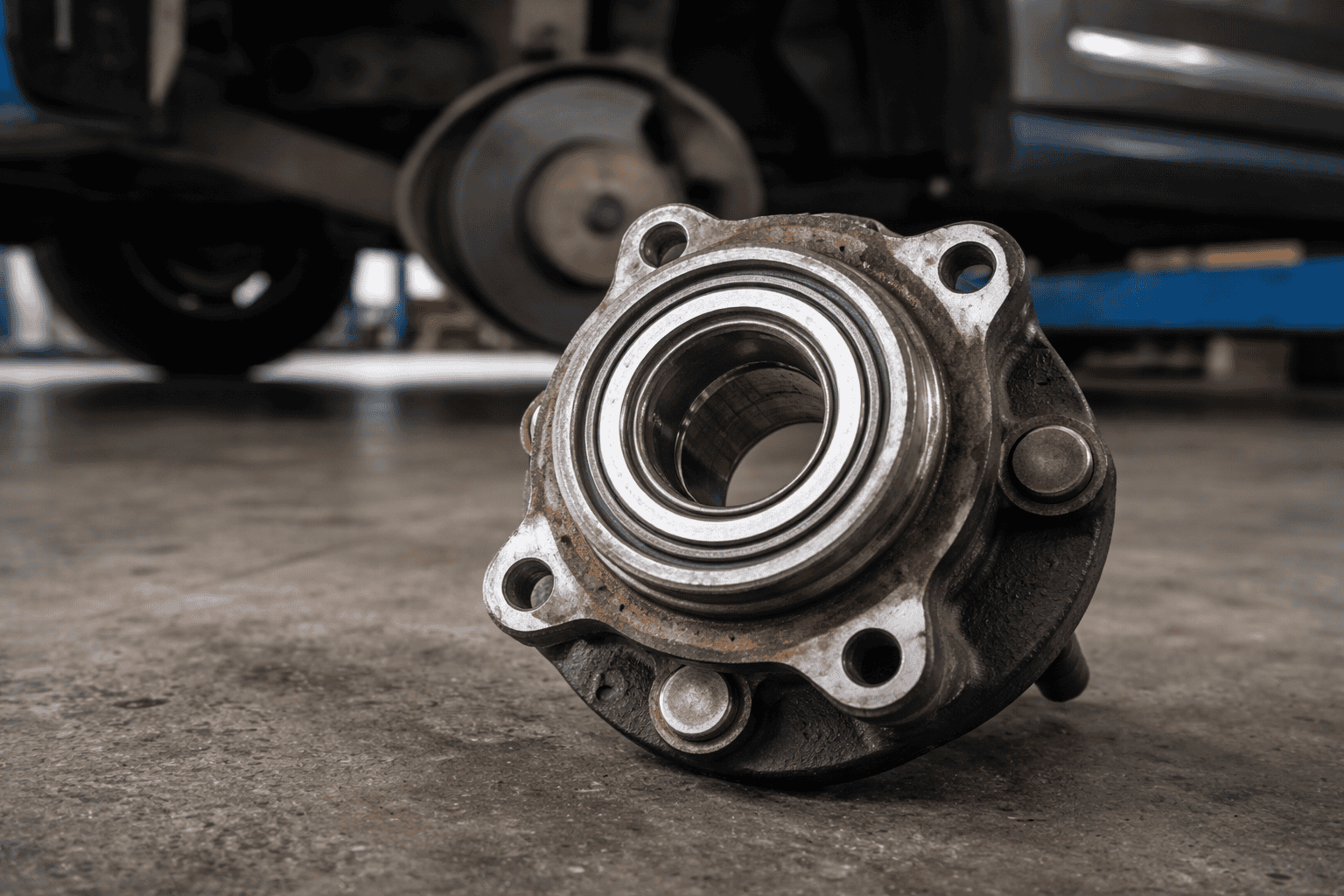
A wheel bearing is a precision-engineered set of steel balls or rollers housed inside a sealed metal ring. It sits inside the wheel hub assembly and allows the wheel to rotate with minimal friction.
In modern vehicles, wheel bearings are typically:
- Sealed hub assemblies (most common)
- Press-in bearings (older or heavy-duty setups)
- Integrated with ABS wheel speed sensors
Because they are sealed units, lubrication cannot be serviced. As a result, once internal wear begins, replacement is usually required.
Common Wheel Bearing Symptoms
Early detection prevents expensive secondary damage. The most common wheel bearing symptoms include:
1. Humming or Growling Noise
A low humming or grinding sound that increases with road speed is often the first sign. Additionally, the noise may change when turning due to weight transfer.
2. Vibration in Steering Wheel
As internal wear progresses, vibration may travel through the suspension into the steering wheel.
3. Uneven Tire Wear
A loose or worn bearing can alter wheel alignment slightly, which may cause irregular tread wear.
4. ABS Warning Light
Many hub assemblies include integrated wheel speed sensors. Consequently, bearing damage can trigger ABS or traction control alerts.
For a deeper breakdown of noise diagnosis, see:
Common Causes of Front-End Noise While Driving
What Causes Wheel Bearings to Fail?
Although wheel bearings are durable, several factors accelerate wear:
- High mileage and normal wear
- Water intrusion or road salt corrosion
- Impact damage (potholes or curb strikes)
- Improper installation or torque
- Excessive vehicle loads
Over time, internal rollers develop pitting or scoring. Therefore, friction increases, heat builds, and noise begins.
How Wheel Bearings Affect Other Systems
Wheel bearings do not operate independently. They directly influence:
- Suspension stability
- Steering precision
- Brake rotor alignment
- ABS system accuracy
- Drivetrain operation (on driven wheels)
If ignored, a failing bearing can damage the hub, axle splines, brake components, and even wheel studs.
Is It Safe to Drive With a Bad Wheel Bearing?
Short-term driving may be possible in early stages. However, continued operation can become dangerous. As wear increases, excessive play may develop in the wheel hub.
In extreme cases, this can result in:
- Loss of steering stability
- Increased braking distance
- Hub overheating
- Wheel separation (rare but severe)
For a full safety breakdown, read:
When Suspension Noises Become Dangerous (future internal guide)
Wheel Bearing Replacement Overview
Most modern vehicles use complete hub assemblies. Therefore, replacement typically involves:
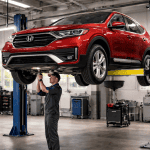
- Lifting the vehicle
- Removing brake components
- Disconnecting ABS wiring
- Unbolting the hub assembly
- Installing and torquing the new unit to specification
Labor complexity varies by vehicle design. Front bearings are generally more labor-intensive than rear units.
Wheel Bearing Replacement Cost: What to Expect
Wheel bearing replacement cost varies widely depending on vehicle design, bearing type, and labor complexity. Therefore, understanding what affects pricing helps you estimate repairs more accurately and avoid surprises.
Average Wheel Bearing Replacement Cost
For most passenger vehicles, wheel bearing replacement typically falls within these ranges:
- Parts: $80–$350 per wheel
- Labor: $120–$450 per wheel
- Total cost: $200–$800 per wheel (parts + labor)
However, vehicles with integrated hub assemblies or AWD systems often cost more due to additional labor and component complexity.
What Affects Wheel Bearing Replacement Cost?
Several factors directly influence total repair cost:
Vehicle Design
Modern vehicles usually use sealed hub assemblies, which cost more upfront but reduce installation time. Older vehicles may use press-in bearings, which require specialized tools and additional labor.
Front vs Rear Bearings
Front wheel bearings often cost more to replace because they are integrated with steering, drive axles, and ABS components. Rear bearings are sometimes simpler, especially on non-driven wheels.
ABS Integration
If the wheel bearing includes an integrated wheel speed sensor, replacement cost increases due to higher part pricing and careful sensor handling.
Drivetrain Type
AWD and 4WD vehicles typically require more labor because axle removal and torque procedures are more complex.
Cost Comparison: Front vs Rear Wheel Bearings
(Typical Passenger Vehicle)
- Front wheel bearing: $300–$800
- Rear wheel bearing: $200–$600
As a result, front-end wheel bearing repairs are usually the more expensive of the two.
Can You Drive With a Bad Wheel Bearing to Save Money?
Delaying replacement may seem cost-effective, but it often leads to higher repair bills. As bearing wear progresses, it can damage:
- Wheel hubs
- Axle splines
- Brake rotors
- ABS sensors
Therefore, replacing a bearing early is usually cheaper than repairing secondary damage later.
For safety implications, see:
When Suspension Noises Become Dangerous
Is Wheel Bearing Replacement a DIY Job?
Some experienced DIYers can replace bolt-on hub assemblies with basic tools. However, press-in bearings require hydraulic presses and precise torque specifications.
Improper installation can result in:
- Premature bearing failure
- ABS faults
- Steering instability
Because of this, professional installation is recommended for most vehicles.
Estimate Your Wheel Bearing Replacement Cost
Wheel bearing costs vary significantly by vehicle make, model, year, and drivetrain. To get a more accurate estimate based on your vehicle:
Use the Wheel Bearing Replacement Cost Calculator
This calculator factors in:
- Vehicle configuration
- Front vs rear placement
- Typical labor time
- Regional pricing averages