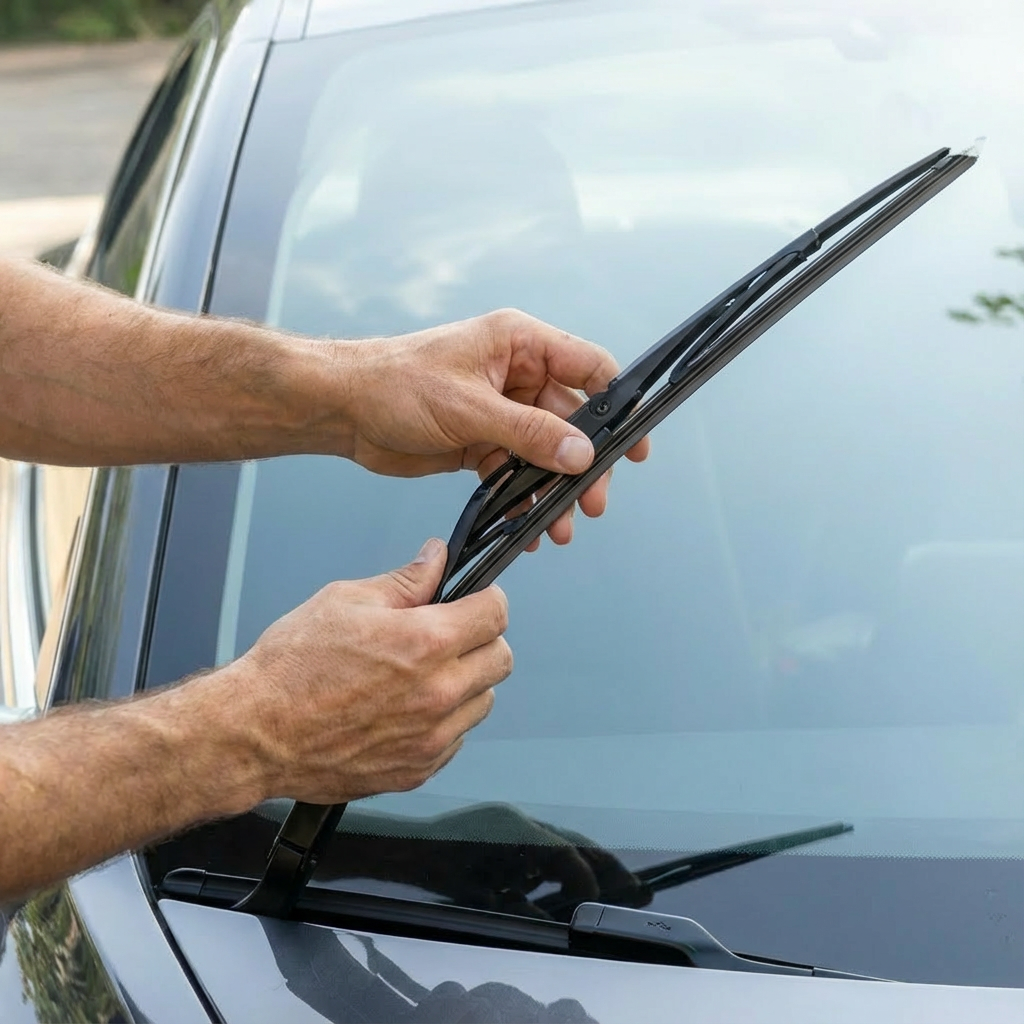
Windshield wipers are a small but critical safety component. Worn or damaged wipers reduce visibility in rain, snow, and road spray, increasing the risk of accidents. Fortunately, inspecting and replacing wiper blades is one of the easiest maintenance tasks most drivers can perform in just a few minutes.
This guide walks you through the process step by step, even if you’ve never replaced wipers before.
What Windshield Wipers Do (and Why They Matter)
Windshield wipers clear rain, snow, dirt, and debris from the glass to maintain visibility while driving. Over time, the rubber edge degrades due to heat, cold, sunlight, and general wear.
Worn wipers can cause:
✓ Streaking or smearing on the windshield
✓ Reduced visibility during rain or snow
✓ Skipping or chattering noises
✓ Scratches on the glass if the rubber splits
Replacing them early helps maintain clear vision and protects the windshield surface.
What You’ll Need Before You Start
Before beginning, gather the following:
✓ Replacement wiper blades sized for your vehicle
✓ A clean cloth or paper towel
✓ Your vehicle owner’s manual (recommended for blade type)
Most auto parts stores can match wiper blades by vehicle year, make, and model.
Step 1: Inspect the Existing Wiper Blades
Lift each wiper arm gently away from the windshield until it locks in the upright position. Examine the rubber edge closely.
Signs replacement is needed include cracking, tearing, stiffness, or uneven wear. If the rubber looks dry or no longer flexible, replacement is recommended even if streaking hasn’t started yet.
Step 2: Lift the Wiper Arm Carefully
Once raised, place a cloth between the wiper arm and windshield as a precaution. This prevents damage if the arm snaps back unexpectedly.
Most wiper arms are spring-loaded and should be handled gently.
Step 3: Remove the Old Wiper Blade
Locate the release mechanism where the blade connects to the wiper arm. Common designs include a small tab, button, or clip.
Press or lift the release and slide the blade downward or outward to detach it. At this point, the blade should come free from the arm.
Step 4: Attach the New Wiper Blade
Align the new blade with the wiper arm connector and slide it into place until you hear or feel a click.
Make sure the blade is securely attached before lowering the arm. The connection should feel firm and stable.
Step 5: Lower the Wiper Arm Back Onto the Windshield
Slowly guide the wiper arm back down onto the glass. Repeat the same steps for the second wiper blade.
Avoid letting the arm snap back without a blade attached.
Step 6: Test the New Wipers
Turn on the vehicle and activate the wipers using washer fluid. Observe their movement across the windshield.
The blades should move smoothly without streaking, skipping, or noise.
How Often Should Windshield Wipers Be Replaced?
Most manufacturers recommend replacing wiper blades every 6 to 12 months, though this can vary based on climate and usage.
Replacement is recommended if:
✓ Wipers leave streaks or patches
✓ The rubber edge appears cracked or brittle
✓ Visibility is reduced during rain
Checking wipers during seasonal changes is a good habit.
Final Notes for Beginners
Replacing windshield wipers is a simple task that delivers immediate safety benefits. Taking a few minutes to inspect and replace worn blades helps ensure clear visibility in all driving conditions.
This guide is provided for general educational purposes only and does not replace manufacturer service instructions or professional advice.