Wheel bearings play a critical role in allowing your wheels to rotate smoothly while supporting the weight of the vehicle. When a wheel bearing begins to fail, the symptoms often start subtly and worsen over time. Therefore, learning how to identify wheel bearing symptoms early can help you avoid unsafe driving conditions, uneven tire wear, and costly secondary damage.
Although wheel bearings are designed to last many years, they are constantly exposed to heat, moisture, road debris, and heavy loads. As a result, wear is inevitable, especially as mileage increases.
Unusual Humming or Growling Noise
One of the earliest and most common wheel bearing symptoms is a low humming, grinding, or growling noise that changes with vehicle speed. Typically, the sound becomes louder as you accelerate and may quiet slightly when slowing down.
However, unlike engine noise, wheel bearing noise often changes when you turn the steering wheel. For example, if the sound increases when turning left, the issue may be on the right side, and vice versa. This happens because cornering shifts the vehicle’s weight from one side to the other.
Noise That Changes With Road Speed, Not Engine Speed
Another key indicator is noise that follows road speed rather than engine RPM. Even if you shift gears or coast in neutral, a failing wheel bearing will usually continue to make noise as long as the vehicle is moving. Therefore, this symptom helps differentiate wheel bearing problems from transmission or engine-related issues.
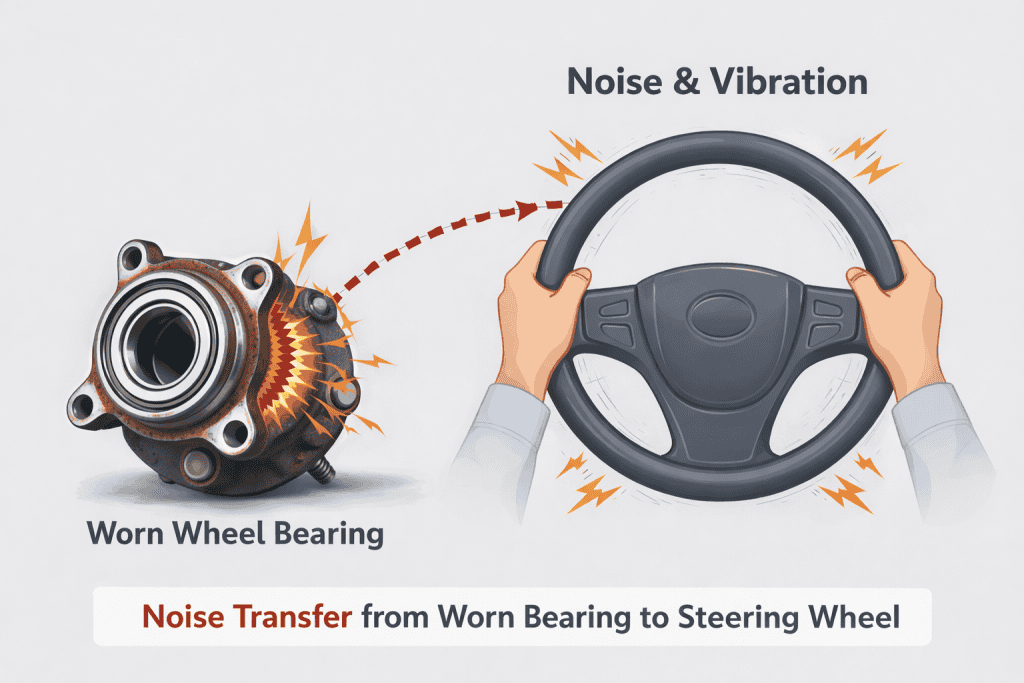
Diagram showing noise and vibration transfer from a worn wheel bearing through the
through the suspension to the steering wheel, explaining common wheel bearing symptoms.
Vibration or Rough Feeling While Driving
As the bearing wears further, you may notice vibration through the steering wheel, floor, or seat. Initially, this vibration may only appear at higher speeds. Over time, however, it can become noticeable even during normal city driving.
Additionally, the vehicle may feel less stable, especially during lane changes or gentle curves. This instability occurs because the bearing can no longer hold the wheel perfectly aligned.
Uneven or Accelerated Tire Wear
Wheel bearing wear can also affect how the tire contacts the road. As a result, you may see uneven tire wear patterns, particularly cupping or scalloping. While alignment and suspension issues can cause similar wear, a noisy wheel combined with abnormal tire wear strongly suggests a bearing problem.
Steering Pull or Handling Changes
In more advanced cases, a failing wheel bearing can cause the vehicle to pull slightly to one side. Meanwhile, steering response may feel inconsistent or less precise. Although this symptom is less common in early stages, it is a serious warning sign when it appears.
While a warning light alone does not confirm a bad bearing, it should never be ignored, especially when combined with noise or vibration.
Why Early Detection Matters
Ignoring wheel bearing symptoms can lead to rapid deterioration. Eventually, the bearing may overheat or seize, which can cause wheel lockup or separation in extreme cases. Therefore, early diagnosis is essential for safety and for preventing damage to hubs, axles, and braking components.
When to Inspect or Replace a Wheel Bearing
If you notice persistent noise, vibration, or handling changes, the wheel bearing should be inspected as soon as possible. A professional inspection typically involves lifting the vehicle, checking for wheel play, and listening for noise while the wheel is rotated.
In many vehicles, wheel bearings are sealed units. As a result, replacement is usually required once failure begins rather than repair.
This platform analyzes depreciation trends, resale value behavior, and long-term ownership costs, helping drivers understand how mileage, maintenance, and timing shape real financial outcomes.