A coolant leak is one of the most common causes of engine overheating, yet it is often overlooked until warning signs become severe. Fortunately, with a careful inspection and a basic understanding of the cooling system, most coolant leaks can be identified early—long before serious engine damage occurs.
Because modern engines rely on precise temperature control, identifying coolant leaks quickly is essential for long-term reliability, fuel efficiency, and overall engine health.
Why Coolant Leaks Matter More Than You Think
Coolant does far more than prevent freezing in cold weather. In fact, it regulates engine temperature, protects internal components from corrosion, and supports proper heater operation. Therefore, even a small leak can gradually lead to overheating, warped engine parts, or complete engine failure.
Moreover, coolant loss often occurs slowly, which means the problem can go unnoticed for weeks or even months unless you know what to look for.
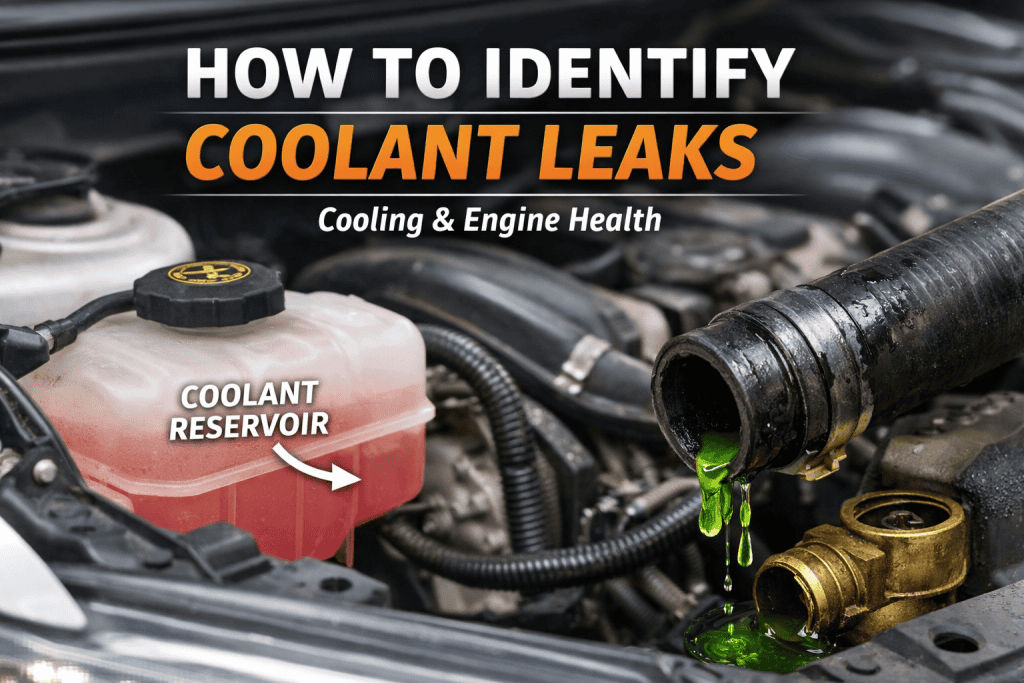
Engine bay showing a coolant reservoir and a leaking radiator hose, illustrating how to identify common coolant leaks in a vehicle.
Common Signs of a Coolant Leak
Although coolant leaks vary in severity, several warning signs appear consistently across most vehicles.
Visible Warning Signs
Puddles or stains under the front of the vehicle after parking
Residue that appears pink, green, orange, or blue depending on coolant type
Crusty buildup near hoses, fittings, or plastic tanks
Performance-Related Symptoms
Rising temperature gauge while driving or idling
Low coolant warning light or repeated need to top off coolant
Weak or inconsistent cabin heat, especially in cold conditions
Because these symptoms often worsen gradually, addressing them early can prevent costly repairs later.
Engine bay showing a coolant reservoir and a leaking radiator hose, illustrating how to identify common coolant leaks in a vehicle.
Most Common Coolant Leak Locations
While cooling system designs vary slightly by manufacturer, coolant leaks usually originate from the same core components.
1. Coolant Reservoir (Expansion Tank)
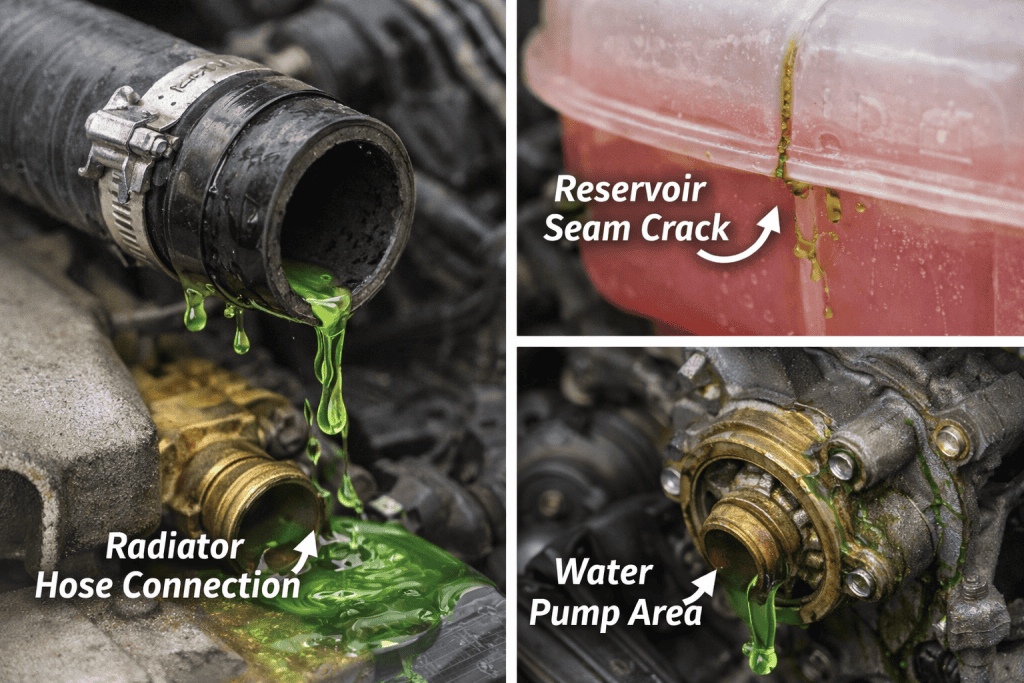
The coolant reservoir is a frequent leak source, particularly on vehicles with plastic tanks. Over time, heat cycles cause plastic to become brittle, leading to cracks near seams or hose connections.
What to check:
Hairline cracks along the tank
Damp areas beneath the reservoir
Staining around the cap or overflow hose
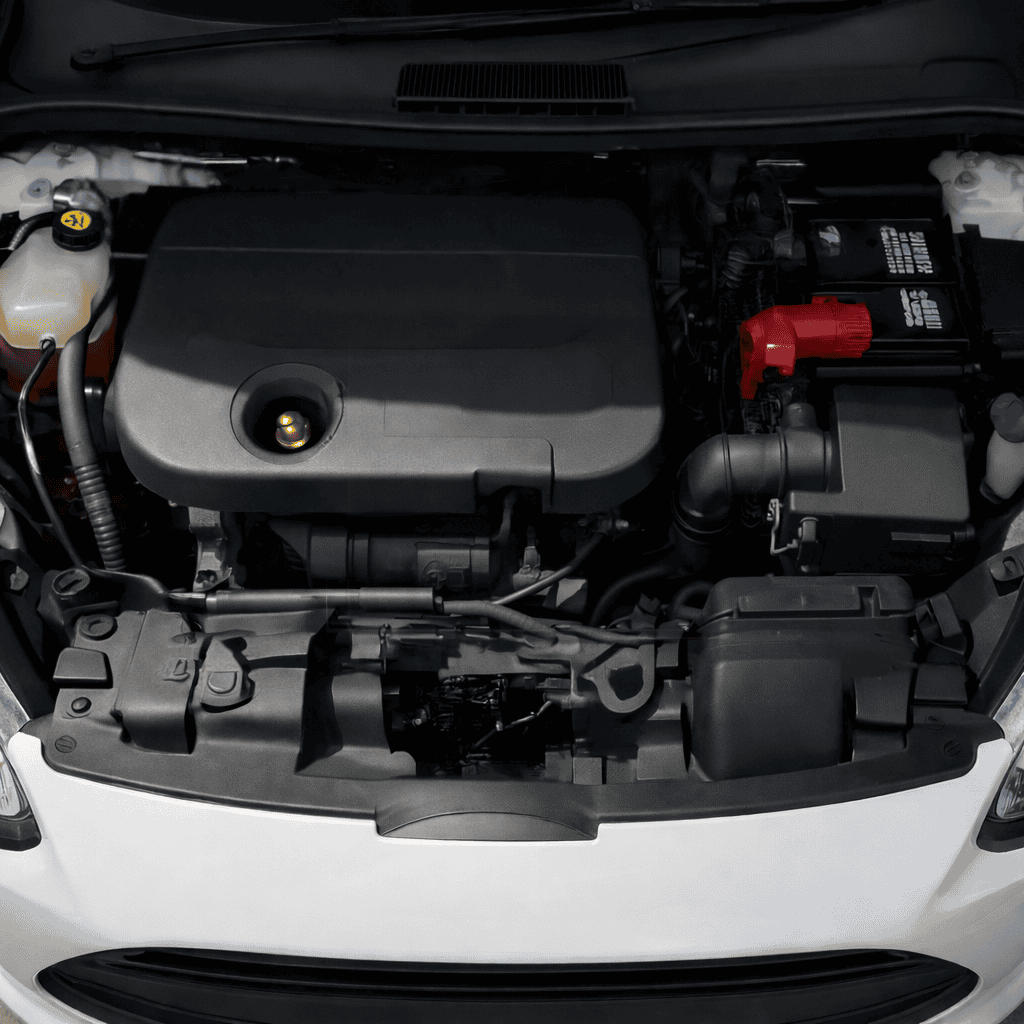
Note: On most modern vehicles, the reservoir is located toward the front corner of the engine bay, often on the passenger side (U.S./Canada).
2. Radiator and Radiator Hoses
Radiators and hoses are under constant pressure, which makes them especially vulnerable to leaks.
Common failure points include:
Hose ends near clamps
Upper radiator hose connections
Plastic radiator end tanks
Because hoses soften with age, even minor swelling or surface cracking should be treated as a warning sign.
3. Water Pump
Although less visible, the water pump is a critical component and a frequent leak source.
Signs of a failing water pump include:
Coolant dripping behind the timing cover or accessory belt area
Dried coolant residue near the pump housing
A sweet smell after driving
Since water pump leaks can worsen quickly, early detection is particularly important.
4. Heater Core and Interior Leaks
In some cases, coolant leaks occur inside the vehicle rather than under the hood.
Watch for:
Foggy windows with a sweet smell
Damp carpeting near the front footwells
Poor heater performance
Because heater core leaks affect both comfort and safety, they should never be ignored.
How to Safely Inspect for Coolant Leaks
Before inspecting the cooling system, always allow the engine to cool completely. Opening the cooling system while hot can cause serious injury.
Step-by-Step Inspection
Park on a level surface and let the engine cool fully
Check the coolant level in the reservoir
Inspect hoses, radiator seams, and visible fittings
Look underneath the vehicle for fresh stains
Recheck after a short drive if no leaks are immediately visible
If necessary, a cooling system pressure test can reveal slow leaks that are otherwise difficult to detect.
When a Coolant Leak Requires Immediate Attention
While minor seepage may allow limited driving, certain conditions require immediate repair.
Seek professional service if:
The temperature gauge rises rapidly
Coolant loss is severe or sudden
Steam is visible from the engine bay
The vehicle overheats repeatedly
Driving with an active coolant leak significantly increases the risk of engine damage.
Preventing Future Coolant Leaks
Although not all leaks are avoidable, routine maintenance dramatically reduces risk.
Preventive steps include:
Replacing coolant at manufacturer-recommended intervals
Inspecting hoses annually
Addressing small leaks before they worsen
Avoiding incompatible coolant types
By maintaining the cooling system proactively, most major failures can be avoided.
Identifying coolant leaks early is one of the simplest ways to protect engine health. More importantly, understanding where leaks occur—and why—allows vehicle owners to make informed decisions before problems escalate.
This platform analyzes depreciation trends, resale value behavior, and long-term ownership costs, helping drivers understand how mileage, maintenance, and timing shape real financial outcomes.