A dirty throttle body can quietly disrupt engine airflow, leading to rough idling, hesitation, or sluggish throttle response. Fortunately, cleaning the throttle body is a simple, non-invasive maintenance task that can restore smooth operation without removing major components. Moreover, when performed correctly, it supports better drivability and more consistent engine behavior.
This guide explains how to clean a throttle body safely, what symptoms to watch for, and when cleaning is appropriate versus when further diagnosis is required.
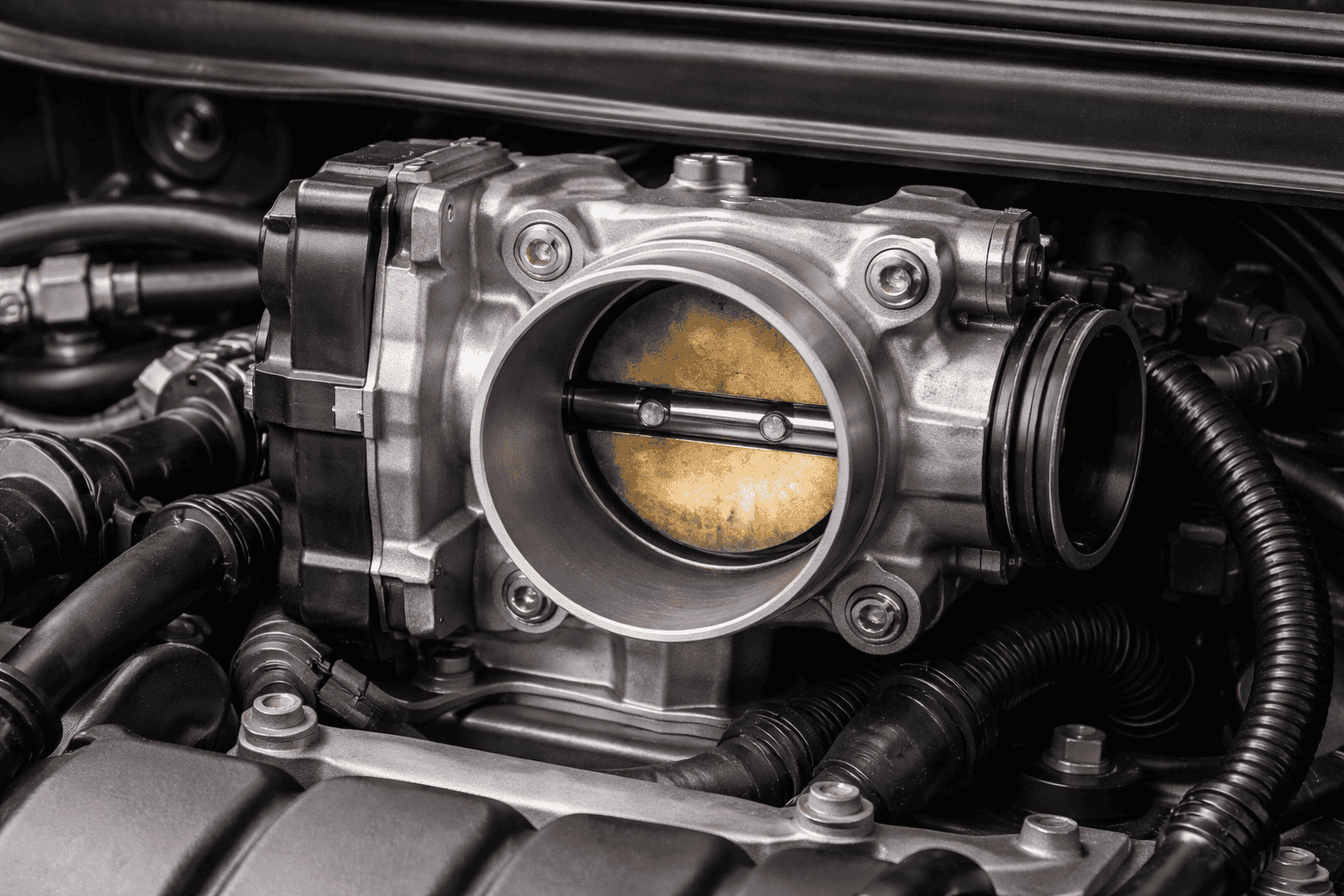
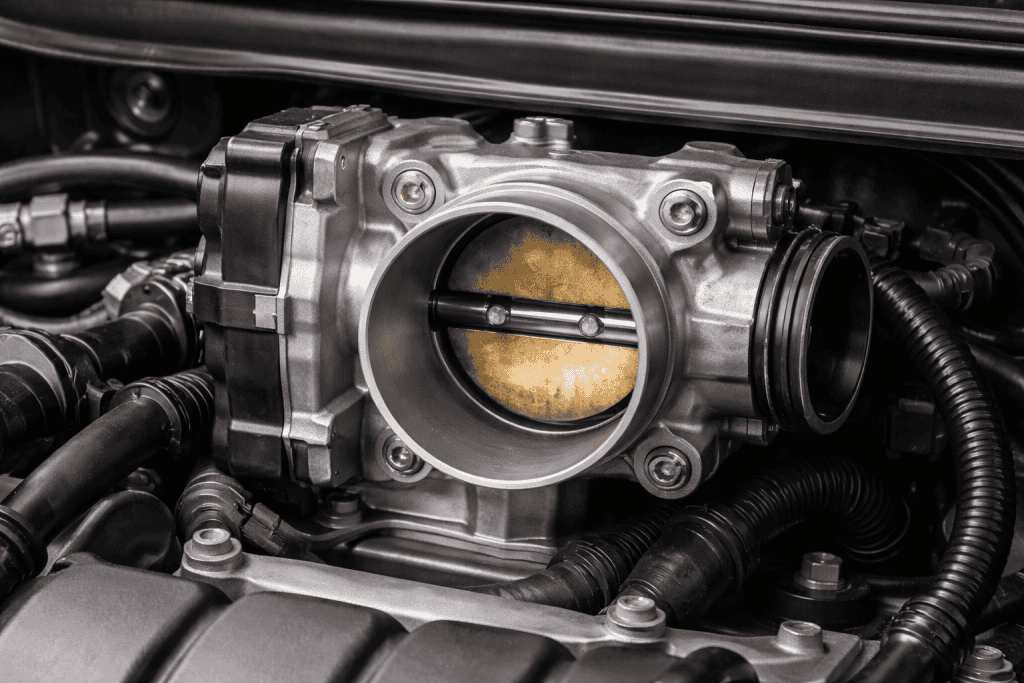
Close-up view of an exposed throttle body with the intake hose removed,
showing the throttle plate and bore inside a clean engine bay
What a Throttle Body Does
The throttle body regulates how much air enters the engine based on accelerator input. As air passes through, however, carbon deposits and oil vapors gradually build up around the throttle plate. Consequently, airflow becomes restricted, especially at idle.
Because modern engines rely on precise air-fuel control, even minor buildup can affect engine smoothness over time.
How a Dirty Throttle Body Affects Engine Performance
A dirty throttle body disrupts engine airflow in subtle but impactful ways. As carbon accumulates around the throttle plate, airflow becomes inconsistent, especially at idle and low throttle openings. As a result, the engine control module struggles to maintain stable idle speed and smooth acceleration.
Over time, this restriction can lead to poor throttle response, increased fuel consumption, and drivability complaints that feel intermittent. Therefore, throttle body cleaning is often recommended as an early maintenance step before more complex diagnostics are performed.
Common Signs a Throttle Body Needs Cleaning
Before cleaning, it helps to confirm whether buildup is likely causing the issue. Typical symptoms include:
Rough or unstable idle, especially when stopped
Hesitation during light acceleration
Engine stalling shortly after startup
Reduced throttle responsiveness
Inconsistent idle speed with no warning lights
Although these symptoms can overlap with other issues, throttle body contamination is often a common and overlooked cause.
Throttle Body Cleaning vs Sensor or Vacuum Problems
While throttle body contamination is common, similar symptoms can also result from airflow sensor issues or vacuum leaks. For example, a contaminated mass air flow sensor may cause hesitation under load, while a vacuum leak often produces a high or fluctuating idle.
However, throttle body buildup typically affects low-speed drivability first. Therefore, cleaning the throttle body is a logical starting point before moving on to deeper airflow or fuel system diagnostics. This approach helps isolate simple maintenance issues from more complex failures.
How Often Should a Throttle Body Be Cleaned?
There is no universal service interval for throttle body cleaning. However, many vehicles benefit from inspection every 30,000 to 50,000 miles, particularly those driven in stop-and-go traffic or short-trip conditions.
Additionally, engines with direct injection tend to accumulate deposits more quickly due to increased oil vapor circulation. As a result, throttle body cleaning is commonly included as part of preventive engine airflow maintenance.
Tools and Supplies Needed
Fortunately, this task requires only basic supplies:
Throttle body cleaner (sensor-safe, non-chlorinated)
Clean lint-free cloths or shop towels
Soft nylon brush (optional)
Screwdriver or nut driver (for intake hose clamp)
Gloves and eye protection
Importantly, do not use carburetor cleaner unless explicitly labeled safe for throttle bodies, as it can damage coatings and sensors.
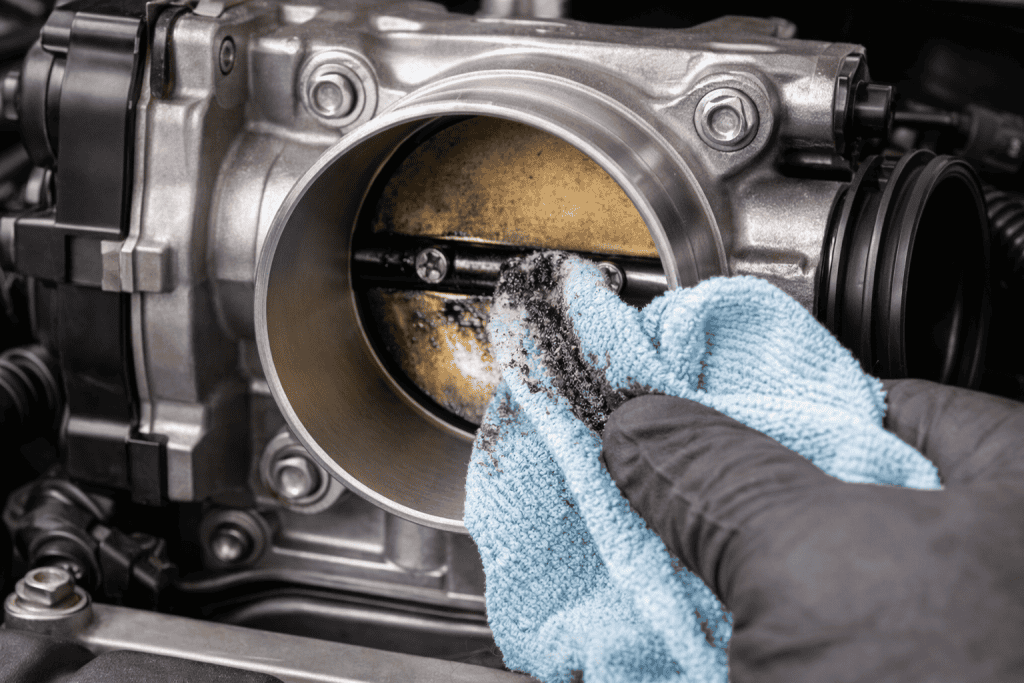
Close-up of a gloved hand using a cloth to wipe carbon buildup from the throttle plate inside an exposed throttle body.
Step-by-Step: How to Clean a Throttle Body
1. Access the Throttle Body
First, turn the engine off and allow it to cool. Then, remove the intake hose connected to the throttle body. Once removed, the throttle plate will be visible.
Spray throttle body cleaner onto a clean cloth—not directly into the intake. Then, gently wipe the throttle plate and inner bore. If needed, carefully open the throttle plate by hand to reach the backside.
4. Remove Stubborn Deposits
If buildup persists, use a soft nylon brush lightly. However, avoid excessive force, as the throttle plate and coatings are sensitive.
5. Reassemble and Restart
After cleaning, reinstall the intake hose securely. Once the engine is started, the idle may fluctuate briefly while the system relearns airflow values. This is normal.
What to Expect After Cleaning
In most cases, drivers notice:
Smoother idle
Improved throttle response
Reduced hesitation
More consistent low-speed driving
However, if symptoms persist, further inspection of sensors or vacuum lines may be necessary.
When Throttle Body Cleaning Is Not Enough
If cleaning does not resolve idle or hesitation issues, additional diagnosis may be required. Persistent symptoms can indicate problems with the electronic throttle actuator, idle control strategy, or related sensors.
In some cases, stored fault codes or a check engine light may appear after cleaning, especially if airflow relearn procedures are required. Therefore, unresolved symptoms should be evaluated further rather than repeatedly cleaning the throttle body.
Important Precautions
Do not remove the throttle body unless required
Avoid soaking electrical components
Never scrape metal surfaces
Allow cleaner to evaporate fully before restarting
Cleaning a throttle body is a low-risk, high-value maintenance task that improves engine smoothness and responsiveness. When done carefully, it restores airflow accuracy without invasive repairs, making it an excellent first step in resolving idle and hesitation issues.
This platform analyzes depreciation trends, resale value behavior, and long-term ownership costs, helping drivers understand how mileage, maintenance, and timing shape real financial outcomes.