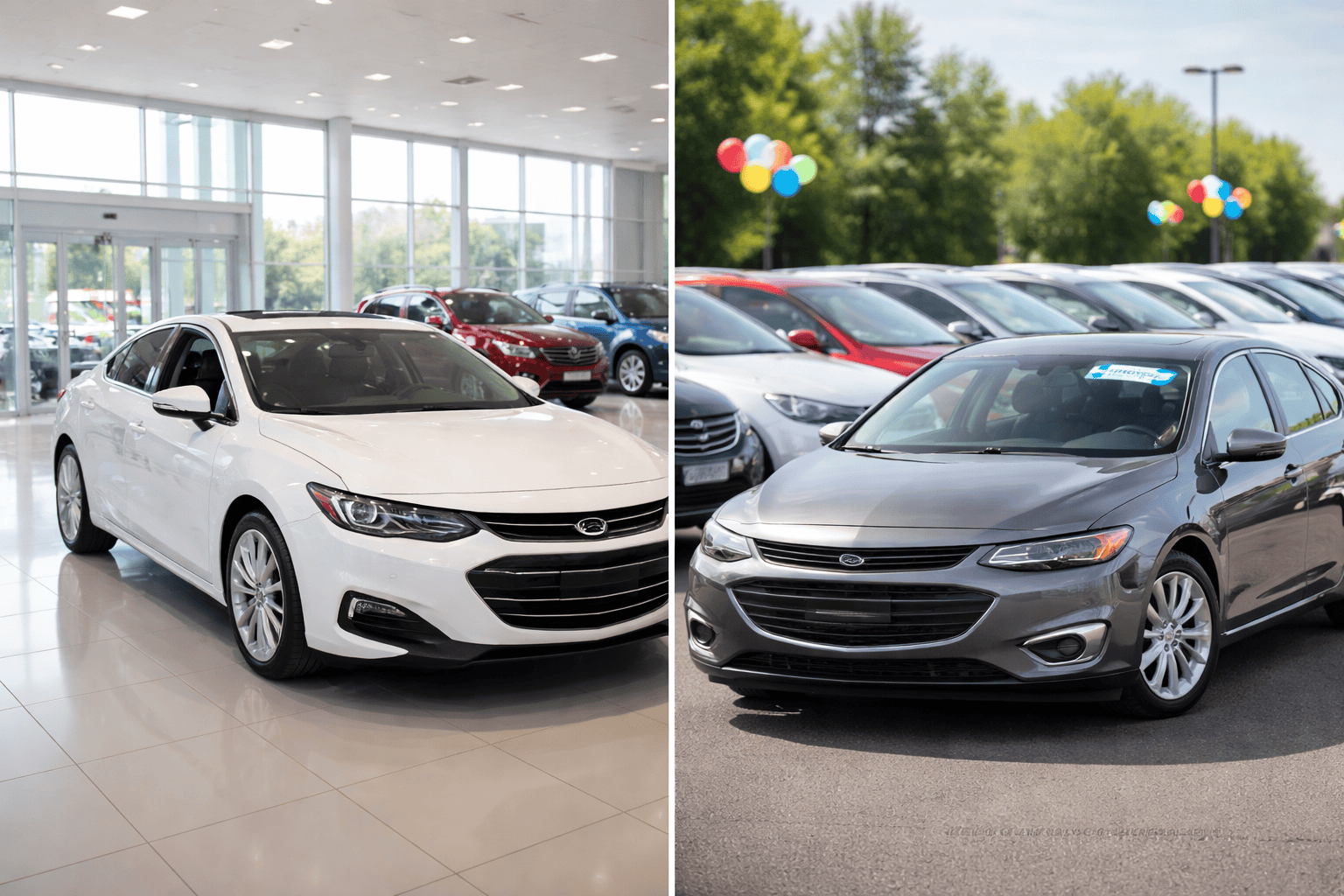
Deciding whether to buy a new or used car is one of the most important financial choices vehicle owners make. While new vehicles offer the latest technology and warranty protection, used vehicles often provide dramatically lower purchase prices and slower depreciation. Therefore, understanding how ownership costs, reliability risks, and long-term value differ between the two options helps buyers avoid expensive mistakes and choose a vehicle that fits their real-world needs.
Because vehicle ownership includes purchase price, depreciation, insurance, maintenance, and repair risks, the smarter choice is rarely about sticker price alone. Instead, it depends on how long you plan to keep the vehicle, how predictable you need expenses to be, and how much financial risk you can comfortably manage.
How New Car Ownership Works Financially
Buying a new vehicle means paying the highest upfront price. However, it also delivers the strongest early ownership protection. Most new vehicles include:
- factory bumper-to-bumper warranty (typically 3–5 years)
- powertrain coverage often extending to 5–10 years
- minimal immediate repair risk
- the newest safety technology and driver assistance systems
Because of this coverage, new-car owners typically face very low unexpected repair costs during the first several years of ownership. For buyers prioritizing predictable expenses, this protection can be extremely valuable. However, depreciation begins immediately. Industry data shows that many new vehicles lose 20–30% of their value in the first year alone, and roughly 50–60% within five years. This means the largest ownership cost for new vehicles is often depreciation rather than maintenance. If you want to understand this loss in detail, the depreciation factors discussed in the vehicle resale value guide help explain why some models lose value much faster than others.
How Used Car Ownership Changes the Cost Structure
Used vehicles shift the financial balance. Instead of paying the highest purchase price, buyers avoid the steepest depreciation period. For example:
- a 3-year-old vehicle may cost 25–40% less than new
- insurance premiums are often lower
- registration and taxes may be reduced depending on location
Because the previous owner already absorbed the initial depreciation, used buyers often obtain far more vehicle for the same budget. However, repair risk increases as vehicles age. Components such as suspension parts, cooling systems, and electronics are more likely to require replacement after 60,000–100,000 miles. Understanding maintenance timelines from a scheduled vehicle maintenance guide can help buyers estimate when these costs typically begin appearing.
How Reliability Risk Changes With Vehicle Age
Reliability is one of the biggest decision factors.
New vehicles
- lowest immediate failure probability
- covered by warranty
- fewer worn mechanical components
Used vehicles
- higher chance of repairs
- possible hidden wear or accident history
- may require inspection before purchase
Because modern vehicles contain complex electronic modules, a single failure can cost:
- infotainment replacement: $900–$2,000
- transmission repairs: $3,500–$6,500
- hybrid battery replacement: $4,000–$8,000+
Therefore, buyers considering used vehicles should always evaluate whether warranty protection or an inspection is necessary. Learning how coverage works in an extended warranty cost guide can help determine if additional protection makes financial sense.
Warning Signs a Used Car May Become Expensive
Before buying used, watch for indicators of elevated repair risk:
- incomplete maintenance records
- visible fluid leaks or engine noise
- uneven tire wear suggesting suspension problems
- dashboard warning lights
- mismatched paint indicating past collision damage
Ignoring these warning signs can lead to immediate post-purchase repair bills that erase the savings from buying used. A professional pre-purchase inspection is strongly recommended for vehicles outside factory warranty coverage.
How Insurance and Financing Differ
Insurance companies calculate premiums based on replacement value and repair cost. Because new vehicles cost more to replace:
- insurance premiums are typically higher
- financing payments may be larger
- loan interest totals increase with price
Used vehicles often benefit from:
- lower insurance rates
- smaller loan amounts
- shorter financing periods
However, very old vehicles may lack modern safety systems, which sometimes increases certain insurance risk factors.
How Long You Plan to Keep the Vehicle Matters
Ownership duration dramatically affects which choice is smarter.
Short ownership (3–4 years)
New vehicles often make sense because:
- warranty coverage protects repairs
- resale value remains strong
- maintenance costs remain minimal
Long ownership (6–10+ years)
Used vehicles often become more economical because:
- purchase price savings outweigh repair costs
- depreciation slows significantly after year three
- insurance savings accumulate
Buyers planning long-term ownership should budget for predictable service intervals using a vehicle ownership cost planning approach rather than focusing only on purchase price.
Consequences of Choosing the Wrong Option
Selecting the wrong ownership strategy can create long-term financial strain. Buying new without considering depreciation may lead to:
- rapid loan balance exceeding vehicle value
- large resale losses during early trade-in
- Buying used without evaluating reliability may lead to:
- repeated repair expenses
- safety concerns from neglected maintenance
- unexpected downtime affecting daily transportation
Because transportation reliability directly impacts work schedules, commuting, and emergency mobility, the wrong decision affects far more than finances alone.
How to Decide Based on Your Situation
A new car is often the better choice if:
- you need maximum reliability immediately
- you want predictable monthly ownership costs
- you prefer the newest safety and driver-assistance technology
- you plan to keep the vehicle through most of its warranty period
A used car is often smarter if:
- you want the lowest purchase price
- you plan long-term ownership
- you are comfortable budgeting for maintenance
- you can verify strong service history
For many buyers, the optimal compromise is a 2–4-year-old certified vehicle, which balances lower depreciation with remaining warranty protection.