Transmission fluid plays a critical role in lubrication, cooling, and smooth gear operation. When fluid levels drop or fluid condition deteriorates, shifting quality can suffer and long-term drivetrain damage may follow. Therefore, knowing how to check transmission fluid correctly is an essential maintenance skill for vehicle owners.
This guide explains how to check transmission fluid for both automatic and manual transmissions, what to look for during inspection, and when further service may be required.
Why Transmission Fluid Condition Matters
Transmission fluid reduces friction between internal components while also carrying heat away from moving parts. Over time, however, fluid can degrade due to heat, contamination, or normal wear.
As a result, low or dirty fluid may lead to:
Harsh or delayed shifting
Gear slipping
Transmission overheating
Increased internal wear
Because these issues often develop gradually, regular inspection helps catch problems early.
Automatic vs Manual Transmission Fluid Checks
Although both transmission types rely on fluid, the inspection process differs.
Automatic transmissions typically allow fluid level checks using a dipstick or electronic procedure. Manual transmissions, on the other hand, usually require checking fluid at a fill or inspection plug.
Understanding which system your vehicle uses is important before proceeding.
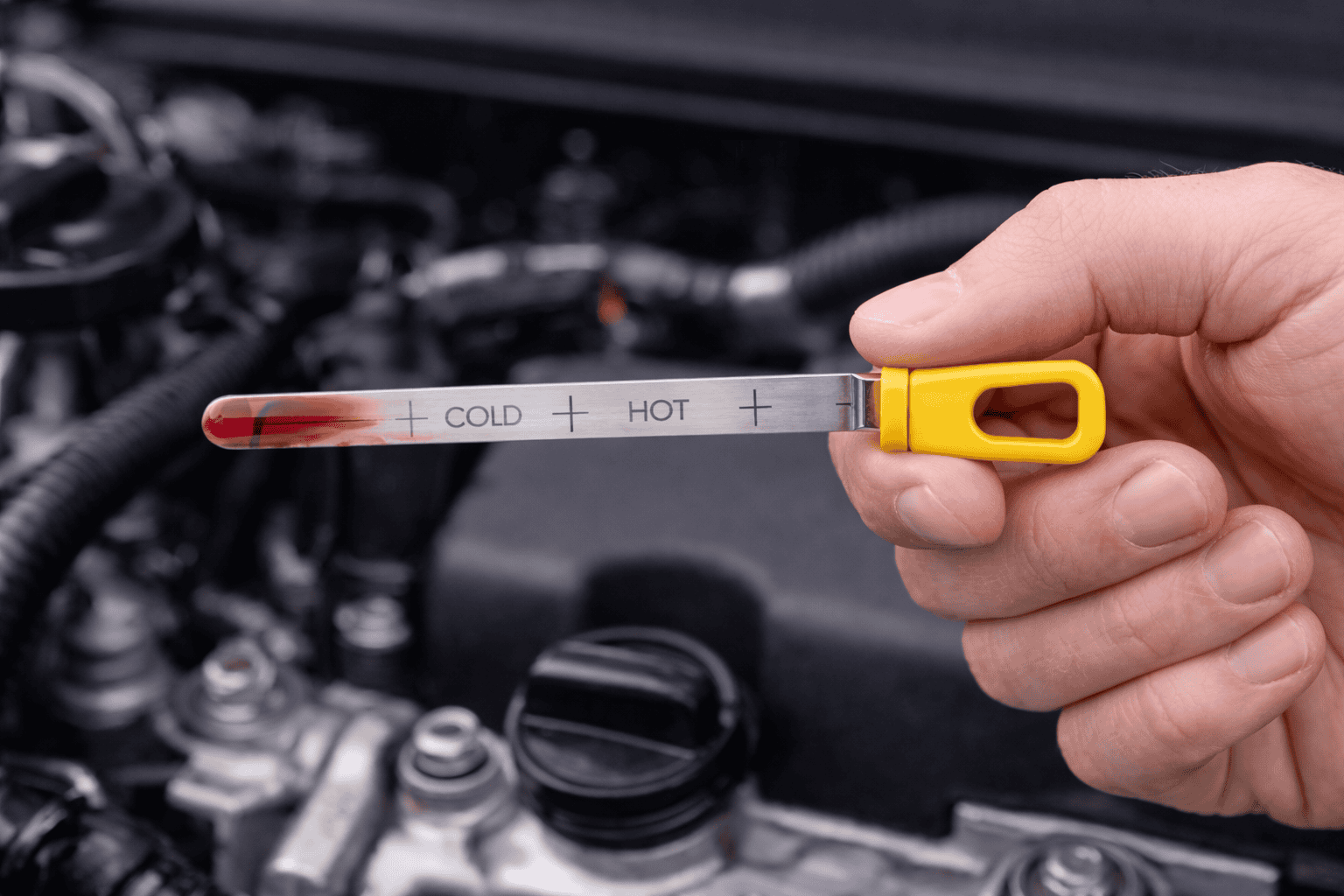
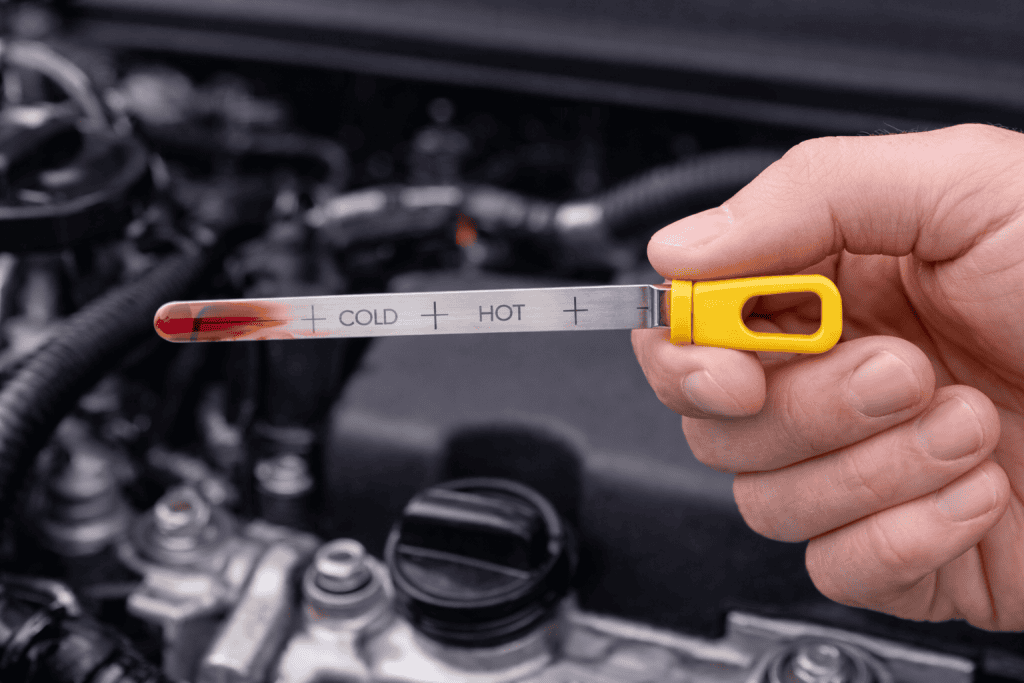
Automatic transmission dipstick
Held by yellow handle with fluid level visible
How to Check Automatic Transmission Fluid
In many vehicles, automatic transmission fluid is checked as follows:
Warm the vehicle by driving briefly, then park on level ground.
Set the parking brake and leave the engine running (unless otherwise specified).
Locate the transmission dipstick, often marked and separate from the engine oil dipstick.
Remove, wipe, reinsert, and recheck the dipstick to read fluid level.
Observe fluid condition, noting color and smell.
Healthy automatic transmission fluid is typically red or light amber and should not smell burnt.
Some newer vehicles no longer have a dipstick and instead require a scan tool or specific temperature range. Always follow manufacturer guidance.
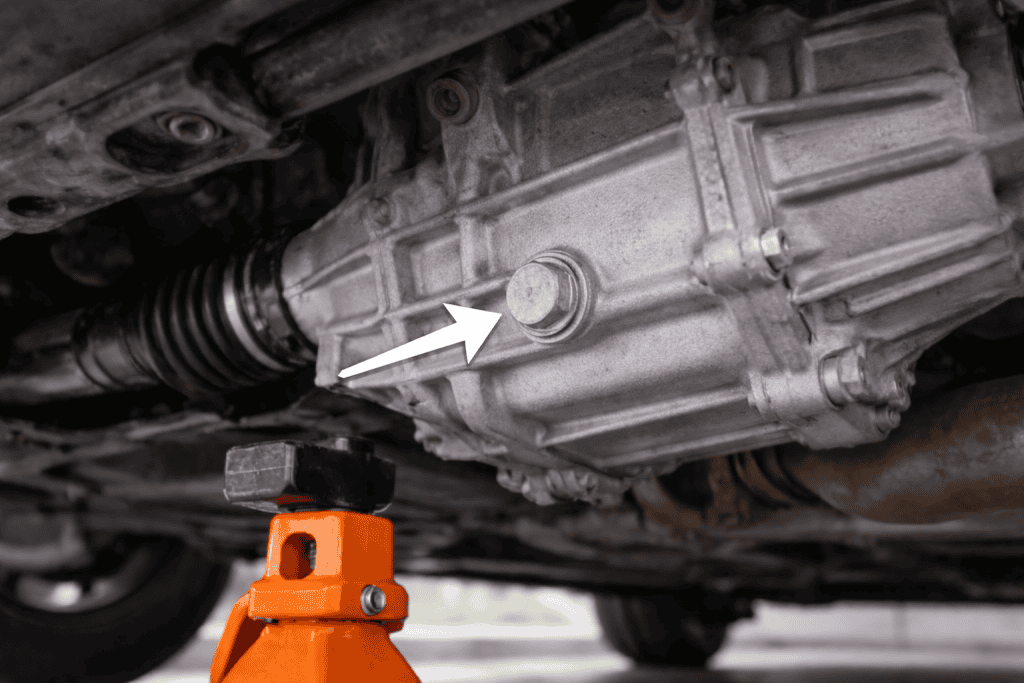
Manual transmission fill plug highlighted with an arrow on the transmission case, viewed from underneath a safely supported vehicle.
How to Check Manual Transmission Fluid
Manual transmissions are usually checked differently:
Park on level ground and allow the vehicle to cool.
Locate the fill or inspection plug on the side of the transmission case.
Remove the plug carefully using the correct tool.
Check fluid level, which should be near the bottom edge of the fill hole.
If fluid is low, topping up may be necessary before reinstalling the plug securely.
Signs Transmission Fluid May Be Low or Degraded
Even without checking fluid directly, warning signs may appear, such as:
Difficulty shifting gears
Grinding or hesitation (manual)
Slipping or delayed engagement (automatic)
Unusual drivetrain noises
Transmission warning lights
If these symptoms persist, inspection should not be delayed.
Important Precautions to Keep in Mind
Always use the correct fluid type specified by the manufacturer
Avoid overfilling, which can cause pressure issues
Never mix fluid types
Clean around fill points before opening to prevent contamination
Additionally, if fluid appears dark, burnt, or contaminated, professional evaluation may be required.
When to Seek Professional Service
If fluid levels are consistently low, leaks may be present. Likewise, abnormal fluid color or odor may indicate internal wear. In those cases, further diagnosis is recommended to prevent transmission failure.
Checking transmission fluid is a routine maintenance step that supports smooth shifting and long-term drivetrain reliability. By understanding the differences between automatic and manual systems, drivers can identify early warning signs and take timely action before costly repairs develop.
[…] quality fluids and parts Stick with synthetic oil, proper CVT fluid, and reputable filters. Cheap fluids can shorten engine or transmission life and erase the Civic’s reliability […]
[…] most is engineering simplicity. Vehicles with smaller naturally aspirated engines and traditional automatic transmissions often deliver stronger hatchback reliability than heavily turbocharged […]
[…] high-speed operation raises engine temperature, transmission fluid heat, and cooling system workload. Although highway driving itself is not harmful, continuous […]
[…] variants deliver hot-sedan thrills, with 228 horsepower and a firmer suspension. Available with a manual or dual-clutch transmission, the GLI is a sleeper sport sedan in this […]
[…] aggressive driving accelerates fluid breakdown, which is why understanding Transmission Fluid: How to Check and When to Change is critical. Degraded or low fluid reduces lubrication and cooling, increasing the risk of […]
[…] Read more How Proper Engine Airflow Improves Performance and Efficiency Read more How to Check Transmission Fluid (Automatic & Manual Overview) Read more How to […]
This platform analyzes depreciation trends, resale value behavior, and long-term ownership costs, helping drivers understand how mileage, maintenance, and timing shape real financial outcomes.