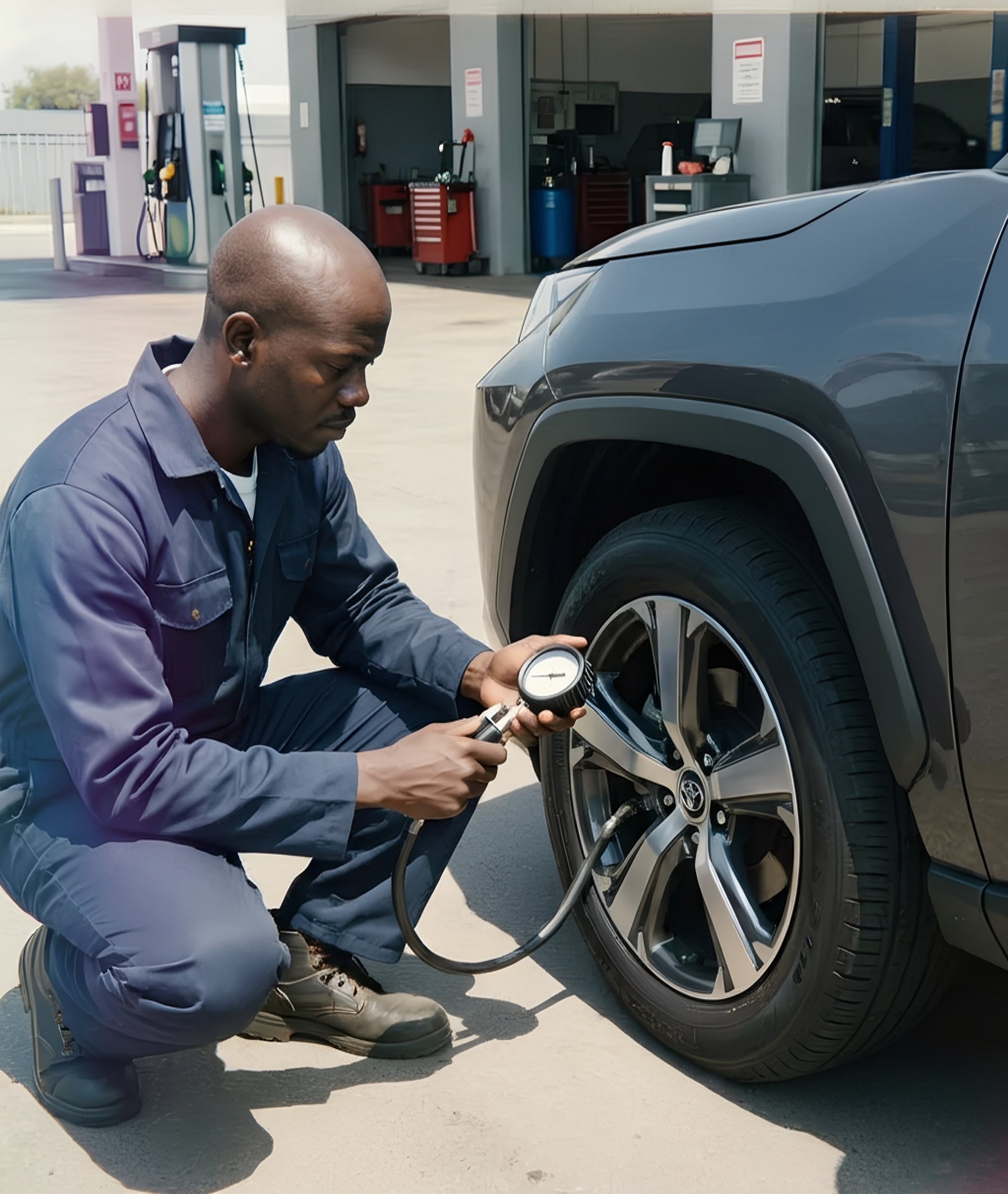
Checking your tire pressure and tread depth is one of the simplest and most important maintenance tasks you can perform. Properly inflated tires with adequate tread improve safety, handling, fuel efficiency, and braking performance. This guide walks you through the process step by step, even if you’ve never checked your tires before.
What Tire Pressure and Tread Depth Do (and Why They Matter)
Your tires are the only point of contact between your vehicle and the road. Keeping them in proper condition directly affects how your vehicle performs.
✓ Proper tire pressure helps maintain even tire wear and stable handling
✓ Correct inflation improves fuel efficiency and braking response
✓ Adequate tread depth provides traction in wet, snowy, or slippery conditions
✓ Worn or underinflated tires increase the risk of blowouts and hydroplaning
Neglecting either pressure or tread depth can compromise safety and shorten tire life.
What You’ll Need Before You Start
Before beginning, gather the following items:
✓ A tire pressure gauge (digital or manual)
✓ A tread depth gauge or a simple visual reference
✓ Access to an air pump (home compressor or gas station)
✓ Your vehicle’s recommended tire pressure (found on the driver-side door jamb or owner’s manual)
These tools are inexpensive and easy to store in your vehicle.
Step 1: Park the Vehicle and Let the Tires Cool
Park on a flat, level surface and turn the engine off. For the most accurate readings, tires should be checked when they are cold, ideally before driving or after sitting for at least 30 minutes.
Beginner workflow tip: Tire pressure increases as you drive, so checking cold tires prevents false high readings.
Step 2: Locate the Recommended Tire Pressure
Open the driver-side door and look for a sticker on the door frame or pillar. This label lists the correct pressure for the front and rear tires.
Do not rely on the number printed on the tire itself, as that indicates the tire’s maximum rating, not the vehicle recommendation.
Step 3: Check Tire Pressure
Remove the valve cap from the tire. Press the tire pressure gauge firmly onto the valve stem until the reading stabilizes.
Compare the reading to the recommended pressure listed on your vehicle.
✓ If the pressure is low, add air gradually
✓ If the pressure is too high, release air slowly
✓ Recheck after each adjustment to avoid overfilling
Repeat this process for all four tires.
Step 4: Inspect Tire Tread Depth
Look closely at the grooves in the tire tread. Use a tread depth gauge or a simple visual inspection.
You are checking for:
✓ Shallow or uneven tread
✓ Smooth or bald spots
✓ Cracks, cuts, or embedded debris
If the tread looks worn or shallow, traction may already be compromised.
Step 5: Measure Tread Depth
Insert the tread depth gauge into the main tread grooves and read the measurement.
Most tires should have at least 2/32 of an inch of tread remaining, but deeper tread is recommended for wet or winter conditions.
Beginner workflow tip: If the tread looks shallow across the entire tire, it’s best to plan for replacement soon rather than waiting.
Step 6: Repeat for All Tires
Check both pressure and tread depth on all four tires, including the rear ones. Tires can wear differently depending on vehicle type, alignment, and driving habits.
If your vehicle has a spare tire, it’s a good idea to check its pressure as well.
How Often Should Tire Pressure and Tread Depth Be Checked?
Most drivers should check tire pressure and tread depth at least once a month.
Additional checks are recommended:
✓ Before long trips
✓ When temperatures change significantly
✓ If you notice handling changes or warning lights
✓ During routine maintenance or oil changes
Regular inspections help prevent unexpected tire issues.
Final Notes for Beginners
Checking tire pressure and tread depth is a quick task that delivers big safety benefits. Taking a few minutes each month helps ensure predictable handling, proper braking, and longer tire life.
If a tire consistently loses pressure or shows uneven wear, have it inspected by a professional.
This guide is provided for general educational purposes only and does not replace manufacturer service instructions or professional advice.