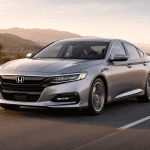
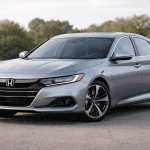
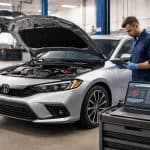
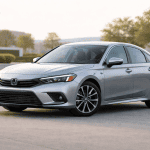
The Honda Accord has earned a long-standing reputation for dependable performance, low repair frequency, and long service life. Many owners routinely reach 200,000–300,000 miles with proper maintenance, and models from 2013–2022 consistently score above average in long‑term reliability studies. The Accord’s strong track record comes from proven engines, durable transmissions, and affordable parts that keep ownership costs predictable.
Across multiple generations, the Accord remains one of the most trusted midsize sedans for drivers who want longevity, low annual expenses, and minimal unexpected repairs.
How Reliable Is the Honda Accord Long Term?
The Accord performs well over extended ownership, with many vehicles lasting 15–20 years. Repair frequency remains lower than most competitors, and annual maintenance typically ranges from $350–$550 depending on mileage and driving habits.
High‑mileage wear but still drivable with proper care
The Accord’s reliability curve stays stable longer than most midsize sedans, especially when compared to models with higher transmission or electrical failure rates.
Why Some Honda Accord Years Perform Better
Certain generations stand out because of stronger engines, fewer design flaws, and improved transmission durability. For example:
2013–2017 (9th gen): Excellent engine reliability and minimal drivetrain issues.
2018–2022 (10th gen): Strong hybrid dependability and refined powertrains.
2006–2007: Known for long‑lasting 2.4L engines and durable automatic transmissions.
Years with more reported issues include:
2003–2004: Automatic transmission failures.
2008–2012: V6 VCM‑related oil consumption.
2018–2020: Early 1.5T oil dilution in cold climates.
These differences explain why some model years hold value better and cost less to maintain over time.
Which Honda Accord Engines Are Most Reliable?
The Accord has used several engines, each with its own reliability profile.
2.4L Inline‑4 (K24)
Used from 2003–2017
Known to exceed 300,000 miles
Low oil consumption
Simple, durable design
3.5L V6 (J35)
Strong performance
Timing belt replacement every 7 years or 100,000 miles
Some VCM‑related issues in certain years
1.5L Turbo (2018+)
Efficient and smooth
Early oil dilution concerns improved after 2020 updates
2.0L Turbo (2018+)
Derived from the Civic Type R engine
Strong reliability with proper maintenance
Higher maintenance cost than the 1.5T
Hybrid Powertrains
Electric motors with excellent durability
Battery packs often last 10–15 years
Reduced brake wear due to regenerative braking
What Common Problems Affect Accord Reliability?
Even reliable vehicles have recurring issues. The most reported Accord concerns include:
1.5L Turbo Oil Dilution (2018–2020)
Fuel mixing with oil in cold climates
Improved with software updates and warmer driving cycles
V6 VCM Issues (2008–2012)
Rough idle
Excessive oil consumption
Many owners disable VCM to prevent long‑term wear
Transmission Concerns
Early 2000s automatics had failure risks
Modern CVTs and 10‑speed automatics show better durability
Suspension Wear
Control arm bushings and struts often need replacement around 120,000–150,000 miles
Electronics
Door lock actuators, infotainment screens, and sensors may fail on older models
Honda Accord Maintenance Costs
The Accord remains one of the most affordable midsize sedans to maintain. Typical costs include:
Service Category
Average Cost
Oil & fluid services
$80–$200 per year
Brakes
$300–$600 every 40,000–60,000 miles
Tires
$450–$900 every 40,000 miles
Battery
$120–$200 every 4–6 years
Major repairs (rare)
$600–$1,500 depending on component
Total annual maintenance usually falls between $350–$550, which is lower than many competitors.
How Long Does a Honda Accord Usually Last?
With consistent care, many Accords reach:
200,000 miles with routine maintenance
250,000 miles with moderate repairs
300,000 miles for well‑maintained 2.4L models
Longevity depends on:
Oil change intervals
Driving habits
Climate
Use of quality parts
Following Honda’s maintenance schedule
Owners who stay on top of service intervals typically see the longest lifespan.
What To Do To Keep an Accord Reliable
Follow a Strict Maintenance Schedule
Oil changes every 5,000–7,500 miles
Transmission fluid every 30,000–60,000 miles
Brake fluid every 3 years
Coolant every 5 years
Use Honda‑Specific Fluids
Reduces wear and prevents premature component failure.
Address Small Issues Early
Fixing minor leaks, noises, or warning lights prevents expensive repairs later.
Drive Smoothly
Turbo models especially benefit from gentle acceleration and proper warm‑up.
Inspect Suspension Regularly
Worn bushings and mounts affect ride quality and long‑term durability.
Which Honda Accord Years Are Most Reliable?
Based on owner reports and long‑term data, the strongest years include:
2013–2017 — Best overall reliability
2018–2022 — Excellent hybrid reliability
2006–2007 — Strong engines and transmissions
Years with more issues:
2003–2004 — Transmission failures
2008–2012 — VCM‑related oil consumption
2018–2020 — Early 1.5T oil dilution
Honda Accord Reliability vs Competitors
Model
Reliability Rating
Notes
Honda Accord
High
Long lifespan, low repair frequency
Toyota Camry
Very High
Slightly better long‑term engine durability
Nissan Altima
Below Average
CVT issues common
Hyundai Sonata
Average
Improved after 2016
Mazda6
Above Average
Strong engines, fewer sales
The Accord consistently ranks near the top of the midsize sedan segment.
FAQ
Yes. It consistently ranks among the most dependable midsize sedans and often lasts 200,000–300,000 miles.
The 2.4L K24 engine is widely considered the most durable.
Older models (early 2000s) had problems, but modern transmissions are far more reliable.
Yes. Honda’s hybrid system is known for long battery life and low maintenance.
Models with VCM issues (2008–2012) and early 1.5T oil dilution concerns (2018–2020).
Annual maintenance typically ranges from $350–$550, making it one of the most affordable cars in its class.
This platform analyzes depreciation trends, resale value behavior, and long-term ownership costs, helping drivers understand how mileage, maintenance, and timing shape real financial outcomes.