Buying a vehicle often includes the option to purchase an extended warranty. While some drivers view these plans as unnecessary add-ons, others rely on them to control repair costs and protect long-term ownership budgets. Understanding how extended warranties actually work helps you decide whether the coverage fits your risk tolerance, driving habits, and vehicle reliability expectations.
Because modern vehicles contain complex electronics, advanced safety systems, and expensive drivetrain components, repair costs can escalate quickly. For example, transmission replacements frequently exceed $3,500–$6,500, advanced infotainment modules may cost $1,000+, and certain hybrid battery systems can exceed $4,000–$8,000. Therefore, the right warranty can sometimes prevent a major financial shock — but only when the coverage aligns with realistic ownership risks.
What an Extended Warranty Actually Is
An extended warranty is technically a vehicle service contract. Unlike the factory warranty that comes with a new vehicle, this optional plan begins after the manufacturer’s original coverage expires or overlaps to extend total protection time. Typically, these contracts cover:
Engine internal components
Transmission and drivetrain parts
Electrical systems and onboard computers
Steering and suspension components
Air conditioning systems
However, coverage varies widely. Some policies include nearly every mechanical component, while others protect only major powertrain parts.
How Extended Warranty Coverage Is Structured
Most plans are organized into three common tiers.
Powertrain Coverage
This is the lowest-cost option. It protects only the most expensive core components:
Engine block and internals
Transmission assembly
Driveshaft and differential
This tier reduces catastrophic repair risk but does not cover many electronics or comfort systems.
Mid-Level Component Coverage
These plans extend protection to:
Cooling system parts
Fuel delivery systems
Electrical components
Brake hydraulic systems
Because modern vehicles depend heavily on electronics, this level often offers the best balance between price and protection.
Comprehensive (“Exclusionary”) Coverage
This is the closest to a factory bumper-to-bumper warranty. Instead of listing what is covered, these contracts list what is NOT covered. Everything else is included. Typically excluded items include:
Brake pads and rotors
Tires
Wiper blades
Routine maintenance services
Typical Extended Warranty Costs
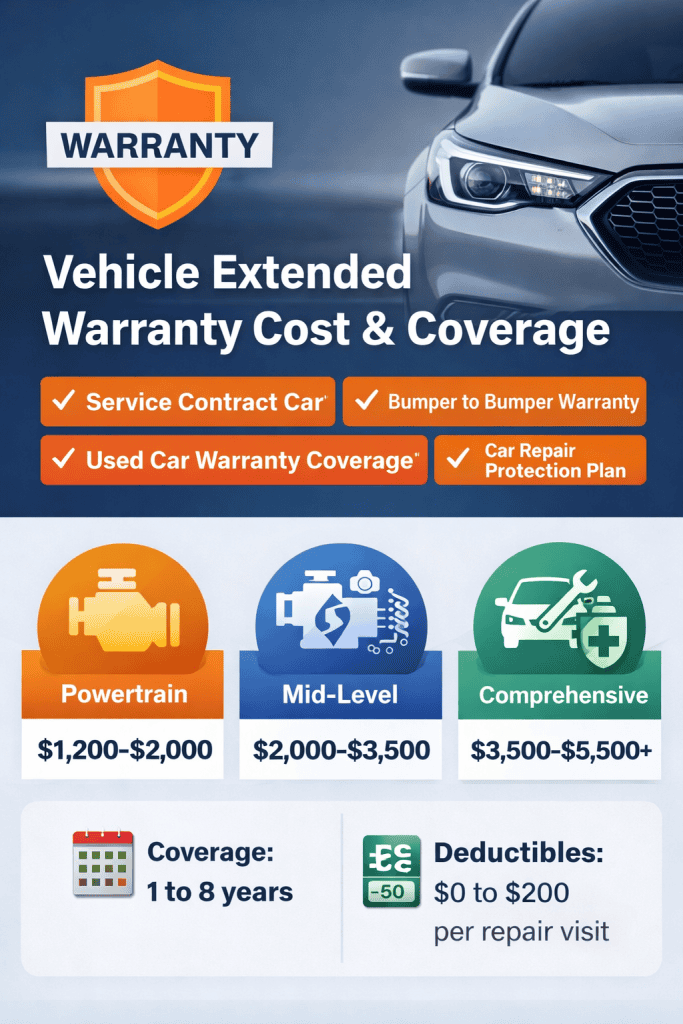
Vehicle extended warranty coverage levels and typical cost ranges for powertrain, mid-level, and comprehensive plans
Pricing depends on vehicle age, mileage, reliability history, and coverage length.
Industry averages show:
Basic plans: $1,200–$2,000 total
Mid-level plans: $2,000–$3,500 total
Comprehensive plans: $3,500–$5,500+ total
Deductibles usually range between $0 and $200 per repair visit. Longer coverage periods or high-risk vehicles increase premiums significantly.
When an Extended Warranty Makes Financial Sense
Extended warranties are most useful in specific ownership situations.
High-Tech Vehicles
Modern vehicles equipped with:
advanced driver assistance systems
digital dashboards
adaptive suspensions
hybrid drivetrains
tend to have higher long-term repair costs. Consequently, extended protection may offset these risks.
Long Ownership Plans
If you intend to keep a vehicle beyond 6–8 years, the likelihood of major repairs rises sharply. Studies from automotive reliability data show that repair frequency increases substantially after 100,000 miles. Therefore, extended coverage becomes more valuable the longer the vehicle stays in service.
Used Vehicles Near Warranty Expiration
Purchasing a used vehicle that has just exited factory coverage creates a risk window. An extended plan can stabilize ownership costs during this higher-failure period.
Warning Signs an Extended Warranty May NOT Be Worth It
Not every vehicle or owner benefits from additional coverage. Be cautious if:
The vehicle model has exceptionally strong reliability ratings
You plan to sell within 2–3 years
The warranty cost approaches expected repair averages
The policy contains many exclusions or claim limits
Additionally, some contracts require strict maintenance documentation. Missing oil-change records or service intervals can invalidate claims.
How Claims and Repairs Typically Work
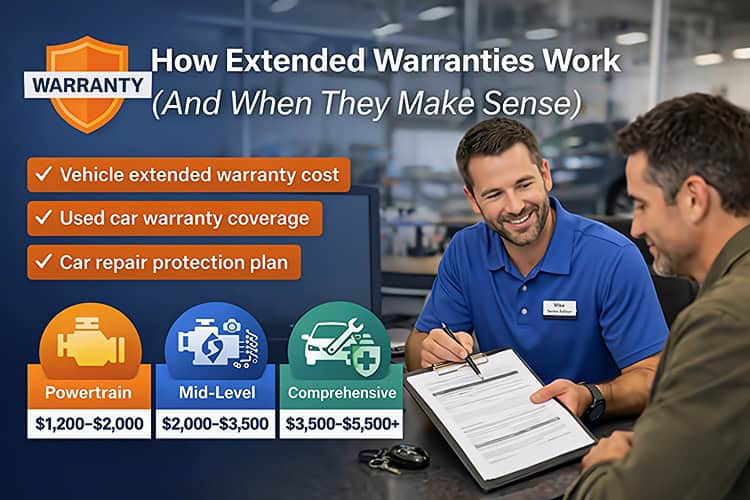
Service advisor reviewing vehicle extended warranty paperwork with customer at dealership service desk
When a covered component fails:
The vehicle is inspected at an approved repair facility
The technician diagnoses the failure
The warranty provider authorizes the repair
You pay only the deductible
However, delays can occur if the provider requests additional diagnostics or documentation. Because of this, reading contract details before purchase is essential.
Consequences of Skipping Coverage
Without extended protection, you assume full responsibility for post-warranty repairs. While many vehicles operate reliably for years, unexpected failures can create sudden expenses such as:
transmission rebuilds exceeding several thousand dollars
electronic control module failures requiring specialized programming
suspension system replacements affecting ride safety
For drivers operating on a strict monthly budget, even one major repair can exceed several years of warranty premiums.
How to Evaluate an Extended Warranty Before Buying
Before signing any contract, check:
maximum claim limits
deductible structure
covered repair locations
cancellation and refund policy
transferability to future owners
Transferable warranties sometimes increase resale value, particularly for private sales.
Final Ownership Insight
Extended warranties are neither universally necessary nor universally wasteful. Instead, their value depends on vehicle complexity, ownership duration, and personal financial risk tolerance. For high-tech vehicles kept long-term, they can stabilize ownership costs. For short-term ownership or highly reliable models, they may add unnecessary expense. Making the decision based on realistic repair risk — rather than dealership sales pressure — ensures the warranty serves as financial protection instead of an avoidable cost.
This platform analyzes depreciation trends, resale value behavior, and long-term ownership costs, helping drivers understand how mileage, maintenance, and timing shape real financial outcomes.