Fuel economy is influenced by more than just vehicle design or engine size. How a vehicle is driven plays a major role in how much fuel it consumes over time. Even small, repeated driving behaviors can significantly affect fuel usage, especially for drivers who spend a lot of time on the road.
Understanding how everyday driving habits impact fuel consumption helps drivers reduce costs, improve efficiency, and better interpret real-world fuel economy results.
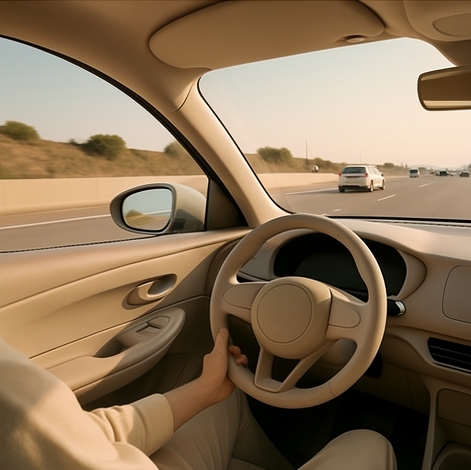
Interior view of a driver maintaining steady speed on a highway, illustrating how driving habits affect fuel consumption
Acceleration and Braking
Aggressive acceleration is one of the most common causes of increased fuel consumption. Rapid throttle input forces the engine to work harder and burn more fuel than necessary. Smooth, gradual acceleration allows the vehicle to reach cruising speed more efficiently.
Hard braking also reduces fuel efficiency by wasting momentum that required fuel to build. Anticipating traffic flow and slowing down gradually helps preserve energy and improve overall fuel economy.
Speed Consistency
Maintaining a steady speed is generally more fuel-efficient than frequent speed changes. Constant acceleration and deceleration place additional demand on the engine and increase fuel usage.
On highways, small fluctuations in speed can add up over long distances. Consistent pacing and smooth throttle control help reduce unnecessary fuel consumption.
Idling and Short Trips
Idling consumes fuel without moving the vehicle. Extended idling periods—such as waiting in traffic or leaving the engine running while parked—can noticeably increase fuel use over time.
Short trips are also inefficient because engines consume more fuel before reaching optimal operating temperature. Combining multiple short trips into one longer drive can help reduce overall fuel consumption.
Highway vs City Driving Behavior
City driving often involves frequent stops, congestion, and idle time, all of which increase fuel consumption. Highway driving is typically more efficient, but driving at high speeds can reduce fuel economy due to increased aerodynamic drag.
Moderate speeds and steady driving tend to deliver better real-world fuel efficiency than aggressive highway cruising.
Use of Vehicle Features
Certain vehicle features affect fuel consumption when used frequently. Climate control systems, particularly air conditioning, place additional load on the engine and can reduce fuel efficiency, especially in stop-and-go traffic.
External accessories such as roof racks and cargo boxes increase aerodynamic resistance and should be removed when not in use to improve fuel economy.
Planning and Driving Awareness
Route planning can also influence fuel consumption. Avoiding congested areas, steep terrain, and unnecessary detours helps reduce fuel usage without changing driving style.
Paying attention to traffic patterns and road conditions allows drivers to adjust smoothly rather than reacting abruptly, which supports more efficient driving.
Long-Term Impact of Driving Habits
Fuel consumption adds up over time. Small inefficiencies repeated daily can lead to meaningful increases in fuel costs over months and years.
Drivers who adopt smoother, more efficient driving habits often see more consistent fuel economy and lower ownership costs without changing vehicles.
Turning Fuel Economy Into Real Costs
Driving habits directly affect fuel usage, but the impact is most meaningful when translated into actual expenses. To see how your typical driving behavior influences fuel costs, you can use the Fuel Cost Calculator to estimate how distance driven, fuel consumption, and fuel prices affect real-world ownership costs.
Related reading
This guide works alongside broader fuel economy education and real-world driving analysis to help drivers better understand how everyday behavior influences fuel consumption.