Modern vehicles are engineered to last for many years. However, long-term reliability depends not only on maintenance schedules and build quality, but also on how the vehicle is driven every day. Driving habits directly influence engine wear, transmission health, brake life, suspension durability, and the longevity of electronic systems. Because many reliability problems develop slowly, drivers often overlook the connection between daily habits and future repair costs. Understanding how driving behavior affects mechanical stress helps prevent premature failures, reduce ownership expenses, and maintain consistent vehicle performance over time.
Why Driving Style Matters More Than Many Owners Realize
Every mechanical component experiences heat, friction, and stress during operation. While vehicles are designed to tolerate normal use, aggressive or inconsistent driving increases internal loads beyond typical operating ranges. Over time, this additional stress accelerates component degradation.
For example:
Rapid acceleration increases engine cylinder pressure and fuel system strain
Hard braking generates excessive heat in pads, rotors, and hydraulic systems
Frequent short trips prevent engine oil from reaching full operating temperature
Rough road impacts shorten suspension and steering component lifespan
Therefore, even a well-maintained vehicle can experience reliability issues if daily driving habits consistently increase mechanical stress.
Aggressive Acceleration and Engine Wear
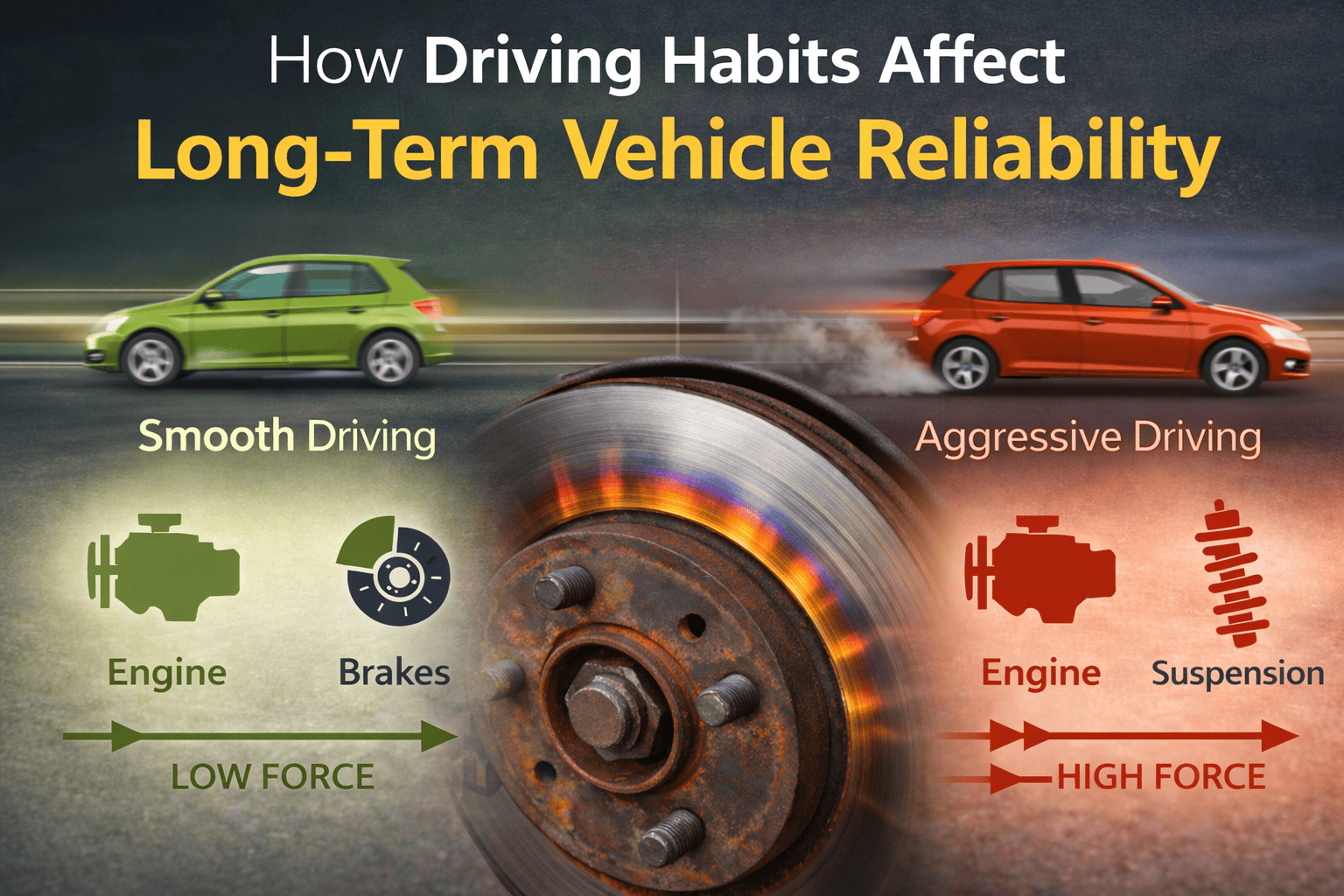
Diagram comparing smooth driving and aggressive driving, showing low force vs high force impact on engine, brakes, and suspension
Repeated hard acceleration places substantial stress on internal engine components. Pistons, connecting rods, crankshaft bearings, and turbochargers all experience higher loads when throttle input is abrupt. Although occasional acceleration is harmless, constant aggressive driving can lead to:
Faster engine oil breakdown
Increased piston ring wear
Higher fuel injector deposits
Premature turbocharger bearing fatigue
Warning Signs of Habit-Related Engine Stress
Drivers may notice:
Reduced fuel efficiency
Rough idle development
Increased oil consumption
Slower throttle response over time
Because these symptoms develop gradually, many owners incorrectly attribute them solely to age rather than driving patterns.
Hard Braking and Brake System Longevity
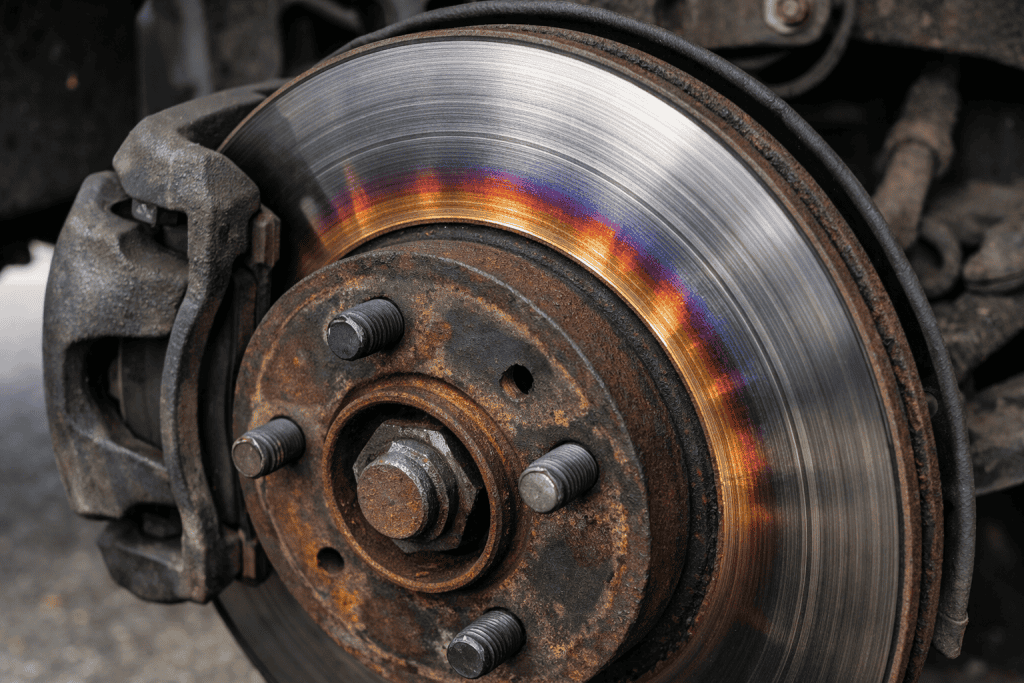
Close-up of a vehicle brake rotor showing heat discoloration from heavy braking, with caliper and wheel hub visible
Frequent hard braking dramatically increases brake system temperature. When brake components repeatedly overheat, friction materials degrade faster and metal surfaces can warp. Long-term consequences may include:
Caliper damage from overheating: major repair expense
Therefore, smoother deceleration habits can substantially reduce lifetime braking costs.
Short Trips vs Proper Warm-Up Driving
Short trips are one of the most underestimated reliability risks. When engines run for only a few minutes, oil often does not reach full operating temperature. As a result, moisture and fuel contamination remain inside the engine. Over time, repeated short-distance driving can cause:
Internal sludge buildup
Accelerated oil degradation
Exhaust system corrosion
Reduced battery lifespan
Warning Signs Linked to Frequent Short Trips
Owners may observe:
Milky oil residue
Increased exhaust moisture
Weak battery performance
More frequent oil change requirements
For long-term reliability, vehicles benefit from occasional longer drives that allow full system warm-up.
Rough Road Driving and Suspension Damage
Driving frequently over potholes, speed bumps at high speed, or uneven surfaces transfers shock directly into suspension components. While occasional impacts are unavoidable, repeated rough driving can accelerate wear in:
Shock absorbers
Struts and mounts
Control arm bushings
Wheel bearings
Steering linkages
Early Warning Signs of Suspension Wear
Drivers should watch for:
Increased road vibration
Uneven tire wear
Clunking noises over bumps
Steering looseness
Ignoring these symptoms may eventually lead to expensive multi-component suspension repairs.
Constant High-Speed Driving and Heat Stress
Sustained high-speed operation raises engine temperature, transmission fluid heat, and cooling system workload. Although highway driving itself is not harmful, continuous high-RPM operation increases thermal stress. Because heat is one of the primary causes of mechanical deterioration, consistent temperature control is critical for vehicle longevity. Possible long-term effects include:
Cooling system fatigue
Transmission fluid breakdown
Engine gasket wear
Turbocharger heat damage
Idling Habits and Internal Carbon Build-Up
Extended idling may seem harmless, yet it can contribute to internal engine deposits. During idle, combustion temperatures are lower, which allows carbon accumulation on valves, intake passages, and piston crowns. Over long periods, excessive idling can result in:
Reduced combustion efficiency
Intake valve carbon buildup
Increased emissions system stress
Lower fuel economy
This issue is particularly significant for modern direct-injection engines.
When Driving Habits Are Already Causing Reliability Problems
Drivers should consider adjusting habits immediately if they notice:
Repairs occurring earlier than expected mileage intervals
Brake replacements happening unusually frequently
Suspension parts failing repeatedly
Engine oil degrading faster than recommended
These patterns often indicate that driving conditions or habits are accelerating wear beyond normal expectations.
How to Improve Driving Habits for Maximum Reliability
Improving reliability does not require extreme changes. Instead, consistent small adjustments can significantly extend component lifespan. Recommended reliability-focused habits include:
Accelerate smoothly rather than abruptly
Anticipate stops to reduce hard braking
Allow engine warm-up before heavy throttle
Drive longer distances periodically if trips are usually short
Reduce speed over rough road surfaces
Follow fluid change intervals strictly
Because reliability is cumulative, small daily improvements often prevent major mechanical failures later.
Consequences of Ignoring Driving-Related Wear
If harmful driving patterns continue long-term, vehicles may experience:
Premature engine wear requiring major repair
Early transmission rebuild needs
Chronic suspension replacements
Persistent brake system costs
Reduced resale value
Therefore, driving style is not merely a comfort preference. It is a measurable factor that directly determines ownership cost and long-term reliability outcomes.
This platform analyzes depreciation trends, resale value behavior, and long-term ownership costs, helping drivers understand how mileage, maintenance, and timing shape real financial outcomes.