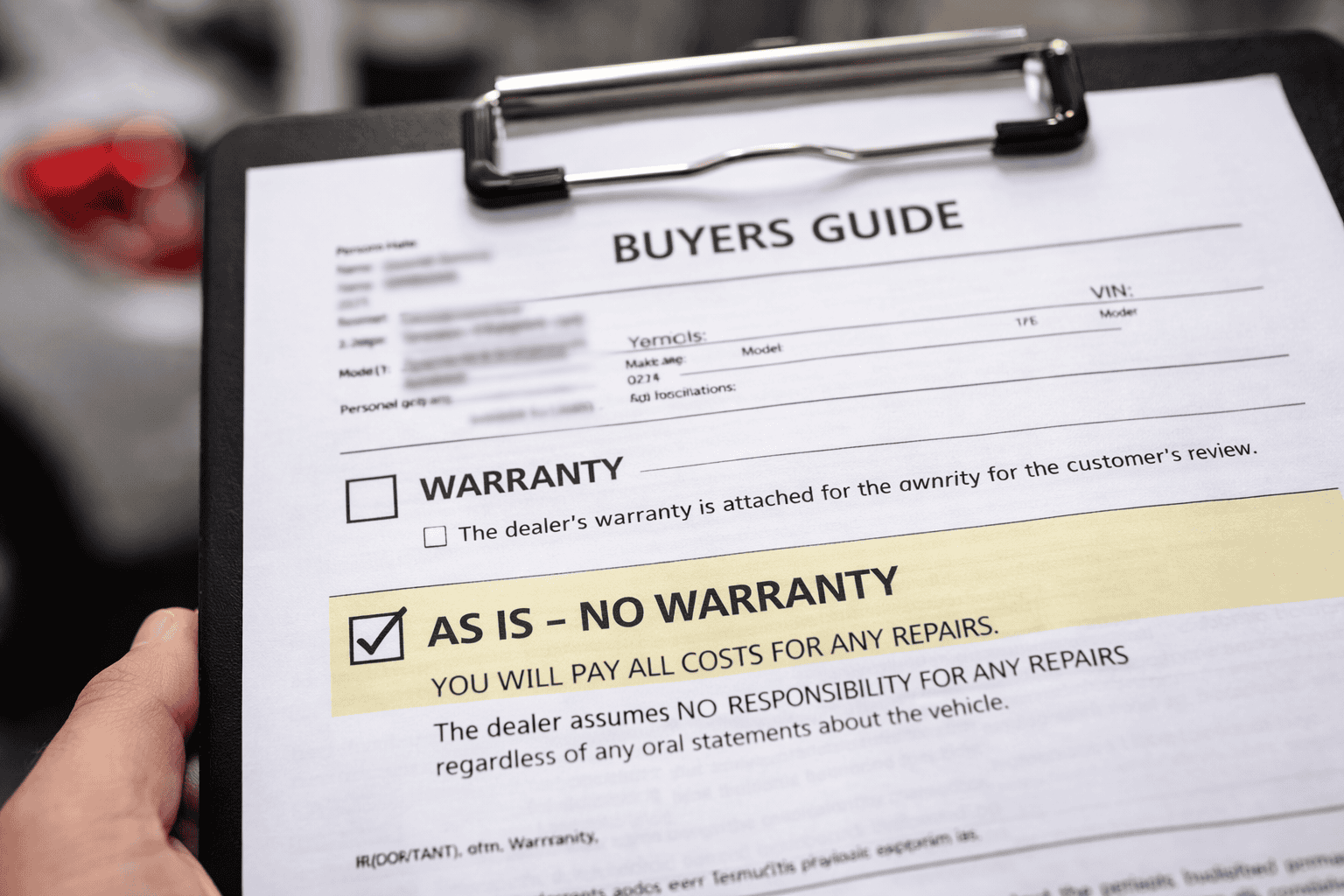
An “as-is” vehicle sale means the buyer agrees to purchase the vehicle in its current condition, with no promise from the seller to repair defects after the transaction. Because this type of sale shifts most responsibility for future problems to the buyer, understanding how as-is vehicle sales work helps prevent disputes, protects ownership decisions, and clarifies what legal protections still apply. Therefore, buyers and sellers should know exactly what “as-is” means before signing any purchase agreement.
How an “As-Is” Sale Is Defined
In an as-is transaction, the seller provides the vehicle without guaranteeing its mechanical condition, reliability, or future performance. Once the sale is completed, the buyer typically accepts responsibility for repairs, maintenance, and any hidden issues that appear later.
However, an as-is sale does not remove all legal obligations. Sellers generally must still avoid fraud, misrepresentation, or intentionally hiding known major defects. Consequently, while the buyer assumes repair risk, the seller must still provide truthful disclosures where required by law.
How Dealer and Private “As-Is” Sales Differ
Both dealerships and private sellers can sell vehicles as-is, yet the process often differs slightly.
Dealership as-is sales usually include a written buyer’s guide or disclosure form stating that no warranty applies. Additionally, dealerships must follow federal consumer disclosure rules that require the warranty status to be clearly shown before purchase.
Private-party sales, meanwhile, are frequently treated as-is by default unless a written warranty is specifically included. Because paperwork requirements vary, buyers should always confirm the exact terms in writing before completing payment.
How Warranties Interact With “As-Is” Sales
An as-is label generally means no dealer warranty is provided. Nevertheless, manufacturer warranties may still apply if the vehicle remains within the original coverage period. Similarly, certain certified used vehicles include warranty protection even if the sales paperwork uses as-is language for dealer liability.
Additionally, some states restrict or regulate how dealerships use as-is clauses, especially for newer vehicles or certain consumer protection categories. Therefore, checking whether any remaining factory warranty transfers with the vehicle is an important step before purchase.
How Inspection Responsibility Shifts to the Buyer
A professional pre-purchase inspection can help identify hidden engine problems before buying a used vehicle.
Because the seller does not promise repairs, buyers in as-is transactions usually carry full responsibility for verifying vehicle condition before purchase. As a result, pre-purchase inspections become especially important.
Buyers commonly verify:
Mechanical condition and safety systems
Diagnostic trouble codes
Accident or damage history
Title branding or prior insurance losses
Maintenance records
Since post-sale repair claims are typically limited, confirming these details beforehand greatly reduces financial risk.
How Disclosure Rules Still Apply
Even in an as-is sale, sellers generally cannot legally conceal known serious problems such as flood damage, salvage branding, or odometer fraud. Additionally, title branding laws require that certain vehicle histories remain permanently recorded in official documentation.
Therefore, although the buyer accepts normal wear risks, deliberate deception may still create legal liability for the seller. Maintaining written documentation of all disclosures protects both parties if questions arise later.
How Financing and Insurance May Be Affected
Financing institutions sometimes evaluate as-is vehicles more cautiously because repair risk is higher. Consequently, loan approval may depend heavily on vehicle age, mileage, and resale value.
Insurance companies typically insure as-is vehicles normally for liability coverage. However, comprehensive or collision coverage may depend on vehicle condition, appraisal results, or lender requirements. Because insurer policies vary, confirming coverage eligibility before purchase helps prevent registration delays.
How Buyers Can Protect Themselves in an “As-Is” Purchase
Although as-is transactions transfer repair responsibility, buyers can still reduce risk through careful preparation. Obtaining a professional inspection, reviewing vehicle history records, and confirming title status provide essential protection before payment.
Additionally, keeping copies of the bill of sale, disclosure forms, and inspection results ensures documentation exists if ownership questions arise later. Therefore, treating the pre-purchase evaluation as the final opportunity to verify condition is critical in any as-is sale.
Why Understanding “As-Is” Sales Matters
Understanding how as-is vehicle sales function allows buyers to make informed decisions and helps sellers document transactions correctly. While these sales are common in the used-vehicle market, the shift of repair responsibility means buyers must rely heavily on inspection, documentation, and verification before purchase.
Consequently, knowing the rules surrounding as-is agreements ensures smoother ownership transfers, fewer post-sale disputes, and better long-term financial planning.
This platform analyzes depreciation trends, resale value behavior, and long-term ownership costs, helping drivers understand how mileage, maintenance, and timing shape real financial outcomes.