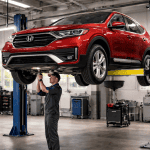
The Honda CR-V is widely considered a dependable compact SUV, but no vehicle is free from recurring issues. Over the years, certain problems have appeared more frequently depending on the generation, engine type, and driving conditions.
This guide covers the most common Honda CR-V problems, repair costs, affected years, and what to do if you encounter them, so you can make informed ownership or buying decisions.
Across multiple generations, a few issues appear consistently in owner reports and service records.
| Problem | Affected Years | Severity | Typical Cost |
|---|---|---|---|
| Oil dilution (turbo engines) | 2017–2019 | Moderate | $200–$1,500 |
| AC compressor failure | 2007–2011 | Moderate–High | $800–$1,500 |
| CVT transmission hesitation | 2015–2020 | Moderate | $300–$2,000 |
| Battery drain issues | 2015–2021 | Low–Moderate | $150–$400 |
| Brake wear (premature) | All years | Low | $250–$450 |
If warning lights appear, start diagnosis here:
https://flipcars.ca/how-to-identify-common-dashboard-warning-lights/
Recurring issues often come down to engineering changes or usage patterns.
Understanding how systems work can help identify early issues:
https://flipcars.ca/how-the-drivetrain-works-and-why-it-matters/
One of the most discussed Honda CR-V issues involves fuel mixing with engine oil.
Fuel enters the oil system, reducing lubrication effectiveness.
Older Honda CR-V models commonly experience air conditioning issues.
Later Honda CR-V models use CVT transmissions for better fuel economy.
Transmission repairs are among the most expensive.
Learn warning signs early:
https://flipcars.ca/how-to-identify-transmission-warning-signs/
Some Honda CR-V models experience unexpected battery discharge.
Brake components wear faster depending on driving style.
| Service | Cost |
|---|---|
| Brake Pads | $250–$450 |
| Rotors + Pads | $400–$800 |
Driving habits significantly affect wear:
https://flipcars.ca/how-driving-habits-affect-long-term-vehicle-reliability/
| Model Year | Reason |
|---|---|
| 2013–2016 | Proven reliability, fewer major issues |
| 2020–2022 | Improved turbo engine performance |
| 2005–2006 | Simple, durable design |
| Model Year | Issue Focus |
|---|---|
| 2017–2018 | Oil dilution |
| 2007–2011 | AC system failures |
| 2015–2017 | Early CVT behavior |
| Category | Cost Range |
|---|---|
| Minor Repairs | $150–$500 |
| Moderate Repairs | $500–$1,500 |
| Major Repairs | $1,500–$3,000 |
Estimate repair costs based on symptoms:
https://flipcars.ca/repair-cost-estimator/
| Category | CR-V | RAV4 | Rogue | Tucson |
|---|---|---|---|---|
| Engine Issues | Low–Moderate | Low | Moderate | Moderate |
| Transmission Risk | Moderate (CVT) | Low | Higher | Moderate |
| Electrical Issues | Moderate | Low | Moderate | Moderate |
| Repair Frequency | Low | Very Low | Moderate | Moderate |
Market comparisons and reliability trends can be checked at:
https://www.kbb.com/
Preventative maintenance reduces long-term risk.
Routine maintenance guidance:
https://flipcars.ca/how-scheduled-maintenance-protects-your-vehicle/
Check fluid levels regularly:
https://flipcars.ca/how-to-check-and-top-up-engine-fluids-beginner-step-by-step-guide/
Yes, but less than most competitors.
You can calculate depreciation impact here:
https://flipcars.ca/depreciation-calculator/
Oil dilution in turbocharged models (2017–2019) and AC failures in older models are among the most common.
No. Repair costs are generally lower than average for compact SUVs.
The 2013–2016 and 2020–2022 models are widely considered the most reliable.
Some CVT-related issues exist, but overall transmission reliability is better than many competitors.
Not necessarily, but specific years should be inspected carefully before purchase.
Yes. Even with known issues, the CR-V remains one of the most reliable and cost-effective compact SUVs.
The Honda CR-V maintains a strong reputation despite a few recurring issues across certain model years. Most problems are manageable and predictable, especially when caught early. With proper maintenance and informed buying decisions, the CR-V continues to deliver reliable, long-term ownership with lower overall risk than many competitors.
This platform analyzes depreciation trends, resale value behavior, and long-term ownership costs, helping drivers understand how mileage, maintenance, and timing shape real financial outcomes.