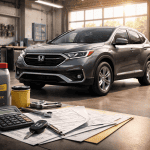
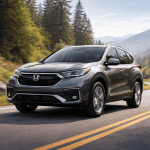
Honda CR-V Depreciation: Rates, Value & Cost

Honda CR-V Depreciation: Rates, Value & Cost

March 23, 2026
0 Comments

The Honda CR-V has a strong reputation for holding value over time. Buyers consistently choose it for reliability, fuel efficiency, and practical ownership costs. That demand directly affects how quickly—or slowly—it depreciates.

This guide breaks down CR-V depreciation rates, real-world value loss, and what affects resale, so you can decide when to buy, sell, or trade.


How Fast Does the Honda CR-V Depreciate?

On average, the Honda CR-V performs better than most compact SUVs when it comes to value retention.

Typical Depreciation Timeline
Year Value Loss Remaining Value
Year 1 15–18% 82–85%
Year 3 28–32% 68–72%
Year 5 38–42% 58–62%
Year 8 50–55% 45–50%

For comparison:

  • Compact SUV average: 45–55% loss after 5 years
  • CR-V: ~38–42% loss

This places the CR-V among the top value-retaining SUVs in its class, often alongside Toyota models.

Market resale benchmarks are regularly tracked by:
https://www.kbb.com/


Why Does the CR-V Hold Value So Well?

Several factors drive strong resale value.

1. Consistent Demand

The CR-V is one of the best-selling SUVs globally. High demand keeps used prices stable.

2. Proven Reliability

Fewer major repairs mean buyers are more willing to pay for used models. Learn how reliability affects long-term value:
https://flipcars.ca/how-honda-models-compare/

3. Low Ownership Costs

Lower maintenance and repair costs make it attractive in the used market.

Estimate your ownership costs:
https://flipcars.ca/ownership-cost-calculator/


What Affects Honda CR-V Depreciation?

Not all CR-Vs lose value at the same rate.

Key Factors
  • Mileage: Vehicles under 12,000 miles/year retain value better
  • Trim level: Mid-tier trims (EX, EX-L) hold value best
  • Condition: Service history plays a major role
  • Market demand: Fuel-efficient SUVs hold value during high gas prices

Driving habits also influence long-term value:
https://flipcars.ca/how-driving-habits-affect-long-term-vehicle-reliability/


Which Honda CR-V Years Hold Value Best?

Some model years outperform others due to reliability and design updates.

Best Value Retention Years
Model YearWhy It Holds Value
2020–2022Strong reliability, modern tech
2017–2019Redesigned platform, high demand
2013–2016Proven durability, lower entry cost
Years with Slightly Faster Depreciation
Model Year Reason
Early 2010s Older tech, lower demand
First year redesigns Uncertainty in reliability

How Much Does a CR-V Cost to Own Over Time?

Depreciation is only part of the total ownership cost.

5-Year Cost Breakdown
Category Estimated Cost
Depreciation $8,000–$12,000
Fuel $7,000–$9,000
Maintenance $2,500–$4,000
Insurance $6,000–$8,000
Total 5-Year Cost:

~$23,500 to $33,000

Calculate your exact numbers:


How Does CR-V Depreciation Compare to Competitors?

CR-V vs Toyota RAV4 vs Nissan Rogue vs Hyundai Tucson
Model 5-Year Depreciation Value Retention
CR-V 38–42% Strong
RAV4 35–40% Very Strong
Rogue 45–50% Moderate
Tucson 45–52% Moderate
What does this mean for buyers?
  • CR-V and RAV4 lead the segment
  • Rogue and Tucson lose value faster
  • Higher depreciation = better deals used
  • Lower depreciation = better resale later

Use real market pricing comparisons:
https://www.kbb.com/


Is It Better to Buy New or Used?

New CR-V
  • Higher upfront cost
  • Largest depreciation hit in first 2 years
Used CR-V (2–4 years old)
  • Avoids 20–30% initial depreciation
  • Best value for most buyers

To evaluate your options:
https://flipcars.ca/how-to-choose-between-a-new-or-used-car/


When Is the Best Time to Sell a CR-V?

Timing matters.

Ideal Selling Window
  • Between 3–5 years ownership
  • Mileage under 60,000 miles

At this stage:

  • Depreciation slows
  • Resale value remains strong

Estimate trade-in value:
https://flipcars.ca/trade-in-value-estimator/


What Should You Do to Protect CR-V Value?

Maintaining resale value is not complicated, but consistency matters.

Key Actions
  • Follow scheduled maintenance
  • Keep mileage reasonable
  • Avoid major cosmetic damage
  • Maintain service records

Routine care directly impacts resale value:
https://flipcars.ca/how-scheduled-maintenance-protects-your-vehicle/


Why Do SUVs Like the CR-V Depreciate Slower?

SUV demand has increased over the past decade.

Drivers prefer:

  • Higher driving position
  • Cargo space
  • Fuel-efficient crossovers

That demand supports long-term resale value.

Frequently Asked Questions

Typically 38–42%, which is better than most compact SUVs.

Yes. It performs similarly to the Toyota RAV4 and better than most other compact SUVs like the Rogue or Tucson.

While cars are not financial investments, the CR-V minimizes value loss compared to most vehicles, making it a strong ownership choice.

For most buyers, a 2–4 year old CR-V offers the best balance between price and value retention.

Values typically drop faster after 75,000–100,000 miles, especially without maintenance records.

Use trusted market tools like:
https://www.kbb.com/

Final Thoughts

The Honda CR-V consistently ranks among the best compact SUVs for value retention. While it still depreciates like any vehicle, its slower rate of decline helps owners reduce long-term costs and protect resale value.

Understanding when to buy, how to maintain it, and when to sell can make a significant difference in your total ownership experience.

Add a comment

Your email address will not be published. Required fields are marked *

Comments (0)

Honda CR-V Buying Guide: Models, Costs & Best Years

[…] For a deeper breakdown specific to this model:https://flipcars.ca/honda-cr-v-depreciation-rates-value-cost/ […]

Categories

Recent Posts

About us

John Hendricks
Blog Editor

This platform analyzes depreciation trends, resale value behavior, and long-term ownership costs, helping drivers understand how mileage, maintenance, and timing shape real financial outcomes.