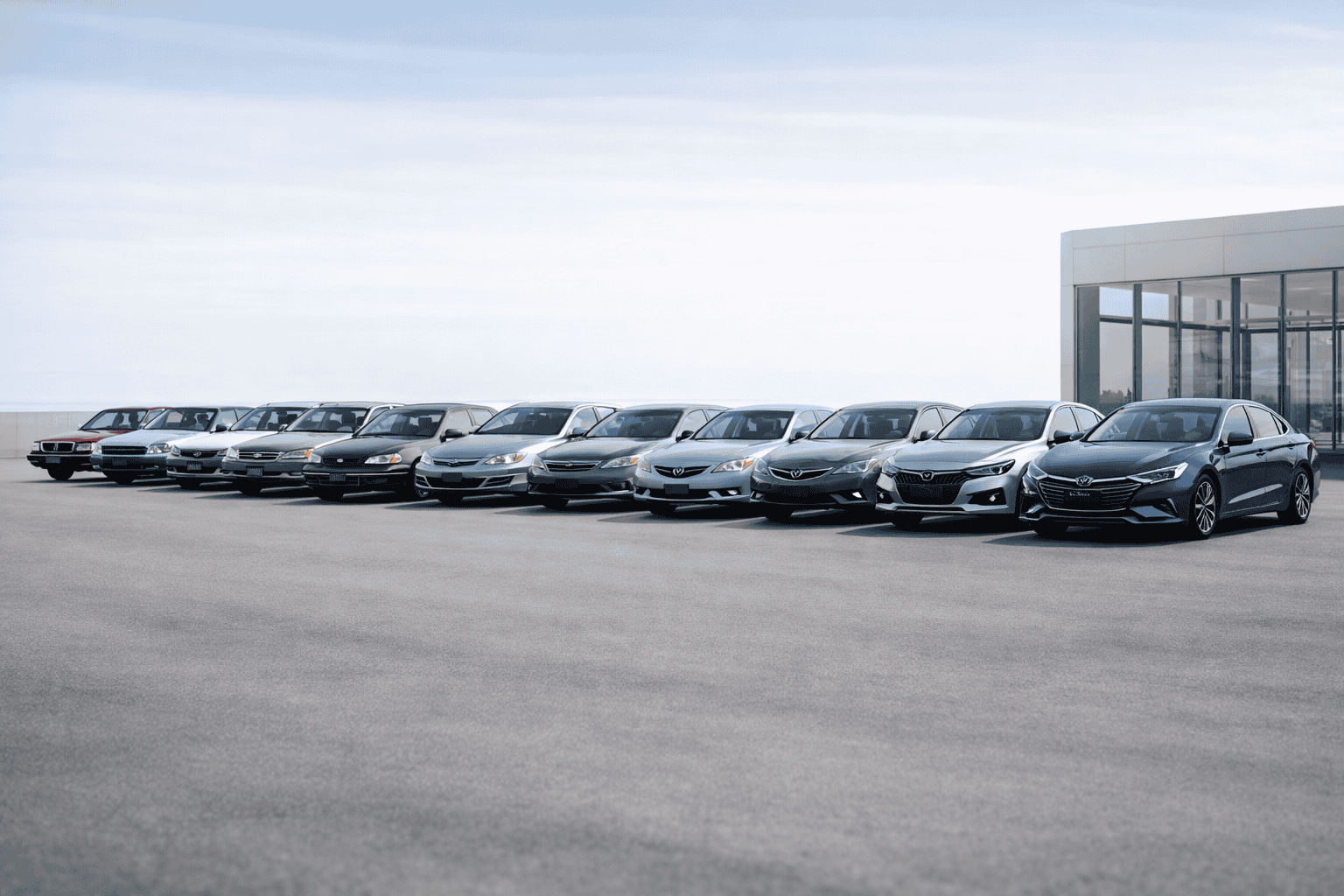
The Honda Accord has evolved from a compact hatchback into one of the most trusted midsize sedans on the road. Each generation brought changes in size, reliability, technology, and long-term ownership costs. Understanding these shifts helps you choose the right model year based on budget, reliability, and resale value.
This guide breaks down every Accord generation since 1976, including what changed, what to watch for, and which years deliver the best value.
How the Honda Accord Has Evolved Over Time
Across nearly five decades, the Accord followed a clear pattern:
Early years (1976–1989): Simple, durable, fuel-efficient
Growth years (1990–2007): Larger size, more power, mainstream success
Modern era (2008–present): Technology, safety, efficiency, hybrid focus
Body Style: Hatchback Engine: 1.6L Key Focus: Fuel economy and affordability
The first Accord arrived during the fuel crisis, offering reliability and efficiency when many competitors struggled. These models are now rare and mostly collector vehicles.
What to expect today:
Very limited parts availability
Minimal safety features
Not practical for daily use
2nd Generation (1982–1985): First Sedan Option
Body Styles: Hatchback, Sedan Notable Change: First U.S.-built Accord
This generation introduced the sedan format, which became the standard moving forward.
Ownership note: Durable for its time, but outdated by modern standards.
3rd Generation (1986–1989): Engineering Leap
Key Upgrade: Double-wishbone suspension Why it matters: Improved handling and ride quality
This design gave the Accord a more refined driving experience compared to competitors.
4th Generation (1990–1993): Midsize Transition
Major Shift: Larger size, more comfort Market Position: Entered midsize segment
This generation marked the beginning of the Accord as a family sedan.
5th Generation (1994–1997): Reliability Gains
Reputation: Strong reliability and simplicity
These models are known for:
Long engine life
Low repair costs
Even today, well-maintained examples can exceed 200,000 miles.
6th Generation (1998–2002): Mainstream Success
Key Features:
Improved interior quality
More powerful engines
However, some models experienced transmission issues, which can affect long-term ownership costs.
The Honda Accord’s long history shows a clear trend toward better efficiency, improved reliability, and stronger value retention. While older models can still serve as budget options, newer generations offer the best balance of cost, performance, and long-term ownership confidence.
Frequently Asked Questions
The 2013–2017 and 2018–2022 generations are widely considered the most reliable, offering strong durability and lower repair risk.
Some 1998–2002 and early 2000s V6 models had transmission issues, which can increase repair costs.
With proper maintenance, most Accords last 200,000–300,000 miles.
Yes, especially for long-term ownership. Better fuel economy, fewer repairs, and higher resale value offset the higher purchase price.
The 2023+ hybrid models offer the best efficiency, reaching up to 48 MPG combined.
Older: lower upfront cost
Newer: lower long-term cost
For most buyers, newer models provide better overall value.
[…] Civic feels inside — the materials, comfort, quietness, and overall refinement. Below is a clear breakdown of why each generation scores the way it does, what you can expect when sitting in one, and how to use this information […]
This platform analyzes depreciation trends, resale value behavior, and long-term ownership costs, helping drivers understand how mileage, maintenance, and timing shape real financial outcomes.