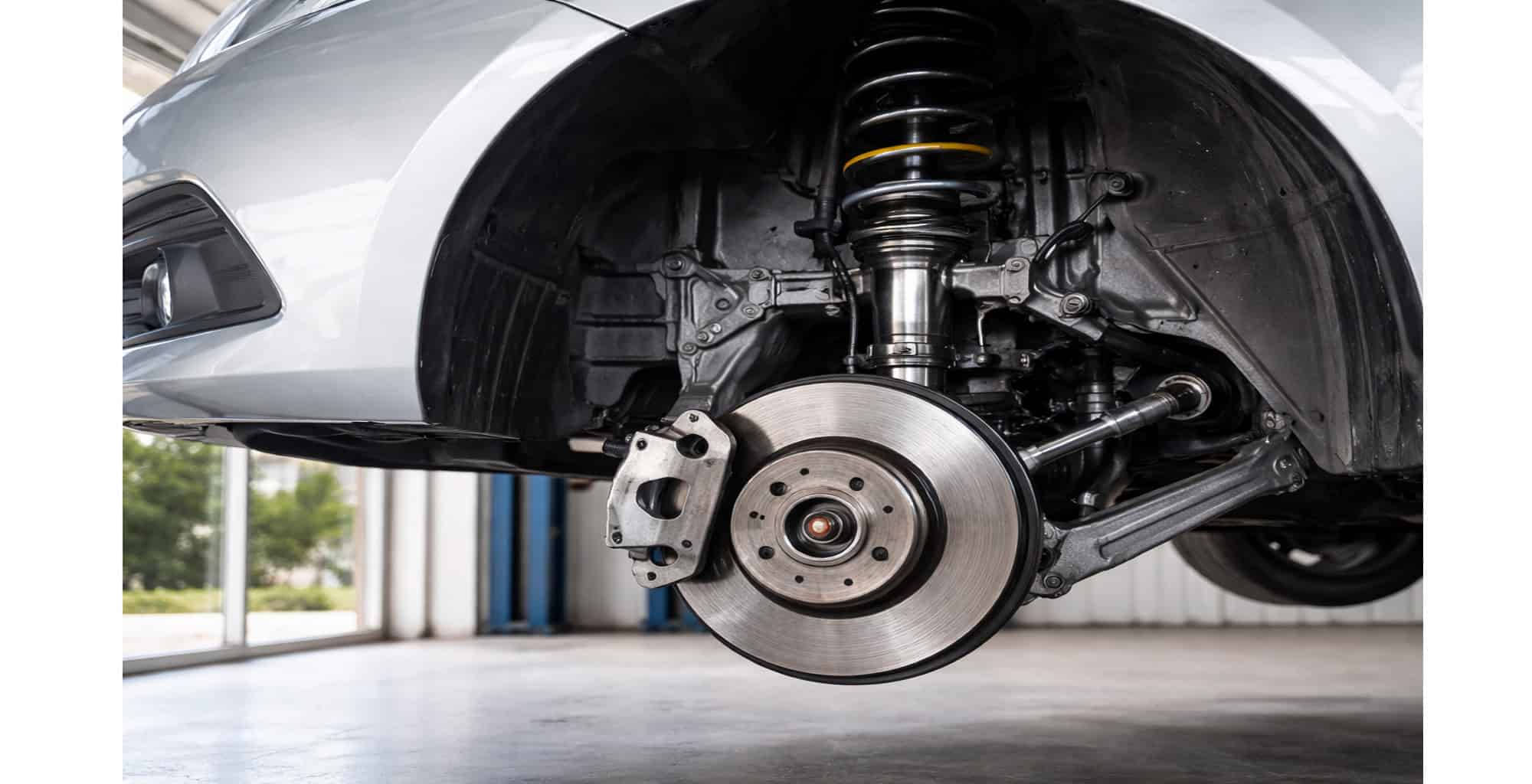
A vehicle’s suspension system controls far more than ride comfort. It directly affects handling, braking stability, tire wear, and overall safety. When the suspension is working properly, the vehicle feels planted, responsive, and predictable. When components begin to wear, control decreases, stopping distances increase, and long-term ownership costs start to rise. Understanding how suspension systems function, how long components last, and when to act on early warning signs helps prevent expensive repairs and unsafe driving conditions.
What the Suspension System Does
Every vehicle suspension is engineered to balance control and comfort under constantly changing road conditions. At a basic level, the system:
- Absorbs impacts from uneven surfaces
- Keeps tires in consistent contact with the road
- Maintains vehicle stability during braking and cornering
- Supports the vehicle’s weight while allowing controlled movement
When these functions are working together, the vehicle tracks straight, corners with confidence, and maintains even tire contact. This directly improves braking efficiency and reduces uneven tire wear.
Key Suspension Components
| Component |
Function |
Why It Matters |
| Shocks and Struts |
Control rebound and absorb road impact; struts also support vehicle structure |
Maintains tire contact with the road and prevents excessive bouncing |
| Springs (Coil or Air) |
Support vehicle weight and maintain ride height |
Keeps the vehicle level and absorbs large impacts |
| Control Arms |
Connect wheels to the chassis and guide suspension movement |
Allows controlled wheel motion while maintaining alignment |
| Ball Joints |
Provide pivot points for steering and suspension movement |
Ensures smooth steering and stable handling |
| Sway Bar and Links |
Reduce body roll during cornering |
Keeps the vehicle balanced and improves cornering stability |
| Bushings |
Cushion contact points between components and absorb vibration |
Reduces noise, vibration, and premature metal wear |
A suspension system is made up of several interconnected parts. Each component plays a specific role in maintaining control, stability, and ride quality. Because these components operate as a system, wear in one area often increases stress on surrounding parts.
Suspension Lifespan and Replacement Intervals
Suspension systems have come a long way from the early days of automotive design. In the 1930s and 1940s, most vehicles relied on basic leaf spring setups that prioritized durability over comfort. By the 1950s, manufacturers like General Motors began introducing independent front suspension systems, improving ride quality and control. Modern vehicles now use advanced combinations of struts, coil springs, and multi-link setups designed to balance comfort, handling, and safety. Despite these advancements, suspension components are still wear items. They don’t fail suddenly — they fade over time. What starts as a slightly softer ride or minor instability can gradually turn into reduced control, longer stopping distances, and uneven tire wear. Today, industry benchmarks from manufacturers and service providers like Monroe and KYB suggest that shocks and struts typically last between 50,000 and 100,000 miles. However, real-world conditions matter more than any fixed number. Vehicles driven on smooth highways may reach the upper end of that range, while those exposed to potholes, rough roads, or winter conditions often wear out much sooner.
The key is not waiting for obvious failure. Suspension wear directly affects how a vehicle grips the road, especially during braking and cornering. Regular inspections every 12,000 to 15,000 miles help catch early wear, maintain stability, and prevent more expensive repairs later.
Suspension Component Lifespan and Cost
| Component |
Typical Lifespan (Miles) |
Replacement Interval |
Average Cost (USD) |
| Shocks/Struts |
50,000 – 100,000 miles |
5–8 years |
$400 – $1,200 (pair) |
| Control Arm Bushings |
60,000 – 120,000 miles |
As wear appears |
$250 – $600 each |
| Ball Joints |
75,000 – 120,000 miles |
As needed |
$150 – $350 each |
| Sway Bar Links |
30,000 – 75,000 miles |
Often with suspension service |
$80 – $200 each |
| Springs |
100,000+ miles |
Rare replacement |
$200 – $500 each |
| Wheel Alignment |
Every 12,000 – 15,000 miles |
Preventive maintenance |
$100 – $150 |
In regions with rough roads, potholes, or harsh winters, these intervals often shorten significantly.
Signs of Worn Suspension Components
Suspension wear usually develops gradually. Many drivers adjust to the change without realizing performance has declined. Common symptoms include:
- Excessive bouncing after hitting bumps
- Clunking or knocking noises over uneven roads
- Uneven or rapid tire wear
- Steering that feels loose or unstable
- Nose diving under braking
- Vehicle leaning or sagging on one side
- Harsh or uncomfortable ride quality
- Fluid leaks from shocks or struts
If multiple symptoms appear at once, it’s time for an inspection. In many cases, these issues also overlap with broader maintenance patterns, especially when drivers ignore regular service intervals outlined in proper maintenance schedules:
https://flipcars.ca/how-scheduled-maintenance-protects-your-vehicle/
Common Suspension Problems and Their Impact
Several issues appear consistently across most vehicles as mileage increases. Understanding how each problem affects performance helps identify issues early and prevent more serious damage.
| Problem |
What Happens |
Driving Impact |
Safety Risk Level |
| Worn Shocks or Struts |
Internal damping weakens, reducing control over suspension movement |
Excessive bouncing, reduced road contact, longer stopping distances |
Medium to High |
| Damaged or Sagging Springs |
Springs lose tension or crack, lowering ride height |
Uneven stance, reduced load support, bottoming out over bumps |
Medium |
| Worn Bushings |
Rubber components degrade, creating looseness between parts |
Clunking noises, vibration, less precise steering response |
Medium |
| Failing Ball Joints |
Joint wear creates play in suspension pivot points |
Loose steering, wandering, uneven tire wear |
High |
| Broken Sway Bar Links |
Links disconnect or loosen from wear or corrosion |
Increased body roll, reduced cornering stability |
Low to Medium |
| Corrosion and Rust Damage |
Metal components weaken due to moisture and salt exposure |
Structural weakness, accelerated wear across suspension parts |
High (long-term) |
Suspension Repair and Replacement Costs
Suspension repair costs vary based on vehicle type, part quality, and labor rates. Typical price ranges include:
- Shocks or struts: $400 – $1,200 per pair
- Control arms: $250 – $600 each
- Ball joints: $150 – $350 each
- Sway bar links: $80 – $200 each
- Springs: $200 – $500 each
- Wheel alignment: $100 – $150
Repair costs often increase when suspension wear is ignored. For a more accurate breakdown based on your vehicle, using a repair cost estimator provides realistic pricing expectations:
https://flipcars.ca/repair-cost-estimator/
When Suspension Replacement Becomes Necessary
Suspension components should be replaced when performance noticeably changes or safety is affected. Service becomes necessary when:
- Ride quality deteriorates
- Noise develops over bumps
- Tires begin wearing unevenly
- Steering response becomes delayed
- Fluid leaks appear on shocks or struts
Most vehicles require partial suspension service every 5 to 8 years, depending on usage and road conditions.
How Driving Habits Affect Suspension Wear
Driving style plays a major role in how quickly suspension components wear out. Key contributors include:
- Repeated hard braking
- Driving over potholes or rough roads
- Carrying heavy loads regularly
- Aggressive cornering
- Long-term exposure to poor road conditions
These same habits also impact multiple systems across the vehicle. Understanding how driving habits affect long-term vehicle reliability helps explain why some vehicles require suspension work much earlier than others:
https://flipcars.ca/how-driving-habits-affect-long-term-vehicle-reliability/
Preventing Premature Suspension Damage
Routine maintenance and simple driving adjustments can significantly extend suspension life. Recommended practices:
- Slow down over rough roads and potholes
- Wash the undercarriage to remove salt and debris
- Replace worn bushings early
- Maintain proper tire pressure
- Schedule wheel alignments every 1–2 years
- Inspect suspension annually
These steps reduce stress across multiple components and help maintain consistent vehicle performance.
How Suspension Wear Affects Ownership Costs
Suspension issues rarely stay isolated. As components wear, they begin affecting other systems. Common long-term effects include:
- Increased tire replacement frequency
- Reduced braking efficiency
- Higher repair costs
- Lower resale value
When looking at the bigger picture, suspension maintenance plays a role in total ownership expenses. Understanding the true cost of owning a vehicle helps connect these smaller repairs to long-term financial impact:
https://flipcars.ca/true-cost-of-car-ownership-maintenance-cost-guide/
Final Thoughts on Suspension Maintenance
A well-maintained suspension system keeps a vehicle stable, safe, and predictable under all driving conditions. As components wear, performance gradually declines, often without immediate warning. Staying ahead of maintenance, recognizing early symptoms, and addressing wear early keeps repair costs under control and prevents safety issues. Proper suspension care also protects tires, improves braking performance, and ensures the vehicle continues to handle the way it was designed to.