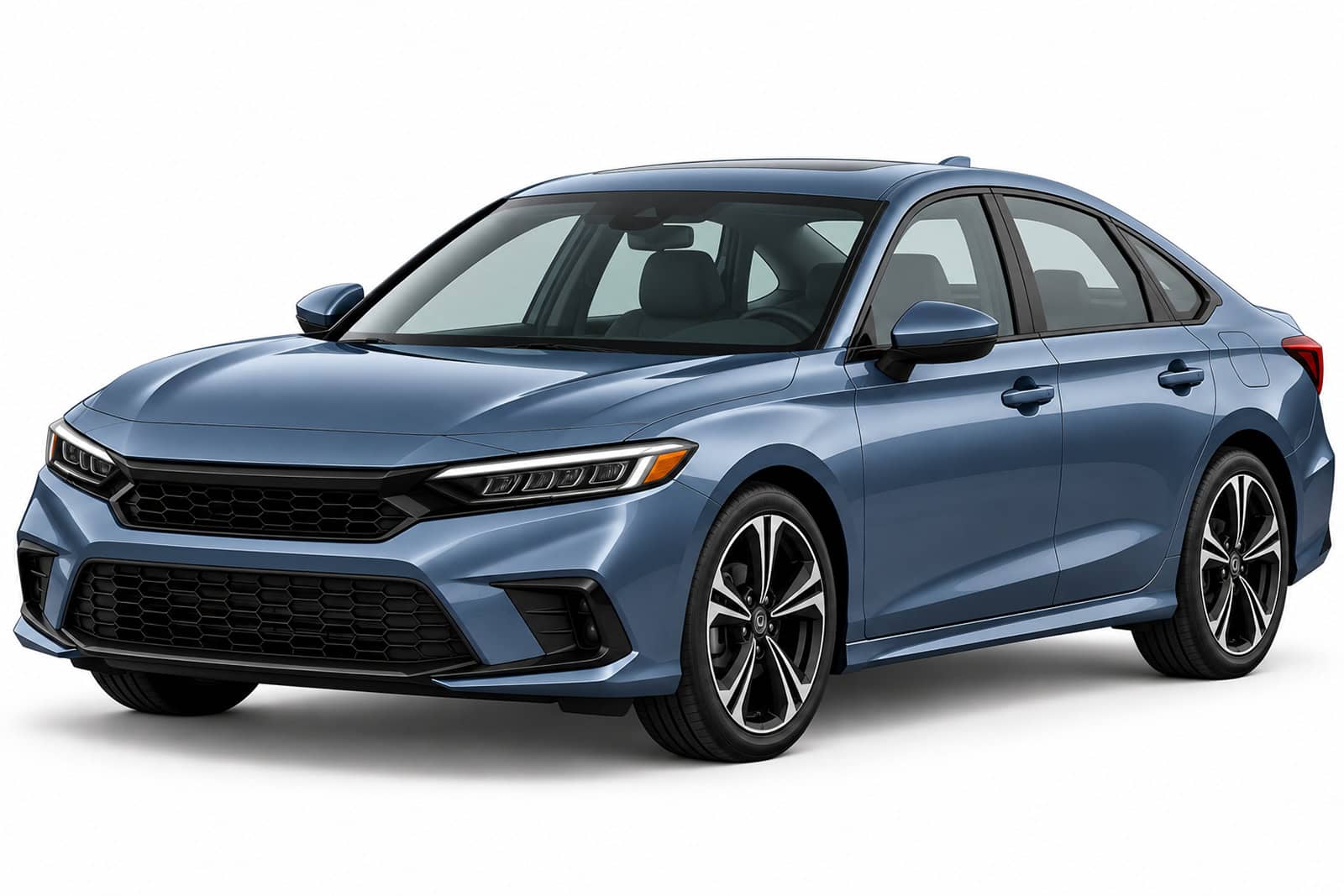
The Honda Civic has been part of the North American car market for more than 50 years. During that time, it has grown from a very small economy car into a roomy compact that can handle commuting, family use, and long highway trips. Newer Civics give you modern safety systems, better cabin technology, and gasoline or hybrid power. Older generations open the door to lower purchase prices, manual transmissions, coupes, and several performance versions. If you are shopping for a Civic, the model year matters because engines, transmissions, body styles, fuel economy, and safety equipment have changed considerably between generations. This Honda Civic overview explains those differences and gives you the basic information you need before deciding which version belongs on your shopping list.
Where the Honda Civic Fits in the Market
The Civic sits in the compact car class, where it competes with cars such as the Toyota Corolla, Hyundai Elantra, Mazda3, Kia K4, and Volkswagen Jetta. You get a smaller footprint than a midsize sedan such as the Honda Accord, but there is still seating for 5 people and enough rear space for everyday family use. The Civic also gives you sedan and hatchback choices on recent models, depending on year and trim. That flexibility makes it worth considering if you want something easy to drive and park without dropping down to a much smaller car.
- Vehicle class: Compact car.
- Main competitors: Toyota Corolla, Hyundai Elantra, Mazda3, Kia K4, and Volkswagen Jetta.
- Seating: Up to 5 people.
- Drivetrain: Front-wheel drive.
- Power choices: Gasoline and hybrid powertrains, depending on model year and trim.
- Body choices: Sedan and hatchback versions are available in recent generations.
Honda Civic Body Styles and Drivetrain
Recent Civics are sold as 4-door sedans and hatchbacks, giving you two different ways to carry people and cargo. The sedan has a separate trunk and works well when most of your cargo consists of groceries, luggage, or everyday bags. The hatchback gives you a larger rear opening, which makes bulky items easier to load. Both layouts seat up to 5 people. The Civic remains front-wheel drive in the U.S. and Canada. Honda does not offer an AWD Civic simply by moving to a higher trim. If AWD is a requirement because of your roads or personal preference, you will need to consider another model. Front-wheel drive can still handle snowy conditions well when you use suitable winter tires, but tires and AWD solve different problems.
Honda Civic Gas Engines
Engine choices depend heavily on the Civic year you are considering. Recent generations have used a 2.0L four-cylinder as a straightforward gasoline choice, while a 1.5L turbocharged four-cylinder has appeared on certain trims and performance-oriented versions. The 2.0L appeals if you want a simpler engine without a turbocharger. The 1.5L turbo produces stronger low-speed pulling power and can still deliver good fuel economy. Older generations add many more engine combinations, so you should never assume two Civics with similar prices have the same powertrain.
- 2.0L four-cylinder: A non-turbo gasoline engine used in several recent Civic trims.
- 1.5L turbo four-cylinder: Adds turbocharging for stronger power and torque on applicable models.
- Transmission: CVT, manual, and other transmission choices vary by generation and trim.
- Drivetrain: Power goes to the front wheels.
- Buying priority: Check the exact engine and transmission rather than shopping by trim name alone.
Honda Civic Hybrid System
The newer Civic Hybrid combines a 2.0L gasoline engine with an electric drive system. You do not need to plug the car into an outlet. The Civic manages gasoline and electric power automatically while you drive, and energy recovered during slowing and braking helps recharge the hybrid battery. That makes the car easy to use if you want better fuel economy without changing where or how you refuel. The hybrid becomes especially interesting when you cover a lot of miles or kilometres each year because every reduction in fuel use has more time to save you money. You should still compare the hybrid’s purchase price with the gasoline Civic you would otherwise buy. Better fuel economy is useful, but the cheapest fuel is not automatically the cheapest car to own.
Honda Civic Fuel Economy
Fuel economy is one of the Civic’s strongest everyday benefits, but your exact number depends on the engine, trim, wheels, model year, weather, and driving conditions. The supplied figures put 2.0L gasoline models around 31–33 mpg combined in the U.S. and 7.1–7.5 L/100 km in Canada. The 1.5L turbo is listed around 33–36 mpg or 6.7–7.2 L/100 km. Hybrid figures improve to roughly 48–50 mpg or 4.7–5.0 L/100 km. Use the rating for the exact Civic you are considering when estimating fuel costs because a broad engine range cannot tell you precisely what one trim will consume.
| Powertrain |
U.S. Combined |
Canada Combined |
| 2.0L four-cylinder |
~31–33 mpg |
~7.1–7.5 L/100 km |
| 1.5L turbo |
~33–36 mpg |
~6.7–7.2 L/100 km |
| Hybrid |
~48–50 mpg |
~4.7–5.0 L/100 km |
Honda Civic Interior and Passenger Space
The Civic may carry a compact-car label, but recent generations make good use of the available cabin space. You get seating for 5, usable rear legroom, and a dashboard that keeps frequently used controls within easy reach. Depending on year and trim, equipment can include touchscreen infotainment, Apple CarPlay, Android Auto, a digital instrument display, heated seats, and upgraded audio. The hatchback adds another benefit if you regularly carry larger objects because its rear opening is wider and taller than a sedan trunk opening. Before buying, sit in both rows and bring along anything you regularly transport, such as a child seat or large work bag. Interior measurements are helpful, but five minutes inside the actual car can answer questions that a specification sheet cannot.
Honda Civic Safety and Honda Sensing
Honda Sensing is the name Honda uses for a group of driver assistance systems found on modern Civics. These features can help warn you about certain hazards, assist with braking, and reduce some of the work involved in maintaining speed and lane position. They do not turn the Civic into a self-driving car. You still need to watch traffic and remain in control. Equipment has changed over the years, so confirm the features installed on the specific Civic you are considering. You can also check current and older Civic crash-test results through the IIHS rather than assuming every model year received identical results.
- Collision Mitigation Braking: Can provide warnings and braking assistance when a possible frontal collision is detected.
- Lane Keeping Assist: Can provide steering assistance to help you remain within a detected lane.
- Adaptive Cruise Control: Can adjust speed to help maintain a selected distance from detected traffic ahead.
- Road Departure Mitigation: Can warn and assist you if the vehicle appears likely to leave the roadway.
- Traffic Sign Recognition: Can identify certain road signs and display the recognized information.
Honda Civic Reliability
A Civic’s long reliability history is useful when you are building a shopping list, but the condition of the individual car still decides what you are actually buying. Older Civics can have missed fluid changes, worn suspension parts, neglected brakes, accident repairs, or corrosion. Newer models can also have poor maintenance histories despite having relatively low mileage. Engine and transmission choices have changed between generations, which means reliability concerns can change with them. Before buying used, check service records and have the car inspected. Investigate warning lights and unusual noises instead of accepting a seller’s guess about what caused them. The Honda Civic reliability guide goes deeper into reliability if you are comparing specific years.
Honda Civic Resale Value and Depreciation
Resale value affects how much Honda Civic ownership ultimately costs you. If you pay $28,000 for a Civic and later sell it for $18,000, that $10,000 loss in value is part of your ownership cost even though it never appears as a repair or fuel bill. The supplied information identifies resale value as one of the Civic’s strengths, but no Civic is protected from depreciation. Age, mileage, accident history, condition, trim, maintenance records, and local demand all influence what someone will eventually pay for your car. Keep maintenance receipts and look after the interior and exterior if resale matters to you. You can see how those factors affect values over time in the Honda Civic depreciation guide.
Who Should Consider a Honda Civic?
The Civic covers a wider range of drivers than its compact size might suggest. A commuter can benefit from its fuel economy. A first-time buyer may appreciate having smaller dimensions without giving up seating for 5. A family that does not need an SUV can use the sedan or choose the hatchback for easier cargo loading. Hybrid shoppers can reduce fuel use further, while used-car buyers have many generations and price points available. Your needs should decide which version makes sense rather than simply choosing the newest or most expensive Civic.
- Daily commuters: Gasoline and hybrid versions give you several ways to control fuel costs.
- First-time buyers: The compact dimensions can make the Civic easier to manage without dropping to a tiny cabin.
- Small families: You get 5 seats and usable rear passenger room.
- High-mileage drivers: Better fuel economy becomes increasingly valuable as annual mileage rises.
- Cargo-focused buyers: The hatchback provides easier access for larger items.
- Used-car shoppers: Multiple generations provide a broad range of engines, equipment, ages, and prices.
Honda Civic Advantages
The Civic’s appeal comes from combining several useful qualities in one compact car. You can get seating for 5, strong fuel economy, modern safety equipment, and enough interior room for everyday driving without moving into a larger vehicle. Recent buyers can also choose between sedan and hatchback body styles. Hybrid models add another route to lower fuel consumption. Used shoppers benefit from decades of Civics already on the market, although the condition and service history of those cars still need careful checking.
- Fuel economy: Hybrid models in the supplied figures reach approximately 48–50 mpg combined.
- Body choices: Recent sedan and hatchback versions suit different cargo needs.
- Passenger room: The cabin provides usable space for front and rear occupants.
- Safety equipment: Modern models include Honda Sensing driver assistance technology.
- Powertrain choices: Gasoline, turbocharged, hybrid, CVT, and manual combinations can be found depending on year.
- Resale value: Used-market demand can help reduce depreciation compared with a car that becomes difficult to sell.
Honda Civic Limitations
The Civic has tradeoffs that you should consider before buying. AWD is not available in the regular U.S. or Canadian Civic lineup, which immediately removes it from some shopping lists. A compact car also cannot provide the same cargo height, ground clearance, or rear space as a larger crossover. Turbocharged versions add performance but make proper oil and fluid maintenance especially important. Hybrid models can reduce fuel use considerably, but you still need to compare the higher purchase price with your expected fuel savings. These limitations are not reasons to avoid the Civic. They simply tell you where another vehicle may fit your needs better.
- No AWD: Current Civic models use front-wheel drive.
- Limited ground clearance: The Civic is a road-focused passenger car rather than a higher-riding crossover.
- Turbo maintenance: Proper servicing matters if you choose a turbocharged Civic.
- Hybrid purchase price: Fuel savings should be compared with the extra amount you pay upfront.
- Compact-car size: Buyers regularly carrying large cargo or several adults may need more interior room.
Honda Civic Overview: What You Should Know Before Buying
The Honda Civic gives you plenty of choices, but you should narrow them according to how you actually drive. Start with body style. Choose between the sedan and hatchback where both are available. Then consider how much you drive each year and whether gasoline or hybrid fuel economy makes more financial sense. If you are shopping used, research the exact engine, transmission, and model year rather than relying on the Civic’s overall reputation. Check maintenance history and inspect the vehicle before buying. U.S. owners can also search the VIN through the NHTSA recall database for unresolved safety recalls. Once you have narrowed your budget and needs, the Honda Civic buying guide can help you compare specific years and versions.