


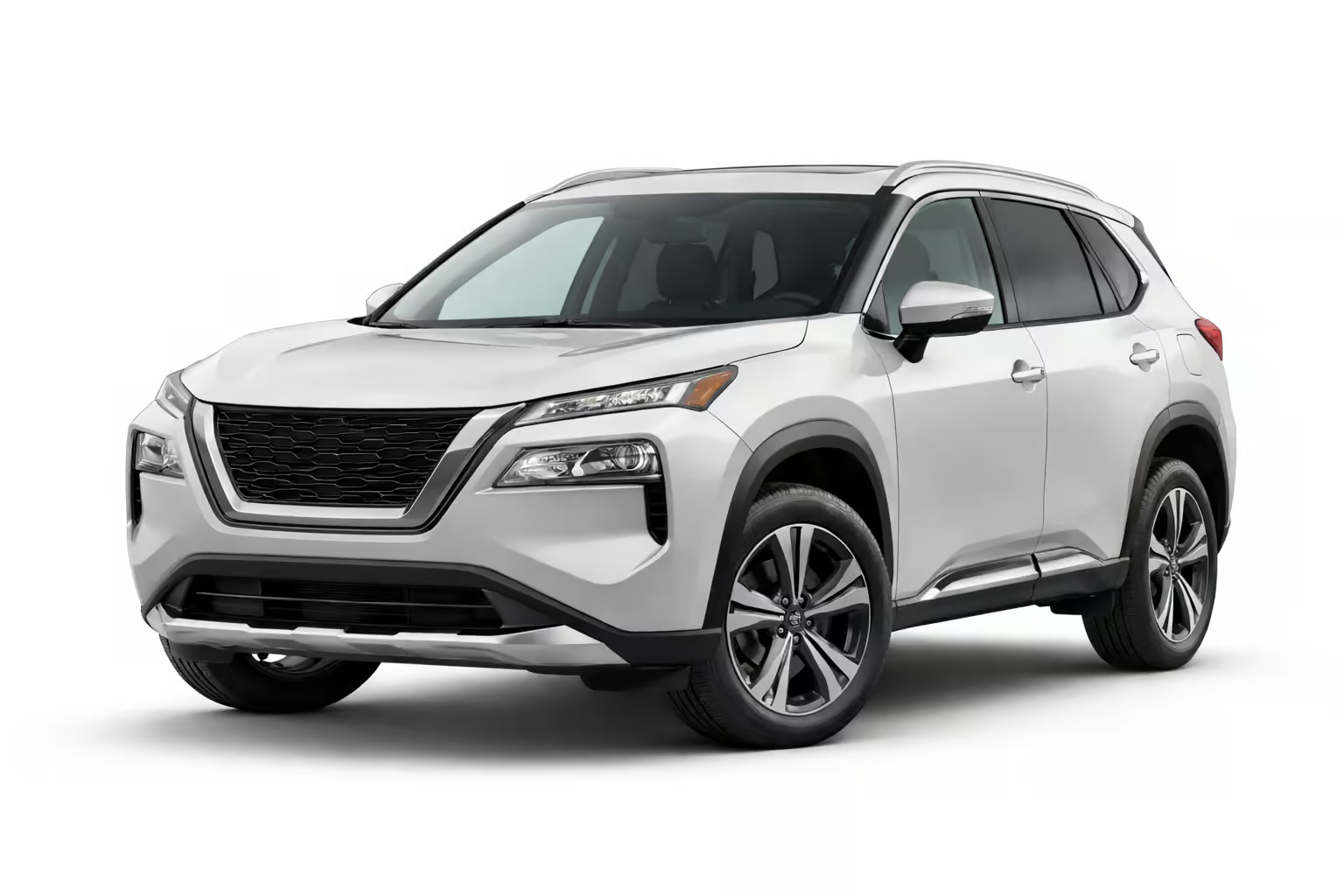
Nissan Rogue Full Buyer’s Guide (U.S. & Canada)
The Nissan Rogue has become one of the most popular compact SUVs in the U.S. and Canada because it covers the things you are likely to use every day. You get a comfortable cabin, useful cargo space, good fuel economy, available all wheel drive, and an approachable driving experience. Shopping for a Rogue becomes more complicated once you enter the used market. Three generations bring different engines, technology, interior layouts, and reliability considerations. Older models can be inexpensive, but the lowest purchase price does not necessarily produce the lowest ownership cost. Your best choice depends heavily on the model year, maintenance history, condition, and how much technology you actually want.
Rogue Overview: What Buyers Should Know
You should think of the Rogue as a comfort focused compact SUV rather than a performance vehicle. It competes directly with the Toyota RAV4, Honda CR V, Subaru Forester, and Hyundai Tucson. Its strengths are easy everyday driving, a quiet cabin, useful passenger space, strong safety equipment, and competitive fuel economy. That balance makes the Rogue particularly useful when you need one vehicle for commuting, groceries, family trips, and longer highway drives. Performance and towing are not its strongest selling points. If those are priorities, you may want another SUV. If comfort, efficiency, safety, and straightforward technology matter more, the Rogue makes a stronger case.
You are likely to appreciate the Rogue if you want:
- Comfortable daily driving. The suspension and cabin are designed more around everyday comfort than sporty handling.
- Good fuel economy. Later models can reach about 33 mpg combined, keeping fuel use competitive for a gasoline compact SUV.
- A quieter cabin. Newer generations improved interior materials and refinement, which becomes noticeable during longer drives.
- Strong safety equipment. Safety technology expanded substantially as the Rogue evolved, particularly on third generation models.
- Easy smartphone connectivity. Android Auto and Apple CarPlay make navigation, calls, music, and other everyday functions easier to access.
Nissan Rogue Generations and What They Mean for You
A Rogue badge alone does not tell you enough about the vehicle you are considering. A 2010 Rogue and a 2024 Rogue differ substantially in power, technology, interior quality, efficiency, and available safety equipment. The generation therefore deserves as much attention as mileage when you compare used examples.
The Rogue has gone through three generations since its 2008 introduction. You can explore the complete Nissan Rogue generations separately if you want the full model history. For buying purposes, however, the biggest differences are easier to understand generation by generation.
1st Generation (2008–2013)
First generation Rogues make the most sense when your budget is the deciding factor. These models use a 2.5 litre four cylinder producing 170 horsepower paired with a continuously variable transmission. You get straightforward transportation and a comfortable ride without paying for newer technology you may not need.
Price alone should not make the decision for you. The early CVT is the major concern and this period became associated with transmission reliability complaints. You should investigate service records carefully and pay attention to transmission behaviour during a test drive. A cheap Rogue stops being cheap surprisingly quickly if a major drivetrain repair follows you home.
Best for: Budget shoppers and basic commuting.
Engine: 2.5 litre four cylinder with 170 hp.
Strengths:
- Affordable entry point. Older first generation vehicles can provide inexpensive access to compact SUV practicality.
- Comfortable ride. The Rogue’s comfort oriented character was already evident in this generation.
- Good crash safety. Safety was a meaningful strength even before the later arrival of today’s driver assistance systems.
Weak points:
- CVT concerns. Transmission reliability complaints are the biggest reason you should approach these years carefully.
- Basic interior. Cabin design and technology are noticeably simpler than what you receive in later Rogues.
- Limited driver assistance. You will not get the broad collection of modern active safety features available on third generation models.
Buyer verdict: Buy a 2008–2013 Rogue only when the price reflects its age and you can verify its transmission service history. An unusually inexpensive example with questionable maintenance is not automatically a bargain.
2nd Generation (2014–2020)
The second generation is where the Rogue became much more useful as a family SUV. You get a larger cabin, improved materials, better cargo flexibility, and the clever Divide N Hide cargo system. Some versions even offered a third row, an unusual feature in a compact SUV, although you should consider it occasional seating rather than minivan territory.
Power remained at 170 hp from the 2.5 litre four cylinder, so acceleration was never the reason to choose one. CVT history also remains important, particularly on earlier examples. Later 2017–2020 models are the more attractive part of this generation when you want value without moving into third generation pricing.
A Rogue Hybrid was available from 2017 through 2019. Its 176 hp hybrid system could achieve up to 34 mpg combined, giving you an efficiency focused alternative that the conventional gasoline lineup did not provide.
Best for: Families, practical used SUV shoppers, and value focused buyers.
Strengths:
- More passenger room. The larger body made the Rogue more accommodating for family use.
- Optional third row. Certain versions could carry additional passengers when necessary.
- Better interior quality. Cabin materials and overall presentation improved over the first generation.
- Flexible cargo area. Divide N Hide gave you several ways to organize luggage, groceries, and smaller items.
Weak points:
- CVT history still matters. Transmission concerns did not disappear simply because the Rogue entered a new generation.
- Modest acceleration. The 170 hp engine prioritizes ordinary transportation rather than quick performance.
Buyer verdict: The 2017–2020 models are among the Rogue’s stronger used value choices. Prioritize documented maintenance and condition over simply finding the vehicle with the lowest odometer reading or asking price.
3rd Generation (2021–Present)
The third generation represents the biggest step forward if you care about interior quality, safety technology, connectivity, and efficiency. The redesigned cabin feels considerably more modern, while larger screens and improved smartphone integration make the vehicle easier to live with every day.
Engine choice separates the early and later versions. The 2021–2022 Rogue uses a naturally aspirated 2.5 litre four cylinder producing 181 hp. From 2023 onward, the 1.5 litre turbocharged three cylinder produces 201 hp while delivering stronger torque and improved efficiency. That gives you a meaningful reason to compare model years instead of treating every third generation Rogue as mechanically identical.
Best for: Buyers prioritizing modern technology, safety, comfort, and fuel economy.
Strengths:
- Improved cabin. Better materials give the third generation a more upscale interior than earlier Rogues.
- Strong efficiency. Fuel economy can reach approximately 33 mpg combined.
- Modern driver assistance. ProPilot Assist and other available systems add useful support during everyday driving.
- Better technology. Larger displays and improved connectivity bring the Rogue much closer to newer competitors.
Weak points:
- No current hybrid choice. That puts the Rogue at a disadvantage if hybrid fuel savings are one of your main priorities.
- Three cylinder preference. The turbocharged engine will not appeal equally to everyone, especially if you specifically want a conventional four cylinder.
Buyer verdict: This is the strongest Rogue generation overall. Choose a 2023 or newer model for 201 hp, stronger torque, and improved efficiency. A 2021–2022 model makes more sense if you prefer the conventional 2.5 litre four cylinder.
Nissan Rogue Trim Levels
Trim names are fairly easy to understand even though equipment can vary by model year and between the U.S. and Canadian markets. S starts the range, SV adds desirable everyday conveniences, SL moves toward premium comfort, and Platinum sits at the top. The Rock Creek trim adds a more rugged personality on newer U.S. models.
You should still check the equipment sheet of the exact Rogue you are buying. Features can move between optional packages and standard equipment from one year to another, so the badge on the liftgate should be the beginning of your investigation, not the end of it.
S
The S works when keeping your purchase price down matters more than luxury equipment. You still receive the Rogue’s basic practicality, good fuel economy, Android Auto, Apple CarPlay, and Nissan Safety Shield 360 on applicable models. You give up some of the convenience and premium touches available farther up the lineup, but that can actually benefit you if you simply want an uncomplicated commuter or family vehicle.
SV
The SV is the value focused sweet spot for many buyers because it adds useful comfort and convenience without immediately pushing you toward top trim pricing. Depending on the model year, ProPilot Assist may be optional or included. Larger wheels and additional convenience equipment also distinguish the SV from the base S. When comparing used vehicles, an SV can therefore offer a better equipment to price balance than paying considerably more for luxury features you rarely use.
SL
Moving to the SL changes the Rogue from basic family transportation toward a more premium experience. Leather seating, a larger infotainment display, and additional safety technology are among the upgrades you can encounter. The SL makes the most sense if cabin comfort matters enough to justify the additional purchase price. On the used market, depreciation can sometimes narrow the price difference between an SV and SL, making the higher trim worth comparing rather than automatically dismissing.
Platinum
Platinum sits at the luxury end of the Rogue lineup. You get the highest grade interior materials, a digital instrument display, and the most complete collection of available technology and ProPilot Assist features. You should compare its price carefully with an SL before buying. The additional equipment is attractive, but paying thousands more only makes sense when you will actually use and appreciate those upgrades.
Rock Creek
For 2025 in the U.S., Rock Creek gives the Rogue a more rugged appearance and an off road inspired personality. It is aimed at you if the standard Rogue looks a little too polite but you still want its practical compact SUV foundation. Do not confuse rugged styling with turning the Rogue into a dedicated trail machine. The trim broadens the Rogue’s character, but your intended terrain and actual capability requirements should still determine whether it fits your needs.
Nissan Rogue Fuel Economy
Fuel economy is one of the Rogue’s more compelling everyday advantages because even small differences add up when you commute five days a week. The 2021–2022 2.5 litre models can reach about 33 mpg combined in the U.S. and approximately 7.2 L/100 km in Canada under favourable configurations.
The 2023 and newer 1.5 litre turbo engine combines 201 hp with improved torque and efficiency. Real world fuel economy can outperform the earlier 2.5 litre setup, although your actual consumption still changes with drivetrain, traffic, weather, speed, tires, and driving habits. Winter has a habit of reminding Canadian fuel economy estimates who is really in charge.
| Engine | Model Years | Power | Fuel Economy |
|---|---|---|---|
| 2.5L four cylinder | 2021–2022 | 181 hp | Up to 33 mpg combined / 7.2 L/100 km |
| 1.5L turbo three cylinder | 2023–Present | 201 hp | Improved efficiency over the 2.5L |
| Hybrid | 2017–2019 | 176 hp | Up to 34 mpg combined |
Nissan Rogue Reliability
Reliability varies enough by generation that you should not judge every Rogue by the same reputation. The 2008–2013 models carry the greatest CVT concern, while early second generation vehicles from 2014–2016 also deserve careful transmission scrutiny. That history makes maintenance documentation particularly valuable when you are shopping for an older example.
The picture improves with later vehicles. The 2017–2020 period benefits from improved CVT tuning, while the third generation introduced a newer platform and better overall build quality. Our detailed Nissan Rogue reliability guide can help you evaluate longevity separately from purchase price.
Most Reliable Years
- 2017–2020. These later second generation years benefit from improved CVT tuning and represent some of the better used Rogue choices.
- 2021–Present. The third generation brings the newer platform, improved construction, and a more modern overall package.
Years Requiring More Caution
- 2008–2013. Early CVT reliability complaints make transmission condition and maintenance history especially important.
- 2014–2016. Early second generation models still carry enough CVT concern that you should investigate service history before buying.
If you are considering an older example, the Nissan Rogue problems guide can help you identify the issues worth checking before you commit to a particular vehicle.
What to Check Before Buying a Used Nissan Rogue
A clean exterior and low mileage are useful, but neither tells you how the vehicle was maintained. Start with service records, then inspect how the Rogue behaves from a cold start through a proper road test. Older CVT equipped examples deserve particular attention because transmission condition can matter far more financially than a few scratches or worn floor mats.
You should also test the climate control, infotainment system, cameras, driver assistance features, power accessories, and every warning light. Check tires and brakes for upcoming replacement costs and inspect the vehicle for collision repairs or corrosion. Following the proper Nissan Rogue maintenance schedule also gives you a useful reference when reviewing previous service records.
Before paying, check:
- Transmission behaviour. Watch for hesitation, unusual noises, shuddering, or inconsistent response during acceleration.
- Maintenance records. Verify that routine servicing was performed instead of relying solely on the seller’s description.
- Warning lights. Confirm that warning lamps illuminate normally at startup and then switch off as expected.
- Tires and brakes. Uneven tire wear or worn brakes can create immediate expenses after purchase.
- Electronics. Test the touchscreen, cameras, smartphone connectivity, power equipment, and available driver assistance systems.
- Vehicle history. Review accident, ownership, and available service records before deciding what the vehicle is worth.
- Independent inspection. Have a qualified technician inspect a used Rogue when its history or mechanical condition is uncertain.
Nissan Rogue Safety
Safety has remained an important part of the Rogue’s appeal, but the amount of technology you receive depends heavily on the generation. Earlier vehicles relied more heavily on conventional crash protection, while third generation Rogues added a much broader collection of active systems designed to help you avoid a collision in the first place.
For a specific model year, check the actual crash test results rather than assuming every Rogue received identical ratings. The U.S. government’s NHTSA vehicle safety ratings provide model specific crash test information, while equipment such as Nissan Safety Shield 360 and available ProPilot Assist can further influence the safety package you receive.
Nissan Rogue Pricing
Used Rogue pricing covers a wide range because a 2014 model and a nearly new 2025 vehicle are very different purchases. Based on the supplied CarMax pricing data, second generation 2014–2020 vehicles range from approximately $10,998 to $23,998, while third generation 2021–2025 examples range from about $15,998 to $35,998.
New 2026 pricing is typically around $26,000–$32,000 in the U.S. and approximately $32,000–$40,000 CAD in Canada depending on trim. These figures are useful shopping references rather than guarantees. Your actual transaction price can change with trim, drivetrain, mileage, condition, location, fees, incentives, and dealer inventory.
| Rogue | Typical Price Range |
|---|---|
| Used 2014–2020 | $10,998–$23,998 |
| Used 2021–2025 | $15,998–$35,998 |
| New 2026 U.S. | $26,000–$32,000 |
| New 2026 Canada | $32,000–$40,000 CAD |
The purchase price is only part of what you will spend. Fuel, insurance, maintenance, repairs, tires, financing, and depreciation all influence the real cost, so comparing the Nissan Rogue ownership costs can prevent a lower sticker price from disguising a more expensive vehicle.
Best Nissan Rogue Years to Buy
The strongest year range depends on what you want from the vehicle rather than a single model year winning every category. If modern technology, performance, and efficiency matter most, 2023 and newer models are the clear target. Their 201 hp turbo engine provides more output than the 181 hp 2.5 litre used in 2021–2022 models.
Value shoppers should pay closer attention to 2017–2020. You get the more mature part of the second generation without paying third generation prices. The 2008–2013 period requires considerably more caution because CVT history can outweigh an attractive purchase price. You can also examine Nissan Rogue depreciation when deciding whether a newer or older example gives you better value.
- Best overall: 2023–Present. Choose these years for the 201 hp turbo engine, modern technology, and strongest efficiency package.
- Best traditional engine choice: 2021–2022. These models give you the redesigned third generation with the naturally aspirated 181 hp 2.5 litre four cylinder.
- Best used value: 2017–2020. Later second generation models combine lower used prices with a more refined version of the older Rogue formula.
- Buy cautiously: 2008–2013. Consider these primarily when the price is compelling and transmission history can be verified.
Nissan Rogue vs. Its Main Competitors
You should compare the Rogue with the RAV4, CR V, Forester, and Tucson before buying because each emphasizes something different. The Rogue’s case rests on comfort, fuel economy, safety technology, and the noticeably improved interior found in 2021 and newer models. It is a balanced choice rather than an SUV built around one headline feature.
Its biggest competitive weakness is the absence of a current hybrid option while the Toyota RAV4 and Honda CR V offer hybrid alternatives. Older Rogue CVT history can also make some used competitors easier choices when service documentation is missing. That does not make every older Rogue unreliable, but it gives you an additional item to investigate before handing over your money.
| Vehicle | Buyer Advantage |
|---|---|
| Nissan Rogue | Comfort, efficiency, safety technology, 2021+ interior |
| Toyota RAV4 | Strong resale value |
| Honda CR V | Strong overall refinement |
| Subaru Forester | Excellent visibility and AWD appeal |
Who Should Buy a Nissan Rogue?
A Rogue makes the most sense when you want a compact SUV that handles ordinary life without making ordinary life unnecessarily complicated. You get room for passengers and cargo, competitive efficiency, accessible technology, and a comfort focused driving experience. Newer versions add enough cabin quality and safety equipment to make the Rogue considerably more sophisticated than the early models.
You should look elsewhere if towing capability, sporty acceleration, or a hybrid powertrain sits at the top of your requirements. Otherwise, the Rogue’s broad mix of comfort and practicality makes it worth considering, particularly when you choose the generation carefully and verify the condition of the exact vehicle you are buying.
Final Buyer Verdict
For the strongest overall Rogue experience, focus on 2023 and newer models. You get the 201 hp turbo engine, modern cabin technology, advanced safety equipment, and improved efficiency. If you prefer a conventional four cylinder, the 2021–2022 Rogue gives you the newer generation with its 181 hp 2.5 litre engine.
For a lower used purchase price, 2017–2020 models offer the best value balance. Approach 2008–2013 Rogues much more carefully because of their CVT history. Whatever year you choose, condition and documented maintenance should settle a close decision. The best Rogue is not simply the newest one you can afford. It is the one whose history gives you the fewest expensive surprises.
Add a comment Cancel reply
Comments (0)
Categories
Recent Posts
About us

Alex Demn
Blog Editor
This platform analyzes depreciation trends, resale value behavior, and long-term ownership costs, helping drivers understand how mileage, maintenance, and timing shape real financial outcomes.


- Guides
- Vehicle Research
- Tools
- Company
- Buying Guides
- Vehicle Reviews
- Fuel Cost calculator
- About Us
- Maintenance Guides
- Vehicle News
- Maintenance Cost Calculator
- Contact
- Repair Guides
- Towing & Payload Guides
- Repair Cost Estimator
- Privacy Policy
- Ownership Guides
- Fuel Economy Guides
- Ownership Cost Calculator
- Terms
- Depreciation Guides
- Reliability & Ownership
- Trade-In Value Estimator
- Disclaimer
- Depreciation Calculator
- Loan / Payment Calculator
- Car Insurance Cost Calculator