The way a vehicle is driven each day has a direct impact on how long its major components last, particularly the transmission. While regular maintenance plays an important role, daily driving behavior often determines how quickly wear develops across the drivetrain, engine, suspension, and braking systems. In many cases, poor habits accelerate damage that would otherwise take years to surface.
Because modern transmissions rely on precise hydraulic pressure and electronic controls, even small driving behaviors can trigger early Transmission Warning Signs if stress becomes consistent.
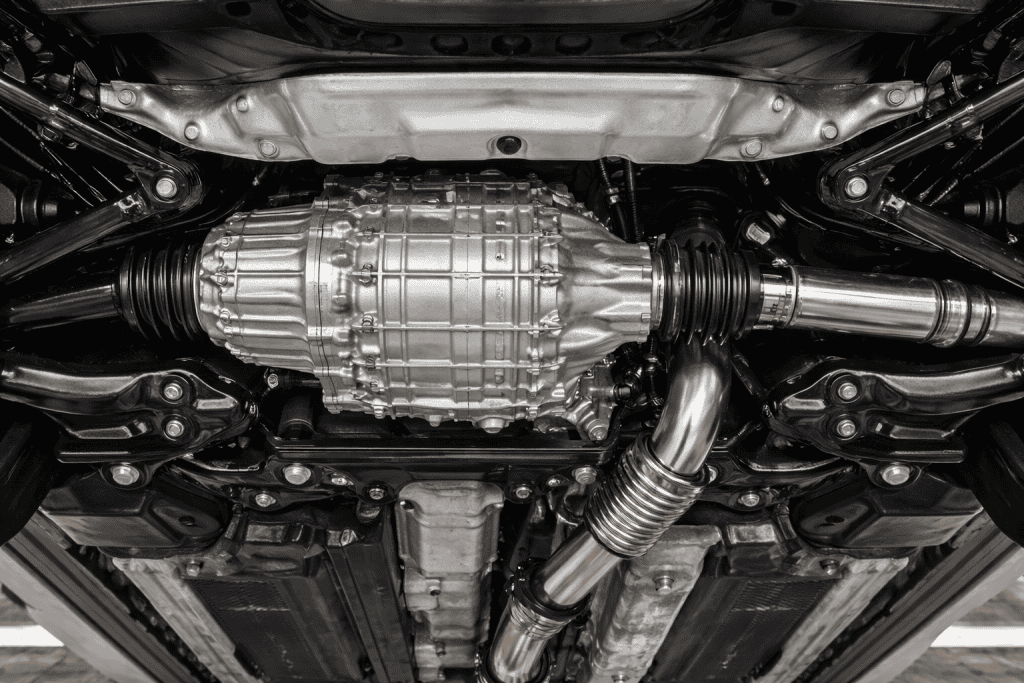
Vehicle underside showing the transmission and drivetrain components in a clean, educational view
Aggressive Acceleration and Hard Shifting
Frequent hard acceleration places immediate strain on the transmission. When throttle input is abrupt, the transmission must shift under high load, which increases internal clutch pressure and heat. As a result, components wear faster and shift quality often degrades over time.
Additionally, aggressive driving accelerates fluid breakdown, which is why understanding Transmission Fluid: How to Check and When to Change is critical. Degraded or low fluid reduces lubrication and cooling, increasing the risk of slipping, hesitation, and internal damage.
Stop-and-Go Driving and Repeated Short Trips
Urban driving environments force the transmission to shift repeatedly at low speeds. Although vehicles are designed to handle city traffic, excessive stop-and-go driving increases heat buildup and mechanical wear.
Moreover, repeated short trips often prevent the transmission and engine from reaching optimal operating temperature. Consequently, moisture and contaminants may remain in the system longer, contributing to long-term reliability concerns.
Inconsistent Throttle Control and Rough Shifting Behavior
Erratic throttle inputs—rapid acceleration followed by sudden braking—disrupt smooth gear engagement. Over time, this behavior contributes to harsh or unpredictable shifts and driveline shock.
These symptoms are frequently linked to Common Causes of Rough Shifting, including worn clutch packs, improper fluid pressure, or electronic control irregularities. Therefore, smoother throttle application helps preserve internal components and promotes consistent shift behavior.
Cold Starts and Immediate High Load
Applying heavy throttle immediately after a cold start places unnecessary stress on the transmission. Transmission fluid is thicker when cold, which reduces its ability to circulate and protect moving parts effectively.
Allowing a short warm-up period before aggressive driving improves lubrication and reduces friction-related wear. As a result, long-term durability improves across both transmission and engine components.
Dashboard Alerts and Electronic Safeguards
Modern vehicles actively monitor transmission performance. When driving habits create excessive heat, slipping, or pressure irregularities, warning indicators may illuminate on the dashboard.
In some cases, the vehicle may enter a protective operating state to prevent further damage. Understanding Warning Dashboard Lights Explained helps drivers respond appropriately instead of continuing to drive with a developing transmission issue, which can quickly escalate repair costs.
Broader Impact on Vehicle Longevity
Driving habits that strain the transmission rarely affect only one system. For example, harsh shifting increases stress on engine and transmission mounts, while aggressive acceleration accelerates wear on axles, differentials, brakes, and suspension components.
Therefore, smooth and controlled driving habits benefit overall vehicle longevity, not just transmission health.
Long-Term Perspective
Although no vehicle is immune to wear, consistent driving behavior significantly slows the aging process of critical systems. Smooth acceleration, proper load management, and attention to early symptoms reduce repair frequency and extend service life.
Ultimately, drivers who recognize how habits influence performance are better equipped to avoid costly failures and maintain long-term reliability.
[…] faults. Furthermore, aggressive acceleration, heavy towing, and stop-and-go driving highlight 7 driving habits that can seriously damage your transmission, as repeated stress accelerates transmission wear over […]
This platform analyzes depreciation trends, resale value behavior, and long-term ownership costs, helping drivers understand how mileage, maintenance, and timing shape real financial outcomes.